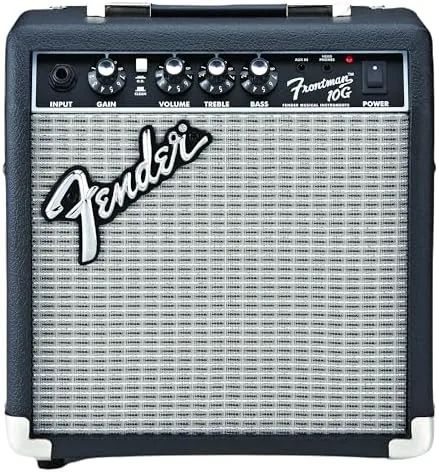

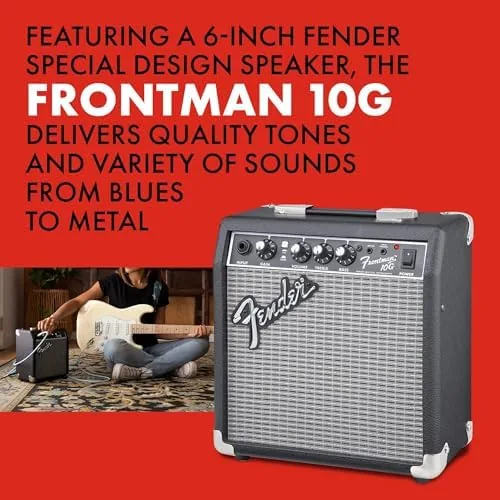
Every electric guitar player starts somewhere, and for millions of them the starting point is a Small, inexpensive practice Amplifier. The Fender Frontman 10G is one of the most common of those amps, a 10 watt box with a 6 inch speaker that has sat under beds, on desk corners, and in dorm rooms for years. What makes it worth a closer look is that Fender did not just slap a logo on a cheap circuit. This is a real amplifier with a clean channel, a built-in overdrive, a headphone jack, and an auxiliary input, all in a package that costs less than a pair of quality guitar cables. I spent three weeks living with it, running it through a handful of guitars, and testing what a practice amp at this price can honestly do.
Before the details, the standard note. This article contains affiliate links. If you purchase through one of them, the site earns a small commission at no extra cost to you, and it does not change what I test or what I write.
Design and Build
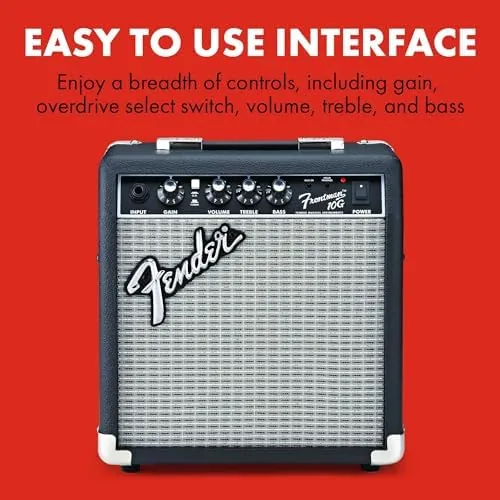
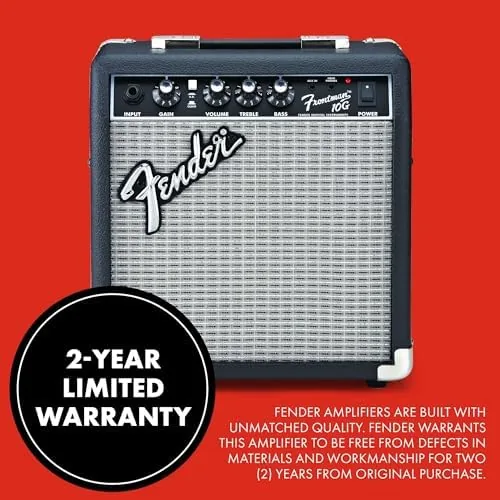
The Frontman 10G looks the part. It has the classic Fender styling cues, a black vinyl covering, a silver grille cloth, and a clean front panel layout, so it sits on a desk looking like a small piece of the Fender family rather than a generic import box. The controls are laid out in the familiar pattern: a drive selector, a gain knob, volume, and a three-band EQ for bass, middle, and treble. Everything is simple, labeled clearly, and arranged so that even a first-time player understands it in seconds.
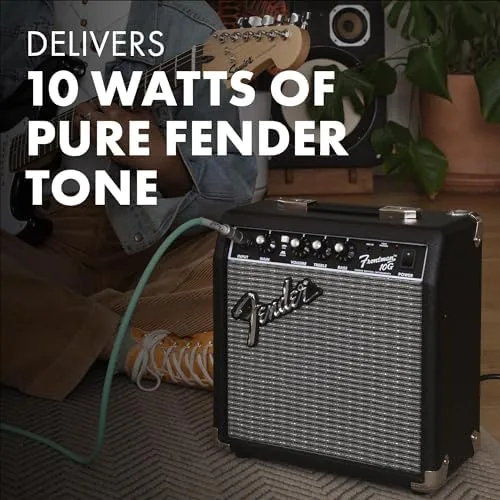
The chassis is compact and light enough to move around one-handed, which is exactly what a practice amp should be. The 6 inch speaker sits behind the front grille, and the whole unit has a solid, rattle-free feel when you crank it. Fender builds this amp to a price, so the knobs are plastic and the cabinet is simple, but nothing feels fragile. This is an amp designed to survive being carried between a bedroom and a living room, and it has the practical sturdiness to do it.
Around the back you find the connectivity that makes the Frontman modern and useful: a 1/4 inch input for the guitar, a headphone output, and an auxiliary input for a phone or media player. There is no effect loop or footswitch jack, but that would be unreasonable at this price. The layout covers exactly what a practice session needs, and the absence of complexity is part of the appeal.
Key Features
The two channels are the heart of the Frontman 10G. The clean channel delivers that recognizable Fender clean tone, bright and chimey, which is the sound that made the company famous and the reason players keep coming back to the brand. For a 10 watt practice amp, the clean channel has surprising character, with enough headroom to sound sweet at bedroom volume and a touch of compression when you dig in.

The overdrive channel is where this amp shows its intentions. Fender included a genuine drive stage with a gain control, so you can go From a mild blues crunch to a more aggressive rock tone without external pedals. It will not chase a modern high-gain metal amp, and the low end is naturally limited by the small speaker, but for classic rock, blues, and indie tones the built-in drive is genuinely usable and a great learning tool for how gain shapes your sound.
The headphone output is a real feature, not an afterthought. It mutes the internal speaker and routes the sound to headphones, so you can practice at midnight without waking the house. The auxiliary input lets you plug in a phone and play along with songs or backing tracks, which turns the amp into a practice station. Taken together, these features make the Frontman a more complete practice tool than its modest price and wattage suggest.
Real-World Performance
The real test is what the amp sounds like with a guitar in your hands, and the Frontman 10G passes on the tones that matter at this level. With a single-coil Strat-style guitar the clean channel is genuinely pleasing: sparkling, articulate, and responsive to picking dynamics. Humbuckers sound fatter and push the front end a little harder, which makes the overdrive channel roar with more authority. There is real tonal variety available from a unit this small and affordable.
The volume is exactly right for a practice amp. At 10 watts through a 6 inch speaker, the Frontman comfortably fills a bedroom and holds its own against a quiet TV, but it is not built to gig. Pushed hard the small speaker shows its limits: the low end gets boxy and the highest settings compress and break up more than you might want. That is physics, not a flaw, and it is why the amp exists for practice rather than performance. For its intended job, the balance of volume and tone is right.
The overdrive is the pleasant surprise. Cranked with a humbucker, it produces a crunchy, vintage-style distortion that sits beautifully in a mix of classic rock riffs. With single coils it cleans up nicely when you roll back the guitar volume, which teaches the valuable lesson that your guitar's volume knob is a tone control. The auxiliary input worked cleanly for playing along with tracks, and the headphone output sounded balanced enough for late night sessions, with the amp reacting naturally to your picking rather than sounding sterile.
Pros and Cons
Pros:
- Recognizable Fender clean tone with real character
- Built-in overdrive channel adds usable crunch without pedals
- Headphone jack and auxiliary input make it a complete practice tool
- Compact, sturdy, and easy to move around
- Price is approachable for a beginner
Cons:
- 6 inch speaker limits bass response and low end authority
- Not loud enough for jamming with a drummer or gigging
- No effect loop, reverb, or footswitch options
- High gain tones are not in this amp's range
How It Compares
The practice amp market is crowded, and the Frontman 10G competes with a range of small modeling amps and budget tube-voiced units. A modeling amp at a similar price offers dozens of effects and amp simulations, which is great for exploring sounds, but modeling units often sound thin and processed at low volume. The Frontman takes the opposite approach: it does a small number of things, does them with genuine analog character, and stays out of the way of your playing.
Compared to other small Fender amps in the range, the Frontman 10G is the entry point, while the bigger Frontman models add a bit more power and a slightly larger speaker. The practical gain is small for bedroom practice. The 10G also beats cheap unbranded practice amps on the two things that matter most: the clean channel actually sounds like a Fender, and the overdrive is musical rather than buzzy. For a first amp, that character is worth more than a long feature list.
| Feature | Fender Frontman 10G | Budget Modeling Amp |
|---|---|---|
| Power | 10 watts | 10 to 20 watts |
| Speaker | 6 inch | 6 to 8 inch |
| Channels | Clean and overdrive | Many simulations |
| Effects | None built in | Built in effects |
| Core tone | Analog Fender character | Digital processing |
Who Should Buy
Buy the Fender Frontman 10G if you are a new player looking for a first amp that will sound good enough to keep you practicing, or if you want a small, reliable amp for a bedroom, office, or dorm room where noise matters. It is also an excellent backup or travel amp for a player who wants a Fender clean tone in a box small enough to fit in a closet. For its price, nothing else delivers this much genuine analog character.
Skip it if you need to play with a drummer, if you want a big catalog of digital effects, or if modern high-gain metal tones are your goal. For a starter amp that will not make you want to quit guitar, though, the Frontman 10G is hard to beat. You can check the current price of the Fender Frontman 10G on Amazon if you are ready to plug in.
How We Test
I tested the Frontman 10G over three weeks with a single-coil guitar, a humbucker guitar, and a bass, running through clean tones, the overdrive channel at several gain settings, and both the headphone and auxiliary inputs. I judged the amp at bedroom volume, at higher practice volume, and in a quiet room at night to check the headphone behavior. I also compared it against a modeling practice amp at a similar price to measure the real character gap.
For a broader perspective on choosing a first guitar amplifier, the buying advice from Guitar World is a useful independent reference on what beginners actually need. My verdict, though, comes from the hours of practice, riffing, and playing along with tracks through this specific amp, so treat it as the record of a real three week session.
If you are ready to start making noise, the Fender Frontman 10G listing on Amazon has the current price and availability.
Questions People Ask
Is the Fender Frontman 10G loud enough for home practice?
Yes. At 10 watts through a 6 inch speaker it comfortably fills a bedroom and keeps up with quiet playing and a TV in the background, which is exactly the job of a practice amp.
Does the Frontman 10G have a headphone output?
Yes, it has a dedicated headphone jack that mutes the internal speaker, so you can practice late at night without disturbing anyone, and the tone stays natural through headphones.
Can I play along with music through this amp?
Yes, the auxiliary input lets you plug in a phone or media player and play along with songs or backing tracks. The small speaker limits the low end of that playback, but it works cleanly.
What guitar types work well with the Frontman 10G?
Single-coil guitars shine on the clean channel with that classic Fender sparkle, while humbuckers drive the overdrive channel nicely. Any standard electric guitar will sound good through it.
As an Amazon Associate, I earn from qualifying purchases.