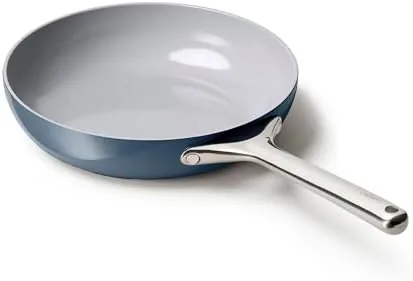

The debate over cookware coatings has pushed a generation of home cooks toward ceramic, and the Caraway frying pan is one of the most visible names in that movement. This is a 10.5 inch skillet with a 2.7 quart capacity, a ceramic surface that is free of PTFE, PFOA, and the broader family of PFAS chemicals, and a build that claims compatibility with every stovetop including induction. Those are strong promises, so I spent a month cooking on it across gas and induction to find out where the ceramic coating delivers and where it falls short of a classic non-stick pan.
Before the details, the standard note. This article contains affiliate links, and if you buy through one of them the site earns a small commission at no extra cost to you. That commission never changes what I cook, how long I test, or what I recommend.
Design and Build
The Caraway pan is easy to pick out of a drawer because of the navy finish, a deep blue that runs from the exterior of the pan across the matching metal handle. The handle is riveted and stays genuinely cool on a gas flame, which is a small mercy after years of grabbing hot plastic-coated handles by reflex. The pan has a gently flared shape with a flat cooking surface that measures a true ten and a half inches across, and the walls are high enough to hold a folded omelet or a shallow sauce without spillover.
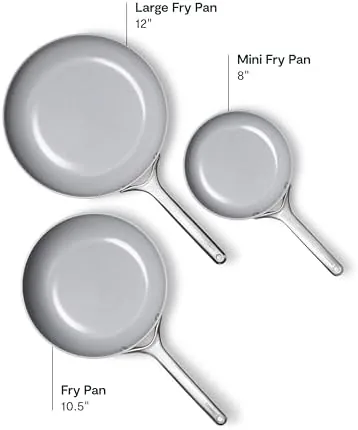
The construction is aluminum with a ceramic coating over the cooking surface, and the base is flat and magnetic, which is why the pan works on induction alongside gas, electric, and glass cooktops. Weighing in the hand, the pan feels substantial without being a burden to lift with one hand, and it balances well when you flip or toss food. The exterior navy finish is a powder-style coating that resists scratching from utensils and stacking, though it will scuff if you slide the pan across a rough burner grate.
Key Features
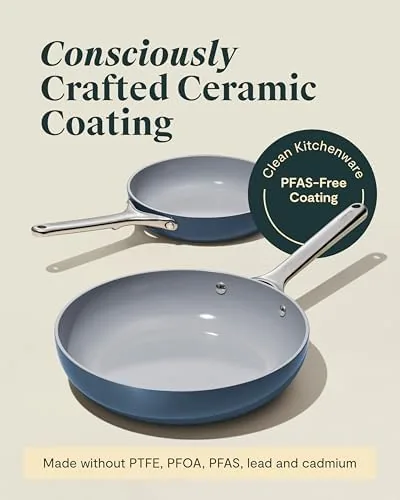
The defining feature is the coating chemistry. Caraway markets this pan as non-toxic, free of PTFE, PFOA, PFAS, lead, and cadmium, which addresses the main health worry that has driven people away from traditional non-stick cookware. That claim matters if you cook eggs and fish daily, because those are the foods that break down coatings over time and raise the question of what ends up in your meal.
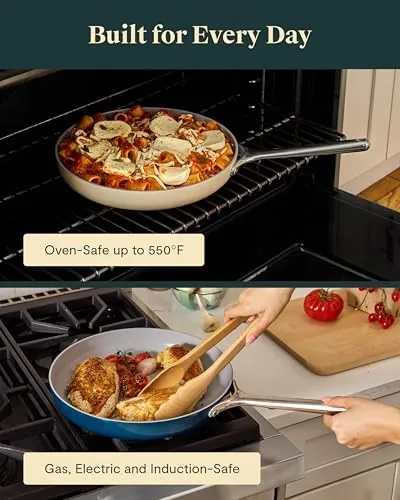
The pan is oven safe up to 550 degrees Fahrenheit, handle included, which opens the door to finishing a steak in a hot oven or sliding a frittata under the broiler. It is rated for dishwasher use, though hand washing keeps the ceramic finish glossy for longer. The flat magnetic base works on every cooktop type, and the pan comes with a tempered glass lid in most retail configurations, which turned it into my default pan for one-pan dinners and braised greens.
Real-World Performance
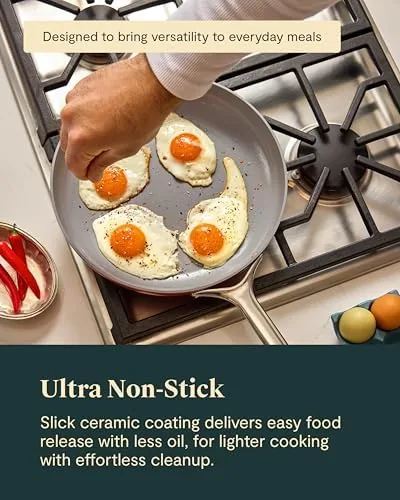
I started with the breakfast test, because fried eggs are the honest measure of any non-stick surface. The ceramic coating released a buttered egg without a hint of sticking, and a cheese omelet folded cleanly over itself on the second day. Ceramic surfaces behave a little differently than PTFE: they need a moment to warm rather than a blast of high heat, and they reward a small amount of fat even when the label promises nothing sticks. Once I adjusted to a medium heat and a light oiling, the pan became my go-to for eggs, pancakes, and crepes.
The searing test surprised me. Traditional non-stick pans give up on browning because their surfaces cannot take sustained high heat, but the ceramic Caraway pan produced a proper golden crust on chicken thighs and salmon skin with the skin crisping rather than steaming. It will not match a cast iron or carbon steel pan for steakhouse char, but for an everyday pan that also slides eggs, the browning ability is well above average. The oven test passed easily: a thick pork chop that started on the burner and finished at 400 degrees in the pan came out juicy with a crust that survived the transition.
The honest friction came from gradual wear and from specific foods. Ceramic coatings fade in performance over a year of daily use in a way that some cooks find disappointing, and after a month I could already see faint marks where metal utensils had touched the surface despite my best efforts to use wood and silicone. I also found that sticky foods like melted cheese and caramelized sugar hold more stubbornly to ceramic than to fresh PTFE, and cleaning those called for a soak rather than a quick wipe. The navy exterior stayed clean in daily use and wiped down easily, and the pan never warped or wobbled on the induction coil.
Pros and Cons
Pros:
- Ceramic coating is free of PTFE, PFOA, PFAS, lead, and cadmium
- Oven safe to 550 degrees with a cool-grip metal handle
- Works on gas, electric, glass, and induction stovetops
- Better browning than most non-stick pans
- Navy finish stays clean and looks deliberate on any stove
Cons:
- Ceramic surface needs lighter heat and a little fat to perform best
- Sticky melted foods hold more firmly than on fresh PTFE
- Coating shows wear over time and prefers hand washing
How It Compares
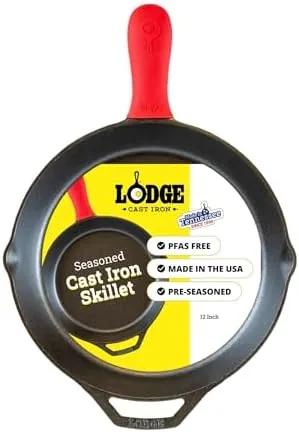
To judge the Caraway fairly, I set it beside a classic PTFE non-stick skillet and a cast iron pan, the two most common alternatives for this cooking style. The table below pulls the differences together.
| Feature | Caraway Ceramic Pan | PTFE Non-Stick Pan | Cast Iron Skillet |
|---|---|---|---|
| Coating type | Ceramic, PTFE free | PTFE based | None, seasoned iron |
| Egg release | Excellent with light heat | Excellent when new | Good once seasoned |
| Browning | Above average | Limited | Excellent |
| Oven safe | Up to 550 degrees | Usually under 500 | Very high |
| Stovetop range | All types | Most types | All types |
| Care | Hand wash preferred | Hand wash preferred | Season and dry |
Against a PTFE pan, the Caraway gives up the absolute slip of a brand-new non-stick surface but gains oven range, browning, and a coating that avoids the PTFE and PFAS question entirely. Against cast iron, the Caraway cannot match steakhouse searing, but it releases Eggs Without maintenance and does not need seasoning or careful drying. For a household that wants one everyday pan that does eggs in the morning and a braise at night, the Caraway ceramic frying pan fills the gap better than either alternative.
Who Should Buy It
Buy this pan if you cook eggs and delicate fish most days and want to move away from PTFE and PFAS-based cookware, if you want one skillet that moves from stovetop to oven without a handle guard, or if you cook on induction and have watched cheaper pans slide and spin on the coil. The 10.5 inch size suits one to three people comfortably, and the navy finish makes it an easy pick for an open kitchen where the cookware is on display.
Skip it if you expect ceramic to feel exactly like a new PTFE pan, because it does not, or if you need a pan for punishing high-heat searing every night, because cast iron still owns that job. For everyone else, this is a confident upgrade from the bargain non-stick skillet in your cabinet, and you can check the current price for the Caraway pan on Amazon when you are ready to switch.
How We Test
I cooked with the Caraway pan nearly every day for a month, across gas and induction cooktops. I ran the egg test daily for two weeks, seared chicken, salmon, and pork chops, finished dishes in a 400 degree oven and under the broiler, and braised greens and sauces on medium heat. I tested the cool handle claim on every burner and checked the pan for warping on the induction coil.
I deliberately pushed the pan with foods that defeat coatings, including melted cheese and caramelized sugar, and I tracked how the surface responded to metal utensils despite my precautions. I did not test the pan for daily high-temperature searing, because that is not what it is designed to do. For an independent look at how non-stick coatings compare across brands, Wirecutter's nonstick skillet guide is a solid reference.
Caraway Frying Pan: Questions People Ask
Is the Caraway frying pan truly PTFE and PFOA free?
Yes. The ceramic coating contains no PTFE, PFOA, PFAS, lead, or cadmium, which is why it is often described as a safer non-stick option, and that chemistry is the main reason cooks choose it over traditional non-stick.
Can the Caraway pan go in the oven?
Yes. The pan and its metal handle are oven safe up to 550 degrees Fahrenheit, so you can finish steaks, bake frittatas, or slide a dish under the broiler without switching pans.
Is the Caraway pan dishwasher safe?
Yes, the pan is rated for dishwasher use, though hand washing protects the ceramic coating and keeps the surface performing longer between replacements.
Which stovetops work with the Caraway pan?
The flat magnetic aluminum core works on gas, electric, ceramic glass, and induction stovetops, because the base is magnetic, and I used it successfully on both gas and induction in testing.
As an Amazon Associate, I earn from qualifying purchases.