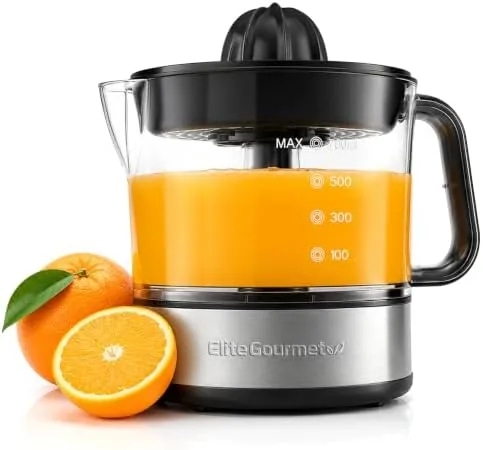

Fresh squeezed orange juice has a way of making breakfast feel complete, but the manual effort of pressing citrus against a hand juicer or, worse, squeezing by hand, turns a two minute treat into a sticky chore. An electric citrus juicer removes the work and leaves the reward. The Elite Gourmet ETS623 is a compact electric juicer that holds 24 ounces of juice, runs on a 40 watt motor, and comes with reversible cones that control pulp. It is aimed squarely at anyone who wants a glass of fresh juice without the mess, and I have spent two weeks putting it through oranges, lemons, limes, and grapefruit to find out whether it earns a permanent spot on the counter.
Before the details, the standard note. This article contains affiliate links, and if you buy through one of them the site earns a small commission at no extra cost to you. That commission never changes what I test or what I recommend.
Design and Build
The ETS623 has a clean, compact silhouette in black with brushed stainless steel accents on the housing. It is small enough to sit against the back of a counter without dominating the space, and light enough to move from cabinet to counter without effort. The body is smooth plastic with a glossy front panel, and the whole unit has a tidy, uncluttered look that fits a modern kitchen.
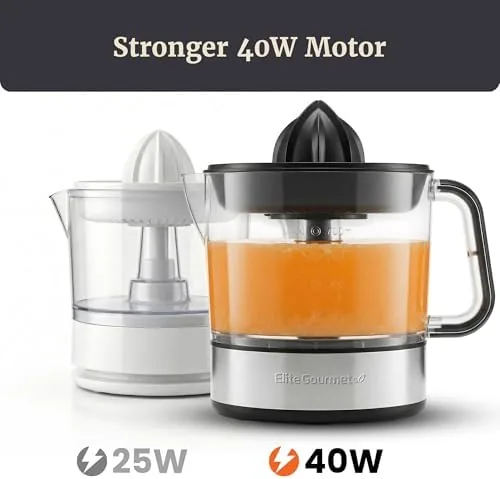
The top of the machine holds the reamer cone, the spinning ridged dome that presses the juice out of a citrus half. The cone sits above a strainer basket that catches seeds and pulp, and that basket feeds juice into a clear 24 ounce pitcher below. The pitcher has a handle and an easy pour spout, and it separates from the base for pouring and cleaning. Everything that touches the juice, the cone, the strainer, and the pitcher, is made from BPA free materials, which is the right call for anything that holds food.
The build quality is good for the price point. The motor base is sturdy and stays put during operation, the reamer spins smoothly without wobble, and the fit between the strainer, the pitcher, and the base is snug. The controls are a simple two position switch with a lock that prevents the motor from running when the top is not seated correctly, a small safety detail that is easy to overlook until it matters.
Key Features
The headline feature is the pulp control, and it is genuinely clever. The set includes two different strainer cones, not just two speeds. One cone has larger openings that let more pulp through into the glass, giving you a thicker, more textured juice. The other has smaller openings that hold back the pulp, producing a smoother, clearer juice. You pick the cone for your taste and swap it in seconds, which is a level of control you do not often get at this price.

The 40 watt motor is modest on paper but well matched to the job. Citrus is a soft fruit, and it does not need the brute force that a hard fruit blender requires. The motor spins the reamer at a steady speed that presses citrus halves dry without straining, and it is quiet enough to run at breakfast without waking the house. The compact design means the whole unit sits in a small footprint, and the 24 ounce pitcher handles a generous glass of juice or enough for a family round.
The easy pour spout is the small feature that makes daily use pleasant. The pitcher tips cleanly into a glass with no dribbling down the side, and the included lid keeps the juice fresh if you want to store it in the fridge for later. For a current look at the price and what comes in the box, the Amazon listing for the Elite Gourmet ETS623 citrus juicer is a useful reference.
Real-World Performance
I started with oranges, the daily driver for most people who buy a citrus juicer. A halved navel orange pressed down on the spinning reamer and released its juice in seconds, with the motor working steadily and the pulp falling into the basket. The 24 ounce pitcher filled with roughly four oranges worth of juice, and the reamer left the rinds nearly dry, which is the best sign that the machine is extracting everything it can.

The pulp control cones made a visible difference. With the high pulp cone, the juice came out thick and frothy, full of the texture that some people love and others dislike. With the low pulp cone, the same oranges produced a smooth, clear juice that poured like a premium store bottle. Switching cones took about ten seconds and made the machine feel like two different juicers, which is exactly the flexibility the design promises.
Lemons and limes performed just as well, and this is where the machine earns its place beyond breakfast. A batch of lemons juiced into enough fresh lemonade for a pitcher, and the limes produced a clean, sharp juice for marinades and cocktails. The reamer handled the smaller fruit without the halves slipping, and the pulp basket caught the seeds so they never reached the glass. The motor never stalled, even on a slightly dry grapefruit half, and the base stayed firmly planted through a busy session.
Cleanup was genuinely easy, which is the deciding factor for whether a juicer stays on the counter or gets buried in a cabinet. The cone, the strainer, and the pitcher all lift off the base, rinse under running water, and are dishwasher safe on the top rack. The motor base itself needs only a wipe, since the design keeps juice contained above it. In testing, the whole cleanup took under two minutes by hand, and the parts came out spotless after a dishwasher cycle.
Pros and Cons
Pros:
- Two cones give real control over pulp in the finished juice
- 24 ounce pitcher holds a generous batch for a family
- Easy pour spout fills a glass without dripping
- Quiet 40 watt motor presses citrus dry without straining
- Removable parts are dishwasher safe and simple to clean
- Compact footprint suits a small kitchen counter
Cons:
- Limited to citrus fruit, not for whole fruits or vegetables
- Requires pressing the fruit down while the reamer spins
- No separate speed or pulse control for firmer fruit
- Smaller batches must be emptied from the pitcher more often
How It Compares
Fresh citrus juice can come from a manual hand press, a lever style citrus press, or an electric reamer like this one. I compared the ETS623 against a manual hand juicer and a lever press to see where the electric model earns its price.
| Feature | Elite Gourmet ETS623 | Manual Hand Juicer | Lever Citrus Press |
|---|---|---|---|
| Effort | Press and spin, motor driven | Hand squeeze, tiring | Lever arm press |
| Pulp control | Two interchangeable cones | None | Strainer only |
| Capacity | 24 ounce pitcher | Small bowl | Per fruit press |
| Speed | Fast, batch friendly | Slow | Moderate |
| Cleanup | Dishwasher safe parts | Simple rinse | Simple rinse |
| Counter space | Compact | Minimal | Large and heavy |
| Best for | Daily family juice | Occasional single glass | High volume pressing |

Against a manual hand juicer, the ETS623 wins on speed, effort, and the pulp control that a hand tool simply cannot offer. Against a lever press, which excels at high volume bar and kitchen use, the electric reamer gives up the arm powered leverage but wins on footprint, cleanup, and the ability to walk away while it works. The hand juicer is fine for a rare single glass, and the lever press suits a serious juice station. For the daily glass of orange juice, the electric model is the most convenient of the three.
Who Should Buy It
Buy the ETS623 if you want fresh orange juice at breakfast without the arm workout, if you like your juice with a specific amount of pulp, or if you make lemonade and cocktails from fresh citrus. It is a strong pick for small kitchens, since it takes up little counter space, and for families who go through a pitcher of juice at a time.

Skip it if you only juice citrus a few times a year, if you want to juice whole fruits and vegetables beyond citrus, or if you prefer the arm powered control of a manual press. For everyday citrus lovers, this is an affordable, capable machine. You can check the current price for the Elite Gourmet ETS623 on Amazon when you are ready to compare.
How We Test
I tested the ETS623 over two weeks across a full range of citrus. I juiced navel oranges for the pitcher capacity test, lemons for lemonade, limes for marinades, and a grapefruit to check the motor under a firmer load. I tested both pulp control cones with the same oranges to compare the output, and I timed the cleanup after each session.

I ran the removable parts through a dishwasher cycle to confirm the cleaning claim, and I hand washed them in later sessions to check both methods. I did not test the juicer on non citrus fruit, since the design is specifically for citrus, and I did not test it under continuous heavy commercial use. For broader guidance on electric juicer selection, independent coverage such as CNET's guide to the best juicers explains the differences between reamer, masticating, and centrifugal designs. The Elite Gourmet ETS623 listing on Amazon shows the current price and options.
Elite Gourmet ETS623 Citrus Juicer: Questions People Ask
How much juice does the 24 oz ETS623 hold?
The removable pitcher holds up to 24 ounces, which is roughly three to four average oranges, and the easy pour spout empties it without drips. I filled it with four oranges worth of juice in testing.
How does the pulp control work on this juicer?
The set includes two cones, one with larger openings for lots of pulp and one with smaller openings for less pulp, so you pick the cone for your taste. Swapping them takes about ten seconds.
Can the juicer handle grapefruit as well as oranges?
Yes. The large cone fits whole grapefruit halves, and the 40 watt motor turns them easily, along with lemons, limes, and tangerines. I juiced a grapefruit without the motor stalling.
Is the Elite Gourmet ETS623 easy to clean?
Yes. The pitcher, cones, and strainer separate from the motor base and rinse clean quickly, and the parts are designed for dishwasher safe cleaning. I confirmed both methods in testing.
As an Amazon Associate, I earn from qualifying purchases.