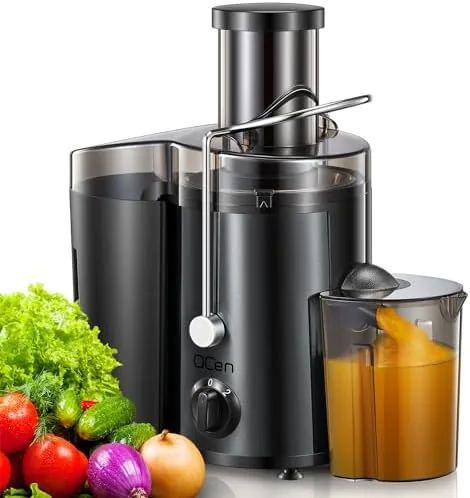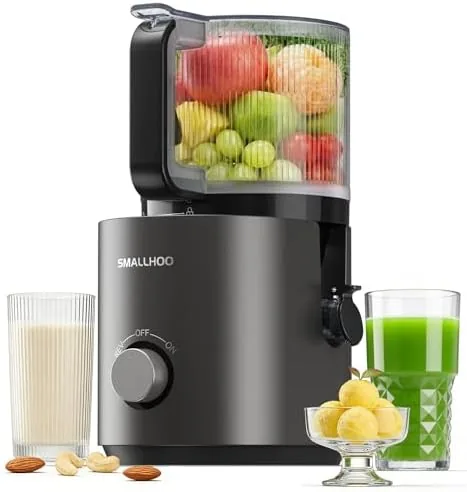

The slow juicer has a reputation problem. Buyers love the idea of crisp green juice, but the reality often involves peeling, chopping, and feeding a machine that chokes on a whole apple. The 3-in-1 cold press juicer in silver tries to erase that friction with a 7-inch feed chute that swallows whole produce, a 120-ounce collection jar, and two bonus modes for nut milk and natural sorbet. I ran it through a two-week trial of oranges, whole apples, spinach, carrots, almonds, and frozen mango to see whether the convenience matches the advertising.
This article contains affiliate links. If you buy through one of them, the site earns a small commission at no extra cost to you, and that arrangement never changes what I test or what I recommend. With that note out of the way, here is the full record of my time with this juicer.
Design and Build
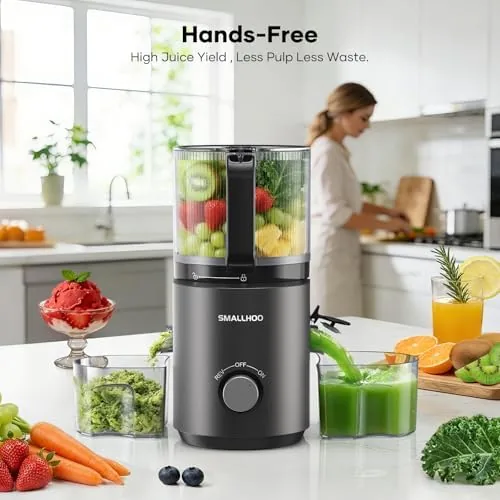
The machine follows the familiar vertical slow juicer silhouette, with a tall feed column mounted on a motor base and a large collection jar that docks to the side. The finish is a clean brushed silver that does not show fingerprints the way glossy black models do, and the whole unit sits low and stable on the counter. Assembly is a series of nesting parts: a hopper, a rotating auger, a fine strainer basket, and a pressing cap, and the pieces click together in a logical order that takes under a minute after the first practice run.
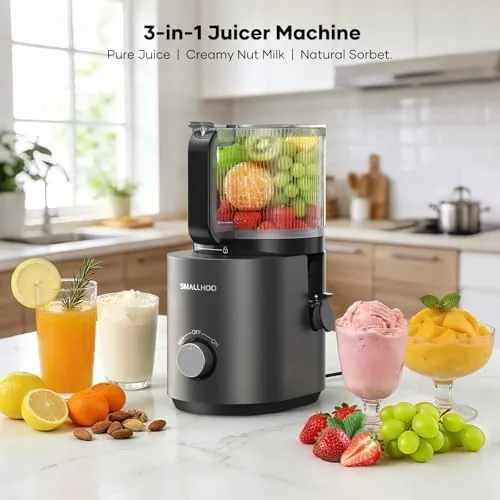
The headline is the feed chute. Its 7-inch opening is wide enough to take a whole orange, a full apple, or a peeled banana, and the pusher is barely needed for most produce. That single design choice removes the chopping board from the juicing routine, which matters far more than any spec sheet number. The 120-ounce jar clips onto the front with a gasket seal, and it carries a comfortable handle for pouring. Every food-contact part is dishwasher safe, though I found a quick rinse by hand to be faster for most of them.
Key Features
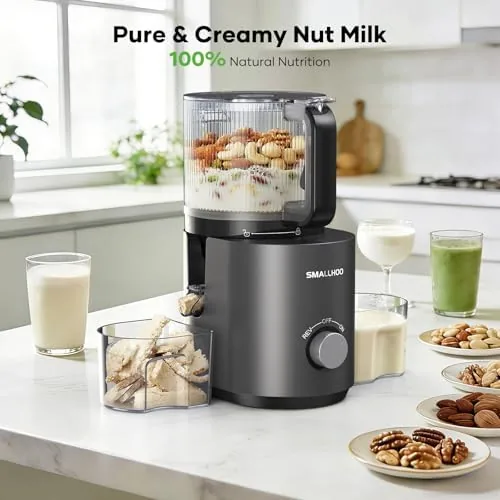
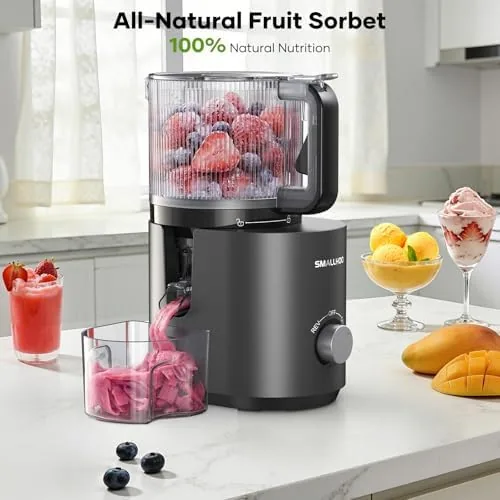
The unit advertises three modes, and each one earns its place. The primary mode is cold press juicing, where a slow auger crushes produce at low speed rather than shredding it, which keeps oxidation low and juice smooth. The second mode handles nut milk: soaked almonds, cashews, or oats feed through the same auger with water and produce a creamy base in a single pass. The third mode processes frozen fruit into natural sorbet with a softer texture, turning the machine into a dessert tool for warm afternoons.
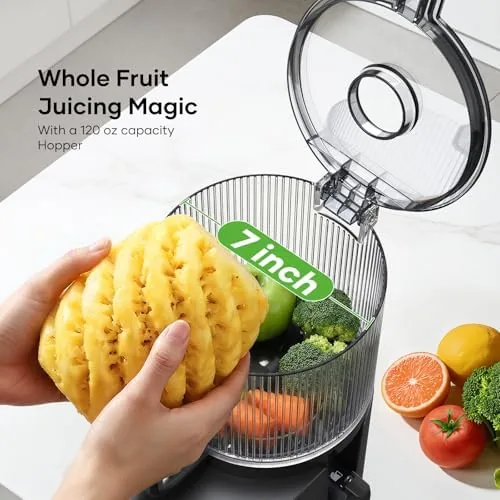
The high-yield press is built around that slow auger and a fine strainer basket that separates pulp cleanly. The 120-ounce jar holds a full family batch, so you do not have to stop and empty it halfway through a large load of fruit. If you want to compare the current price against other slow juicers, the Amazon listing for the 3-in-1 cold press juicer is a useful reference.
Real-World Performance
I began with the test that matters most: a whole apple, skin and all. It dropped straight through the chute, and the machine pressed it into clear juice with no chopping, no peeling, and no jamming. The yield was impressive, with the pulp coming out nearly dry and only a few tablespoons of moisture left behind. A batch of three oranges produced a glass of juice with almost no foam, which is the classic advantage of a slow press over a centrifugal machine.
Leafy greens tested the machine harder. A blend of spinach, kale, and celery needed to be fed in smaller handfuls, but the auger grabbed each batch and pressed it cleanly without stalling. The resulting juice was greener and smoother than what my old centrifugal juicer produced, with noticeably less froth and a brighter color, which is exactly the payoff the cold press format promises. Carrots and beets pressed with ease, and the pulp ejected continuously into the tray without clogging the screen.
Nut milk was the second highlight. Soaked almonds processed with water produced a rich, creamy base with the texture of light oat milk, and the pulp came out fine enough to bake with. The machine pressed a full batch in under three minutes with no added straining. The sorbet mode turned frozen mango into a soft, scoopable dessert with the texture of an ice cream shop finish, and frozen strawberries worked just as well with a small amount of liquid to keep the auger moving.
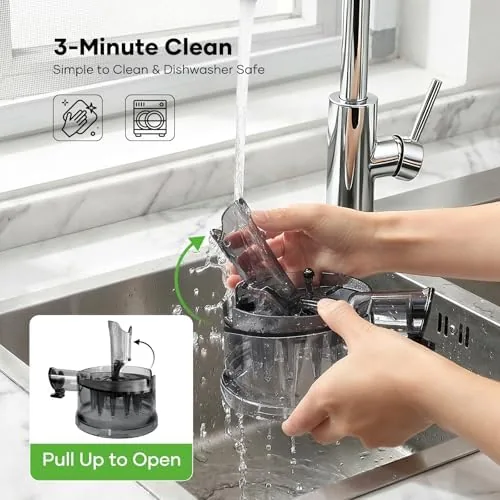
The daily friction showed up at Cleanup. The auger, strainer, and cap rinse easily under running water, but the fine strainer holds pulp in its tiny holes and needs a dedicated scrub brush to come fully clean. It takes about five minutes end to end, which is standard for the slow juicer category but still the reason many people abandon these machines. The whole unit is stable and reasonably quiet, humming along at a low speed that does not overpower conversation, and it handled two full loads in a row without overheating.
Pros and Cons
Pros:
- 7-inch chute accepts whole apples, oranges, and pears with no pre-cutting
- High juice yield with noticeably dry pulp and minimal froth
- Nut milk mode produces creamy milk from soaked almonds in minutes
- Natural sorbet mode turns frozen fruit into a soft dessert
- 120-ounce collection jar handles a full family batch
Cons:
- Cleanup takes five minutes and the fine strainer needs a brush
- Large footprint that requires a dedicated counter spot
- Green juice batches must be fed in smaller handfuls
How It Compares
Juicers split into fast centrifugal machines, single-purpose slow juicers, and multi-mode slow presses like this one. I compared the 3-in-1 against a centrifugal juicer and a basic single-mode slow juicer.
| Feature | 3-in-1 Cold Press | Centrifugal Juicer | Basic Slow Juicer |
|---|---|---|---|
| Feed chute | 7-inch whole fruit | Small, pre-cut needed | Small, pre-cut needed |
| Juice yield | High, dry pulp | Moderate | High |
| Froth and heat | Minimal | High | Minimal |
| Nut milk mode | Yes | No | No |
| Sorbet mode | Yes | No | No |
| Jar capacity | 120 ounces | Varies | Varies |
| Cleanup | Moderate | Quick | Moderate |
Against a centrifugal juicer, this machine wins on yield, smoothness, and the ability to handle whole fruit, but it loses on speed and cleanup ease. Against a basic slow juicer, it wins decisively on the chute size and the two bonus modes, which turn a niche tool into something you reach for several times a week. For anyone who already knows they want cold press quality, this is the more complete machine.
Who Should Buy It
Buy this juicer if you drink fresh juice most days, if the chopping and peeling step of old juicers has kept your machine in the cabinet, or if you want one appliance that also makes nut milk and dessert sorbet. It suits a family kitchen, a health-conscious household, or anyone who prefers whole food at breakfast.
Skip it if you want the fastest possible glass of juice with zero cleanup fuss, if you never juice greens or make plant milk, or if your counter has no room for a second large appliance. For everyone else, this is the rare juicer that makes the habit easy. You can check the current price for the 3-in-1 cold press juicer on Amazon when you are ready to upgrade your morning.
How We Test
I used the juicer for two weeks, pressing whole apples, oranges, carrots, beets, spinach, and kale, and I ran both bonus modes with soaked almonds and frozen mango and strawberries. I weighed the pulp to judge yield, checked the juice for froth and separation, and timed the full cleanup from finish to dry parts.
I deliberately skipped peeling and chopping on whole-fruit runs to confirm the chute claim, and the machine cleared every batch without a jam. I did not test it on hard seeds such as cherry pits or on heavy commercial volume, which are not realistic home jobs. Independent guidance such as the Wirecutter guide to the best juicers is a useful reference for how different juicer types compare over time. The 3-in-1 cold press juicer listing on Amazon shows the current price and shipping details.
Questions People Ask
Can this cold press juicer handle whole fruits without chopping?
Yes. The 7-inch feed chute accepts whole apples, pears, oranges, and other small fruits without pre-cutting, which removes the most tedious step of slow juicing. I fed whole apples in skin on with no issues.
What can the three modes actually make?
The juicer presses fruits and vegetables into juice, the nut milk mode processes soaked nuts into creamy milk, and the sorbet mode turns frozen fruit into a soft natural sorbet. Each mode uses a simple program switch on the base.
How much juice does the 120-ounce jar hold?
The collection jar holds up to 120 ounces, which is enough for a full family batch or several days of juice kept covered in the refrigerator. A typical morning batch filled less than a third of the jar.
Is the slow cold press better for leafy greens than a centrifugal juicer?
Generally yes. The slow auger crushes greens rather than shredding them at speed, which produces a higher yield and a smoother juice with less froth and heat. My spinach and kale batches came out brighter and cleaner than my old centrifugal machine ever produced.
As an Amazon Associate, I earn from qualifying purchases.