
A perfect poached egg is one of those things people assume requires a professional kitchen, a swirl of vinegar, and nerves of steel. The classic method works, but it is fiddly, and it fails on busy mornings when the kettle is screaming and the toast is about to burn. The Eggssentials poached egg maker takes the whole drama out of the equation with a stovetop pan, four PFOA-free non-stick cups, and a tempered glass lid that steams the eggs into neat, round poached results. This is the record of a month of breakfasts, brunches, and a few lunches that all started with the same four cups.
A quick note before the details. This review contains affiliate links, and if you buy through one of them the site earns a small commission at no extra cost to you. That commission does not change what I test or what I recommend.
Design and Build
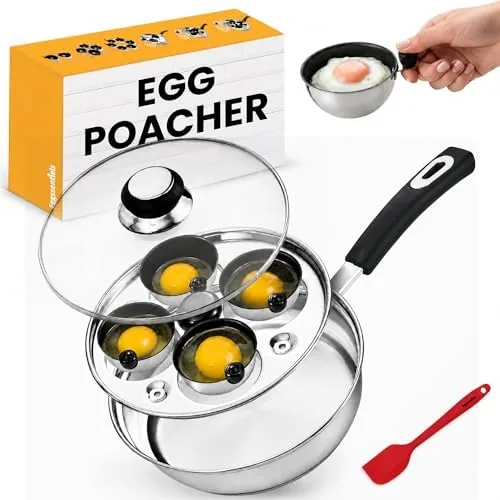
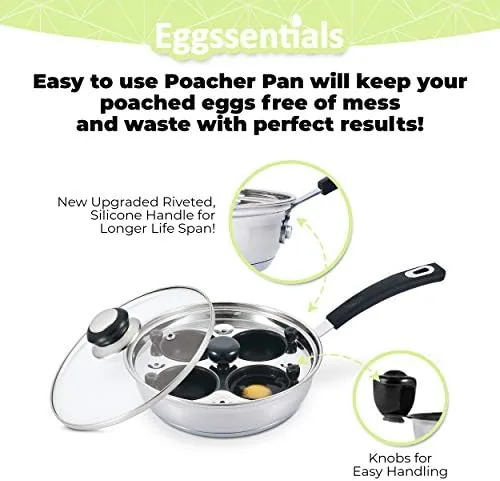
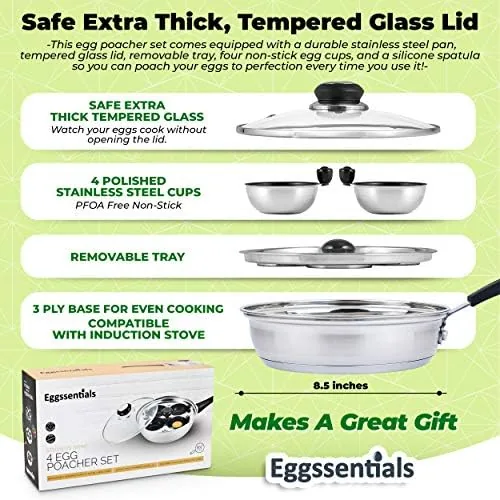
The Eggssentials poacher is built around a stainless steel pan with a short pour spout, a fitted non-stick tray that holds four cups, and a tempered glass lid with a steam vent. The steel feels substantial, not like the flimsy pans that flex in the hand, and the whole unit stacks into a compact footprint that fits on a shelf or in a drawer.
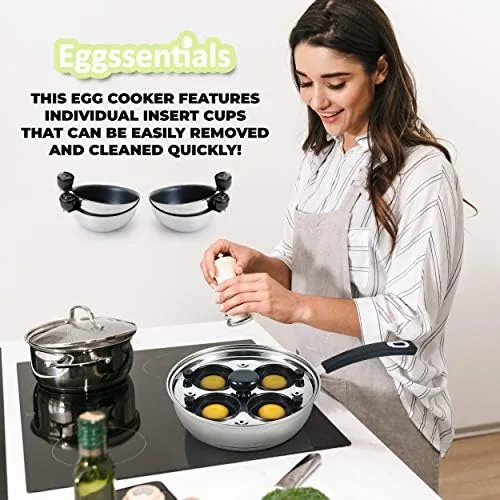
The four cups are the heart of the design. Each cup has a small handle that makes lifting it out of the tray easy, and the non-stick coating is explicitly PFOA free, which matters for anything that cooks eggs directly. The glass lid lets you watch the eggs set without lifting it and losing steam, and the vent keeps the water from sputtering over the rim. A spatula ships with the pan, and it is the right tool for teasing each egg out of its cup without tearing the white.
Key Features
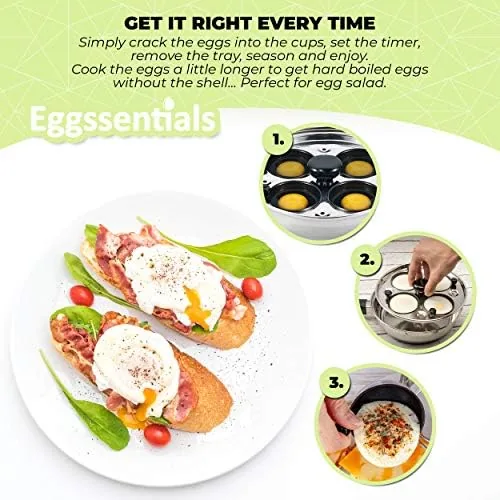
The stovetop method is the defining feature. You add a shallow layer of water to the pan, seat the tray with its four cups, crack an egg into each cup, and cover with the glass lid over low heat. Gentle steam does the cooking, so there is no violent water bath, no swirling vortex, and no vinegar required.
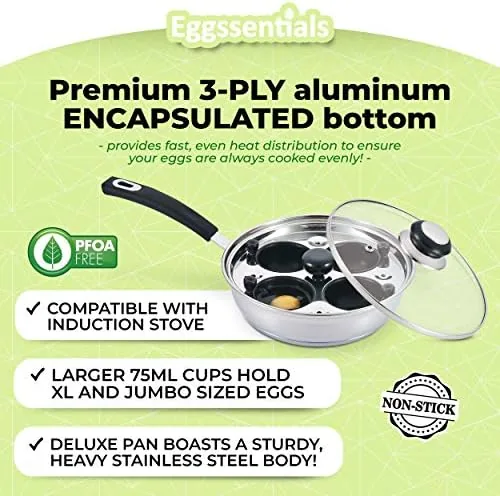
The four-cup capacity is generous for a poacher. A family of four gets its eggs at the same time, and for one or two people the empty cups make handy ramekins for warming butter or holding a second batch. The PFOA-free coating releases eggs cleanly, and the short pour spout makes emptying the pan after cooking a tidy operation rather than a spill. Everything that touches food is either food-grade stainless steel or a PFOA-free coating, which keeps the health story simple.
Real-World Performance
My first batch went exactly as the box promised. A shallow layer of water, four eggs cracked into the cups, the lid on, and about four minutes of low heat. The whites set into tidy rounds, the yolks stayed soft and slightly runny, and the eggs slid out onto toast with a nudge from the included spatula. There was no failed first attempt, which is more than I can say for my vinegar-swirl efforts.
Over the month I pushed the timing in both directions. At around three and a half minutes the yolks were noticeably runnier, and at five minutes they firmed up for people who dislike anything undercooked. The steam method was forgiving, because the gentle heat gives you a wider window than a water bath before things overcook. For batch cooking, I made four eggs at once and kept three in the fridge for weekday breakfasts, and they reheated in about twenty seconds without turning rubbery.
The only real adjustment was heat management. High heat makes the water sputter against the glass lid and risks cooking the eggs unevenly, so low to medium-low is the setting that works. After cooking, the pan empties easily through the spout, and the cups wipe out with a damp cloth because the non-stick coating sheds egg residue. The manufacturer recommends hand washing, and after a month of that routine the cups still release eggs as cleanly as day one.
I also tried the pan beyond poaching, because a dedicated tool that only does one thing earns its storage space poorly. The cups worked as tiny ramekins for warming maple syrup and melting butter without dirtying a second pan, and the tray itself held a batch of steamed vegetables on top of a light simmer. The glass lid turned the pan into a small steamer for dumplings and asparagus tips, which broadened its usefulness without asking anything extra of the design. It is still an egg poacher at heart, but it does not go idle when eggs are not on the menu. You can check the current price for the Eggssentials egg poacher on Amazon when you are ready to fix your morning routine.
Pros and Cons
Pros:
- Cooks four poached eggs at once with no water bath or vinegar
- PFOA-free non-stick cups release eggs cleanly
- Solid stainless steel build with a comfortable pour spout
- Tempered glass lid lets you watch the eggs set
- Included spatula is sized for the cups
Cons:
- Requires careful low-heat control to avoid sputtering
- Hand washing is recommended, not a dishwasher cycle
- Cups are small, so jumbo eggs fit snugly
How It Compares
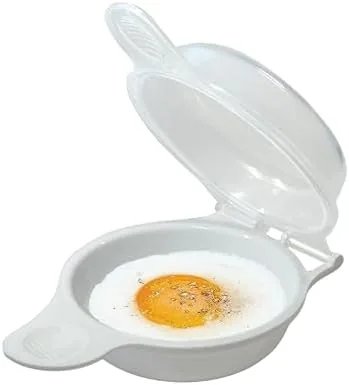
Poached egg makers fall into two camps: microwave versions and stovetop pans like this one. I compared the Eggssentials against a microwave egg cooker and the old classic method of poaching directly in simmering water to see where the stovetop pan earns its keep.
| Feature | Eggssentials Stovetop Pan | Microwave Egg Cooker | Classic Water Bath |
|---|---|---|---|
| Eggs at once | Four | Usually one or two | Limited by pot size |
| Technique | Gentle steam | Microwave heat | Simmering, swirled water |
| Consistency | Very consistent | Varies by wattage | Requires skill |
| Clean-up | Wipe and rinse | Quick, small parts | Pot plus strainer |
| Batch cooking | Yes, four at once | No | Possible, stressful |
| Cost of entry | One pan, no extras | Cheap | No equipment needed |
Against a microwave cooker, the stovetop pan wins on capacity and texture, because microwave eggs can turn tough at the edges and only do a single serving at a time. Against the classic water bath, it trades a little theatre for a lot of reliability, because the steam method does not punish you for answering the door mid-cook. For most homes, the Eggssentials pan is the easiest road to a reliable poached egg.
Who Should Buy It
Buy this poacher if you love eggs benedict but hate the process, if you cook for a family that eats poached eggs in shifts, or if you want a foolproof way to poach without a pot of swirling water. It is also a good fit for meal prep, since four eggs at once cover most of a week of breakfasts, and for anyone who wants a stovetop tool that doubles as a small steamer.
Skip it if you only ever want one egg, if you prefer the hands-on ritual of the classic method, or if your cooktop struggles to hold a low, steady heat. For everyone else, this is one of the simplest upgrades a breakfast routine can get. The Eggssentials egg poacher listing on Amazon has the current price and availability.
How We Test
I cooked with the Eggssentials poacher every week for a month, covering poached eggs at a range of timings, a batch of four for meal prep, and a few tests at different heat settings to find the point where the water starts to sputter. I tracked how cleanly each egg released from its cup, how the non-stick coating held up, and how the pan handled emptying and hand washing.
I deliberately pushed the heat high in one session to confirm the failure mode, and I reheated refrigerated poached eggs to check whether the texture survived. I did not put the pan in the dishwasher, because the manufacturer recommends hand washing, and I did not test it for commercial or campfire use. If you want a second opinion, CNET's look at the best egg poachers is a useful companion to this review. The Eggssentials poacher page on Amazon shows the current price and delivery details.
Eggssentials Egg Poacher: Questions People Ask
How does the Eggssentials egg poacher work?
It is a stovetop pan. You add a shallow layer of water, fit the four PFOA-free cups into the tray, crack an egg into each cup, cover with the glass lid, and cook over low heat for about four to five minutes.
Are the Egg Poaching Cups really PFOA free?
Yes. The four cups carry a PFOA-free non-stick coating, and the pan body is food-grade stainless steel, so there is no exposed chemical coating in the cooking zone.
How many eggs can the pan cook at once?
Four. The tray holds four cups at a time, which suits a family breakfast or meal-prep poached eggs for the week.
Is the egg poacher easy to clean?
Yes. The non-stick cups wipe out with little effort, and the stainless steel pan washes easily by hand, though the manufacturer recommends hand washing to protect the cups.
As an Amazon Associate, I earn from qualifying purchases.