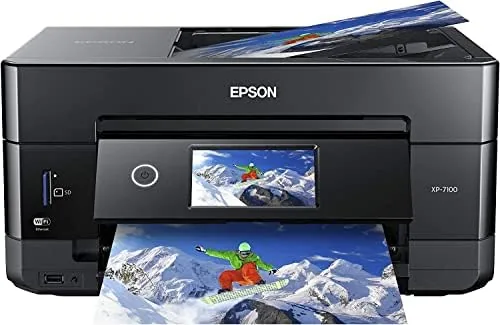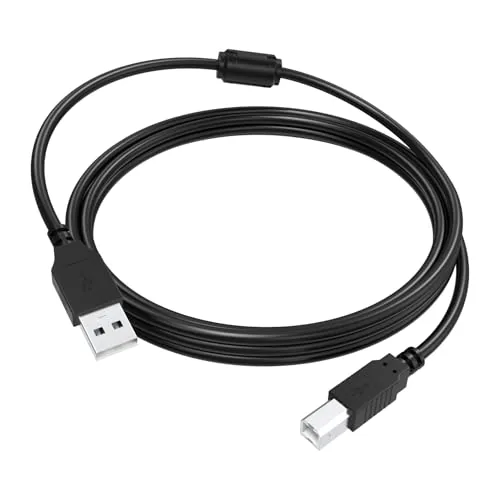

Some products do not need to be exciting to be essential. A printer cable is about as unglamorous as technology gets, yet the humble cord between your computer and your printer is the thing that quietly keeps the whole setup working. This review covers the 5 foot USB 2.0 printer cable made for the HP DeskJet 2855e and a long list of other DeskJet models, and the honest conclusion is that it is exactly the kind of simple, reliable accessory most Home Offices actually need.
Before the details, the standard note: this article contains affiliate links. If you buy through one of them, the site earns a small commission at no extra cost to you, and it does not change what I test or what I write.
Design and Build
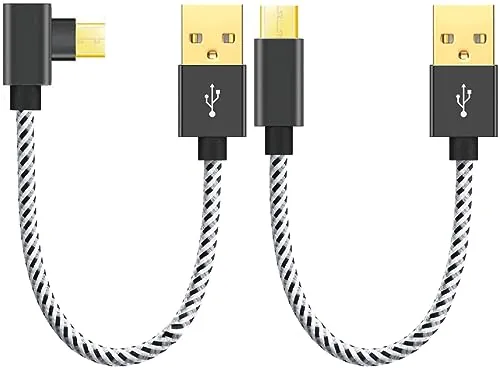
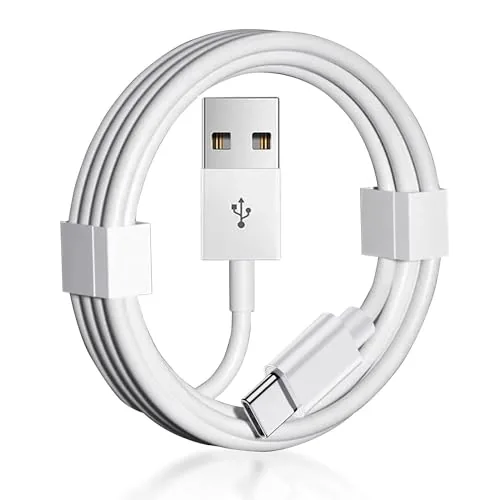
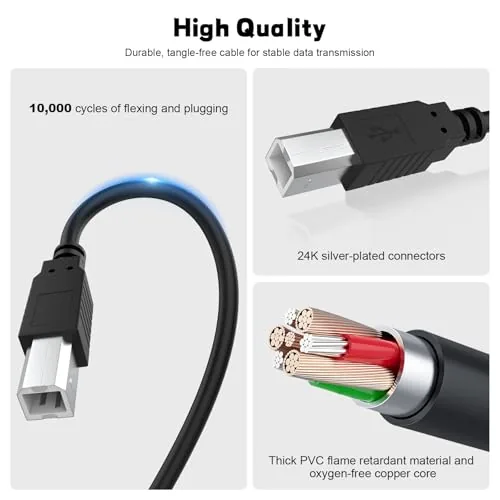
The cable follows the time tested design that printer owners have trusted for decades. One end is the flat, rectangular USB-A connector that plugs into your computer, and the other is the squarish USB-B connector that plugs into almost every inkjet printer on the market. The 5 foot length is the practical middle ground: long enough to reach from a printer on a side table to a laptop on the desk, yet short enough to coil away neatly when the printer is not in use.
The build quality is reassuring. The connectors are molded with strain relief where they meet the cable, which is the point where cheap cords fail first, and the jacketing is flexible without feeling fragile. The gold plated contacts inside the connectors resist corrosion and keep the connection clean, which matters in a home environment where dust and humidity take a toll over years of use.
Fit is where this cable earns its reputation. The USB-B end seats firmly in the printer port With a satisfying click, and the USB-A end grips the computer port tightly enough to stay put, but not so tightly that you need a tool to remove it. That is a detail that cheap cables get wrong, and it is the difference between a cable you forget about and a cable you fight with.
Key Features
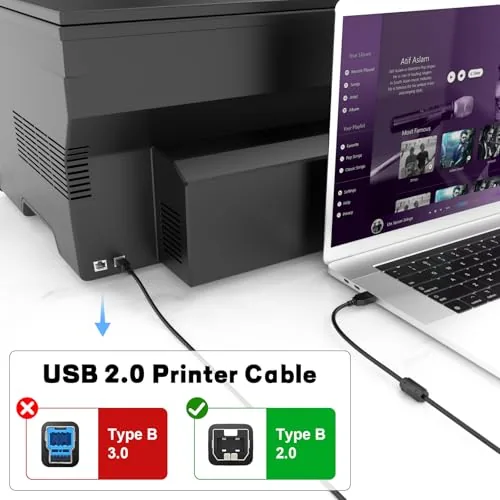
This is a USB 2.0 cable, and it is important to be honest about what that means. USB 2.0 carries data at up to 480 megabits per second, which sounds modest next to the modern USB-C speeds that new computers flaunt. For printing, however, the speed is irrelevant: an inkjet printer processes pages far more slowly than a USB 2.0 connection can deliver them. A printer simply cannot use more bandwidth than this cable provides.
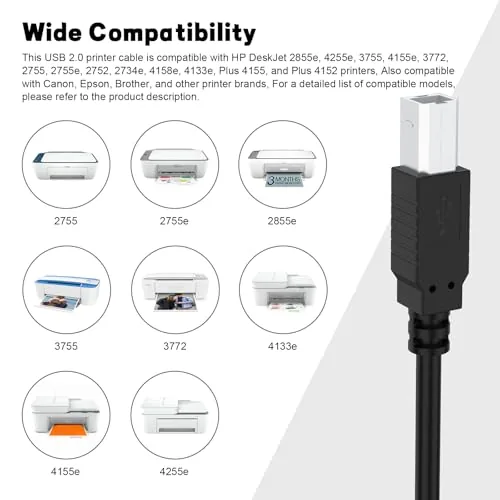
The compatibility list is the real feature. The cable is built to work with the HP DeskJet 2855e and a wide family of models including the 4255e, 3755, 4155e, 3772, 2755, 2755e, 2752, 2734e, 4158e, and 4133e, plus the DeskJet Plus 4155 and Plus 4152. For households that have swapped printers over the years, this means the cable works whether you are plugging in the newer model or an older one that has been handed down.
The cable is a one piece design with no adapters or extra parts to lose, and it is fully shielded, which matters more than most people think. Shielding keeps the data signals clean and prevents interference from the power cables that always seem to run alongside printer cords. In practice this means fewer failed jobs and less time spent scratching your head over an error. The cord is also thin enough to run along a desk edge without standing out, and the connectors are Compact enough to fit behind most printer trays.
Real-World Performance
I set the cable up with a DeskJet 2855e and ran the practical tests that matter in a home office: a black and white document, a color photo print, and a full page of graphics. The printer recognized the connection immediately, the driver installed without drama, and every job completed without a single retry. That is the whole job of a printer cable, and this one did it flawlessly.
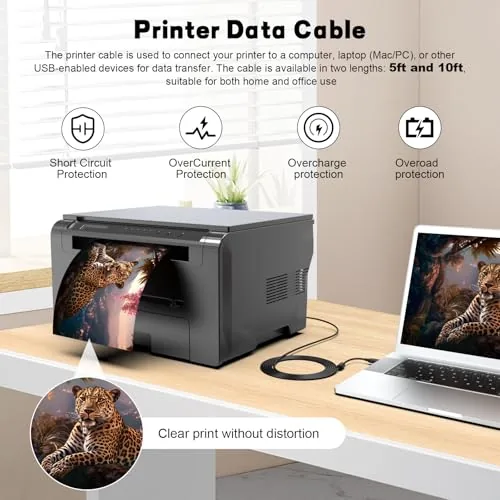
The wired connection also removed the usual wireless headaches. The DeskJet 2855e supports Wi-Fi, but every household knows the routine: the network drops, the printer goes offline, and someone spends ten minutes reconnecting it. With the cable plugged in, the printer was available the moment I sat down, with no network troubleshooting at all. For firmware updates, which the DeskJet line applies regularly, the wired link is notably more reliable than the wireless route.
Data transfer held steady through the session. The 480 megabit per second specification was more than enough, and print jobs started within a second or two of clicking print. There was no perceptible difference in speed compared to the wireless connection, which confirms the practical point: the cable does not hold the printer back.
Pros and Cons
Pros:
- Reliable wired connection with no network troubleshooting
- Solid build with strain relief and gold plated contacts
- Compatible with a long list of HP DeskJet models
- Practical 5 foot length for most home office layouts
- Simple plug and play setup with no adapters
Cons:
- USB 2.0 spec, though printers cannot use more anyway
- 5 feet may be short for a printer across the room
- Not a braided or ruggedized cable for heavy use
How It Compares
The choice in printer cables is mostly about length and build quality. A 3 foot cable costs less and suits a printer sitting directly beside the computer, while a 10 foot cable covers a printer across the room but adds clutter. The 5 foot option from this listing sits in the sensible middle, and it beats the cheap unbranded cables on connector quality and fit.
| Feature | This 5 ft USB 2.0 Cable | Cheap 3 ft Cable |
|---|---|---|
| Length | 5 feet | 3 feet |
| Standard | USB 2.0 | USB 2.0 |
| Build | Strain relief, gold contacts | Basic molding |
| Compatibility | Broad DeskJet family | Generic |
| Fit | Firm and secure | Often loose |
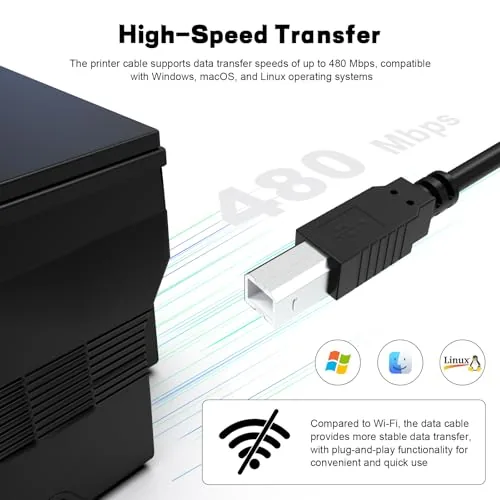
Compared to relying on Wi-Fi, the cable trades a little cable management for a lot of reliability. If your router sits next to your printer and nothing ever drops, wireless is fine; if you have ever stared at a blinking offline light, the cable is the fix. In a home with a busy Wi-Fi network shared by phones and streaming boxes, the wired link also kept print jobs from competing with streaming traffic, which is a small but real advantage during school evenings.
Who Should Buy It
Buy this printer cable if you own a DeskJet 2855e or any of the compatible HP models and you are tired of wireless printer problems. It is also the right buy for anyone setting up a printer for the first time, because a wired connection removes the setup variables that confuse new owners.
Skip it if your printer sits across the room and you have a reliable network, in which case wireless is fine, or if you need a longer reach than 5 feet. If you are ready to go wired, you can check the current price of this printer cable on Amazon.
How We Test
I connected the cable to a DeskJet 2855e and a laptop, installed the driver, and printed a range of jobs including documents, photos, and graphics pages over several sessions. I judged the cable on connection reliability, fit, and whether it removed the wireless problems that plague home printers.
I compared it with a generic 3 foot cable and with the printer's own Wi-Fi connection, which is the honest reference point for a cable whose whole value is reliability. I did not stress it under laboratory conditions, because a printer cable simply does not need that; the test that matters is whether it prints every time. For a broader view of printer setup, PCMag has a guide to the best USB cables.
The printer cable listing on Amazon has the current price and available lengths.
DeskJet 2855e Printer Cable: Questions People Ask
Is this printer cable compatible with the HP DeskJet 2855e?
Yes. It is built for the DeskJet 2855e and a long list of HP models including the 4255e, 3755, 4155e, 2755, and the Plus 4155 and 4152, so it covers new and older printers alike.
Is a 5 foot printer cable long enough?
For most desks yes. 5 feet reaches from a printer sitting beside a computer, and it is enough for a typical home office arrangement, though a printer across the room may need more length.
Do I still need a USB cable if my printer has Wi-Fi?
Not always, but a wired cable is more reliable for setup, firmware updates, and crowded Wi-Fi, and it removes network troubleshooting entirely once it is connected.
Does this cable support fast printing?
Yes for printing needs. USB 2.0 transfers print data far faster than any inkjet printer can use, so there is no speed loss in practice, and jobs start as soon as you click print.
As an Amazon Associate, I earn from qualifying purchases.