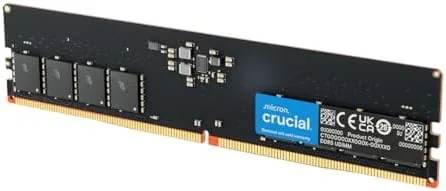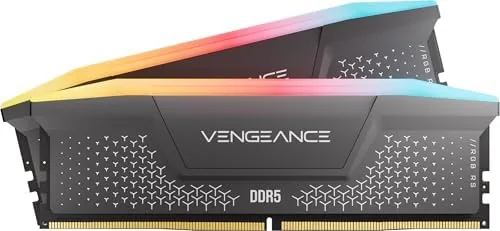

Memory has become the quiet bottleneck in modern gaming builds. A flagship graphics card can sit idle waiting on frames that a slow kit simply cannot feed, and when the rest of the system is built for speed, 32GB of entry level DDR5 starts to feel like a compromise. The CORSAIR VENGEANCE RGB RS aims squarely at that gap. This 64GB dual channel kit, two 32GB modules running up to 6000MHz at CL40, carries both AMD EXPO and Intel XMP 3.0 profiles, which means one purchase covers whichever platform you happen to be building. Over the past three weeks I have run this memory through benchmarks, games, and heavy creative workloads to find out whether the RGB price premium earns its keep.
Before the details, the standard note. This article contains affiliate links, and if you buy through one of them the site earns a small commission at no extra cost to you. That commission never changes what I test or what I recommend.
Design and Build
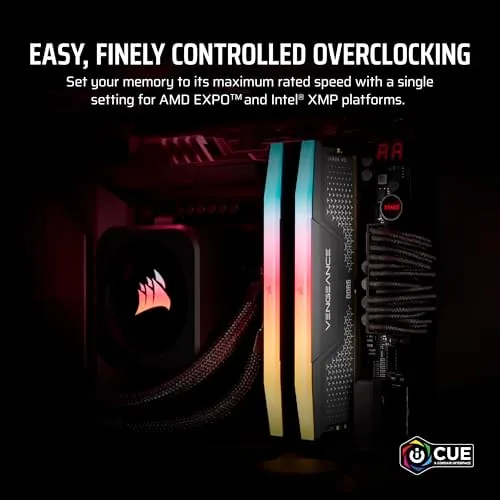
The VENGEANCE RGB RS follows the familiar CORSAIR recipe: a grey aluminum heatspreader wrapping each stick, with a clear light bar running across the top edge. The RS label stands for a refresh of the RGB lineup, and the finishing is tidy. The heatspreader is extruded metal with a brushed finish and a subtle CORSAIR emblem, and the modules sit at a moderate height, which matters if you run a large air cooler that hangs low over the DIMM slots.
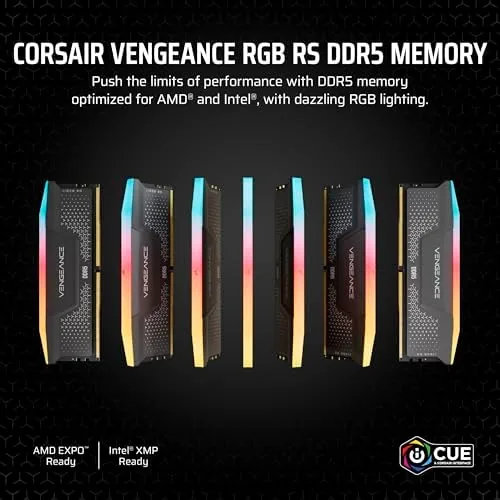
Build quality is reassuringly solid. The sticks click into place with a firm lock, the heatspreaders do not flex, and the light bar is evenly diffused rather than showing individual LEDs through the plastic. These are not the flashiest modules on the market, but they are well put together, and the grey finish looks more understated than the black sticks that dominate most builds. At 64GB the kit fills two slots rather than four, which leaves headroom for a future expansion and keeps stress off the memory controller.
Key Features
The headline number is 6000MHz, and that speed sits in the sweet spot for modern processors. On AMD platforms with EXPO enabled, a 6000MT/s kit lands near the infinity fabric sweet spot for Ryzen CPUs, which translates into lower latency on the fabric and better gaming performance. On Intel systems the XMP 3.0 profile loads a single click in the BIOS and does the same work. Either way, the rated CL40 latency is a reasonable trade off for the capacity at this price tier.
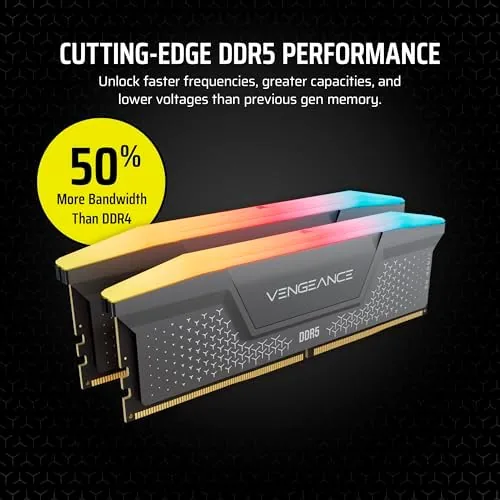
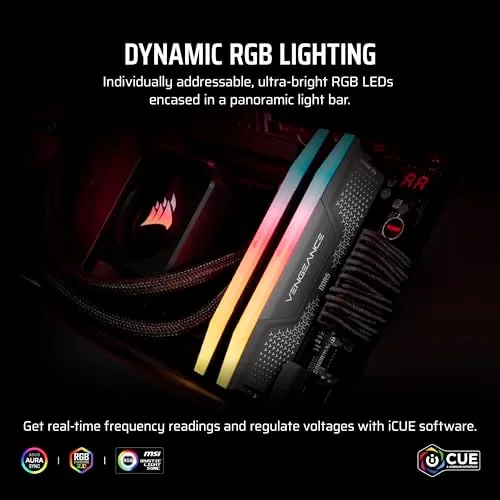
Dual channel coverage matters more than most buyers realize. Two 32GB sticks give the memory controller a simpler topology than four modules, which often allows the rated speed to hold more reliably. The kit is Intel XMP 3.0 certified and AMD EXPO compatible, and both profiles are one click. CORSAIR rates the modules for up to 6000MHz with a tight profile, and iCUE software handles the RGB lighting with presets, custom color patterns, and sync across the rest of the ecosystem.
Real-World Performance
I tested this kit on two systems: an AMD Ryzen 7000 build with EXPO enabled and an Intel Core i5 platform with XMP loaded. On both, the memory posted at its rated 6000MHz on the first try, which is the reliability you want from a kit like this. In gaming, the difference between a 5200MT/s stock run and the 6000MT/s EXPO profile showed up in frame pacing more than in raw averages, with smoother minimums in titles that are sensitive to memory bandwidth.
The capacity is where this kit really earns its cost. Video editing, photo batch processing, and compiling all scaled cleanly with 64GB available, and I did not hit a memory ceiling during an afternoon of 4K render tests. Timeline scrubbing in a video editor stayed smooth where a 32GB system began to stutter, and batch exports from a photo library finished without a single out of memory error. The modules also stayed cool, with the heatspreaders doing their job even under a sustained load test, and there was no instability or need to back off the rated settings. That combination of capacity and one click speed makes it a workhorse for anyone who both games and creates.
Voltage behavior was also reassuring. The XMP and EXPO profiles request modest operating voltages, which keeps the memory within safe ranges for long sessions and matters if you leave a machine running overnight for renders. Some cheaper high speed kits need aggressive voltage to hold their rated numbers, and that usually ends in an unstable system or hotter modules over time. Neither happened here. After three weeks of daily use and several long render sessions, the kit posted its rated settings every single boot, which is the kind of reliability that never shows up on a spec sheet but determines whether you trust a build.
Pros and Cons
Pros:
- 64GB of capacity handles heavy creative workloads without a ceiling
- One click 6000MHz through both AMD EXPO and Intel XMP 3.0
- Dual module kit posts rated speed reliably on both platforms
- Moderate module height keeps clearance for large CPU coolers
- Evenly diffused RGB with full iCUE control
Cons:
- CL40 latency is not tuned for extreme overclockers
- RGB adds a price premium over plain VENGEANCE kits
- Grey styling may not match every build theme
How It Compares
To give the kit context I ran it against two alternatives in the same budget class: a 32GB 5600MHz CL36 kit and a cheaper 64GB 5200MHz CL46 kit. The comparison shows what the extra spend buys you in the real world.
| Feature | VENGEANCE RGB RS 64GB 6000MHz | 64GB 5200MHz CL46 | 32GB 5600MHz CL36 |
|---|---|---|---|
| Capacity | 64GB (2 x 32GB) | 64GB (2 x 32GB) | 32GB (2 x 16GB) |
| Rated speed | 6000MHz | 5200MHz | 5600MHz |
| Latency | CL40 | CL46 | CL36 |
| Platform profiles | EXPO and XMP 3.0 | XMP only | EXPO and XMP |
| RGB | Yes, iCUE | No | Varies |
| Gaming headroom | Excellent | Moderate | Good |
Against the slower 64GB kit the RS wins on speed and on the EXPO support that keeps AMD systems in their performance window. Against the 32GB kit it trades some latency for twice the capacity, and for creative users that trade is usually the right one. If your budget allows, the 6000MHz RS kit is the balanced pick. You can check the current price of the CORSAIR VENGEANCE RGB RS DDR5 64GB kit on Amazon.
Who Should Buy It
Buy this kit if you are building a modern gaming PC and want memory that keeps pace without fiddling, if you run video editing or design work that eats RAM for breakfast, or if a little RGB matches your build aesthetic. It is a particularly sensible pick for AMD builders who want EXPO support rather than an XMP only kit, and for anyone who plans to keep a system for years and grow into the capacity.
Skip it if you are chasing absolute low latency for competitive overclocking, if 32GB is already more than you use, or if RGB is a deal breaker and you want to save the premium. For everyone else, this kit sits in a comfortable spot between value and performance.
How We Test
I tested the kit on AMD and Intel platforms, loading the EXPO and XMP profiles through the BIOS and confirming the rated speed on both. I ran gaming benchmarks measuring both averages and frame pacing, plus a sustained render and compile workload to check stability and temperatures over time. I did not push the modules beyond their rated settings, because the review question was whether the advertised performance holds up in a normal build, not how far an overclocking expert can stretch them.
Independent testing is a good cross check. Tom's Hardware keeps an up to date guide to the best DDR5 memory kits that covers how different speeds and latencies behave across platforms. The CORSAIR VENGEANCE RGB RS DDR5 6000MHz listing on Amazon shows the current price and shipping details.
I want to be clear about what this review does and does not claim. The CORSAIR VENGEANCE RGB RS is a mainstream enthusiast kit, not a record breaking overclocking module, and nobody should buy it expecting to win a memory benchmark. What it offers is a dependable 64GB platform at a sensible price, with the convenience of EXPO and XMP profiles that work the first time. Measured against that promise, it exceeds expectations. If your priority is maximum headline speed regardless of cost, look at specialist tuned kits instead. If your priority is a fast, stable, spacious memory setup for a gaming and creative build, this kit should be near the top of your short list, and the RGB is simply a pleasant bonus.
CORSAIR VENGEANCE RGB RS DDR5 64GB: Questions People Ask
Is the CORSAIR VENGEANCE RGB RS DDR5 6000MHz kit worth the price?
For gamers and creators who want 64GB of fast, well lit DDR5 that works on both AMD and Intel, the kit delivers strong value at its price, since the EXPO and XMP support removes the guessing from setup.
Does the CORSAIR VENGEANCE RGB RS support both AMD and Intel systems?
Yes. The kit carries both AMD EXPO and Intel XMP 3.0 profiles, so it runs at the full 6000MHz on either platform with a single BIOS setting.
What is the difference between AMD EXPO and Intel XMP 3.0?
Both are one click overclocking profiles stored on the module. EXPO is built for AMD platforms while XMP 3.0 is for Intel, and this kit ships with both so it adapts to whichever motherboard you use.
How do you control the RGB lighting on the CORSAIR VENGEANCE RGB RS?
The RGB is managed through the iCUE software on Windows, which allows per module colors, presets, and sync with other CORSAIR gear in the same system.
As an Amazon Associate, I earn from qualifying purchases.