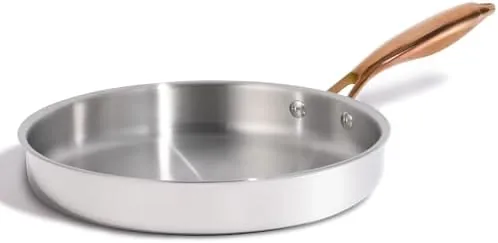

The frying pan is the workhorse of almost every kitchen, and choosing the right one often comes down to a trade off between non stick convenience and the lasting durability of stainless steel. The CAROTE 10 inch tri-ply stainless steel frying pan sits firmly in the second camp, promising a coated, non-toxic cooking surface that works on induction, ceramic, and gas cooktops and survives oven heat without complaint. I spent three weeks cooking with this pan as my default skillet, running it through eggs, omelets, searing, and pan sauces. This is the honest record of how it performed.
Before the details, the standard note. This article contains affiliate links, and if you buy through one of them the site earns a small commission at no extra cost to you. That commission never changes what I test or what I recommend.
Design and Build
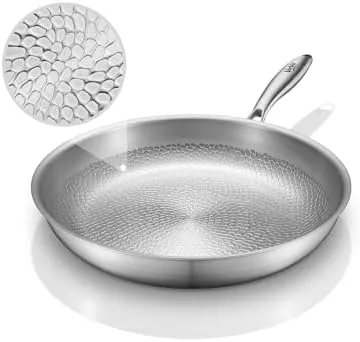
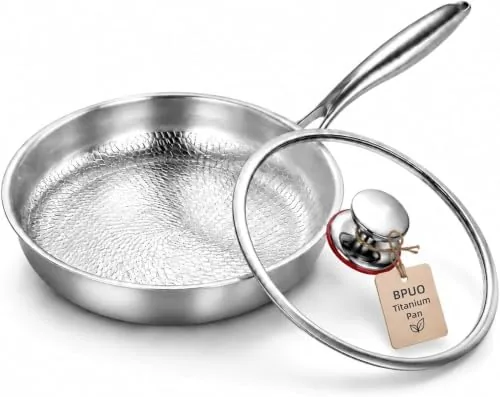
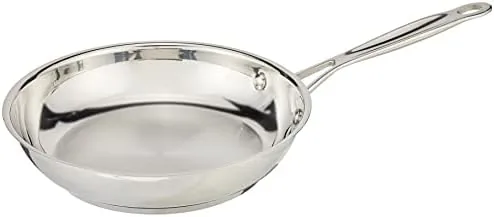
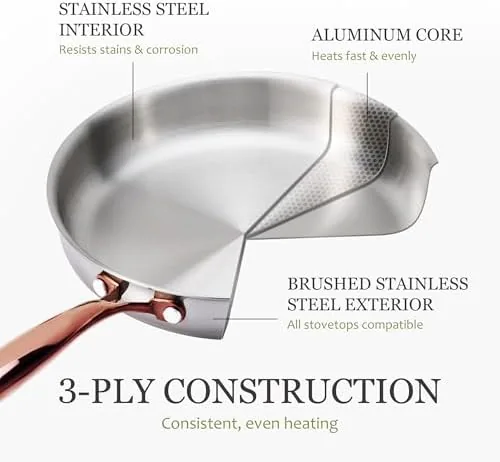
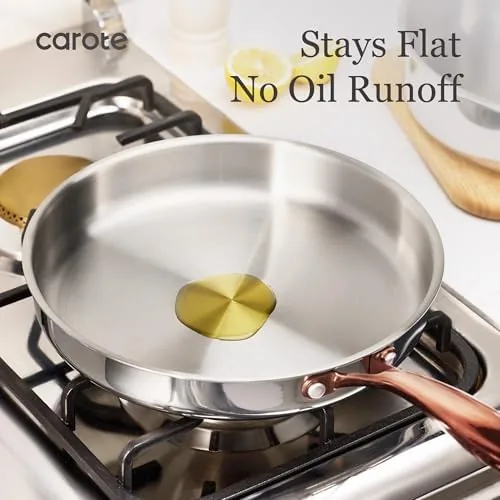
The pan opens with a polished silver exterior that catches the light and looks more expensive than its price suggests. The construction is tri-ply, which means a heat-spreading aluminum core is sandwiched between two layers of stainless steel. That layering is the entire point of the design: it combines the quick, even heating of aluminum with the durability and clean look of stainless steel on the outside.
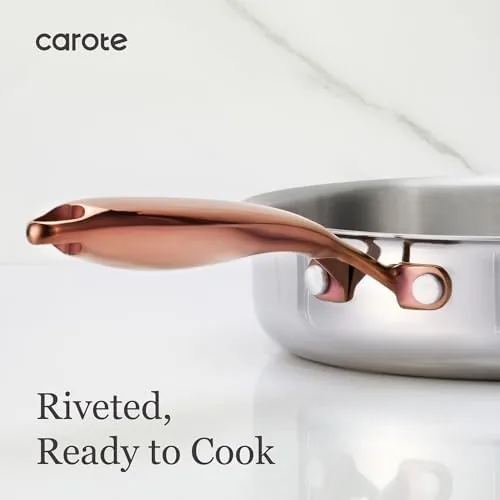
The handle deserves attention. It is a single piece of stainless steel, riveted to the pan, with a rounded profile that sits comfortably in the hand. Because it is hollow and not coated, it stays cooler than you might expect during stovetop cooking, though I still reached for a mitt for longer sessions. The rim is slightly flared, which makes pouring and flipping more natural and gives the pan a clean, professional silhouette.
At 10 inches, the pan is a genuine everyday size. It fits a two or three egg omelet with room to fold, takes a full batch of crepes, and holds a standard chicken breast without crowding. The base is flat enough for induction use, which is important because many budget pans skip the magnetic base entirely. I tested this on a glass-top induction unit and the pan locked on firmly with no sliding.
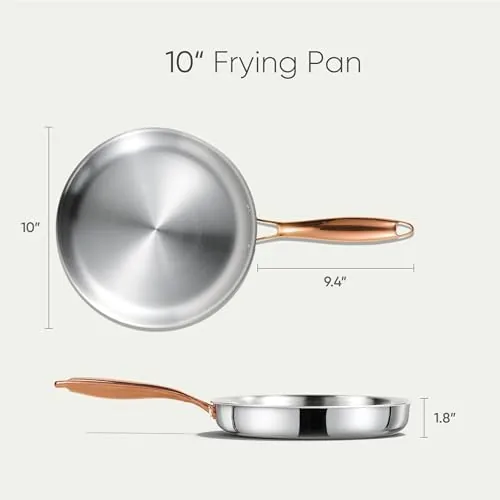
Key Features
The headline feature is the tri-ply construction. Heat from the burner travels through the base and the aluminum core spreads it across the full diameter, so the pan does not develop a hot spot in the center. I saw the benefit most clearly when searing: the entire surface browned evenly rather than scorching a small circle in the middle while the edges lagged behind.
The cooking surface is bare stainless steel, which means there is no non stick coating to scratch or wear away. That makes it non-toxic by design, free of the PTFE and PFOA families that some cooks want to avoid. The trade off is that you manage heat and fat yourself, but once the technique clicks, the release is excellent. For a full rundown of the pan specifications and the current price, the CAROTE frying pan listing on Amazon is a useful reference.
Versatility rounds out the feature list. The pan is oven safe, so you can sear on the stove and finish in a hot oven without swapping pans. It is compatible with induction, ceramic, gas, and electric cooktops, and the manufacturer also lists it as dishwasher safe, though I hand washed it to protect the polished finish. The magnetic base and the flat bottom together make it one of the more flexible pans in its price range.
Real-World Performance
My testing began where stainless steel pans usually scare people off: fried eggs. I preheated the pan on medium until a drop of water skittered across the surface, added a thin layer of butter, and dropped in an egg. It slid cleanly, the white cooked evenly with no sticking, and the yolk stayed centered. The lesson is simple but firm: stainless steel rewards a properly heated pan and a little patience.
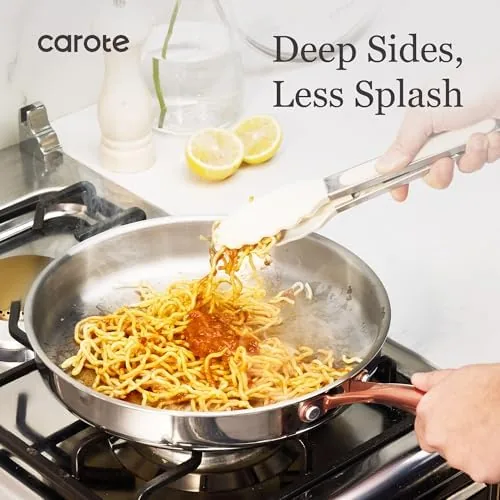
Omelets followed, and this is where the pan truly shines. The flared rim and the even base made rolling a three egg omelet feel natural, and the rounded profile released the finished fold without tearing. Crepes were equally forgiving, coming off the surface with a satisfying release once the pan was up to temperature. For someone who cooks breakfast daily, this is a genuinely pleasant pan to reach for.
Searing was the strongest test. A thick ribeye went into a hot pan and developed a deep, even crust with no cold patches. I deglazed with stock after the steak rested, and the browned bits released instantly, turning into a quick pan sauce that needed only a pat of butter. The pan's ability to go from stovetop sear to the oven for a butter basting finish proved genuinely useful.
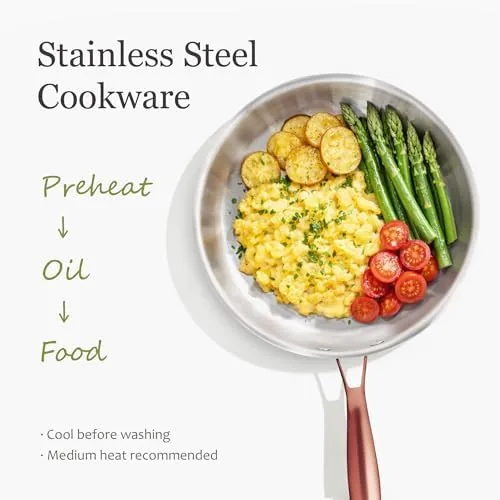
The one friction point is expectations. If you are coming from a non stick pan, the first week will involve a learning curve, because stainless steel sticks when the pan is not hot enough or when there is too little fat. Sticky starches like potatoes and delicate fish need care. That is not a flaw in the pan itself; it is the nature of uncoated steel, and it is the price you pay for a surface that will not peel or degrade over the years.
Cleanup proved straightforward. Most meals needed only warm soapy water and a soft sponge. After searing, I simmered water in the pan for a minute, scraped with a wooden spoon, and the surface came back to polished. The handle also stood up to the oven test without loosening, and the pan remained flat and stable across every cooktop I tried.
Pros and Cons
Pros:
- Tri-ply construction spreads heat evenly across the base
- No non stick coating, so there is nothing to scratch or peel
- Oven safe for sear and finish cooking
- Works on induction, gas, ceramic, and electric cooktops
- Polished stainless steel cleans up with minimal effort
- Comfortable riveted handle that stays reasonably cool
Cons:
- Eggs stick unless the pan is preheated with enough fat
- Not suitable for cooks who want non stick convenience
- Stainless steel requires a short learning curve
- Delicate items like fish need extra care
How It Compares
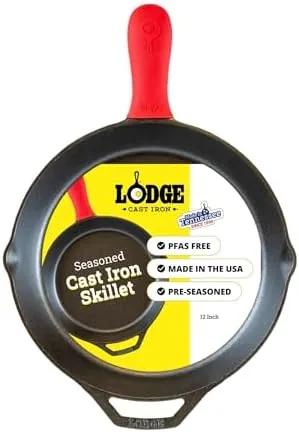
Stainless steel is not the only option at this size, so I compared the CAROTE pan against a typical non stick frying pan and a seasoned cast iron skillet to see which one earns the daily slot.
| Feature | Tri-Ply Stainless | Non Stick Pan | Cast Iron Skillet |
|---|---|---|---|
| Ease of eggs | Good with heat control | Excellent, minimal effort | Good after seasoning |
| Durability | Very durable | Coating wears over time | Essentially permanent |
| Oven use | Yes | Often limited | Yes |
| Induction ready | Yes | Depends on the pan | Usually yes |
| Weight | Moderate | Light | Heavy |
| Maintenance | Simple washing | Hand wash recommended | Seasoning required |
Against a non stick pan, the CAROTE gives up instant egg release but wins on longevity and heat handling. Non stick coatings fade, scratch, and eventually need replacement, while a stainless pan can last decades. Against cast iron, stainless steel wins on convenience: no seasoning, no weight, no rust worries, and it is ready for acidic sauces that can strip a cast iron finish. Cast iron wins on raw heat retention and searing power. For a single daily skillet, the tri-ply stainless steel is the most balanced choice of the three.
Who Should Buy It
Buy this CAROTE pan if you want one serious skillet that does almost everything: breakfast eggs, weekday dinners, searing, and oven finishes. It is a strong pick for cooks who are tired of replacing scratched non stick pans and for anyone moving to induction who needs a pan with a magnetic base. It also suits home cooks who want to avoid non stick coatings altogether.
Skip it if you want the absolute easiest egg flip with zero technique, if you only ever cook with non stick pans, or if you need a lighter pan for quick tossing. For everyone else, this is an affordable way to own a proper tri-ply skillet. You can check the current price of the CAROTE frying pan on Amazon when you are ready to buy.
How We Test
I tested the CAROTE pan over three weeks as my primary 10 inch skillet. I cooked fried eggs, folded omelets, crepes, seared steaks, browned chicken, and built quick pan sauces through deglazing. I checked the pan for hot spots using wide pancake batters and verified the flat base on a glass-top induction unit. I ran the pan through the oven for a butter basting finish and confirmed the handle stayed secure.
I did not use metal utensils to preserve the polished surface, and I washed the pan by hand rather than relying on the dishwasher cycle. For broader guidance on choosing stainless steel cookware, independent guides such as Serious Eats on stainless steel cookware explain the trade offs between coated and uncoated surfaces. The CAROTE tri-ply frying pan listing on Amazon shows the current price and available sizes.
CAROTE 10 Inch Tri-Ply Frying Pan: Questions People Ask
Is the CAROTE tri-ply frying pan oven safe?
Yes. The pan is oven safe, so you can start a sear on the stove and finish a dish in the oven without transferring it to another pan.
Does this pan work on an induction cooktop?
Yes. The stainless steel base is magnetic, which means it couples reliably with induction cooktops as well as gas, ceramic, and electric ranges.
Can you cook eggs without the food sticking?
Yes, if you heat the pan properly and use a little fat. Stainless steel has no coating, so preheating and a pat of butter or oil keep eggs and omelets sliding.
How do you clean a tri-ply stainless steel pan?
Cool the pan and wash it with warm soapy water. For browned residue, simmer a little water in the pan and scrape with a wooden or silicone tool before washing.
As an Amazon Associate, I earn from qualifying purchases.