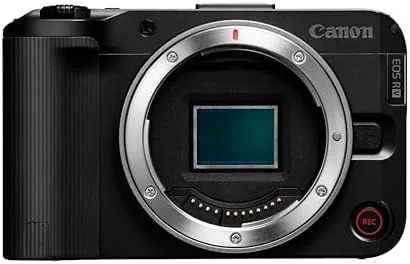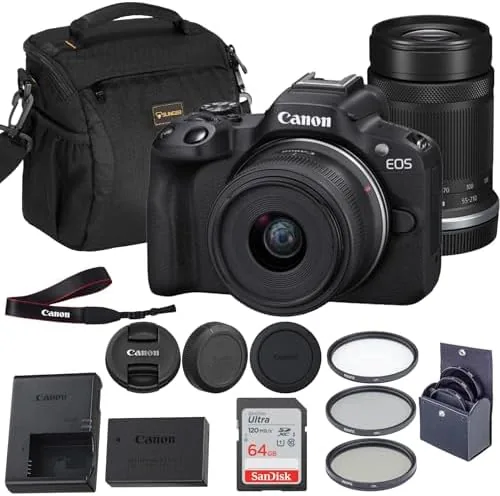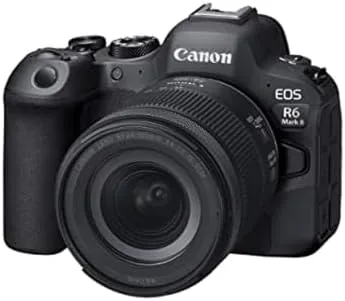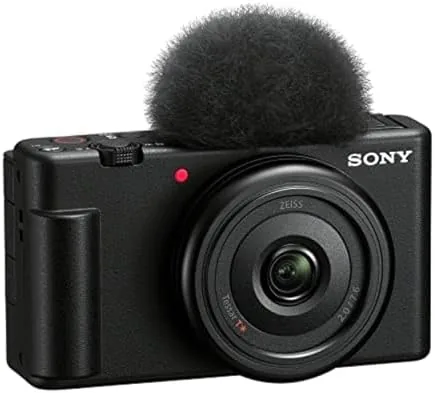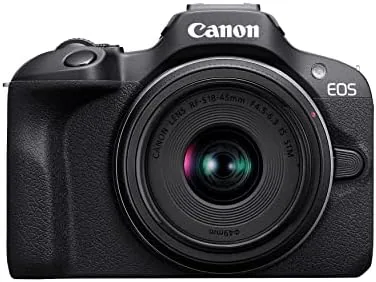

Every photographer remembers the moment a phone stopped being enough. The shots start to blur at the edges of what a tiny sensor can do, and the next step is a real camera, which brings a wall of dials, menus, and jargon that can feel like a second job. The Canon EOS R100 is Canon's answer to that moment. It is a compact APS-C mirrorless body with a 24.1 megapixel CMOS sensor, 4K video, and wireless transfer, and it is built from the ground up for someone buying their first interchangeable lens camera. I carried this camera and the RF-S18-45mm kit lens for three weeks, shooting everything from street scenes to family dinners, and here is the honest record of how it meets the beginner promise.
One note before the details. This article contains affiliate links, and if you make a purchase through one of them the site earns a small commission at no extra cost to you. That commission never changes what I test or what I recommend.
Design and Build
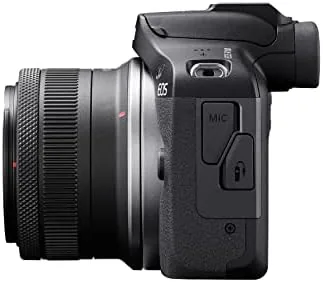
The R100 is small in the way that makes you want to take it places. It weighs in at under a pound with the battery and card installed, and it is the kind of body that slips into a jacket pocket lens down or hangs from a strap without pulling at your neck. The hand grip is modest but functional, and the camera body feels solid without the blocky heft of a full frame body that would overwhelm a first time owner.
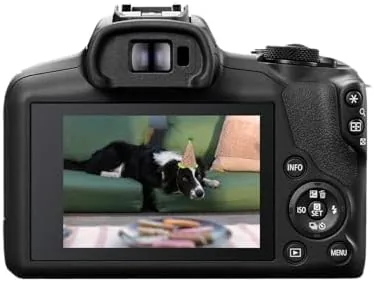
Canon keeps the control layout deliberately simple for this tier. There is a mode dial on top, a record button, and a small but responsive set of controls, with most of the heavy lifting handled by the guided touchscreen interface rather than a bank of buttons. The fixed screen is not articulated, which is the clearest cost cut in the design, but it is sharp, bright, and responsive to touch, which matters more for a beginner than a hinge.
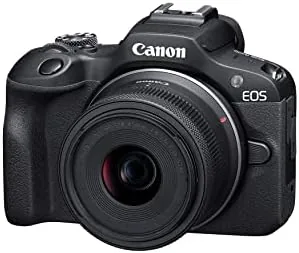
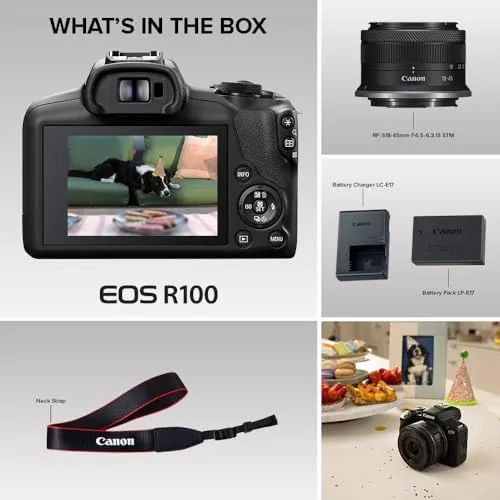
The kit lens, the RF-S18-45mm F4.5-6.3 IS STM, is a small retractable standard zoom with built in stabilization. It collapses down for storage, extends with a twist for shooting, and covers a range that handles the majority of everyday subjects, from wide family shots to a bit of telephoto reach. The lens pairs naturally with the small body, and together they make a package that fits a small day bag without protest.
Key Features
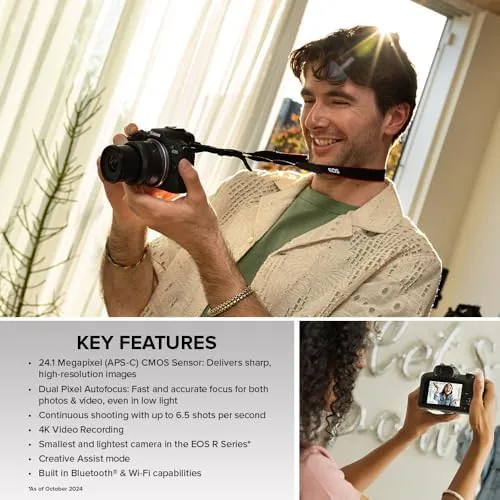
The 24.1 megapixel APS-C CMOS sensor is the engine of the camera. APS-C gives you a genuine depth of field advantage over a phone, letting backgrounds fall away softly behind a portrait, and 24 megapixels leaves plenty of room to crop into a shot and still print large. The sensor, paired with the DIGIC processing in the body, produces clean, natural color straight out of the camera, which is exactly what a beginner wants before they learn raw editing.
Autofocus is the feature that quietly separates a good beginner camera from a frustrating one. The R100 uses Canon's Dual Pixel autofocus, which covers the frame with phase detection points, and it locks onto faces and moving subjects with an ease that removes most of the pain from early photography. Eye detection keeps a subject in focus even as they turn and move, and the whole system runs without any special setup.
4K video recording covers the creator side of the audience, with clean footage that benefits from the same sensor and autofocus as stills. Wi-Fi and Bluetooth complete the picture, letting you pull images to a phone through the Canon Camera Connect app and even control the camera remotely. For a look at the current price and the exact kit contents, the Amazon listing for the Canon EOS R100 with the RF-S18-45mm lens has the details.
Real-World Performance
My first day with the R100 was deliberately casual, the way a new owner would use it. I left it in auto and shot a walk through the city, and the camera chose sensible settings every time. The files came back sharp and colorful, and the soft backgrounds from the APS-C sensor were a visible step up from anything a phone had given me. The joy of that first week was how little I had to think about the camera itself.
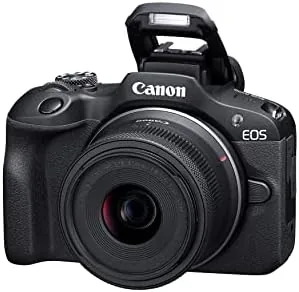
The autofocus carried the harder shots. I pointed the camera at my nephew tearing around the garden, and the eye detection stuck to him through jumps and turns in a way that would have been a battle with a cheaper body. The kit lens stabilized my handheld video, and the 4K clips were smooth enough that I did not reach for a tripod for casual footage.
Low light is where the R100 shows its tier honestly. Indoors under warm lamps, the image quality stays usable, but the kit lens is not fast, so you will raise the ISO and accept a little noise rather than freeze motion cleanly. It is a fair trade at the price, and the fix is either a prime lens later or simply better light, which is a lesson every beginner learns anyway.
Battery life held up for a full day of casual shooting on a single charge, and the wireless transfer moved a photo to my phone in seconds. The one lingering frustration is the fixed screen, which makes selfie angles and low angle shots clumsier than they would be with a flip screen, and there is no touch shutter release, so framing a selfie requires a bit of contortion.
Pros and Cons
Pros:
- 24.1 megapixel APS-C sensor produces sharp, clean stills
- Dual Pixel autofocus with reliable face and eye detection
- Compact and light enough for a pocket or small bag
- 4K video with effective lens stabilization
- Wi-Fi and Bluetooth make phone transfer simple
- Guided menu system is genuinely beginner friendly
Cons:
- Screen is fixed and does not flip for selfies
- Kit lens is not fast in low light
- No touch shutter release for remote framing
- Single card slot and simple controls limit advanced use
How It Compares
The beginner mirrorless market splits into the Canon R50, the R100, and phone cameras, and each answers a different question. I compared the R100 against the R50 and a flagship phone to see where it earns its place.
| Feature | Canon EOS R100 | Canon EOS R50 | Flagship Phone |
|---|---|---|---|
| Sensor | 24.1MP APS-C | 24.2MP APS-C | Small sensor |
| Video | 4K | 4K | 4K plus |
| Screen | Fixed touch | Fully articulating | Touch |
| Lens change | Yes | Yes | No |
| Weight | About 356g | About 375g | About 200g |
| Price | Low | Mid | High |
Against the R50, the R100 gives up the fully articulating screen and a few of the R50's more advanced modes, but it keeps the same sensor class and autofocus technology at a lower price, which makes it the smarter pick for a pure beginner. Against a flagship phone, the R100 wins on sensor size and lens flexibility, because an APS-C body with interchangeable lenses opens creative doors a phone camera cannot reach, though the phone stays ahead on convenience and always being in your pocket. The R50 is the upgrade path if you need the flip screen. For a first mirrorless camera on a budget, the R100 is the more sensible starting point.
Who Should Buy It
Buy the R100 if you are stepping up from a phone and want your first interchangeable lens camera, if you want to learn on a guided interface instead of a wall of menus, and if you want 4K video and wireless transfer in a light, affordable body. It is also a sensible travel camera for anyone who wants DSLR quality without the bulk.
Skip it if you need a flip screen for vlogging or selfies, if you want weather sealed pro features, or if you plan to shoot a lot of fast action and low light sports. For everyone else, this is the most approachable door into the Canon RF system. You can check the current price for the Canon EOS R100 on Amazon when you are ready to make the leap.
How We Test
I carried the R100 for three weeks as my primary camera, shooting street scenes, family gatherings, a garden full of moving children, and evening indoor shots. I tested the autofocus against moving subjects, pushed the kit lens into low light, and transferred dozens of images to a phone over Wi-Fi to confirm the wireless workflow.
I recorded 4K and Full HD clips to check stabilization and file handling, and I ran a full day on one battery to measure real world endurance. I did not test the R100 against a professional full frame body, since the two serve different buyers entirely. For broader perspective on how this camera fits the entry mirrorless market, independent coverage such as DPReview's full review of the Canon EOS R100 digs deeper into the sensor and autofocus performance. The Canon EOS R100 kit listing on Amazon shows the current price and available bundles.
Canon EOS R100: Questions People Ask
Is the Canon EOS R100 good for beginners?
Yes. The guided menu system, light body, and reliable auto modes are built around someone stepping up from a phone to a first interchangeable lens camera, and the results reward the effort quickly.
Does the R100 shoot 4K video?
Yes. The camera records 4K video with the APS-C sensor, and it also offers Full HD recording for longer takes or smaller files, both with the same Dual Pixel autofocus as stills.
Can I transfer photos to my phone with the R100?
Yes. Built in Wi-Fi and Bluetooth connect the camera to the Canon Camera Connect app for quick image transfer and remote control, so sharing a shot takes only seconds.
What lens is included in this kit?
The kit includes the RF-S18-45mm F4.5-6.3 IS STM lens, a compact standard zoom with image stabilization that covers everyday shooting, from wide group shots to a bit of reach.
As an Amazon Associate, I earn from qualifying purchases.