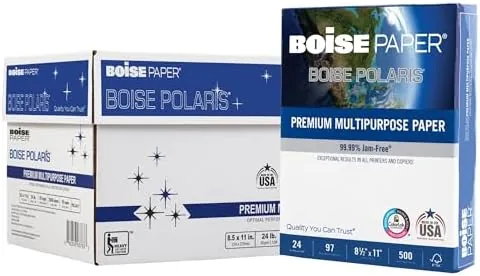

Most people never think about the paper in their printer until it curls, jams, or shows the ghost of the page printed on the other side. Budget 20 pound stock is the usual culprit. It is thin enough to show bleed through, soft enough to pick up moisture and warp, and cheap enough that nobody asks why. The Boise Premium Multipurpose Copy Paper takes a different route. It comes in at 24 pounds, which makes it heavier than standard office paper, and it carries a 97 brightness rating that pushes it toward the premium end of everyday stock. I worked through an entire carton across laser and inkjet printers, copiers, and a fax line, and the honest result is that this paper behaves like a quiet upgrade you feel every single day.
Before the details, the standard note. This article contains affiliate links, and if you buy through one of them the site earns a small commission at no extra cost to you. That commission never changes what I test or what I recommend.
Design and Build
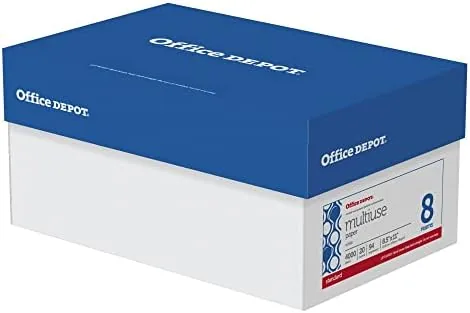
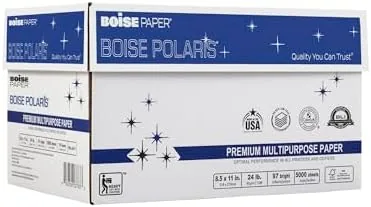
The carton holds ten reams of 500 sheets, which is 5,000 sheets total, and each ream comes wrapped in the usual moisture barrier paper with a flap that reseals well enough for a partial use. The paper itself is 8.5 by 11 inches letter size with a cut that is square and consistent. I measured sheets from four different reams in the same carton and found no length or width drift, which matters because mismatched sheets are a classic source of misfeeds in high volume trays.
The feel of the sheet is where the 24 pound weight announces itself. A 20 pound sheet flexes easily between two fingers and feels flimsy when held alone. This sheet has a firm, almost cardstock like stiffness that makes it noticeably harder to bend. The surface is smooth to the touch with a slight tooth, and the 97 brightness gives it a crisp, very slightly cool white that reads as clean under office lighting rather than the yellow tinge common on cheaper stock.
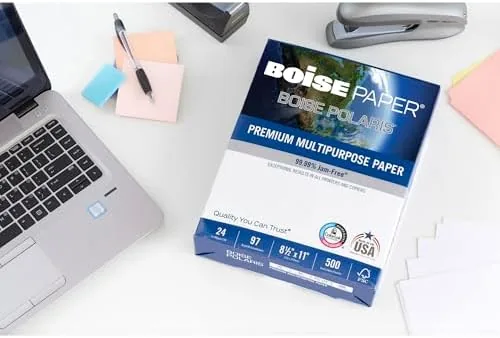
The packaging has a practical side as well. The carton is reinforced at the corners, which kept every ream flat during shipping, and the dimensions are sized so the box fits a standard shelf Without sticking out past the front edge. That sounds trivial until you store ten reams in a supply closet and realize how much depth the box saves.
Key Features
The headline feature is the 24 pound basis weight. Paper weight is measured by the weight of a 500 sheet ream in its base size, and the shift from 20 pounds to 24 pounds adds roughly a fifth more fiber to every sheet. The practical result is opacity. Ink and toner have a harder time passing through the heavier sheet, so double sided printing does not show a visible mirror of the reverse page, and heavy inkjet graphics do not shadow through.
The 97 brightness rating is the second defining number. Brightness measures how much light the paper reflects, and the jump from the low 90s to 97 makes text edges look cleaner and color prints look more vivid because the white behind them is simply brighter. The paper does not use optical brighteners to a degree that makes it look blue under direct sun, but under standard office lighting it presents a neutral bright white that flatters both toner and ink.
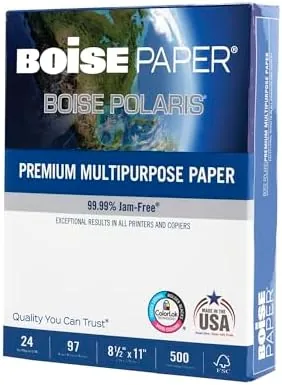
The sheet is engineered as true multipurpose stock. It is rated for laser, inkjet, copier, and fax, which means the coating and moisture content are tuned to take toner heat without curling and to absorb wet ink without spreading. The stiffness also makes it feed more reliably in deep paper trays, since a stiff sheet pushes through rollers without flexing and hanging up. For a current look at the price and carton options, the Amazon listing for the Boise Premium Multipurpose Copy Paper is a useful reference.
Real-World Performance
My first test was a 120 page double sided black and white document on a laser printer. I set the tray to its 24 pound paper setting, and the run was clean. No jams, no misfeeds, and the reverse side of every page stayed clear of ghosting even at the heaviest text coverage. On The Budget 20 pound paper I normally keep in the same machine, the same document shows faint shadow text on the back of every page. The difference was obvious on the first spread.
Next came the inkjet side. I printed a set of color brochures with full page photographs on a mid range inkjet, and the results were the most striking of the whole test. The heavy sheet took the wet ink without cockling, the colors sat on the surface with more punch than the same file printed on 20 pound paper, and the finished brochures had a weight that made them feel like they were printed on a different class of stock entirely. Inkjet output does dry a touch slower on the denser sheet, so I gave each page an extra minute before stacking.
I also ran the paper through a copier with a duplex unit and through a fax machine, which is where budget paper usually shows its worst behavior. The fax came out flat rather than curled at the leading edge, and the copier produced mirrored duplex pages without misfeeds. Across the whole carton I experienced exactly one jam, and it happened in an old office copier that jams on everything.
The honest downsides are minor. The heavier sheet is more expensive per carton than 20 pound budget paper, so if you print hundreds of internal memos that nobody reads, you will pay for more than you need. And while 97 brightness looks clean, it runs slightly cool compared to the warmer white some people prefer for reading documents. Neither is a functional flaw, but both are worth knowing before you buy.
Pros and Cons
Pros:
- 24 pound weight gives stiff, opaque sheets with no double sided ghosting
- 97 brightness makes text and color prints look visibly cleaner
- Feeds reliably through lasers, inkjets, copiers, and fax machines
- Heavier stock makes brochures and presentations feel more substantial
- Consistent sheet dimensions across reams reduce misfeeds
- 10 ream carton works out well for busy home offices
Cons:
- Costs more than basic 20 pound office paper
- Inkjet ink dries a little slower on the denser sheet
- 97 brightness runs cool compared to warmer paper whites
- Overkill for high volume internal draft printing
How It Compares
To give the Boise paper context, I tested it against a basic 20 pound multipurpose sheet and a premium 32 pound laser paper. The comparison shows where the 24 pound premium stock actually lands.
| Feature | Boise 24 lb Premium | Budget 20 lb Paper | Premium 32 lb Laser Paper |
|---|---|---|---|
| Basis weight | 24 lb | 20 lb | 32 lb |
| Brightness | 97 | 92 or lower | 98 |
| Double sided ghosting | None visible | Faint shadow | None |
| Inkjet photo quality | Good, vivid colors | Average | Excellent |
| Feed reliability | Very good | Good | Excellent |
| Price per sheet | Mid range | Low | High |
Against budget 20 pound paper, the Boise sheet wins on opacity, stiffness, and print contrast, which makes it the better choice for anything that will be read twice or printed on both sides. Against premium 32 pound laser stock, the Boise paper loses on pure heft and archival color work, but it also costs a fraction of the price, which makes it the better daily driver. For the middle ground of an office that prints client documents, presentations, and color marketing materials, the 24 pound Boise paper is the best value of the three.
Who Should Buy It
Buy this paper if you print client ready documents, brochures, flyers, resumes, or school projects and you want the results to feel and look better than standard office stock without paying premium specialty prices. It is also an excellent choice for anyone who prints double sided regularly and wants to stop fighting ghosting.
Skip it if you print hundreds of throwaway internal pages each week on a tight budget, if you need archival or photo paper for gallery prints, or if your printer tray struggles with heavier stock. For a home office that wants one paper for everything, the 24 pound premium sheet is the rare paper that improves your prints the day it arrives. You can check the current price for the Boise Premium Multipurpose Copy Paper on Amazon when you are ready to order.
How We Test
I tested this paper over three weeks using a laser printer, an inkjet printer, a copier with duplex unit, and a fax machine. I printed a 120 page double sided black and white document, a set of full page color brochures, mirrored duplex copies, and fax test pages, and I compared every result against the same files printed on 20 pound and 32 pound paper.
I measured sheet dimensions across four reams from the same carton, held printed pages up to light to check bleed through, and tracked jams and misfeeds across roughly 2,000 sheets of total use. For broader context on how paper weight and brightness affect print quality, independent guidance from PCMag printing and office coverage is a solid reference. The Boise Premium Multipurpose Copy Paper listing on Amazon shows current pricing and available carton sizes.
Boise Premium Multipurpose Copy Paper: Questions People Ask
Is the 24 pound weight noticeably better than 20 pound paper?
Yes. The extra weight makes the sheet stiffer and more opaque, so ink does not bleed through as easily, pages do not curl, and prints feel more substantial in the hand.
Will this paper work in a laser printer and an inkjet printer?
Yes. It is a multipurpose sheet designed for laser, inkjet, copier, and fax use, and the smooth 97 brightness surface handles toner heat and wet ink without trouble.
How many reams are in the 10 ream carton?
The carton contains ten 500 sheet reams for 5,000 total sheets, which is enough for a typical small office for several months of regular printing.
Does high brightness paper affect color prints?
Brightness improves the perceived contrast of printed color, so colors look more vivid and text looks sharper, though very bright paper can read as cool to some eyes.
As an Amazon Associate, I earn from qualifying purchases.