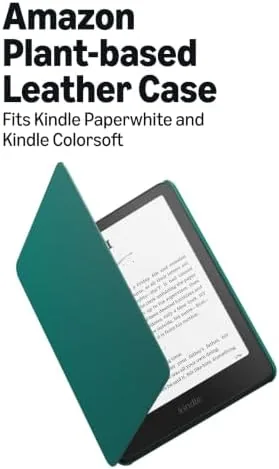

Sustainability is a hard promise to make with accessories, because the temptation is to trade durability for a good story. Amazon takes a different route with its plant-based leather case for the Kindle Paperwhite and Kindle Colorsoft. Instead of animal hide or petroleum-based synthetic leather, the cover uses a material built largely from plant-derived sources, and it still has to do the basic job of any Kindle case: protect the screen, stay light, and feel good in the hand for hours of reading. I used the case daily for three weeks on a Paperwhite and a Colorsoft to see whether the sustainable material holds up, feels premium, and actually protects.
Before the details, the standard note. This article contains affiliate links, and if you buy through one of them the site earns a small commission at no extra cost to you. That commission does not change what I test or what I recommend, and the case reviewed here was used exactly the way an owner would use it.
The case sits at an interesting point in the market, between the ultra-light fabric cover and traditional leather folios, and the rest of this review covers the material, the protection, the folding stand, and how the plant-based surface ages.
Design and Build
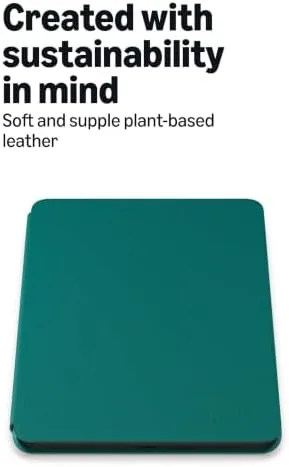
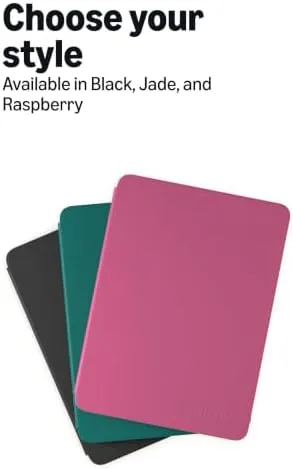
The structure is a rigid back shell with a soft interior lining and a front flap that folds over the display. The exterior is the plant-based leather, which has a smooth, matte grain that reads as premium rather than rubbery. In the hand it sits between the cold snap of plastic and the soft give of genuine leather, with a warm, grippy surface that never feels sticky in warm rooms.
The shell snaps around the Kindle body with the same click you expect from first party hardware, and the corners hold firmly enough that the device does not slide or rattle. All ports, buttons, and the charging area remain accessible, and the magnetic closure keeps the flap shut when the case is idle. Because the Paperwhite and Colorsoft share a chassis, the same cover fits both, which Amazon clearly labels on the packaging.

Key Features
The feature that defines the case is the material itself. Plant-based leather here is a blend that substitutes plant-derived components for the petroleum inputs common in synthetic leathers, giving the surface a natural grain without using animal hides. That matters to readers who are trying to make kinder purchasing choices, and it does not come at the cost of feel: the cover has a soft, warm texture that gets slightly more supple with use.
The folding front cover works as a stand in two positions. Fold the flap back once and the Kindle sits low for tabletop reading; fold it again and it angles up for a desk or a kitchen counter. The hinge is a reinforced fold in the material that stayed crisp through the whole test, with no sign of splitting or loosening after hundreds of open-close cycles.
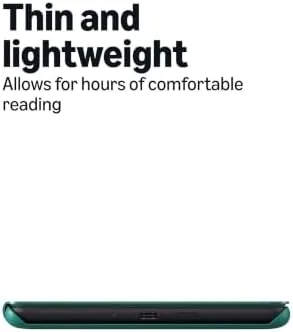
Protection is straightforward and complete. The raised lip around the screen means the Kindle never rests face down on a flat surface, the microfiber lining cushions the display, and the shell absorbs the bumps of a bag or a nightstand. The case adds very little bulk, and it is light enough that the Kindle still feels like an e-reader rather than a tablet in a shield.

Real-World Performance
Three weeks of daily use answered the question that matters most: the plant-based material holds up. I carried the case in a tote with keys, set it on countertops, and read for long sessions one handed, and the surface resisted scuffs and scratches far better than I expected. A faint mark here and there, mostly along the edges where a thumb rests, and a gradual softening of the grain, but nothing that looked like damage.
The reading experience stayed comfortable through it all. The case adds just enough grip that the Kindle does not slide out of a relaxed grip, yet the back is thin enough to hold comfortably for two hour reading sessions. The magnetic closure held the flap shut in a packed bag, and the fold-back mode kept the front flap flush against the back when I wanted to read with the cover out of the way.
The stand earned its keep at the kitchen table and on a desk. The low angle is right for reading while eating, and the taller angle works when the Kindle sits beside a keyboard or on a nightstand. On one occasion the device slipped a few centimeters as I reached across the table, but the flap never collapsed, which speaks to the hinge holding its shape.
The honest limitations show up with hard care. The material is not armored, so a heavy drop onto concrete will still be a drop, and the plant-based leather is softer than hard plastic, which means it can dent or mark if you press a sharp object against it. I also noticed the surface holds fine fibers and dust more readily than fabric, though a quick wipe clears it. None of these are deal breakers, but they are the real trade-offs of choosing a natural-feeling material.
Pros and Cons
Pros:
- Plant-derived material that pairs durability with a lower footprint
- Smooth, premium feel that softens gently with use
- Folding cover provides a sturdy two-position stand
- Magnetic closure and protective raised screen lip
- Fits both the Kindle Paperwhite and the Kindle Colorsoft
- Lightweight build that keeps long reading sessions comfortable
Cons:
- Soft surface can mark under heavy or careless use
- Holds fine dust and fibers more than a woven fabric cover
- Not a hard-shell case, so impact protection has limits
How It Compares
The plant-based leather case competes most directly with the Amazon fabric case, the other first party option for the same two Kindles. The table below lines up the two.
| Feature | Plant-Based Leather Case | Fabric Case |
|---|---|---|
| Material | Plant-derived grain leather | Woven fabric |
| Weight | Slightly heavier | Featherlight |
| Surface feel | Smooth, premium, warm | Soft woven texture |
| Wear over time | Softens, holds marks slowly | Shows marks sooner |
| Stand | Foldable two position | Foldable two position |
| Fit | Paperwhite and Colorsoft | Paperwhite and Colorsoft |
Choose the plant-based leather case when the material matters, whether that means a preference for a leather-like hand or a focus on sustainable sourcing. Choose the fabric case when every gram counts and you want the thinnest possible profile. Both protect the same two devices and fold into the same stand positions, so the decision comes down to feel and philosophy.
Who Should Buy It
Buy this case if you want a Kindle cover that looks and feels more considered than a fabric shell, and especially if the plant-based material is the reason you clicked. It suits readers who care about the materials in their daily carry, anyone who wants a case that looks sharp on a desk or in a meeting, and Colorsoft owners who want the color display framed by a premium surface.
Skip it if you need maximum impact protection or you prefer the bare minimum weight, because the fabric case is lighter and a hard shell would protect more. For a premium-feeling, kinder material that protects the Paperwhite and Colorsoft in style, this case delivers. You can see the current price of the plant-based leather Kindle case on Amazon if it fits your reading setup.
How We Test
I carried the plant-based leather case on both a Kindle Paperwhite and a Kindle Colorsoft for three weeks, reading daily, testing both stand angles, and carrying the case in bags with other items. I checked the magnetic closure, the fold hinge over hundreds of cycles, and how the material aged under real travel rather than controlled lab conditions.
I did not subject the case to immersion or impact tests beyond everyday bumps, because the material is chosen for feel and sustainability rather than armor. For context on what to expect from the two devices the case protects, the Wirecutter guide to Kindle e-readers remains a useful reference. The plant-based leather case listing on Amazon shows the full material description and price.
Amazon Plant-Based Leather Kindle Case: Questions People Ask
What is plant-based leather?
It is a leather alternative made largely from plant-derived materials rather than animal hide, which is what allows this case to pair a premium hand feel with a lower environmental footprint.
Will the case fit a Kindle Paperwhite with a screen protector?
The fit is snug and the lip clears the screen face, so most thin screen protectors will sit underneath without forcing the cover closed.
How does plant-based leather hold up over time?
The material softens slightly with use and resists everyday scuffs, though it does show faint marks more readily than a hard plastic cover, which is a fair trade for the natural feel.
Does this case work with the Kindle Colorsoft?
Yes, the case is molded for the shared body of the current Paperwhite and Colorsoft generations, with all ports and buttons left open.
As an Amazon Associate, I earn from qualifying purchases.