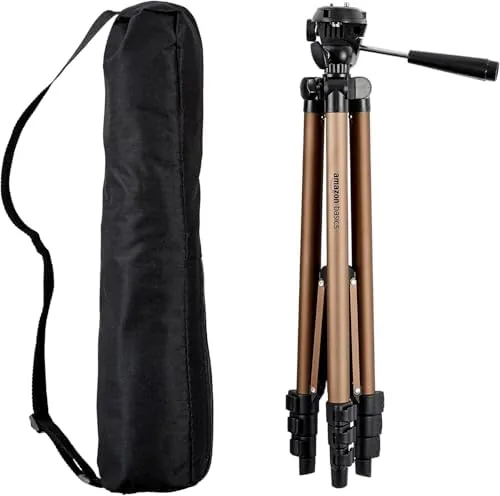

Every photographer owns two kinds of tripod: the heavy studio stand that lives by the gear bag, and the light travel tripod that is actually willing to come along. The heavy one is steady, but it does not fit in a carry-on and it gets left at home, which means it is worthless on the road. The Amazon Basics 50-inch tripod is firmly in the second camp, an aluminum stand that folds small, weighs little, and costs less than a dinner for two. This is the record of a month carrying one through airports, hiking trails, and city streets to find out how much steadiness a budget travel tripod can honestly deliver.
Before the details, the standard note. This article contains affiliate links, and if you buy through one of them the site earns a small commission at no extra cost to you. That commission never changes what I test or what I recommend.
Design and Build
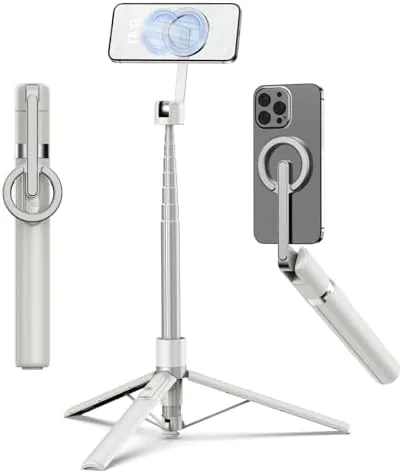
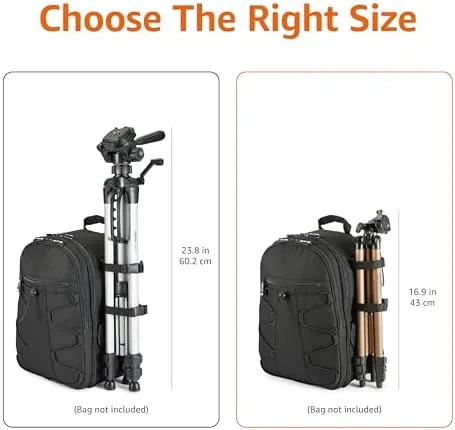
The first impression of the tripod is how small it gets. Collapsed, the legs fold up around the center column to a compact bundle that slides into a backpack side pocket or the corner of a carry-on, and the weight stays genuinely light in the hand. The finish is a soft champagne color over aluminum, which reads as a deliberate choice rather than an accident, and the leg locks are the flip style that snap open and closed with a lever.
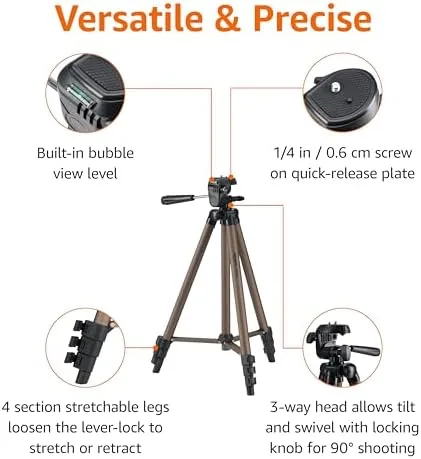
The build is honest for the price. The aluminum legs are slender, as they have to be at this weight, and the plastic head components do not feel like they will survive a drop onto concrete. But everything operates smoothly: the locks click shut with a positive feel, the leg sections extend without sticking, and the center column rises and locks without wobble. The rubber feet grip hard surfaces, and a small bubble level sits in the head for quick horizon checks, a thoughtful inclusion at this price point.
Key Features
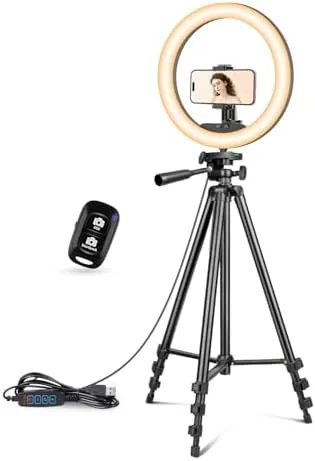
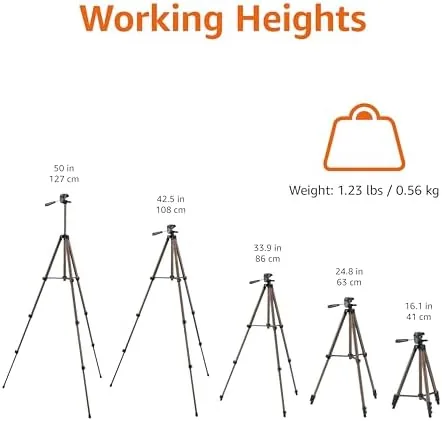
The headline spec is the height. Extended fully, the tripod reaches 50 inches, which places a compact camera or a phone on a mount at a comfortable standing eye level, and the center column lets you go a little higher still. The three-way pan head tilts up and down, pans left and right, and pivots to portrait, so framing shots is a matter of loosening a lever rather than repositioning the whole stand.
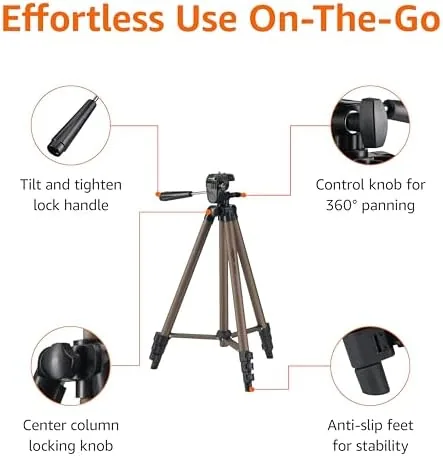
The quick-release plate is the feature that makes the tripod pleasant to use. A small plate screws into the camera base once, then snaps into the head with a sliding click, so mounting and removing the camera takes seconds instead of fiddling with a threaded bolt on a cold trail. The legs adjust independently, which lets you level the stand on stairs and slopes, and the modest load rating tells you plainly that this is compact-gear territory, not a platform for a telephoto lens. If you want to compare the current price against other travel tripods, the Amazon listing for the 50-inch Amazon Basics tripod is a useful reference.
Real-World Performance
My test loop started on an airplane seat and a fold-down tray table, which is the harshest environment a small tripod meets. The collapsed tripod tucked into a backpack side pocket, came out at the gate, and the whole unit set up on a countertop for a 10-second self-timer shot without complaint. The light weight that makes it packable was exactly what I wanted after a two-mile hike to a viewpoint.
On the trail, the tripod earned its keep for landscape shots. With a compact mirrorless camera on the quick-release plate, the stand held steady for a long-exposure shot of a waterfall, and the bubble level saved a crooked horizon at least twice. The independent leg angles let me level the rig on an uneven rock shelf, which is a capability that matters far more outdoors than a heavier head ever does. The flip locks stayed tight through the hike, and nothing came loose in the bag.
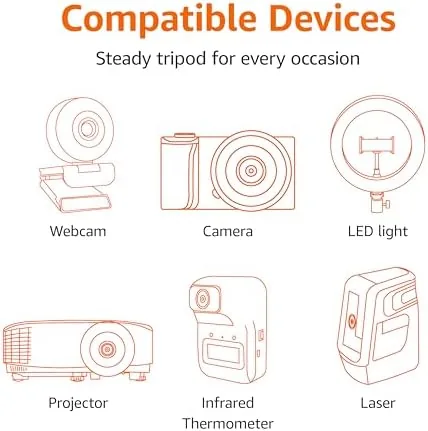
The honest limits showed up with weight and wind. A full-size DSLR with a heavy zoom lens made the slender legs feel nervous, and a breeze at the viewpoint gave the frame a visible shiver at full extension. The center column, extended to maximum, amplifies any wobble, and I learned to keep it low in gusty conditions. A phone mount and a compact camera both sat rock solid on the plate, and a timelapse I left running on a rooftop for twenty minutes did not drift a single frame. For a compact camera, a phone on a mount, or a small mirrorless with a light lens, the tripod is steady; for heavy gear, it is the wrong tool, and the listing does not pretend otherwise.
Pros and Cons
Pros:
- Folds small and light enough for a carry-on or backpack
- Quick-release plate makes mounting a camera effortless
- 50-inch height works for standing-level framing with compact gear
- Independent leg angles and bubble level suit outdoor use
- Three-way head pans, tilts, and pivots to portrait easily
Cons:
- Slender legs shiver in wind at full extension
- Not rated for heavy DSLR and telephoto setups
- Plastic head components feel fragile against hard drops
How It Compares
In the travel tripod class, the realistic alternatives are a heavier mid-range aluminum tripod and a carbon fiber travel stand that costs several times more. I compared the Amazon Basics tripod against both to see where the budget saves and where it costs you.
| Feature | Amazon Basics 50-Inch | Mid-Range Aluminum Tripod | Carbon Fiber Travel Tripod |
|---|---|---|---|
| Weight | Light | Heavier | Lightest |
| Max height | 50 inches | 55 inches or more | 50 inches or more |
| Quick-release plate | Yes | Yes | Yes |
| Load capacity | Compact gear | DSLR class | DSLR class |
| Wind stability | Fair at full height | Better | Better |
| Price | Budget | Moderate | Premium |
Against the mid-range aluminum tripod, the Amazon Basics wins on weight and price and loses on load capacity and wind stiffness, which matters only if you carry heavy glass. Against carbon fiber, it gives up nothing you can see in a photo but everything in feel and price. For the traveler whose camera is compact, the Amazon Basics tripod is the better value, and it is the one that came on every trip when the month ended.
Who Should Buy It
Buy this tripod if you shoot with a compact camera, a small mirrorless body with a light lens, or a smartphone, and you want a stand that will actually make it into your bag. It is also a sensible pick for travel vlogging, timelapse with a phone, and casual landscape shots where the priority is portability over bombproof stability.
Skip it if you carry a full-frame DSLR with telephoto glass, if you shoot in wind regularly, or if you need a head that can hold heavy video rigs. For everyone else, the Amazon Basics 50-inch tripod is one of the easiest budget travel accessories to justify. You can check the current price for the Amazon Basics 50-inch tripod on Amazon when you are ready to pack for your next trip.
How We Test
I carried the tripod on a month of travel that included flights, a two-mile trail hike, city streets, and a waterfall viewpoint. I set it up on airplane trays and countertops, on rock shelves and uneven stair landings, and I shot long exposures and self-timer frames with a compact mirrorless camera and a phone mount. I also compared it against a heavier mid-range aluminum tripod to see how the weight and stiffness trade-offs show up in the field.
I did not test the tripod with heavy DSLR and telephoto combinations, which are outside its stated purpose, and wind performance varies with conditions and extension height. Independent guidance such as Wirecutter's review of the best tripods is a useful way to compare travel stands across the wider market. The Amazon Basics tripod listing on Amazon shows the current price and shipping details.
Amazon Basics Tripod: Questions People Ask
How tall does the Amazon Basics tripod extend?
It extends to 50 inches at full leg height, which puts a compact camera or phone at a comfortable standing eye level for most travel shots, with a center column for a little extra reach.
Can I use this tripod with a smartphone?
Yes. The quick-release plate takes a small phone mount, and a phone adapter clips to the plate so the phone sits where the camera would, which is a common way to use this stand.
What is the quick-release plate for?
It is a small plate that screws into the camera base and snaps into the head, so you can mount and remove the camera in seconds instead of threading the screw each time you set up.
Is the tripod stable enough for a DSLR?
It holds a small DSLR with a light lens on a calm day, but it is built for compact cameras and phones, and a heavy body with a big lens will overwhelm its slender legs.
As an Amazon Associate, I earn from qualifying purchases.