
There are two schools of thought about how to hold a camera between shots. Some photographers live by a neck strap, others by a bag that stays zipped until a photo is happening. A third option, the wrist strap, sits somewhere in the middle, and it is the quiet favorite of anyone who shoots handheld all day and hates a strap swinging into the lens. This particular wrist strap stands out for one feature: a connector the seller calls the safer connector, a screw-in anchor that replaces the thin split ring most straps rely on. I ran it on a mirrorless body and a Full-Frame DSLR for a month to see whether the safety claim holds up.
Before the details, the standard disclosure. This article contains affiliate links, and if you buy through one of them the site earns a small commission at no extra cost to you. That commission never changes what I test or recommend.
Design and Build
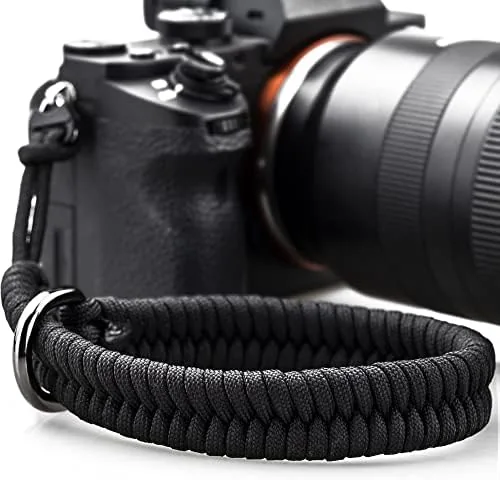
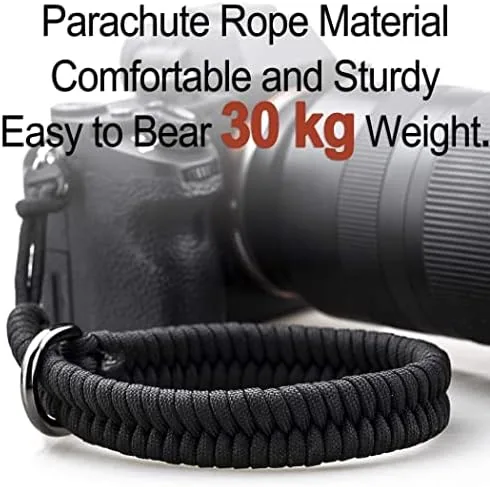
The strap is a slim black nylon band with a soft pad on the wrist section, a plastic quick release buckle, and a small metal anchor plate at the camera end. The first impression is that this is a minimal piece of gear, and that is the point: it adds almost nothing to the weight of the camera and folds flat when you remove it. The stitching is clean, the plastic hardware feels dense rather than hollow, and the pad has enough cushion to take the edge off a heavy body pressing against the back of your hand.
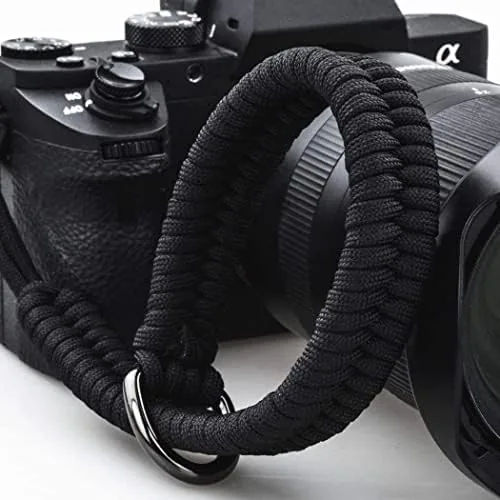
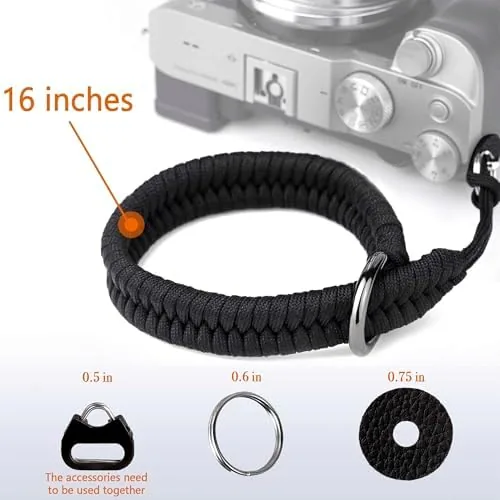
The standout part is the connector. Instead of a loop of nylon that wraps through the camera lug, this strap ends in a small metal fitting with a threaded pin that screws into the lug. The difference matters more than most listing descriptions suggest. Split rings bend under heavy glass and occasionally snap at the worst possible moment, while a screw-in anchor holds the camera firmly in place with nothing to flex. The connector also includes a short locking plate that keeps the strap loop from slipping off the anchor during use.
Key Features
Three features define this strap. The first is the screw-in safer connector, which replaces the factory split ring and gives the strap a much stronger mechanical hold on the body. The second is the quick release buckle, a sliding clip near the wrist pad that separates the strap into two halves in one motion. That makes it trivial to detach the strap when you mount the camera on a gimbal or tripod, and equally fast to hand the camera to a second shooter without loosening anything on the wrist.
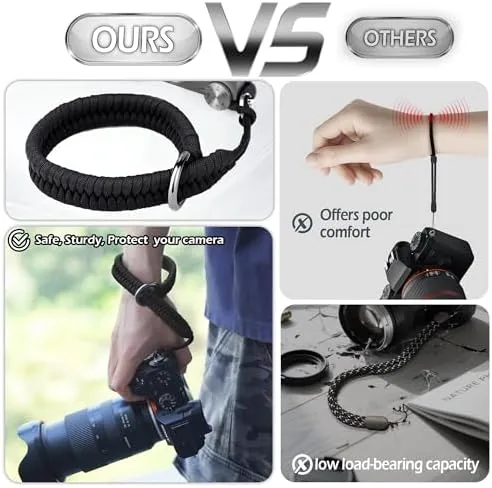
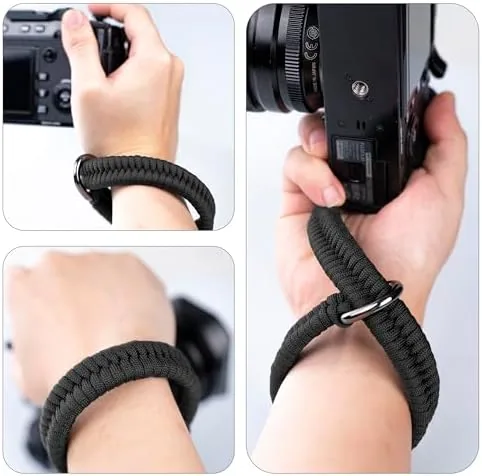
The third feature is adjustability. A sliding buckle lets you set the loop tight around the back of your hand or loose enough to slip on and off over gloves, and the adjustment holds its position during a full day of shooting. The strap is also short by design, which is correct for this category: a wrist strap that hangs too long just becomes a collar for your hand. This one keeps the camera pulled close to the palm, ready to raise for a shot and braced against dropping when you carry it at your side. If you want to compare current pricing, the camera wrist strap listing on Amazon is a useful reference.
Real-World Performance
I mounted the strap first on a mirrorless body with a 24-70 lens, the kind of kit that feels fine on a neck strap but irritating swinging against a belt buckle. With the strap snug around my right hand, the camera hung at my hip and came up to my eye without any fumbling. Walking for hours produced no soreness on the strap hand, and the camera never swung wide or clipped a doorway, because the loop keeps it pinned close to your palm rather than dangling.

Then I moved to the full-frame DSLR with a heavier 70-200 lens. This is the stress test, because that much glass usually defeats cheap straps. The screw-in connector never moved, and the camera stayed planted on my wrist with no sway. The weight did eventually fatigue my forearm, which is physics rather than a flaw, but the strap itself felt as secure on day thirty as it did on day one. The quick release worked cleanly every time I moved the camera to a tripod, and reattaching took two seconds.
The honest weaknesses are comfort related. The pad helps, but a wrist strap concentrates weight in one small spot, so long event days with a big lens will leave your hand wanting a neck strap rotation. The plastic buckle also sits right at the wrist crease when the strap is snug, which took a day of adjustment to stop noticing. And the screw-in connector requires a small screwdriver if you ever want to move the anchor to a second body, a minor chore compared to the security it buys.
Pros and Cons
Pros:
- Screw-in connector is far more secure than a split ring
- Quick release detaches the strap in one motion
- Adjustable loop fits over bare skin or gloves
- Lightweight and folds flat when not in use
- Works with both DSLR and mirrorless strap lugs
Cons:
- Concentrates weight on one wrist point on long shoots
- Buckle sits near the wrist crease when snug
- Moving the anchor to another body needs a screwdriver
- No rainproofing or hard padding on the wrist section
How It Compares
Wrist straps mostly differ in how they attach to the camera and how fast they detach. I compared this strap against a standard fabric wrist strap with a split-ring mount and a premium quick release strap at roughly double the price.
| Feature | This Quick Release Strap | Split-Ring Fabric Strap | Premium Quick Release Strap |
|---|---|---|---|
| Camera connector | Screw-in metal anchor | Fabric loop and split ring | Metal anchor |
| Quick release | Yes, sliding buckle | No | Yes, locking clip |
| Heavy lens security | Strong | Varies with ring quality | Strong |
| Adjustable length | Yes | Yes | Yes |
| Wrist padding | Soft pad | Minimal | Soft pad |
| Typical price | Low | Low | High |
Against the split-ring fabric strap, the screw-in connector wins decisively on security, because the weak point in most budget straps is exactly the metal ring this one removes. Against the premium option, this strap matches the core security and quick release but skips the locking detent and premium fabric of the more expensive unit. For most shooters, the value lands clearly on this side of the table.
Who Should Buy It
Buy this wrist strap if you shoot handheld for hours, if you carry a mirrorless camera at your side between shots, or if you have ever winced at a split ring bending under a heavy lens. It is a strong fit for street photographers, event shooters, and content creators who bounce between handheld and tripod work, where the quick release saves real time.
Skip it if you prefer the weight distribution of a neck strap, if you work with a camera in a strap-free cage most of the time, or if you never take a shot without a tripod. For everyone else, the screw-in connector alone justifies the price. You can check the current price for this camera wrist strap on Amazon when you are ready to secure your kit.
How We Test
I used the strap daily for a month on two bodies: a mirrorless camera with a 24-70 lens and a full-frame DSLR with a 70-200 lens. I walked multi-hour routes with the camera at my hip, tested the quick release several times a day moving between handheld and tripod work, and checked the screw-in connector weekly for any loosening at the lug. I also left the strap in a camera bag under pressure to confirm the hardware does not deform under normal packing.
I did not test the strap in heavy rain, for extreme shock drops, or with cinema cameras, which need a dedicated rig anyway. Independent gear coverage such as Wirecutter's guide to mirrorless cameras is a helpful way to see what gear pairs well with a strap like this. The camera wrist strap product page on Amazon has the current price and available colors.
Camera Wrist Strap: Questions People Ask
How does the safer connector attach to a camera?
The connector screws into the camera strap lug with a small metal loop that anchors the strap, replacing the thin split ring that can bend or snap under a heavy lens.
Will the wrist strap fit a full-frame DSLR with a large lens?
Yes. The strap is adjustable and the metal connector holds the camera firmly, though the full weight of a big body and lens still rests on your wrist rather than on a shoulder.
How does the quick release work?
A sliding buckle unclips the strap from its anchor in one motion, so you can detach the strap to mount the camera on a tripod or pass it to a second shooter quickly.
Can you use the strap with both DSLR and mirrorless cameras?
Yes. The connector works with any Camera That has a standard strap lug, which covers nearly all DSLR and mirrorless bodies, as long as the lug is not damaged or blocked.
As an Amazon Associate, I earn from qualifying purchases.