
Every studio has a pair of headphones that has outlived two laptops, three microphones, and a thousand coffee spills. More often than not, that pair is an AKG K240 in one of its many iterations. The K240 Studio is the modern descendant of that lineage, a semi-open headphone with XXL transducers and Varimotion diaphragms, built for mixing, mastering, and general playback. It costs far less than a flagship monitor headphone, which is exactly why so many desks hold one. I have spent the last month working with a pair on mixes, podcast edits, and everyday listening, and this review records how they actually behave.
Before we get into the details, the standard disclosure. This article contains affiliate links, and if you buy through one of them the site earns a Small commission at no extra cost to you. That commission never changes what I test or what I recommend.
Design and Build
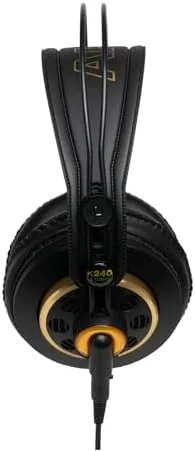
The K240 Studio is unmistakably a working headphone. The suspension headband suspends the earcups from two thin steel arcs, which spreads the weight evenly across the top of the head instead of pressing on a Single point. The result is a pair that stays comfortable for hours, and for a mixing session that can run past the two hour mark, that comfort is not a luxury. The velour ear cushions are soft and breathable, and they sit around the ear rather than pressing into it.
Build quality reflects the price point honestly. The plastic components feel sturdy enough for daily desk use, though not indestructible, and the steel headband arcs give the structure genuine strength. The attached 3-meter cable is thick and durable, terminating in a 3.5mm plug with a screw-on 6.3mm adapter included for mixing desks and interfaces. The semi-open design shows itself immediately: the backs of the earcups are perforated, letting air move in and out of the chamber.

At around 240 grams, the K240 Studio is light enough to forget you are wearing it, which is a compliment in the monitoring world. The earcups rotate slightly to follow the angle of your head, and the fit stays secure without clamping hard. The overall impression is a headphone designed for utility rather than flash, and that is precisely the right priority for a working tool.
Key Features
The defining technology is the Varimotion diaphragm inside the XXL transducer. The diaphragm is not a uniform sheet; its thickness varies across the surface, which allows the transducer to move air efficiently while keeping distortion low. This is the engineering trick that lets a 55 Ohm headphone sound clean at moderate volumes from modest sources, and it contributes to the K240's reputation for a smooth, unhyped response.
The 55 Ohm impedance is a deliberate choice. It is low enough to be driven by a phone or laptop at reasonable volume, yet high enough to benefit from a dedicated headphone amplifier when you add one later. This flexibility makes the K240 Studio a sensible first serious headphone, because it performs acceptably on any device you already own and still rewards an upgrade path. A reviewer should note that the impedance figures comfortably into most interface headphone outputs without any fuss.
The semi-open construction shapes the sound as much as the transducer does. Because the rear of the driver is vented, the headphones present a wider, more natural soundstage than a closed-back pair, with a relaxed sense of space that helps place instruments across a mix. The trade-off is sound leakage: neighbors can hear your music, and you will hear room noise. For mixing alone in a studio that is fine; for a commute or a shared library it is a genuine consideration. For a current look at the price and the exact package, the Amazon listing for the AKG K240 Studio is a useful reference.
Real-World Performance
My first listen was a mix session on a track I had already checked on Studio Monitors. The K240 Studio showed its strength immediately in the midrange. Vocals sat forward and intelligible, guitars and keyboards separated cleanly, and the balance read as honest rather than flattering. The low end was present but polite, which is the classic K240 signature: enough bass to judge the groove, not enough to hide a muddy mix.
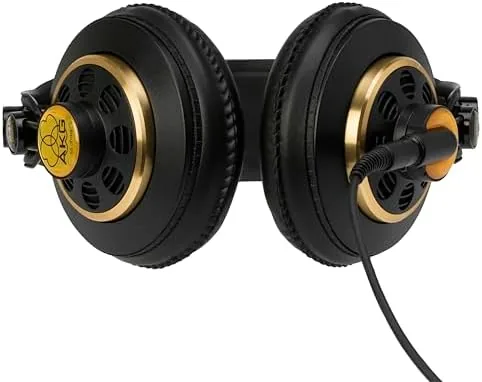
I spent a full afternoon editing a podcast, and the comfort mattered as much as the sound. Two and a half hours in, my ears were not aching and the headband pressure was negligible, which is rare for any headphone and genuinely impressive at this price. The semi-open design kept the pressure off my ears, and the velour pads did not trap heat the way leather pads would. Fatigue was low throughout the session.
On playback duty the K240 Studio is a pleasant, relaxed listen rather than an exciting one. Acoustic tracks sound natural, and the wide stage makes orchestral and live recordings feel open. Bass heavy electronic music is the least impressive match, because the K240 simply does not press the low end the way a closed-back consumer headphone does. That is a limitation to know before you buy, but it is also part of what makes the headphone useful for mixing.
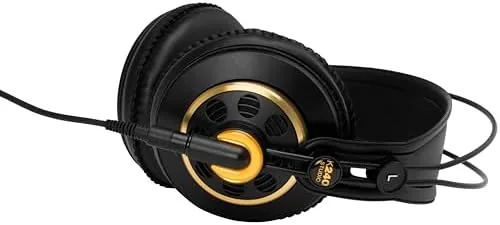
Driving the headphones from a laptop headphone jack produced clean sound at moderate volume with a little headroom to spare. Through a small dedicated amplifier the low end tightened and the imaging sharpened, confirming that the 55 Ohm driver benefits from better sources. The semi-open leakage showed up as expected during a quiet office session, where a nearby colleague could hear my music clearly; anyone sharing a space should plan for that behavior.
Pros and Cons
Pros:
- Suspension headband and velour pads stay comfortable for hours
- 55 Ohm impedance works with phones, laptops, and interfaces
- Semi-open design delivers a wide, natural soundstage
- Balanced midrange keeps vocals and instruments clear for mixing
- Replacement pads keep the headphone viable for years
- Attached 3-meter cable includes a 6.3mm adapter
Cons:
- Light bass response underplays low end heavy music
- Semi-open design leaks sound in and out of the headphones
- Plastic build feels modest next to pricier rivals
How It Compares
The K240 Studio sits between budget closed-back headphones and pricier open-back monitors, and the comparison comes down to what you are mixing and where. I compared it against a budget closed-back studio headphone and a more expensive open-back monitoring model.
| Feature | AKG K240 Studio | Budget Closed-Back | Pricier Open-Back |
|---|---|---|---|
| Design | Semi-open | Closed | Open |
| Impedance | 55 Ohm | Varies, often 32 Ohm | Higher, needs amp |
| Bass response | Moderate | Stronger | Tighter and deeper |
| Soundstage | Wide | Narrow | Very wide |
| Comfort for long sessions | Excellent | Good | Excellent |
| Price | Low to mid | Low | Higher |

Against a budget closed-back headphone, the K240 Studio wins on space and balance but loses on bass thump and sound isolation. If you mix genres with deep low end and share a room, a closed-back pair is easier to live with. Against a pricier open-back monitor, the K240 is less resolving and less deep in the lows, yet it is dramatically cheaper and easier to drive. For a student, a home studio owner, or anyone who wants one honest pair that works everywhere, the K240 Studio remains the sensible middle ground.
Who Should Buy It
Buy the K240 Studio if you mix music, edit podcasts, or want a comfortable everyday listening pair with a balanced character and a wide stage. It is also a strong first studio headphone because it works with equipment you already own and teaches you to hear a mix without the flattering color of consumer tuning.
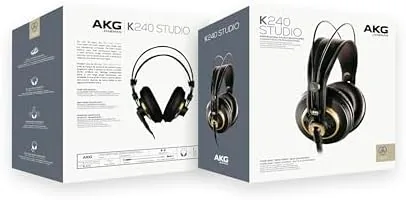
Skip it if your listening is dominated by bass heavy music, if you need sound isolation for shared spaces or travel, or if you already own a high end amplifier and want the last few percent of resolution. For everyone else, this is a proven pair that keeps its value year after year. You can check the current price for the K240 Studio on Amazon when you are ready to listen.
How We Test
I tested the K240 Studio over one month across three workloads: a full mix session on a multitrack project, a long podcast editing afternoon, and extended playback testing across acoustic, rock, and electronic music. I drove the headphones from a laptop jack, a small audio interface, and a dedicated headphone amplifier, and I listened through the same signal chain to keep the comparison fair.

I assessed comfort at two hour intervals, noted leakage with a colleague in the room, and compared the sound against a budget closed-back headphone and a pricier open-back model. I did not test the headphones for durability under repeated drops or extreme humidity, since studio use rarely involves either. For a broader look at headphone monitoring choices, independent guides such as SoundGuys' studio headphone guidance place the K240 in context. The AKG K240 Studio listing on Amazon shows the current price and available options.
AKG K240 Studio: Questions People Ask
Do the AKG K240 Studio work without a headphone amplifier?
Yes. The 55 Ohm impedance is easy to drive from most interfaces, laptops, and phones, and the headphones still respond well when you connect a dedicated amp later.
What does semi-open mean on these headphones?
The back of each earcup has open vents that let air pass through, which widens the soundstage and reduces ear pressure, at the cost of some sound leaking in and out.
Are the K240 Studio good for mixing and mastering?
They are well suited to mixing because the response is reasonably balanced and vocals sit clearly, though the low end is lighter than some closed-back models, so check bass heavy tracks carefully.
Are the ear pads replaceable?
Yes. The velour ear cushions can be replaced when they wear down, which is a practical advantage for a headphone that is meant to last for years.
As an Amazon Associate, I earn from qualifying purchases.