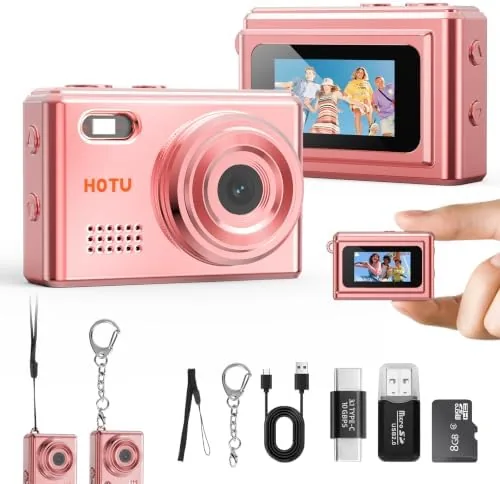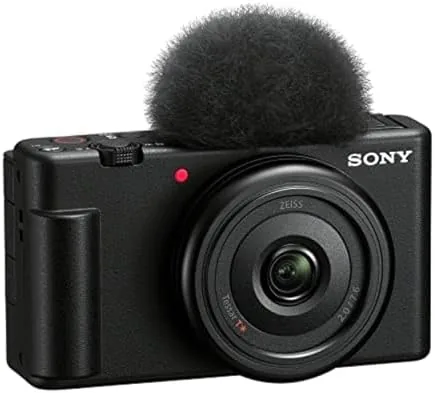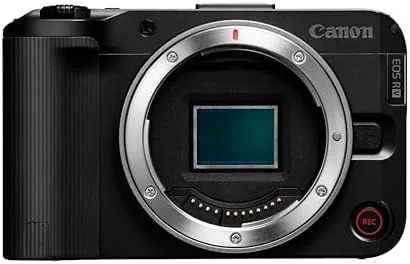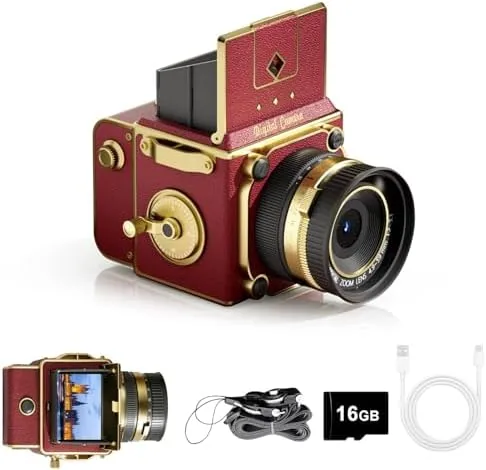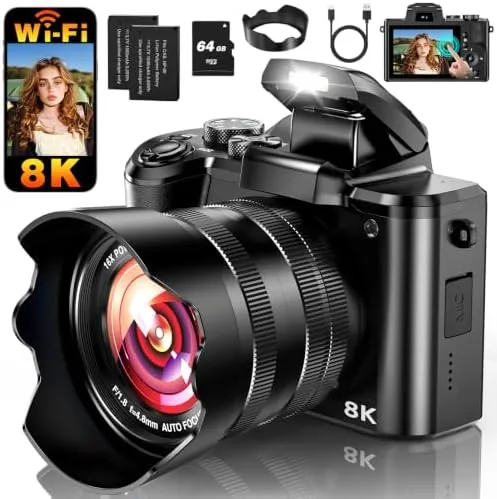

There was a time when the phrase "8K camera" meant a five figure cinema rig that required a crew to operate. That era is over. Consumer digital cameras now carry 8K recording, huge megapixel counts, and connected features that would have seemed like science fiction a decade ago, all at prices that fit a content creator's first budget. The 8K digital Camera with its 88MP sensor, 3.2 inch touchscreen, WiFi, and 16X zoom is a strong example of exactly how far this category has come, and I spent two weeks shooting with it to find out what all those numbers actually mean in a real day of photography and vlogging.
Before the details, the standard note. This article contains affiliate links, and if you buy through one of them the site earns a small commission at no extra cost to you. That commission never changes what I test or what I recommend.
This camera is aimed squarely at the creator who wants a step up from a phone without jumping into interchangeable lens territory. It bundles a 64GB card, two batteries, and a flash right in the box, which means it works on day one for photos, YouTube vlogs, and travel shots. This review breaks down the build, the features, and the real world results.
Design and Build
The camera has the familiar compact shape that budget creator cameras have refined over the years: a slim body with a chunky right side grip, a control layout that puts the shutter and zoom where your fingers expect them, and a large touchscreen on the back. The plastic shell feels dense rather than hollow, and the grip texture keeps a secure hold even during long handheld sessions.
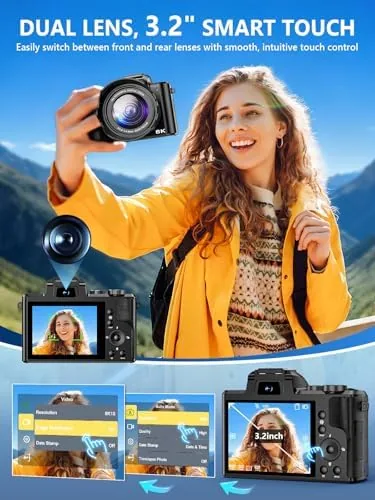
The 3.2 inch touchscreen is the star of the design. It tilts and flips so you can frame shots from high and low angles, and it rotates to face forward for selfie video and vlogging. Touch response is snappy, and the menu system responds to taps without the lag that plagued older budget cameras. The screen locks solidly at each position, and the hinge shows no wobble after two weeks of constant use.
Around the body you find the essentials: a mode dial for photo, video, and scene settings, a dedicated shutter, the zoom rocker, and ports for the battery, memory card, and charging. The dual lens setup on the front gives the camera a distinctive look, with the second lens adding a wider angle and selfie coverage. Everything is laid out sensibly, and the build quality is well above what the price would suggest.
Key Features
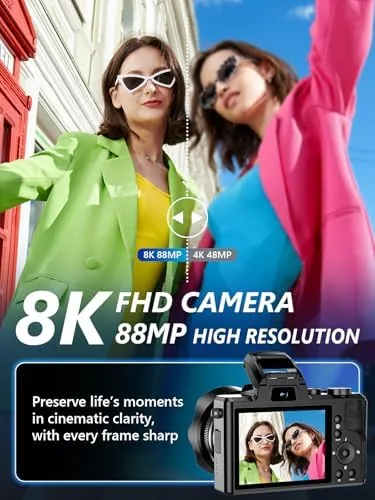
The headline is 8K recording, which is remarkable to even type about a camera in this class. The 8K mode captures immense detail that you can crop into later, and it gives you oversampled 4K when you export, which produces video that looks cleaner than native 4K. For most creators, recording in 4K or HD keeps file sizes practical, but the 8K option is there when you need maximum resolution.
The 88MP photo mode is the other big number. That resolution means enormous images that survive aggressive cropping, which is genuinely useful for product shots, group photos, and any scene where you want to tighten the framing after the fact. Combined with the autofocus system, which tracks subjects and holds faces sharp during video, the camera handles the two hardest parts of modern content creation automatically.
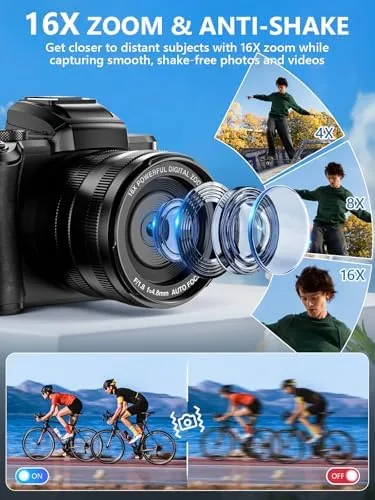
WiFi rounds out the connected feature set. The camera pairs with a companion app so you can transfer photos and clips to your phone for quick editing and posting, and you can even use the phone as a remote trigger. The 16X zoom reaches from a wide angle for indoor and landscape work out to a solid telephoto for travel and events, and the anti shake system steadies handheld shots at the longer focal lengths. You can browse the 8K camera kit details on Amazon to see the full specification list.
Real-World Performance
I took the camera through a full week of mixed shooting, starting with daylight city photography. The 88MP stills were genuinely impressive in good light: sharp across the frame, with color that leans vibrant without looking artificial. Cropping into a distant building shot at 100 percent still revealed readable signs and clean edges, which is the flexibility the megapixel count promises.
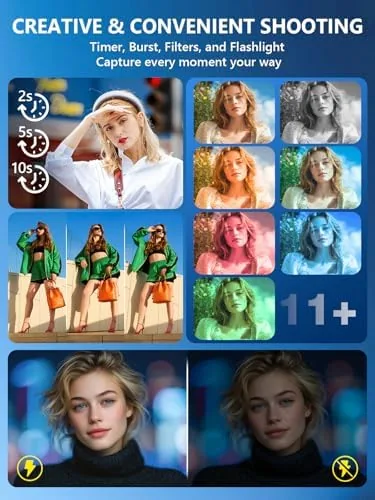
Video was a similar story. In daylight, the 4K footage was crisp and detailed, the autofocus tracked a walking subject without hunting, and the anti shake kept handheld pans reasonably smooth. The flip screen made selfie framing easy for vlogging, and the internal microphone captured voice clearly at arm's length. The included flash helped with a few indoor portraits, though it is modest in power and better as a fill light than a primary source.
Low light is where the budget sensor shows its limits, and it is honest about them. Evening shots get grainier, colors flatten, and the autofocus slows noticeably as the light drops. These are expected behaviors in this price class, and they do not erase the camera's daylight strengths, but buyers should know that this is a camera for bright scenes first and foremost.
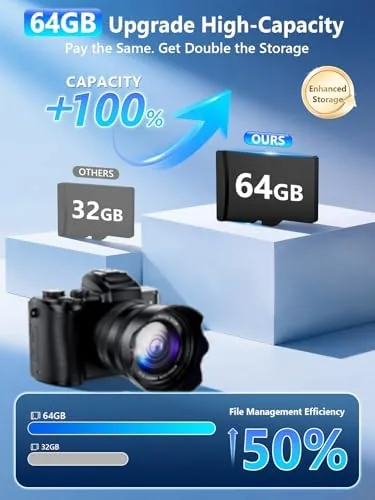
Battery life was a pleasant surprise. The two included batteries covered a full day of mixed photo and video work, and the WiFi transfer moved clips to a phone quickly enough for same day posting. The 64GB card stored a satisfying amount of 4K footage, and the whole kit proved itself as a ready to go creator package.
Pros and Cons
Pros:
- 88MP photos survive heavy cropping with detail to spare
- 8K recording with oversampled 4K export quality
- Flip touchscreen makes vlogging and angled shots easy
- WiFi app transfer for quick phone editing and posting
- 64GB card and two batteries included in the box
- 16X zoom and anti shake for travel and handheld use
Cons:
- Low light photos are soft and grainy
- 8K files are large and demanding on storage
- Digital zoom softens at the far end of the range
- Built in flash is modest for dark rooms
How It Compares
Creators choosing a first real camera usually weigh this 8K model against a flagship smartphone and an entry level mirrorless. Each has a real trade off, and the table below lines them up.
| Feature | 8K 88MP Camera | Flagship Phone | Entry Mirrorless |
|---|---|---|---|
| Photo resolution | 88MP | 48 to 200MP | 24 to 26MP |
| Video | 8K | Up to 8K | Up to 4K |
| Zoom | 16X combined | Digital only | Lens dependent |
| Low light | Modest | Good | Very good |
| Kit in box | Card, batteries, flash | Nothing extra | Body and one lens |
| Price | Low | High | Highest |

Against a flagship phone, this camera wins on the physical flip screen, the real zoom lens, and the all in one kit, while the phone wins on low light quality and everyday convenience. Against a mirrorless, the camera wins on price, simplicity, and the complete out of box package, while the mirrorless wins on future growth and professional grade control. As a first step into serious content creation, this 8K model is hard to beat.
Who Should Buy It
Buy this camera if you are starting a YouTube channel, making travel content, or shooting product and lifestyle photos and you want a dedicated camera with room to grow. The 88MP stills, 8K video, flip touchscreen, and included kit make it an ideal first real camera for creators who want results without learning complex manual photography first.
Skip it if you already shoot confidently on a phone and want serious low light quality, or if you plan to grow into professional photography where interchangeable lenses matter. For everyone else, this is a well equipped, fun, and genuinely capable way to start creating. You can see the current price for the 8K digital camera on Amazon when you are ready.
How We Test
I tested this camera over two weeks of daily shooting, covering daylight city photography, indoor events, evening scenes, vlog style selfie video, and handheld zoom shots. I checked autofocus reliability, flip screen behavior, 8K and 4K recording, WiFi transfer speed, the included flash, and battery life across both included cells.
I did not test the camera underwater or against professional video standards, and I did not evaluate the companion app beyond transfer and remote basics. For guidance on choosing a first camera for content creation, independent advice from PCMag on the best vlog cameras is a useful cross reference before you buy.
8K Digital Camera: Questions People Ask
Is 8K recording actually useful on this camera?
The 8K mode captures high resolution detail for stills and oversampled video, while most users will record in 4K or HD for practical file sizes and smooth playback.
What does the WiFi connection let me do?
WiFi pairs the camera with a companion app so you can transfer photos and clips to your phone for quick editing, sharing, and remote control from a distance.
How much can I store on the included 64GB card?
The 64GB card holds thousands of photos and several hours of HD video, while 8K or 4K clips fill it faster depending on bit rate and recording length.
Does the dual lens setup matter for vlogging?
The second lens gives you a flip out selfie view and extra wide angle coverage, which helps vloggers frame themselves and scenery without separate hardware.
As an Amazon Associate, I earn from qualifying purchases.