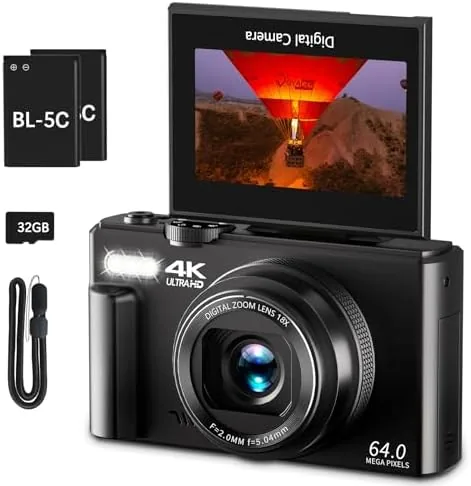

Starting a YouTube channel or a travel vlog does not require an expensive cinema rig. It requires a camera that frames you correctly, records clean video, and lets you share the result without a computer. The 4K vlogging camera with a 180 degree flip screen is aimed exactly at that moment. It pairs a 64 megapixel sensor with 18X zoom, 4K video, built in WiFi, and controls simple enough for a first time creator. I carried it through a week of city walking and indoor filming to find out where it shines and where the budget shows.
Before the details, the standard note. This article contains affiliate links, and if you buy through one of them the site earns a small commission at no extra cost to you. That commission never changes what I test or what I recommend.
Design and Build
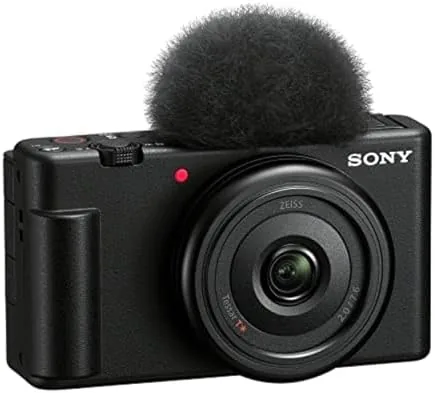
The camera is a compact point and shoot body with a comfortable grip and a generous flip screen that rotates a full 180 degrees to face forward. That front facing position is the whole point of a vlogging camera, because it lets you see exactly what the lens sees while you talk to the camera.
The build feels sturdy for the price. The plastic body has a solid, dense weight rather than a hollow feel, the buttons are firm under the thumb, and the flip screen hinges smoothly at every angle it can reach. The lens extends from the body with a quiet mechanical sound, and the overall package fits in a jacket pocket or a small pouch, which matters for a travel camera you need to carry all day.
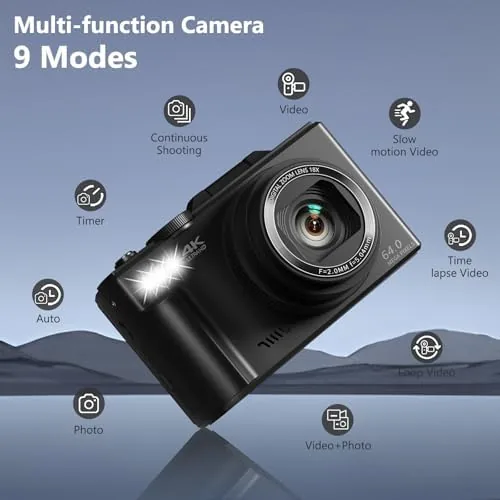
The controls are deliberately simple. A mode dial, a shutter button, a zoom rocker, and a handful of function buttons cover everything the camera does. There is no deep menu system to learn, which is a strength for a beginner and a small limitation for an experienced shooter who wants manual control. The whole design says point, frame, and shoot.
Key Features
The 180 degree flip screen is the defining feature. In the forward position it turns the camera into a self filming tool, and because the screen is large and bright, you can frame your face and check focus without a separate monitor. For talking head videos, tutorials, and travel vlogs, that is the feature that makes the camera usable on its own.
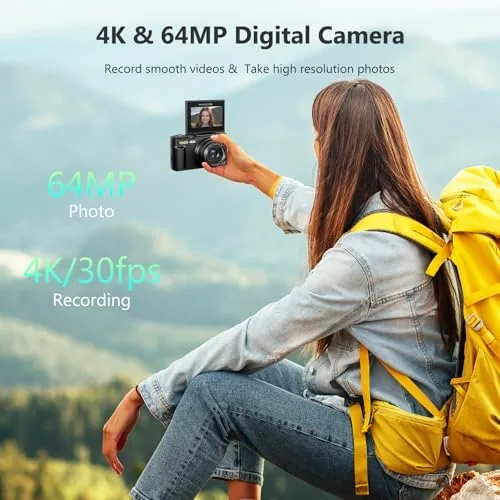
The 64 megapixel sensor is the headline photo specification. In good light, that resolution produces images large enough to crop heavily for social media or print, and the 4K video mode records at a resolution that suits modern platforms. The 18X zoom extends the reach well beyond a phone lens, which is genuinely useful for travel, wildlife, and stage shots where you cannot walk closer.
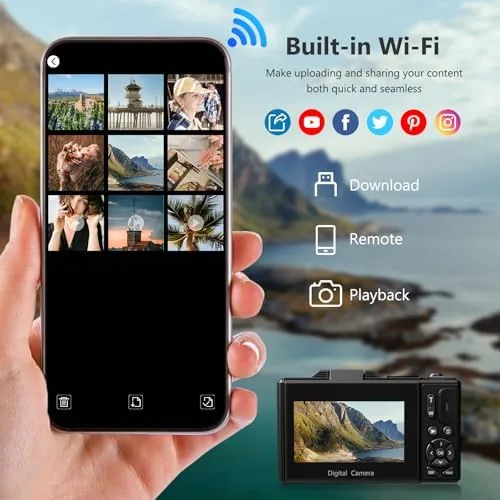
Built in WiFi is the sharing feature. The camera connects to your phone through a companion app, so you can transfer images and clips wirelessly and post them without removing a memory card. For a creator who works on the move, that closes the gap between shooting and publishing.
The point and shoot auto mode rounds out the beginner focus. The camera chooses exposure, focus, and white balance on its own, and it does so well enough that a new user gets usable results from the first shot. There is a manual mode for those who want it, but the camera never forces you to learn it.
Real-World Performance
I carried the camera on a week of city walking, indoor filming sessions, and a quick trip to a local market. The first surprise was how willing I was to actually bring it. At pocket size with a flip screen, it felt more like a companion than a responsibility, and the auto mode meant I never missed a shot while fiddling with settings.
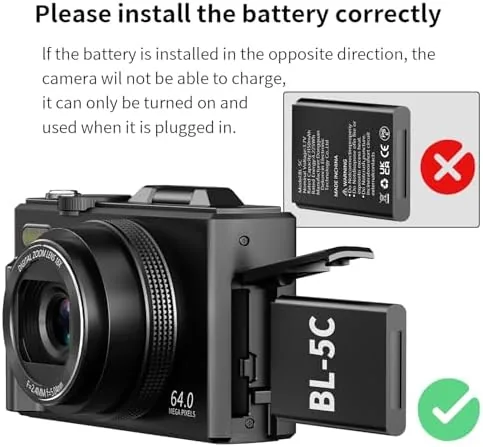
Video quality in daylight was the highlight. 4K footage captured from the forward screen looked clean and steady enough for a vlog, with natural colors and detail that held up on a monitor. The flip screen made self framing effortless, and the built in microphone captured clear talking while a wind sock cut the noise on breezy days.
Photo quality followed the same pattern. Daylight shots at 64 megapixels were sharp and detailed, and the 18X zoom pulled in subjects that a phone could not reach. A bird on a distant rooftop and a stage performer from a back row both came out clearly, which is exactly where the zoom earns its keep.
The weaknesses appeared in low light. Indoors under warm lights, the sensor produced visible noise and softer detail, and the video showed a grainy texture that daylight hid. The digital zoom, past about 8X, began to soften noticeably, which is the honest limit of a compact sensor. The WiFi app also worked well, though transfers of full 4K clips take a little patience on a slower connection.
Pros and Cons
Pros:
- 180 degree flip screen makes self filming easy
- 64 megapixel photos in good light with plenty of cropping room
- 4K video quality suits modern platforms
- 18X zoom reaches subjects a phone cannot
- Built in WiFi shares photos without a computer
- Simple point and shoot controls for beginners
Cons:
- Low light video shows visible noise and softness
- Digital zoom softens past mid range
- Built in microphone is basic and captures wind
- Manual controls are limited for experienced shooters
How It Compares
A vlogging camera competes with a phone and with a larger interchangeable lens camera. I compared the three to show where each fits.
| Feature | 4K Vlogging Camera | Smartphone | Mirrorless Camera |
|---|---|---|---|
| Flip screen for self filming | Yes, 180 degrees | Front camera | Usually yes |
| Zoom range | 18X digital | 2 to 5X optical | Lens dependent |
| Video resolution | 4K | 4K to 8K | 4K and up |
| Photo resolution | 64 MP | Varies | Varies |
| WiFi sharing | Yes | Built in | Yes |
| Learning curve | Minimal | Minimal | Steeper |
| Price | Budget friendly | Already owned | Highest |
A smartphone is always in your pocket and shoots impressive video, but it cannot reach the zoom range of the 18X lens, and using the front camera means sacrificing your own display to check framing. A mirrorless camera produces the best footage, but it costs several times more, requires lenses, and demands a real learning curve. The 4K vlogging camera sits between them: a dedicated tool with real zoom and a flip screen at a fraction of a mirrorless budget. If you already love your phone footage, you may not need it. If you want reach and a proper self filming viewfinder, it is a sensible step up. The 4K vlogging camera is available on Amazon.
Who Should Buy It
Buy this camera if you are starting a YouTube channel or vlog and want a dedicated tool with a flip screen, if you travel and want to shoot subjects beyond phone zoom range, or if you want a simple camera that produces shareable results without a steep learning curve. It is a great fit for students, travel creators, and anyone who finds mirrorless cameras intimidating or expensive.
Skip it if you shoot mainly at night or in low light interiors, where its sensor is weakest, or if you already own a capable phone and want a major upgrade, in which case a mirrorless camera is worth saving for. For an approachable first dedicated camera, this is a strong budget pick. You can check the current price of the 4K vlogging camera on Amazon when you are ready.
How We Test
I carried the camera for a week of daytime walking, indoor filming, and a market trip, testing the flip screen for self framing, 4K video quality, 64 megapixel stills, the 18X zoom at several distances, WiFi transfer speed, and the built in microphone with and without a wind sock.
I did not test the camera in professional studio conditions, and low light results reflect interior lighting rather than a fully dark scene. For background on choosing a camera for video content, The Verge has covered what makes a good vlogging camera. The 4K vlogging camera listing on Amazon shows current pricing and included accessories.
4K Vlogging Camera: Questions People Ask
Is this camera good for YouTube vlogging?
Yes, the 180 degree flip screen lets you frame yourself while recording, and the 4K video quality is more than enough for beginner and mid level YouTube channels.
How many megapixels does the photo sensor produce?
The camera captures up to 64 megapixel stills, which gives you large, detailed images that crop well for social media and print.
Does the 18X zoom stay sharp?
The zoom is useful for travel and outdoor subjects in good light, though like most compact cameras the digital zoom softens noticeably at the longest reach.
Can I share photos without a computer?
Yes, built in WiFi lets you transfer images and videos to your phone, which makes posting to social media quick when you are out shooting.
As an Amazon Associate, I earn from qualifying purchases.