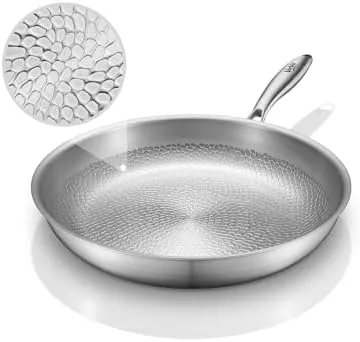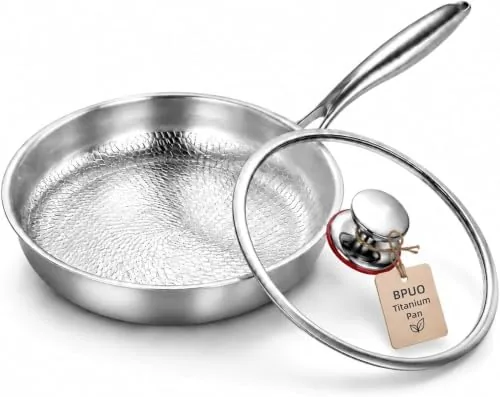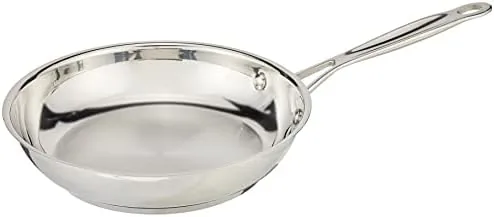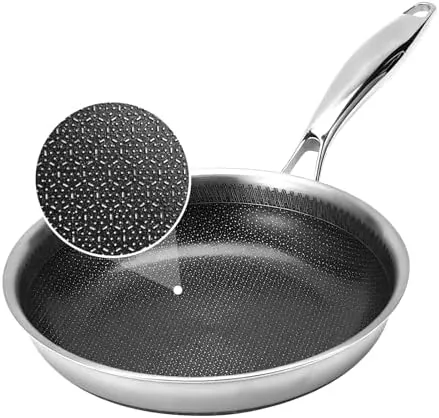

There is a long-running argument in most kitchens between the people who want stainless steel and the people who want nonstick, and hybrid pans exist to end that argument. The 8-inch tri-ply pan from this listing takes a different route than most: it starts with a Tri-Ply Stainless Steel cladding and tops it with a ceramic nonstick surface, which means it is induction and oven safe, free of PFAS and PFOA, and built for cooks who want the sear of steel with the release of a coated pan. I cooked with it daily for a month to find out whether the compromise actually works.
This article contains affiliate links. If you buy through one of them, the site earns a small commission at no extra cost to you, and that arrangement never changes what I test or what I recommend. With that note out of the way, here is the full record of a month of cooking with this hybrid pan.
Design and Build
The pan reads as a serious piece of equipment the moment you lift it. The tri-ply construction layers a stainless steel exterior over an aluminum core, so it is heavier and more substantial than a typical nonstick skillet, and it arrives without a single protective coating sticker to peel. The ceramic nonstick surface has a smooth, slightly matte feel, and the handle is a solid stainless steel loop with a cool-touch section that stays comfortable on the stovetop. There is no rivet wobble, and the whole unit feels machined rather than molded.
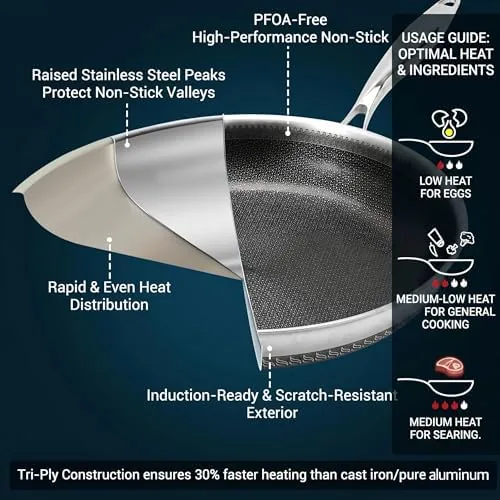
The size is the story here. An 8-inch cooking surface is a specialist tool rather than a family pan: perfect for a single egg, a small omelet, a tuna steak, or a pair of crepes, and it takes up far less space in a drawer or on a crowded stove. The pan is oven safe, which makes finishing a shallow dish under the broiler easy, and the flat base sits flush on an induction ring. The hybrid name comes from the layered build, steel for searing and ceramic for release, and the design is refreshingly honest about the job it wants to do.
Key Features
The key feature is the pairing of tri-ply stainless steel with a ceramic nonstick coating, which is unusual at this price point. Because the cooking surface is ceramic rather than traditional nonstick, the pan is free of PFAS and PFOA, and the stainless cladding means it is fully induction compatible and oven safe. That combination gives you a pan that can handle a hard sear one night and a fragile egg the next morning.
The 8-inch size makes the pan precise. Sauces reduce quickly in the shallow sides, eggs release with a gentle nudge, and single portions of fish brown without crowding. The flat base and even heating come from the aluminum core, which spreads heat across the full diameter rather than leaving a hot center. If you want to compare the current price against other clad pans, the Amazon listing for this 8-inch hybrid pan is a useful reference.
Real-World Performance
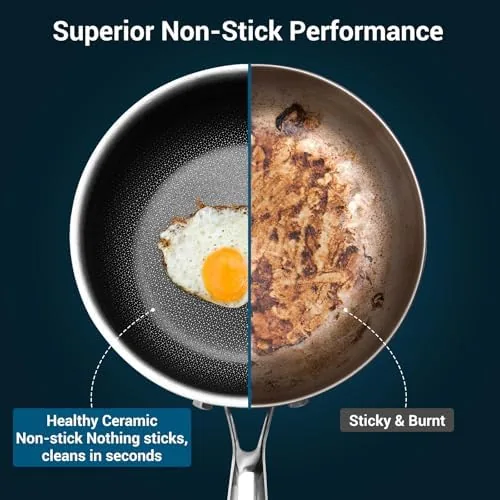
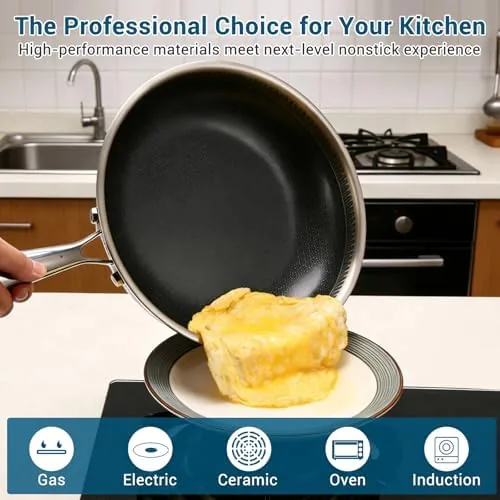
I started with the test that matters most for a hybrid pan: a fried egg with no fat at all. The egg released cleanly after the surface preheated, which showed the ceramic layer doing its job, and the same pan then handled a hard sear on a salmon fillet with a proper golden crust. That range, from delicate to aggressive, is exactly why this kind of pan exists, and it delivered on both ends across a month of use.
The induction performance was a highlight. The flat base made full contact with the glass ring, heat spread evenly across the surface, and there was no hot spot burning the butter while the edges stayed cool. A cream sauce thickened without scorching, and a pan-seared steak built a fond that the stainless exterior handled exactly as intended. The handle stayed cool enough to grip without a mitt through most jobs, and the pan sat steady and level on the burner throughout.
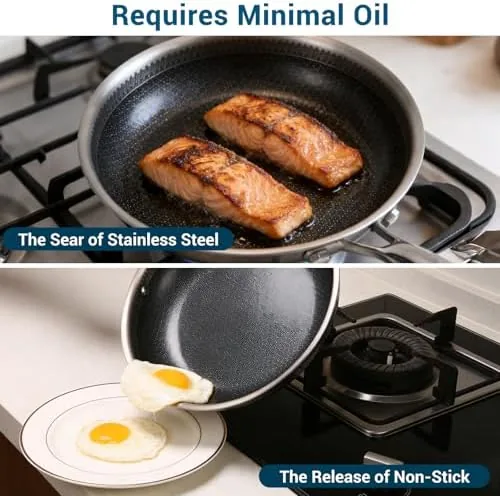
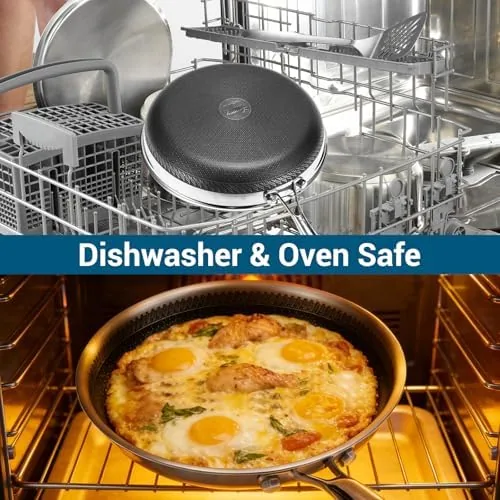
Cleaning revealed the one trade-off you must accept. The ceramic surface is easier to clean than bare stainless: a soft sponge and warm soapy water handled eggs, butter, and most sauces with a single pass. But a hard sear left a brown film on the ceramic layer that needed a short soak and a gentle scrub, and I found that cooking on medium rather than screaming high kept the surface cleaner in the first place. The pan is dishwasher safe by the listing, but hand washing kept the ceramic finish looking fresh.
By the end of the month the pattern was clear. The pan became my default for eggs, fish, and any single serving that needed precision. It never felt like a compromise; it felt like a specialist tool that does a small set of tasks extremely well. The coating showed no scratches after consistent use with silicone and wood utensils, and the steel rim kept its polish with the occasional wipe of oil.
Pros and Cons
Pros:
- Tri-ply stainless construction delivers steady, even heat
- Ceramic nonstick surface is free of PFAS and PFOA
- Induction compatible and oven safe
- Handles delicate eggs and hard sears in one pan
- Compact 8-inch size that stores easily
Cons:
- 8-inch surface is small for batch cooking
- Ceramic layer still needs hand washing and gentle care
- Hard sears can leave a film that needs a soak
How It Compares
Hybrid cookware is a growing category, so I compared this pan against a plain stainless skillet and a standard nonstick pan of the same size to see where the middle ground actually sits.
| Feature | Tri-Ply Hybrid Pan | Plain Stainless Pan | Standard Nonstick Pan |
|---|---|---|---|
| Cooking surface | Ceramic nonstick | Bare stainless | Traditional coating |
| Food release | Excellent for eggs | Requires oil and skill | Excellent |
| Searing | Strong with steel layers | Best in class | Weak |
| PFAS and PFOA | Free | Free | Varies by brand |
| Induction and oven safe | Yes | Yes | Varies |
| Cleaning | Mostly easy, soak after sears | Stubborn at times | Very easy |
The plain stainless pan wins on searing and durability, and the nonstick pan wins on effortless cleanup for fragile food. This hybrid sits between them and, in daily use, that is precisely the point. It seared a steak well enough for my kitchen, released an egg with no oil, and stayed healthy in its materials. For a cook who wants one small pan that refuses to compromise on either end, this is a genuinely strong answer. You can check the current price for this 8-inch hybrid pan on Amazon when you are ready.
Who Should Buy It
Buy this pan if you cook for one or two people, if you have an induction cooktop and want cookware that works on it properly, or if you want to step away from coated nonstick pans without giving up easy eggs. It is a natural fit for a first serious kitchen, a small apartment, or anyone who has one or two frying pans and wants them to be excellent.
Skip it if you feed a family of four at dinner, if you want a full cookware set rather than a single specialist pan, or if you prefer the zero-friction cleanup of traditional nonstick. For everyone else, this is one of the more thoughtful single pans I have tested this year.
How We Test
I cooked with the pan daily for a month, rotating through eggs, fish, sauces, pancakes, and hard sears to stress both surfaces. I ran it on an induction cooktop to check even heating, measured the handle temperature after long cooking, and tested both hand washing and a dishwasher cycle to see how the ceramic layer coped.
I deliberately pushed the ceramic surface with high heat sears, which is the harshest thing you can do to a coated pan, and I noted where it held and where it needed a soak. Independent guidance such as the Wirecutter guide to stainless steel pans is a useful reference for how bare steel behaves, and the Amazon listing for this 8-inch hybrid pan shows the current price and shipping details.
8-Inch Hybrid Pan: Questions People Ask
What makes this pan a hybrid between stainless steel and nonstick?
The pan layers a tri-ply stainless steel body with an aluminum core and tops it with a ceramic nonstick surface. That gives you the even heating and searing ability of steel with the easy food release of a coated pan.
Is the ceramic coating free of PFAS and PFOA?
Yes. The ceramic cooking surface is made without PFAS and PFOA, and the listing confirms the same for the rest of the pan, so it is a safer choice for everyday cooking.
Can the pan go in the oven and on an induction cooktop?
Yes on both counts. The tri-ply steel base is fully induction compatible, and the pan is oven safe, which makes finishing dishes under a broiler or roasting a small portion straightforward.
How do you care for the ceramic nonstick surface?
Hand washing with a soft sponge and warm soapy water keeps the finish in its best shape. After hard sears, a short soak lifts the browned film, and cooking on medium heat keeps the surface cleaner between washes.
As an Amazon Associate, I earn from qualifying purchases.