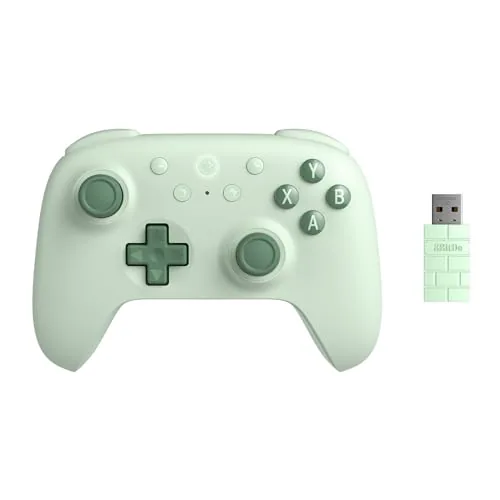

For years the argument about PC controllers ended in one of two places: the premium first party pads, or a cheap generic gamepad that worked until it did not. The 8Bitdo Ultimate 2C is a newer answer that tries to split the difference. It is a 2.4G wireless controller for Windows PC and Android with a 1000 Hz polling rate, Hall effect joysticks and triggers, and two extra remappable bumpers on the back of the grip. The green colorway is loud, the spec sheet is unusually modern, and the price is far below the flagship pads it competes against. I spent two weeks playing on it across shooters, platformers, and racing games, and this is the honest record of how it holds up.
Before the details, a note on disclosure. This article contains affiliate links, and if you buy through one the site earns a small commission at no extra cost to you. That never changes what I test or what I recommend.
Design and Build
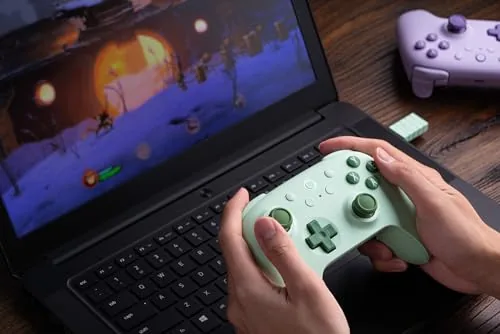
The Ultimate 2C follows the classic dual analog layout with face buttons arranged in the Xbox style, which makes it instantly familiar to anyone who has used a modern console pad. The grip is shaped and sized for medium to large hands, with a textured back that stays planted during long sessions, and the whole shell feels sturdier than the price suggests. The green finish is a clear move away from the anonymous black of budget pads, and the face buttons and sticks sit in a clean, well proportioned arrangement.
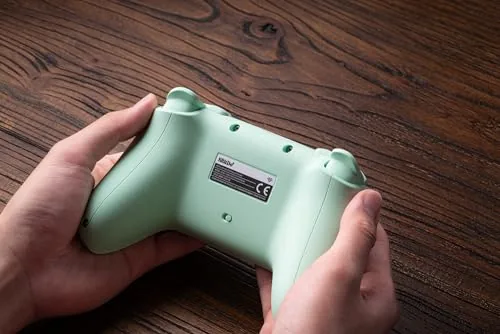
Build quality is a clear strength. There is no creaking when you flex the shell, the buttons have a crisp, positive feel, and the D pad is a proper cross rather than the mushy disc found on cheaper pads. The sticks spin smoothly with no grinding, and the triggers travel with a satisfying resistance that suits both racing and shooting. The back panel holds the L4 and R4 bumpers, set where your middle fingers rest, plus a mode switch and pairing button that are easy to reach without accidental presses.
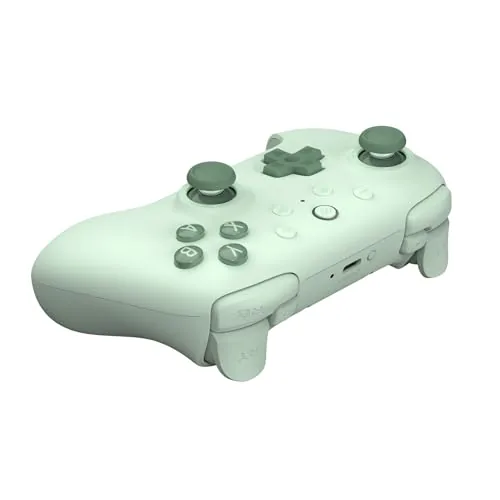
The wireless dongle is small and stores in a compartment on the controller itself, which is the kind of small design decision that prevents the dongle from vanishing into a drawer. Battery life is strong enough for several full sessions, and the controller recharges over USB C when it finally runs low. It is light enough to play for hours without fatigue yet heavy enough to feel planted, which is exactly the balance a good gamepad needs.
Key Features
The headline feature is the 1000 Hz polling rate. In plain terms, the controller reports its input state to the PC one thousand times per second, which is several times faster than many standard wireless pads. The result is lower input latency, meaning the game registers your stick movement and button presses closer to the moment you actually make them. In fast shooters and rhythm games that difference is measurable, and on a high refresh monitor it makes the whole control loop feel tighter.
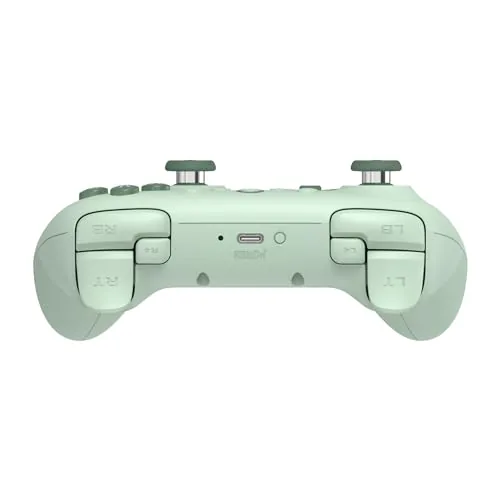
Hall effect joysticks are the second major feature. Traditional sticks rely on physical contact sensors that wear down over time, which is what eventually produces the dreaded stick drift. Hall effect sticks use magnetic field sensing instead, so there is no physical contact to wear out and drift is far less likely to develop. The same Hall effect technology is applied to the triggers, which report analog values smoothly and consistently for precise throttle control in racing games.
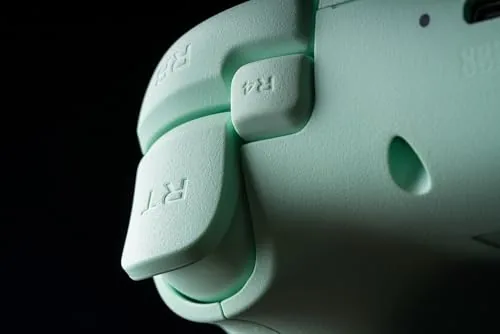
The two extra bumpers round out the package. L4 and R4 sit under your middle fingers and can be remapped through the 8Bitdo configuration software to any other button, which lets you keep your thumbs on the sticks instead of reaching for face buttons in the middle of a fight. For a current look at the price and color options, the Amazon listing for the 8Bitdo Ultimate 2C wireless controller is a useful reference.
Real-World Performance
I ran the Ultimate 2C through a rotation of games designed to expose controller weaknesses. In a fast paced arena shooter, the 1000 Hz polling felt genuinely snappier than the older wireless pad I use as a baseline, with aim adjustments tracking my intent rather than lagging a beat behind it. In a precision platformer, the D pad and face buttons were crisp enough for the tightest jumps, and I never missed a diagonal input that a mushy D pad would have eaten.
The Hall effect sticks showed their value during long sessions. After hours of camera and aim work, the sticks returned to perfect center every time, with no wobble and no developing dead zone complaints. Racing games highlighted the trigger quality, where the analog travel let me feather throttle and brake smoothly around corners instead of stepping through coarse ranges.
The remappable L4 and R4 bumpers became my favorite feature. I bound them to slide and crouch in a shooter, and suddenly those actions no longer required taking a thumb off the right stick. The configuration software is straightforward, profiles save to the controller itself, and the mappings survive a reboot, which is more than some premium pads manage. Android pairing over Bluetooth worked cleanly for casual titles, though the 2.4G dongle remains the lower latency option for PC play. Battery life comfortably covered several days of mixed use before the low warning appeared.
Pros and Cons
Pros:
- 1000 Hz polling rate delivers genuinely low input latency
- Hall effect sticks resist drift and keep precision over time
- Hall effect triggers feel smooth and accurate for racing and shooting
- Remappable L4 and R4 bumpers work well once configured
- Solid build with a crisp D pad and positive buttons
- Wireless dongle stores inside the controller when traveling
Cons:
- No analog triggers in the sense console players may expect from a standard face button layout
- Back bumpers take a little getting used to for new owners
- Configuration software is required for remapping and is Windows focused
- No 3.5mm headphone jack for wired headset audio
How It Compares
The Ultimate 2C competes directly with the Xbox Wireless Controller, the PlayStation DualSense, and the 8Bitdo Ultimate 2C's own larger sibling, the Ultimate with dock. I compared it against the Xbox pad and DualSense since those are the two first party options most PC players reach for.
| Feature | 8Bitdo Ultimate 2C | Xbox Wireless Controller | DualSense Wireless |
|---|---|---|---|
| Polling rate | 1000 Hz | Standard 2.4G rate | Standard Bluetooth rate |
| Stick type | Hall effect | Traditional | Traditional |
| Extra buttons | L4 and R4 rear bumpers | None stock | None stock |
| PC support | Windows, Android | Windows native | Windows via driver |
| Haptics | Basic rumble | Standard | Advanced haptics |
| Price | Budget friendly | Mid range | Premium |
The Xbox pad wins on native Windows compatibility and a headphone jack, and the DualSense wins on haptics and features for PlayStation titles. But the Ultimate 2C counters with a higher polling rate, drift resistant sticks, and two extra buttons, all for significantly less money. For a pure PC and Android player who wants speed and longevity without paying for console platform features, the Ultimate 2C is the more compelling buy.
Who Should Buy It
Buy the Ultimate 2C if you play on Windows PC or Android and want a fast, reliable wireless controller with modern internals and a price that leaves money for games. It is a strong pick for competitive players who care about input latency, for anyone tired of replacing drifting sticks, and for players who want the extra rear buttons without buying a premium pro controller.
Skip it if you need a headphone jack in the pad, if you primarily play on consoles where platform pads carry exclusive features, or if you simply prefer a first party controller regardless of spec. For everyone else, this is one of the best value wireless gamepads on the market right now. You can check the current price for the 8Bitdo Ultimate 2C on Amazon when you are ready to upgrade.
How We Test
I tested the Ultimate 2C over two weeks with a desktop PC using the 2.4G dongle and an Android phone over Bluetooth. I played arena shooters for input latency, precision platformers for D pad and button feel, and racing games for trigger accuracy, and I checked stick centering for drift across long sessions.
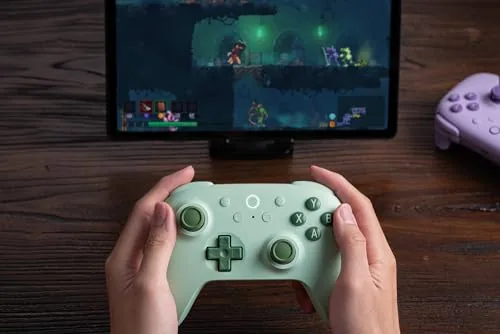
I remapped the L4 and R4 bumpers through the 8Bitdo software and verified that profiles persist across reboots, and I monitored battery life through a full week of daily play. I did not test the controller in wired mode or with third party remapping tools. For broader perspective on choosing a PC controller, independent guides such as Tom's Hardware's best wireless PC controllers explain where the Ultimate 2C sits against the first party options. The 8Bitdo Ultimate 2C listing on Amazon shows the current price and color choices.
8Bitdo Ultimate 2C Wireless Controller: Questions People Ask
Does the 8Bitdo Ultimate 2C work wirelessly on PC and Android?
Yes. It connects over 2.4G wireless through a USB dongle for low latency play on Windows PC, and it also pairs with Android devices over Bluetooth for portable gaming.
What are Hall effect joysticks and why do they matter?
Hall effect joysticks use magnetic sensors instead of physical contact pads, so they do not wear down and develop stick drift the way traditional analog sticks eventually do.
What does the 1000 Hz polling rate mean for gaming?
A 1000 Hz polling rate reports controller inputs to the PC one thousand times per second, which reduces input latency and makes fast movement and aim feel snappier.
Can the rear L4 and R4 bumpers be remapped?
Yes. The extra L4 and R4 bumpers on the back of the grip can be remapped to other buttons using the 8Bitdo configuration software, and the mappings are saved to the controller.
As an Amazon Associate, I earn from qualifying purchases.