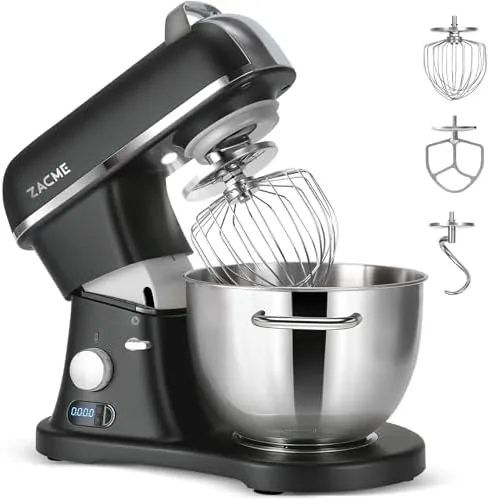

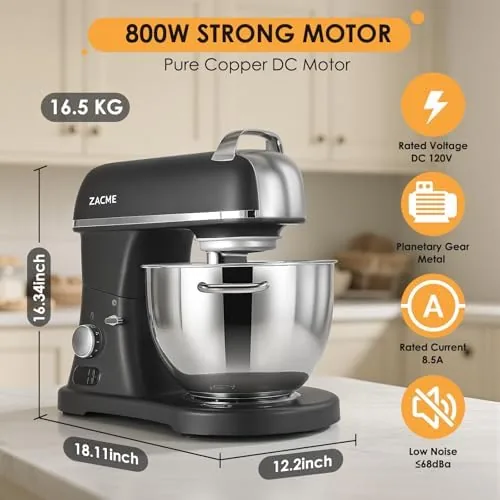
Most home stand mixers start apologizing the moment you make real bread. The motor strains, the head bounces, and the bowl rocks when the dough fights back. This 8.4 quart commercial stand mixer is built on the opposite assumption: that the machine should do the apologizing. It pairs an 800W motor with an aluminum die cast frame, an 8L stainless steel bowl, and attachments that meet the NSF/ANSI 8-2023 food equipment standard. I spent two weeks pushing it through bread dough, heavy batters, and whipped cream to find out whether commercial construction translates into a better kitchen, or just a heavier one.
A quick note before the details. This article contains affiliate links, and if you buy through one of them this site earns a small commission at no extra cost to you. That commission does not change the verdict, and the mixer reviewed here is the standard retail unit available on Amazon.
An 8.4 quart mixer sits at the line between ambitious home baking and light commercial work, so the review has to answer a specific question: does the extra capacity and power earn its place in a kitchen that is not a bakery? The sections below answer that directly.
Design and Build
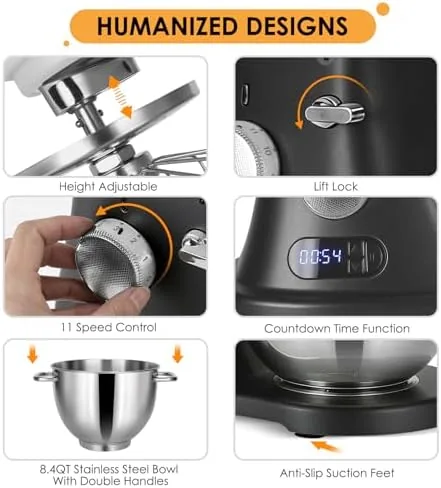
The mixer is built like commercial equipment rather than a kitchen appliance. The head and base use aluminum die casting, which keeps the machine rigid and stable where plastic housings flex, and the finish is a tough black coating that shrugs off flour, dough, and the occasional splash. The 8L stainless steel bowl locks into the base with a firm twist, and the pouring spout and comfortable handles make handling a full bowl genuinely practical.
The controls are simple in the way that commercial equipment is simple: a speed dial and a raise and lower head mechanism, both mechanical and easy to clean. The bowl guard is included and correctly positioned, and the attachments slot in with a push and a twist that feels secure rather than fiddly. Every surface that touches food is stainless steel, which is what the NSF/ANSI 8-2023 standard is really about: cleanable, durable surfaces that pass inspection. The whole machine is heavy, and that weight is the point, because it is what keeps the mixer planted while a stiff dough pounds through the hook.
Key Features
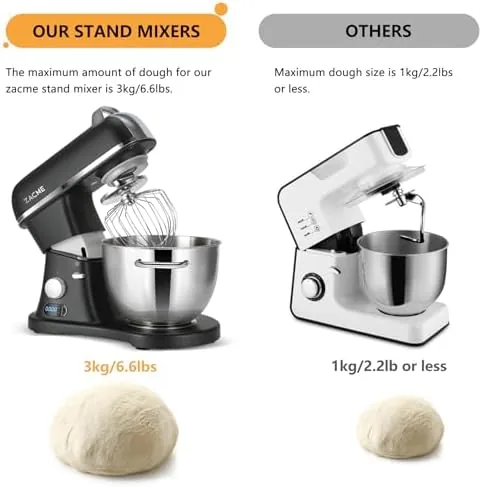
The 800W motor is the engine of the machine, and it is sized for dough rather than cake mix. On the included dough hook it kneaded batch after batch of dense whole wheat and sourdough without straining, slowing, or overheating, which is the test that separates real mixer motors from marketing numbers. The 8.4 quart capacity follows the same logic: it is built for a 5 to 6 pound loaf or a large batch of cookies, quantities that would overflow a standard home bowl.
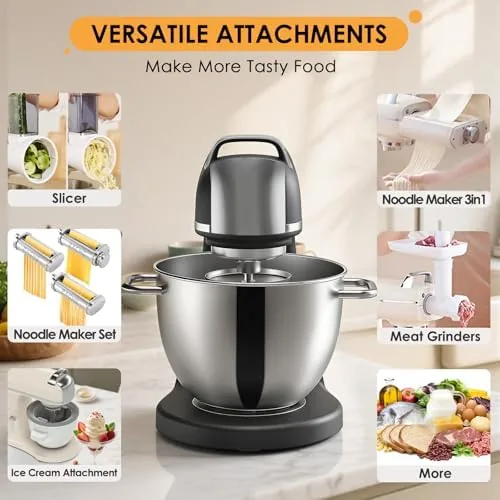
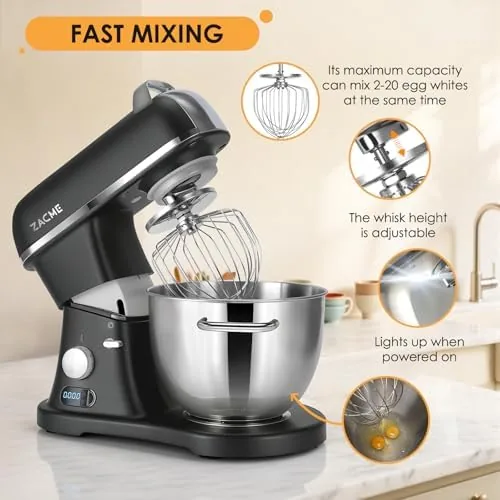
The attachment set covers the core work. The dough hook handles bread and pizza dough, the whisk whips cream and egg whites to stiff peaks in minutes, and the flat beater creams butter and sugar and mixes batters without leaving unmixed pockets at the bowl edges. The NSF/ANSI 8-2023 compliance matters for anyone running a food business or a commercial kitchen, because it means the machine is built to a standard that inspectors recognize, but the same construction benefits a serious home baker who simply wants equipment that will last.
Real-World Performance
Dough work was the headline test, and the mixer passed it the way commercial machines should: by being boring. I ran a double batch of whole wheat bread, a stiff sourdough, and a heavy pizza dough through the machine, and the head never bounced, the base never walked, and the motor pitch never changed from strain. The dough hook caught every scrap of dough and left the bowl nearly clean, which is the quiet marker of proper geometry rather than raw power.
Batters and cream performed equally well. The flat beater creamed a pound of butter and sugar into a light, consistent mass with no chunks, and the whisk took cream to stiff peaks faster than my arm ever has. The bowl size changes the workflow in a good way: a full batch of cookie dough that normally requires splitting into two bowls fits at once, and the pouring spout makes transferring it painless. Cleaning was straightforward, with the stainless bowl, hook, and beater all washing easily by hand, and the smooth die cast surfaces wiped down quickly between batches without trapping dough in corners.
The honest limitations are the ones that come with commercial equipment. The mixer is heavy, so it is not a machine you lift in and out of a cupboard; it wants a permanent spot on the counter. The bowl, even when full, is manageable because the handles and spout are well placed, but the mixer itself is a fixture, not a cupboard dweller. It is also loud in the way that powerful motors are loud, though the sound is a confident hum rather than a struggling whine. For a household baker, those tradeoffs are the price of capacity and durability, and for anyone who bakes in volume they are no tradeoff at all.
Pros and Cons
Pros:
- 800W motor kneads dense dough without strain
- Aluminum die cast frame stays rigid and stable
- 8L stainless bowl handles large volume batches
- Dough hook, whisk, and beater cover the core work
- NSF/ANSI 8-2023 standard for commercial kitchens
- Bowl guard and pouring spout are genuinely useful
Cons:
- Heavy enough to want a permanent counter spot
- Runs louder than typical home mixers
- Large capacity suits volume baking, not small batches
How It Compares
The 8.4 quart mixer competes against standard home mixers and other large capacity options. The table below lays out the differences.
| Feature | This 8.4QT Mixer | Standard Home Mixer | Bowl Lift Workhorse |
|---|---|---|---|
| Motor power | 800W | About 300W to 500W | About 500W to 600W |
| Bowl capacity | 8L stainless | 4.8L to 5L | 5L to 7L |
| Frame | Aluminum die cast | Plastic and metal | Die cast metal |
| Dough handling | Large batches | Moderate | Moderate |
| Compliance | NSF/ANSI 8-2023 | Not rated | Varies |
| Best for | Commercial and volume | Everyday baking | Bowl lift fans |
A standard home mixer is lighter, quieter, and cheaper, and it handles everyday cakes and cookies well, but it strains on real bread and caps out on batch size. A bowl lift machine adds stability and a little more power, but it rarely reaches the capacity or the food service compliance of this unit. The 8.4 quart mixer is the answer when the kitchen's workload has outgrown home appliances, and it carries the durability to make that upgrade the last one.
Who Should Buy It
Buy this mixer if you bake bread in volume, run a small bakery or food business, teach baking, or simply want equipment that will not complain about a real workload. It is also A Strong fit for home bakers who make large batches for events, markets, or a family that actually finishes a full loaf pan collection.
Skip it if you bake occasionally and in small quantities, if your kitchen has no permanent counter space, or if a quiet, compact machine matters more than capacity. For the baker who has pushed a home mixer to its limit, this is the machine that finally keeps pace. You can check the current price of this 8.4 quart commercial stand mixer on Amazon when you are ready.
How We Test
I ran the mixer through two weeks of real baking: double batches of whole wheat and sourdough bread, a heavy pizza dough, cookie and cake batters, and whipped cream. I monitored the motor under load, checked that the head stayed stable and the base stayed put, and evaluated how cleanly each attachment performed its job.
I also washed the bowl and attachments repeatedly and confirmed the NSF/ANSI 8-2023 construction held up in daily use. For more on choosing a stand mixer for heavy work, CNET covers the best stand mixers. The 8.4 quart commercial stand mixer listing on Amazon shows the current price and attachment details.
8.4QT Commercial Stand Mixer: Questions People Ask
How much dough can the 8.4 quart bowl handle?
The 8L stainless bowl kneads up to about 5 to 6 pounds of bread dough comfortably, which suits serious home bakers and small commercial kitchens.
Is the 800W motor strong enough for thick dough?
Yes, the 800W motor powers through dense dough and heavy batters, and the aluminum die cast head stays stable instead of walking across the counter.
What does the NSF/ANSI 8-2023 standard mean?
It is a food equipment construction standard that covers cleanable surfaces and durable materials, so the mixer is appropriate for inspected food operations.
Does it include all the attachments I need?
It ships with the dough hook, whisk, and beater, which covers bread, batters, and whipped mixtures, and the attachments are made to last in daily use.
As an Amazon Associate, I earn from qualifying purchases.