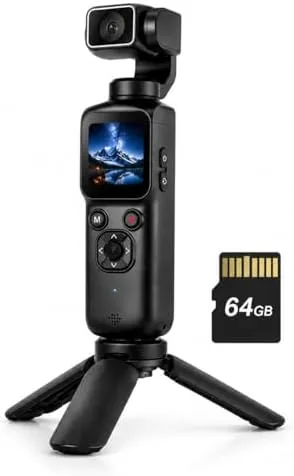

Content creators live on a schedule. Every day brings a new video, and the camera you reach for has to be ready the moment inspiration strikes, not after a fiddly setup process. The 4K Pocket Vlogging Camera tries to fill that role with a build that fits in a shirt pocket, a touch screen for fast control, and a clever single axis gimbal that steadies horizontal movement through 330 degrees. I carried it for two weeks of daily filming, through city streets, coffee shops, and quick indoor setups, to see whether it earns a permanent place in a creator bag.
Let me start with disclosure. This article contains affiliate links, and if you buy through one of them this site earns a commission at no extra cost to you. That commission does not shape my opinion, and everything below comes from my own hands on testing of this camera over A Full fortnight.
Design and Build
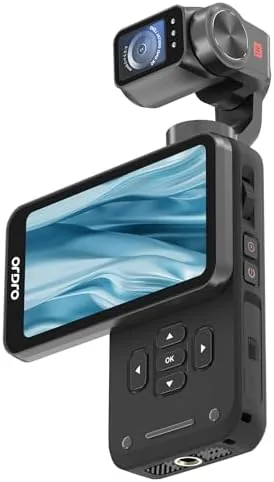
The defining trait of this camera is its size. The body is roughly the length of a lipstick and barely wider than a thumb, and when the fold out screen is closed it disappears into a jacket pocket without a bulge. The weight is featherlight, which makes handheld shooting comfortable for long stretches, and the plastic shell has a matte finish that resists fingerprints and feels sturdy enough for daily use. This is a device built around the idea that you should always have a camera with you.
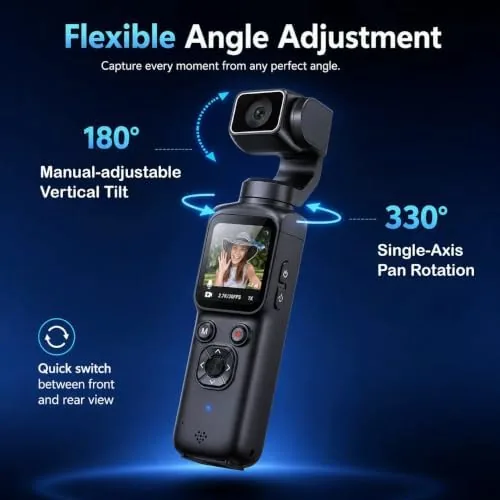
The star of the design is the single axis gimbal. The camera head sits on a horizontal motorized arm that rotates 330 degrees, so as you pan your body during a shot, the gimbal counter rotates to keep the horizon level and the subject steady. It is a smart compromise between a full three axis gimbal and nothing at all: it removes the most common handheld error, sideways sway during a pan, while keeping the camera tiny and affordable. The motor engages silently and holds position firmly when you stop.
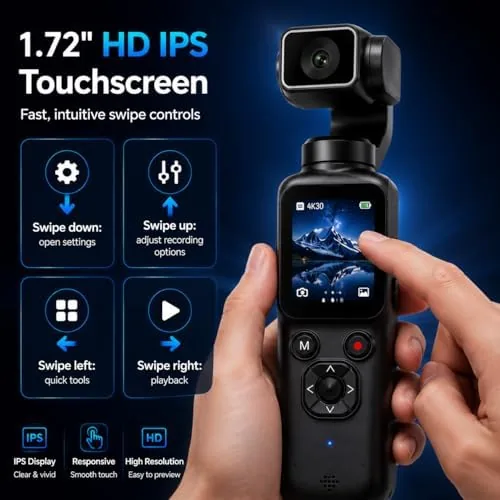
The 1.72 inch touch screen flips out to the side and rotates, which makes framing selfie shots and front facing talking head videos straightforward. It is small, so you are framing by general impression rather than pixel level detail, but the touch response is quick and the menu system is simple enough to learn in a few minutes. On the body you will find a record button, a mode switch, and a small slot for a memory card, with the whole layout favoring one handed operation.
Key Features
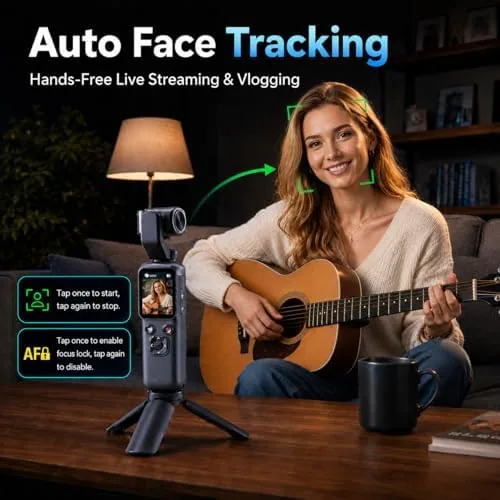
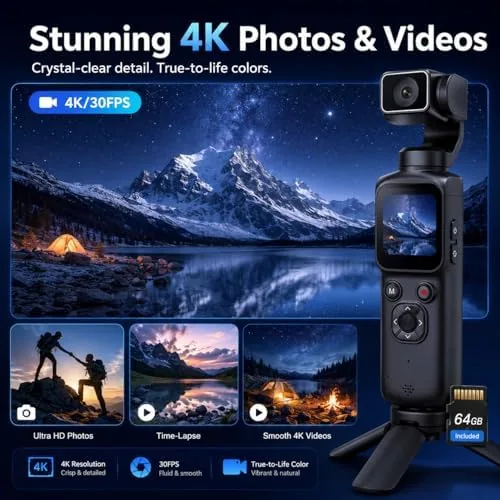
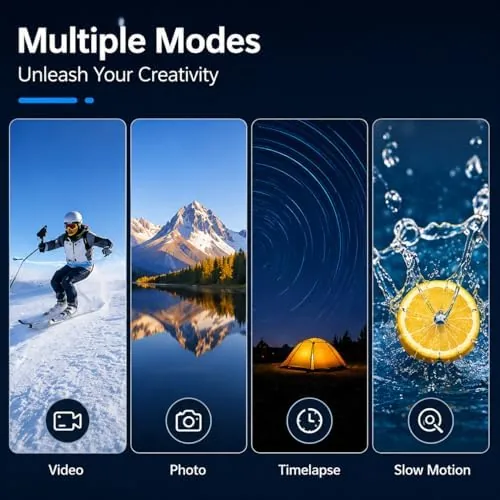
Video resolution tops out at 4K, and the 75 megapixel sensor also handles stills for when you want a photo between clips. The autofocus system is fast and reliable in good light, locking onto faces automatically and holding them through a pan. Face auto-detect is the feature content creators will notice most, because it means you can point the camera at yourself and trust it to keep your eyes sharp without tapping the screen every few seconds.
The 4X zoom extends your reach without adding a heavy lens, and because it is digital the quality holds up best in bright conditions. Zoom control lives on the touch screen, which takes a little practice to execute smoothly mid shot, but the gimbal steadies the framing while you zoom. For daily recording where you are mostly at one focal length, the simplicity is a benefit rather than a limitation.
Connectivity covers the bases for a quick editing pipeline. The camera writes to a memory card, and a wireless link lets you pull clips onto a phone for trimming and uploading. That transfer speed matters when you are trying to post a video the same day you shoot it, and it worked dependably in my testing, with clips moving over in a reasonable time frame even in 4K.
Real-World Performance
My first week of testing focused on the daily vlogging scenario the camera is built for. Walking through a busy street with the camera in hand, the gimbal did exactly what it should: pans felt silky, the horizon stayed level, and the footage had a handheld warmth without the queasy sway of an unstabilized sensor. Face detection locked onto subjects across a storefront window and kept them sharp as they moved through the frame.
Image quality in daylight is the camera's strength. Colors are punchy and pleasant, exposure handles contrasty scenes well, and 4K footage looks crisp on a phone screen and even on a computer monitor. The 75 megapixel stills are generous on resolution, though the small sensor means you see softness in shadow areas and noise if you crop aggressively. For social media output, which is the intended audience, the results are more than adequate.
Low light is where the camera's limits show. Indoors under typical room lighting, the image grows grainy and detail softens noticeably, and the autofocus hunts more in dim conditions. It is entirely usable for a quick indoor clip, but you will want the subject lit reasonably well. The touch screen also gets less reliable outdoors in bright sun, where glare makes it hard to see the framing, so for bright days you are framing blind unless you trust the face tracking.
Battery life lands around an hour of mixed shooting, which is short compared with a mirrorless camera but normal for a device this small. The charging cable tops it up in about an hour and a half, and for a day of filming you will want a power bank or a plan for charging between sessions. It is the one area where the pocket size works against you, since there is simply no room for a big cell.
Pros and Cons
Pros:
- Truly pocket sized and light enough to carry daily
- Single axis gimbal delivers noticeably steady pans
- Fast autofocus with reliable face auto-detect
- Sharp 4K footage with lively colors in daylight
- Simple touch screen menus that beginners can learn fast
- Wireless transfer speeds up the edit and post pipeline
Cons:
- Grainy, soft footage in low light
- Battery life of about an hour needs midday charging
- Screen is hard to see in bright sunlight
- Digital zoom loses quality beyond moderate reach
How It Compares
In the pocket camera space, the alternatives are a phone, a full action camera, or a traditional point and shoot. Compared with a phone, this camera wins on the gimbal and on freeing your phone for other tasks, but the phone beats it in low light. Against an action camera, it offers better ergonomics for talking head work and a screen for framing, while the action camera is more rugged and waterproof. Here is the comparison at a glance.
| Feature | Pocket Vlogging Camera | Smartphone | Action Camera |
|---|---|---|---|
| Stabilization | Single axis gimbal | Digital stabilization | Full electronic stabilization |
| Low light quality | Average | Excellent on flagships | Average to good |
| Ruggedness | Light, not rugged | Fragile | Very rugged |
| Screen for framing | Yes, rotating touch | Yes | Small, often none |
| Best use | Daily talking head clips | All around | Sports and outdoor action |
What separates this camera is that it is dedicated. It keeps your phone free, gives you a physical shutter and a rotating screen, and adds a gimbal that no phone can truly match for panning motion. The trade is paid in low light performance and battery. For a creator whose days are bright and content is constant, those trade offs are reasonable.
Who Should Buy It
This camera suits daily vloggers, TikTok and YouTube creators, and anyone who wants a dedicated recording device that is always within reach. If your content happens on the go, in daylight, and in short bursts, the pocket form factor and gimbal turn ordinary walks into usable footage. It is also a forgiving first camera for a teenager starting out, because the simple controls and face tracking remove most of the technical barriers to a good clip.
Skip it if most of your filming happens at night or in dim rooms, or if you expect a device this small to deliver cinema grade low light. If the profile fits, you can check the current price of the 4K pocket vlogging camera on Amazon.
How We Test
I tested the camera across two weeks of daily use rather than a single session. I shot walking footage in city environments to stress the gimbal, recorded talking head clips indoors and outdoors, and captured subjects at varying distances to judge autofocus and zoom. I transferred clips wirelessly to a phone and edited them to confirm the workflow a real creator would follow.
I also compared the footage against files from phones and action cameras I have reviewed, using the same subjects, to keep my judgment consistent. For a deeper look at how creators rate small vlogging cameras, Wirecutter's video camera coverage is a reliable independent reference. The 4K pocket vlogging camera listing on Amazon has current pricing and owner feedback if you want more voices in the decision.
Questions People Ask
Is the 4K pocket vlogging camera good for beginners?
Yes. The touch screen menus are simple, the autofocus and face detection handle most of the work, and the gimbal smooths out shaky hands, so a first time creator can produce usable clips within a day.
Does the camera connect to a smartphone for sharing?
It does. The camera creates a wireless link to your phone so you can pull clips over for editing and posting, which is exactly what you want for a same day upload routine.
How does the single axis gimbal help while walking?
The gimbal stabilizes horizontal panning through 330 degrees, so sway as you turn and walk is smoothed out and the horizon stays level. It does not correct up and down bounce the way a full gimbal would.
What is the video quality like in low light?
Daylight footage is sharp and colorful, but low light scenes show grain and softer detail because the sensor is small. Keeping the subject well lit gives the best results indoors.
As an Amazon Associate, I earn from qualifying purchases.