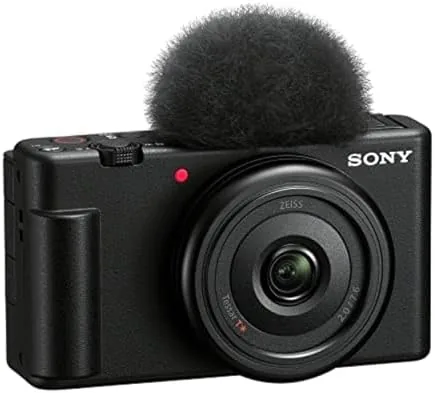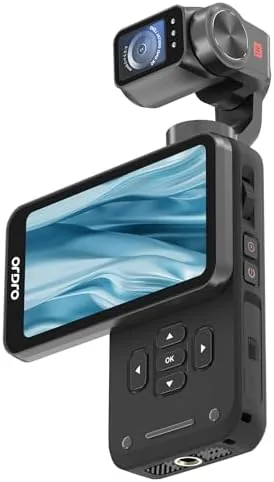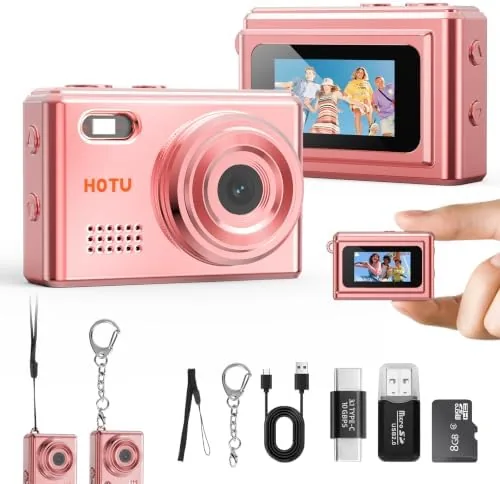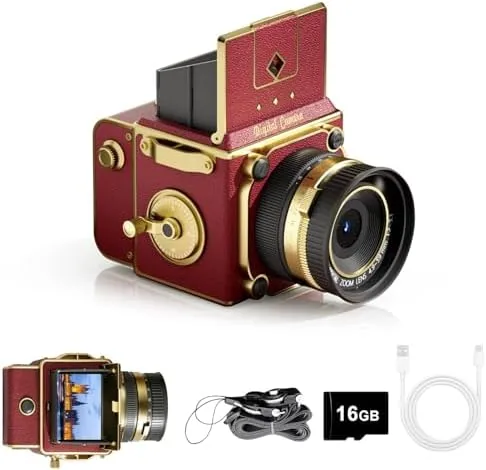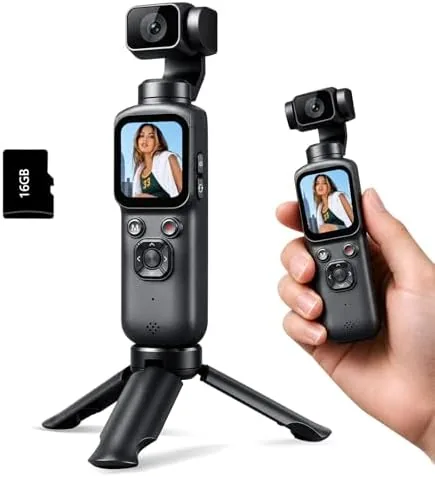

The hardest part of vlogging has never been the camera. It is the physics of holding a camera, pointing it at yourself, and then at the scene, over and over again. Dedicated vloggers solve this with tripods, gimbal mounts, and careful planning. The rest of us just want a camera that makes the whole thing simpler. The 4K vlogging camera with its 330 degree rotating gimbal lens is built around exactly that idea: one lens that spins on the body so you can flip from a selfie view to a scene view without touching a mount or moving your feet. I spent three weeks filming with it to see whether that clever lens is a gimmick or a genuine fix for a real problem.
Before the details, the standard note. This article contains affiliate links, and if you buy through one of them the site earns a small commission at no extra cost to you. That commission never changes what I test or what I recommend.
This is a pocket camera, small enough to disappear into a jacket or a day bag, and it ships as a content creator kit with a tripod and a 16GB card. The promise is simple: everything a beginner needs to start vlogging, in one box, with one clever lens doing the heavy lifting. This review breaks down how well that promise holds up.
Design and Build
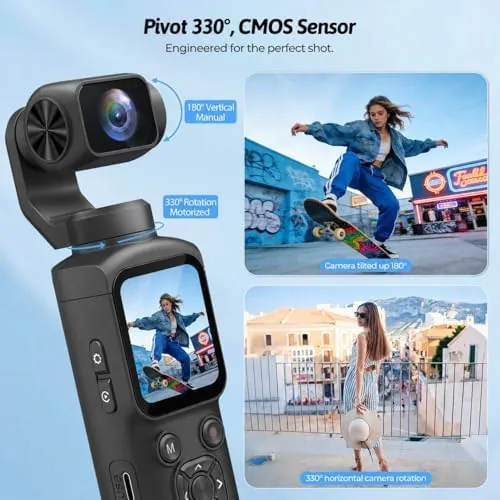
The camera is genuinely small, about the size of a deck of cards, with a rounded, pocket friendly body that is pleasant to hold. The standout physical feature is the rotating lens module on the front. It spins through 330 degrees on a smooth pivot, and the motion feels engineered rather than flimsy. There is a satisfying detent at the selfie position so you know when the lens is facing you, and the rotation holds its position without drifting during filming.
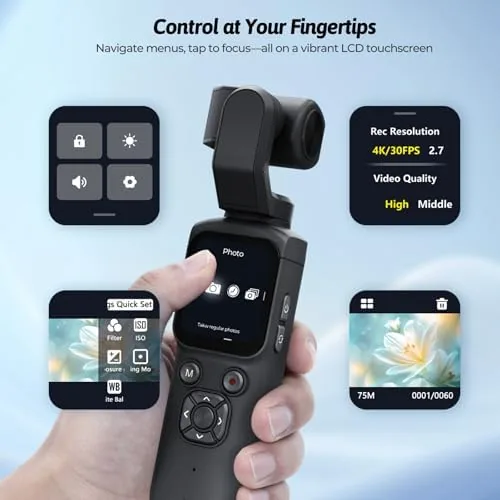
The build quality is good for the price class. The body is plastic but dense, with no creaks or flex, and the compact size means it rides comfortably in a pocket or clips easily to a bag strap. A small screen on the back shows framing and settings, and the controls are minimal: power, record, a zoom rocker, and a mode button. Beginners will not feel overwhelmed by menus, which is exactly the point of this product.
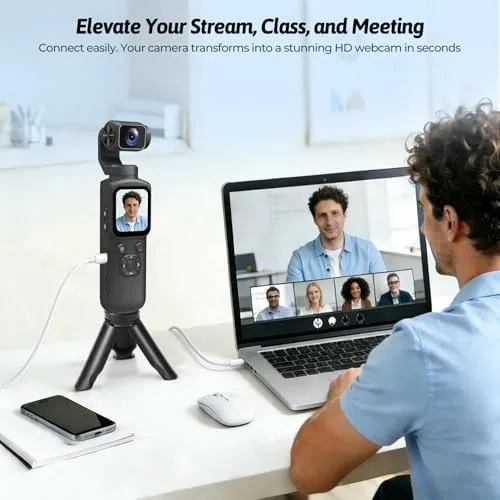
The kit completes the picture. The included tripod is lightweight but usable, with fold out legs that hold the camera steady on a desk or shelf for hands free filming. The 16GB card is entry level storage, enough to get started, and the charging cable and manual round out a box that genuinely works on day one.
Key Features
The headline feature is the 330 degree rotating gimbal lens, and it is worth understanding properly. On a normal vlogging camera, you flip a screen and pray the framing works, or you carry a separate selfie stick and accept the wobble. Here, the lens itself rotates to face you, so you get a true selfie view, and it stops anywhere along its arc for creative angles. That rotation also provides a level of physical stabilization, since the gimbal style mount absorbs small hand movements while the lens spins.
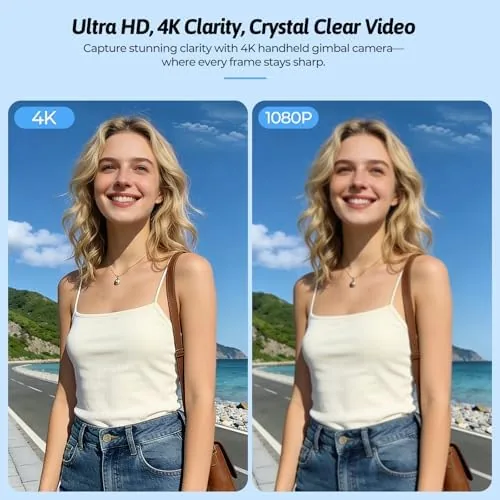
Behind the clever lens is a 4K sensor that captures smooth, detailed video, and a 75MP photo mode for stills. That combination means one small camera covers both sides of modern content creation: video for YouTube and TikTok, and high resolution photos for thumbnails, posts, and prints. The 75MP stills hold up to cropping, which gives beginners room to fix framing after the shot instead of before it.
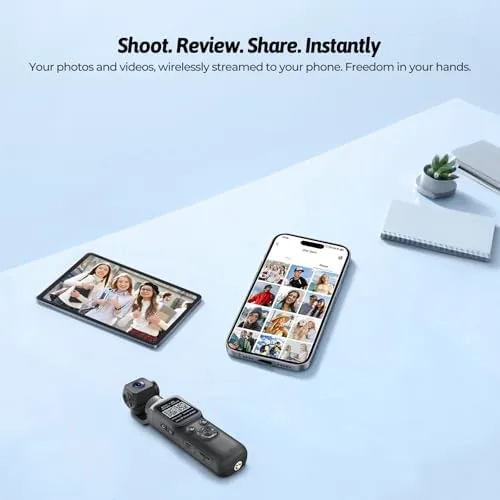
WiFi rounds out the connected toolkit. The camera pairs with a companion app so you can transfer footage to your phone for editing and posting without waiting for a computer, and the app also works as a remote viewfinder for hands off shots. For a look at the current price and full kit contents, you can check the 4K vlogging camera on Amazon before you decide.
Real-World Performance
The rotating lens is the part that had to prove itself, and in daily use it does. I filmed walking vlogs, desk talks, and travel clips, and the flow became natural very quickly. Point the lens at yourself to introduce the video, spin it to the scene for the shot, spin it back for a closing thought. No tripod repositioning, no selfie stick wobble, no guessing whether the framing is right. That is a real workflow improvement, not a spec sheet gimmick.
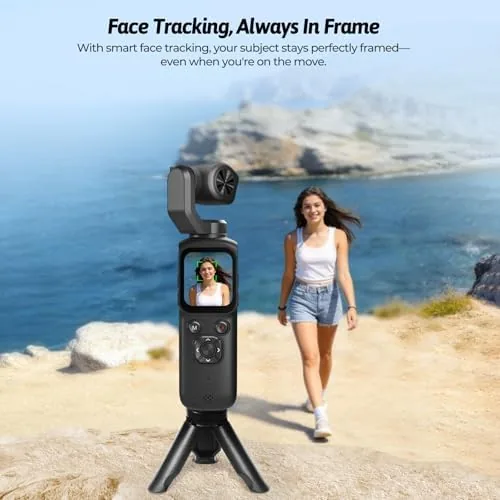
The 4K video quality held up well in daylight. Footage was sharp and colorful, and the gimbal style lens gave handheld shots a steadiness that simple digital stabilization cannot match. Panning was smooth, and the autofocus kept faces in focus when I moved between the selfie and scene positions. The 75MP stills produced clean, detailed photos that cropped beautifully for thumbnails and social posts.
Indoors and in evening light, the budget sensor showed its limits. Video softened, colors flattened, and the image got grainier as the light dropped. The rotating lens cannot compensate for a small sensor in darkness, so serious low light work needs a bigger camera. For daytime vlogging and casual indoor shooting, the results were comfortably good.
Battery life was adequate for a day of casual filming, and the 16GB card covered a reasonable amount of 4K footage, though heavier users will want a larger card. The WiFi transfer moved clips to a phone quickly, and the whole kit lived up to its promise as an easy, complete starter package.
Pros and Cons
Pros:
- 330 degree rotating lens makes selfie to scene switching effortless
- Real physical stabilization for smooth handheld video
- 4K video and 75MP photos cover content creation needs
- Pocket sized and easy to carry every day
- Complete kit includes tripod and 16GB card
- WiFi app transfer for quick editing and posting
Cons:
- Small sensor struggles in low light
- 16GB card fills quickly at 4K
- No external microphone input for better audio
- 75MP photos create large files
How It Compares
Creators choosing a first vlogging camera usually compare this rotating lens model against a smartphone and a traditional flip screen compact camera. Each has a different trade for a beginner, and the table below lines them up.
| Feature | Rotating Lens Camera | Smartphone | Flip Screen Compact |
|---|---|---|---|
| Selfie switching | Lens rotates 330 degrees | App and mounts needed | Screen flips only |
| Stabilization | Gimbal style lens | Digital | Digital |
| Video | 4K | Up to 4K | 4K |
| Stills | 75MP | High MP phone camera | Moderate MP |
| Kit in box | Tripod and 16GB card | None | Card, batteries |
| Low light | Modest | Good | Modest |
Against a smartphone, this camera wins on the physical lens rotation, the real stabilization, and the dedicated recording workflow, while the phone wins on low light and convenience. Against a traditional flip screen compact, it wins on the more flexible lens and the steadier handheld footage. For a beginner who wants to film themselves without fiddling with mounts, the rotating lens camera is the most natural choice of the three.
Who Should Buy It
Buy this camera if you are starting a vlog, TikTok channel, or YouTube channel and you want the simplest possible way to film yourself and the scene in one device. It is also a great pick for travelers and casual creators who want a pocket camera with a complete kit, and for anyone who has ever fought with a selfie stick and lost.
Skip it if you shoot mainly at night, if you need professional audio, or if you want a camera that will grow into advanced videography. For everyone else, this is a friendly, genuinely clever way to start creating. You can see the current price for the 4K vlogging camera on Amazon when you are ready.
How We Test
I tested this camera over three weeks of daily filming, covering walking vlogs, desk talks, travel scenes, and low light tests. I checked the rotating lens mechanism, selfie framing, stabilization on handheld footage, 4K and 75MP quality, battery life, WiFi transfer, and how intuitive the controls were for a beginner.
I did not test the camera in heavy weather or against professional stabilization standards, and I did not evaluate it for studio audio work. For a broader view of the best vlogging cameras, independent coverage from The Verge on the best vlog cameras is a useful reference before you buy.
4K Vlogging Camera: Questions People Ask
What makes the 330 degree lens special?
The lens rotates up to 330 degrees on the body, so you can switch from selfie mode to scene mode instantly without repositioning the camera or buying extra mounts.
Is this a good Camera for a beginner vlogger?
Yes, the kit includes a tripod, a 16GB card, and simple controls, and the rotating lens removes the steepest learning curve of framing your own video.
How do I transfer footage to my phone?
The built in WiFi connects the camera to a companion app, letting you move photos and clips to your phone for editing and posting without a computer.
Does the camera really stabilize handheld video?
The gimbal style lens provides real physical stabilization for smooth pans and walking shots, though it is not a full replacement for a dedicated 3 axis gimbal.
As an Amazon Associate, I earn from qualifying purchases.