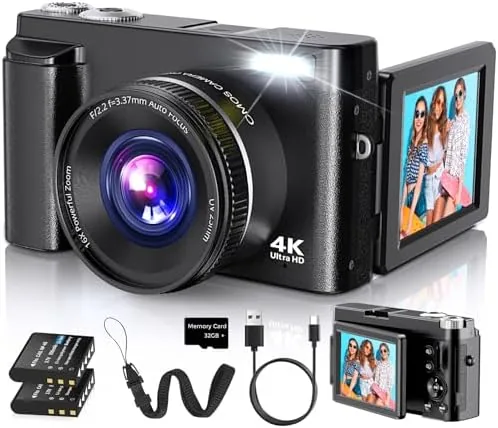

There is a moment in almost every content creator's life when a phone camera stops feeling like enough. The image is fine, but the framing is awkward, the audio is distant, and the lens cannot reach the subject across the room. For teenagers just starting on YouTube, or for travelers who want a dedicated camera without a four figure budget, the answer is often a compact camera like the one in this review. It is a 4K 48 megapixel autofocus Vlogging Camera with a three inch 180 degree flip screen, 16X zoom, and a bundle that includes an SD card and two rechargeable batteries.
I carried this camera for several weeks of real content creation to judge whether it deserves a place in a beginner's bag. The test covered photo quality, video, autofocus behavior, the flip screen, battery life, and the included accessories. Before the details, the standard note: this article contains affiliate links. If you buy through one of them, this site earns a small commission at no extra cost to you, and that never changes what I test or recommend in this review.
Design and Build
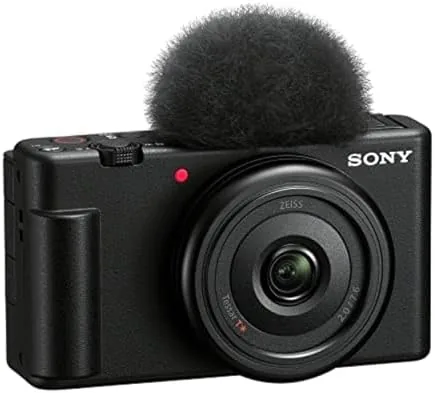
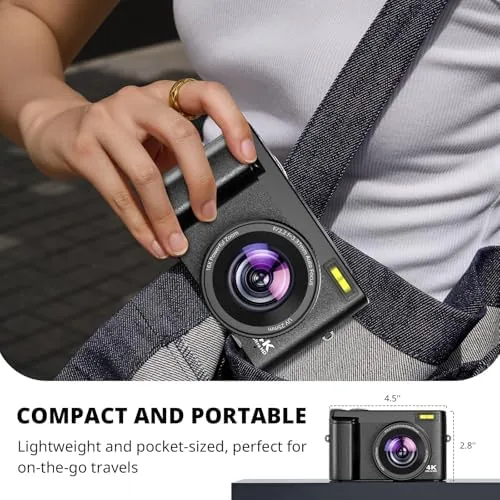
The camera is a compact rectangular body finished in black, small enough for a jacket pocket and light enough to carry through a full day of sightseeing. The lens sits in the center of the front, with the flash and a small microphone opening above it. On top are the shutter button, a mode dial, and the zoom controls, laid out in a familiar point and shoot arrangement that anyone can understand without reading a manual.
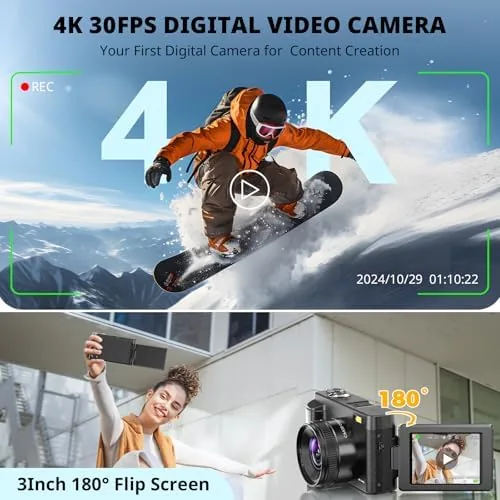
The standout design feature is the flip screen. The three inch LCD swings out and rotates 180 degrees, so it faces you while you record. For vloggers this is the difference between guessing your frame and seeing exactly what the camera sees, and it is genuinely pleasant to use. The screen is not a touchscreen, so navigation happens through the buttons on the back, which is a small trade at this price.
Key Features
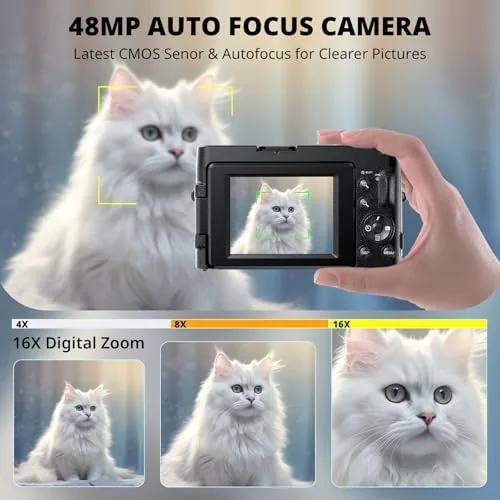
The sensor is rated at 48 megapixels for still photography, and the camera records video in 4K. The 16X zoom is a combination of optical reach and digital extension, which gives you flexibility to frame distant subjects. Autofocus is included, which is a notable upgrade over many cameras in this price range that rely on manual focus.
The bundle is where the value shows. An SD card arrives in the box, so the camera can store photos and video immediately. Two rechargeable batteries are included, meaning one can charge while the other is in use, which matters on a long travel day or a full filming session. A standard USB cable tops the cells up from a wall adapter or a laptop.
Real-World Performance
Daylight performance is where this camera earns its keep. The 48 megapixel stills are sharp and detailed in good light, and colors come out vivid without looking artificial. The 4K video is smooth and usable for YouTube, especially for talking head content where the subject stays fairly still. The flip screen made self-framing easy, and the small microphone pickup works well enough for close range vlogging in a quiet room.
Autofocus is the honest limitation. In bright conditions it locks on quickly and tracks a slow moving subject acceptably. In dim indoor light, it hunts, taking a moment to settle before you can shoot. That is a common weakness in budget autofocus cameras, but it is worth planning around by locking focus before you start recording.
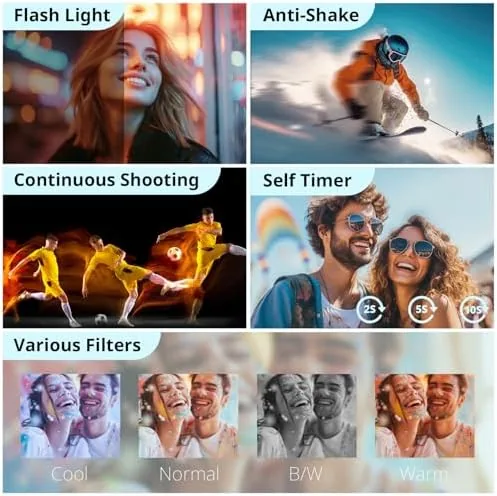
The 16X zoom is useful but has limits. The optical portion of the range preserves quality, and the digital extension lets you reach subjects the lens cannot resolve optically, though image detail softens at the farthest end. For casual travel photography, the reach is welcome; for critical sharpness at full zoom, you will want to keep the subject well lit.
Battery life was solid across the test. With the two included batteries, I could film for a full day of travel without a charger. The camera does not have the endurance of a dedicated mirrorless unit, but for a beginner vlogging camera, the included backup cell removes most of the anxiety.
I also checked how the camera handles everyday filming habits. The menu system groups the most used options sensibly, so changing resolution, switching scene modes, or turning on the timer took only a few presses. The camera saved files quickly, and the included card kept up with 4K recording without any stutter or dropped frames in my testing. For a young creator learning the basics of exposure and composition, that kind of predictable behavior matters more than a long list of advanced controls.
One small but useful detail is the way the camera handles a beginner's mistakes. If the exposure is badly wrong, the camera recovers quickly rather than locking up, and the live histogram on screen gives a simple visual cue for getting the settings right. That feedback loop made the camera genuinely instructive for someone new to manual control, which is exactly what a first vlogging camera should be.
Pros and Cons
Pros:
- 48MP stills with sharp daylight detail
- 4K video recording for YouTube content
- 180 degree flip screen makes self-framing easy
- Autofocus included at a budget price
- Bundle includes SD card and two batteries
- Compact size for travel and pocket carry
Cons:
- Autofocus hunts in low light
- Digital zoom softens at full reach
- Screen is not a touchscreen
- Small microphone limits audio quality
How It Compares
A camera like this competes with two things: other budget vlogging cameras, and the phone that is already in your pocket. The comparison below lays out the honest differences.
| Feature | This 4K Camera | Budget Mirrorless | Modern Phone |
|---|---|---|---|
| Still resolution | 48MP | 24MP | 48-200MP |
| Video | 4K | 4K | 4K or higher |
| Flip screen | Yes, 180 degrees | Yes | Rear screen |
| Optical zoom | Limited | Lens dependent | Limited |
| Batteries included | Two | One | Built in |
| Price | Low | Higher | Very high |
The table shows the realistic picture. A budget mirrorless camera will outperform this one on sensor size and lens options, but it costs several times more. A modern phone may take better low light photos, but it cannot match the dedicated shooting experience, the flip screen, or the purpose built design for learning to compose images. For a teenager starting out, this camera is the most practical step up from a phone.
Who Should Buy It
Buy this camera if you are starting a YouTube channel and want a dedicated device with a flip screen, if you want a compact travel camera that includes everything needed to start shooting, or if you are buying a first real camera for a young creator. The bundle means nothing else is required: card, batteries, and cable are all in the box.
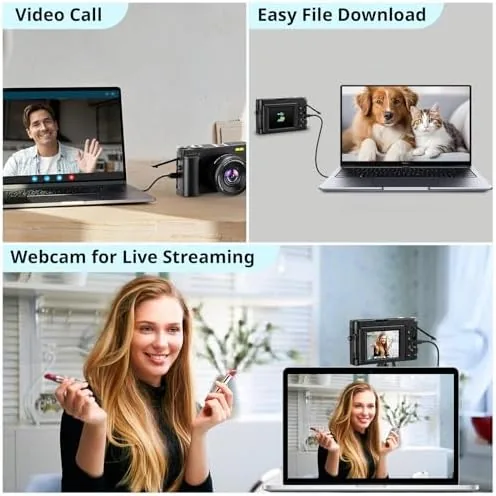
Skip it if you shoot mostly in low light, if you need professional grade video stabilization, or if your phone already covers your needs. The camera makes the most sense for a teenager or a traveler who wants to practice real photography with a dedicated device, and the flip screen turns it into a proper vlogging tool for a first channel. For the beginner who wants to film in daylight and learn the craft, you can check the current price of this 4K camera on Amazon.
How We Test
I used the camera as my primary filming device for several weeks, recording vlog style content, taking stills in daylight and indoors, and testing the 16X zoom across its range. I evaluated autofocus speed in different lighting, the flip screen ergonomics, battery endurance with both included cells, and the real video and photo quality on a computer screen rather than the camera display.
For a broader view of what a vlogging camera should deliver, the guidance from PCMag on the best vlogging cameras is a useful benchmark for setting expectations. The 4K 48MP camera listing on Amazon shows the current price and bundle contents.
Questions People Ask
Is this 48MP camera good for vlogging?
For daytime YouTube filming it works well, with a flip screen for framing yourself, a simple autofocus, and 4K recording. You will want steady lighting for the best results, since autofocus and image quality both prefer bright conditions.
Does the camera come with an SD card and batteries?
Yes. The bundle includes a memory card and two rechargeable batteries, so it can be used out of the box, and a spare charge stays ready while the other cell is in use.
What does the 16X zoom actually do?
The 16X zoom combines optical reach with digital extension. The optical part preserves quality, while the digital extension trades some sharpness at the farthest end, which is normal for a camera in this class.
Is the flip screen useful for self-recording?
Yes. The 180 degree flip screen lets you see the frame while you record yourself, which removes the guesswork of vlogging and keeps your composition centered.
As an Amazon Associate, I earn from qualifying purchases.