
Nostalgia is a powerful marketing tool, and few devices lean into it harder than the 2026 New Retro Game Console. This HDMI game stick promises more than forty thousand games across 23 emulators, dual 2.4G wireless controllers, and plug and play setup, all for a price that makes it easy to justify as an impulse buy. I spent two weeks revisiting childhood favorites and testing it with friends and family to see whether the library is as deep as advertised and whether the hardware holds up to real use.
This article contains affiliate links, and if you buy through one of them the site earns a small commission at no extra cost to you. That commission never changes what I test or what I recommend.
Design and Build
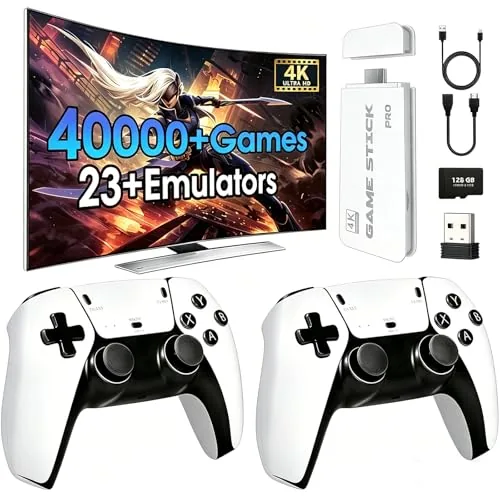
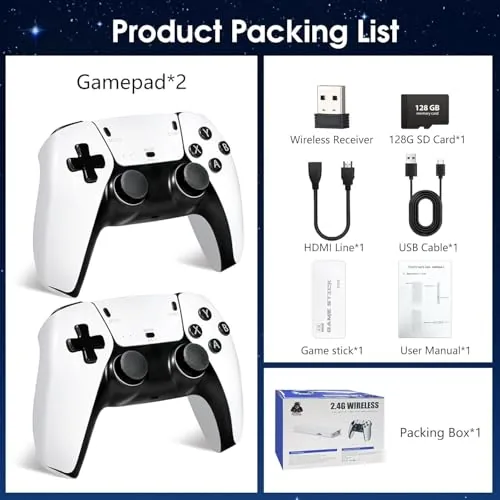
The console itself is remarkably small, a compact HDMI stick that disappears behind the television once plugged in. The 128GB model stores the entire game library internally, so there is no external memory card to keep track of or lose. The build quality is simple but functional, with a small status LED and no moving parts to fail.
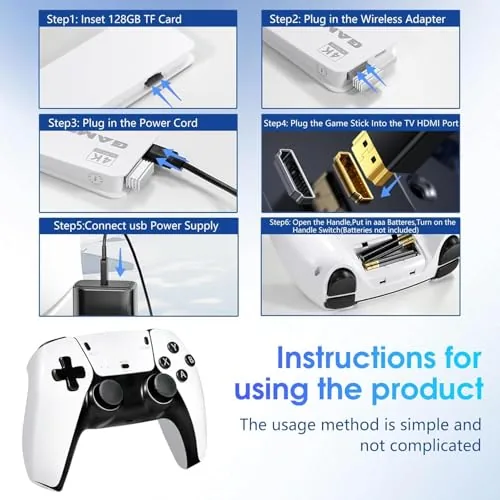
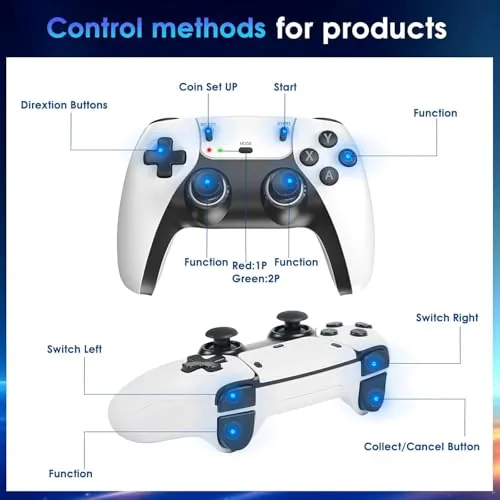
The two 2.4G wireless controllers are the real story. They use the classic D-pad and face button layout that anyone over a certain age will recognize instantly, and they pair with the console through a small USB receiver that plugs into the stick. Setup takes about a minute: connect the stick to an HDMI port, plug in the receiver, and the controllers are recognized immediately.
Buttons are responsive with a satisfying click, and the controllers are light enough for long sessions. The whole kit is clearly built to a price, but nothing feels fragile in the way that cheap retro hardware sometimes does. The stick runs cool even after hours of play, which is a good sign for a device that lives behind a television.
Key Features
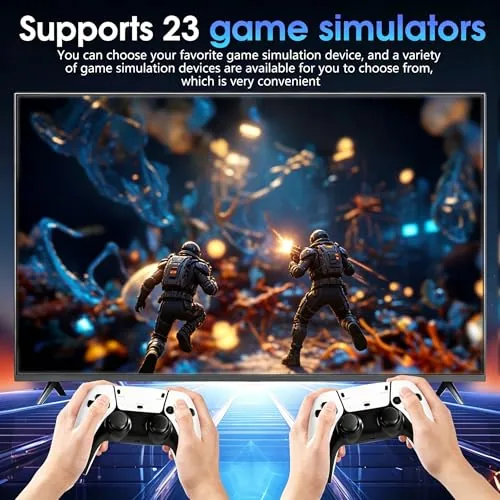
The headline is the game library: over 40,000 titles across 23 emulators. That covers arcade classics, 8-bit and 16-bit favorites, and a broad spread of systems that defined gaming in the 80s and 90s. Browsing is organized by emulator and by genre, and the interface supports saving your progress, which matters for games that were originally impossible to finish in one sitting.
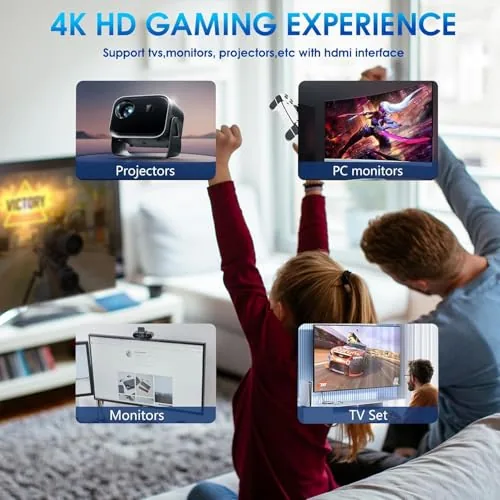
Output is 4K HD over HDMI, and the upscaling makes the games look clean on a modern television rather than blocky and stretched. The image is not a modern remaster, but it is a respectful presentation of what these games were, with scanline and smoothing options for those who want a more authentic look.
Multiplayer is built in from day one because both controllers come in the box. Competitive classics and co-op games work with two players without any extra purchases, which is exactly what you want for a family or a group of friends. For a current look at the price and included accessories, check the Retro Game Console on Amazon.
Real-World Performance
Game compatibility across the library was strong. The most popular arcade and 16-bit titles loaded instantly and ran at a consistent frame rate, and the save state feature worked reliably across multiple systems. A few niche titles showed minor glitches in sound or graphics, which is normal for this class of device, but the mainstream library played cleanly.
The two player experience is where this console earns its keep. I tested it at a small gathering, and within minutes we were trading controllers and trash talk on classic versus games. The wireless range was more than enough for a living room, and the controllers never dropped their connection during several hours of play.
Loading was snappy across the board. Browsing the library, switching emulators, and loading saves all happened within a couple of seconds, and the interface responded quickly to controller input. The stick remained stable with no crashes or lockups across the entire test period, which is more than I can say for some budget retro devices.
The one disappointment is that navigating forty thousand games by scrolling can feel overwhelming. The search and favorites functions help, but the console would benefit from a better way to curate a personal list. Still, once you find your favorites and pin them, the everyday experience is smooth, and the interface remembers where you left off between sessions so you can pick up a game quickly later.
Pros and Cons
Pros:
- Massive library of over 40,000 games across 23 emulators
- Two wireless controllers included for instant multiplayer
- Plug and play HDMI setup with 4K output
- Save state support on nearly every title
- Compact stick design disappears behind the TV
- Reliable performance with no crashes in testing
Cons:
- Browsing 40,000 games can feel overwhelming
- Some niche titles have minor audio or graphics glitches
- Controllers are light and feel budget grade
- No wired controller ports on the stick
How It Compares
I compared this console against a full sized mini console replica and against a modern handheld emulator to see which approach makes sense for a living room buyer.
| Feature | Retro Game Console | Mini Console Replica | Handheld Emulator |
|---|---|---|---|
| Game library | 40,000 plus | Hundreds | Thousands |
| Output | 4K HDMI | HDMI | Built in screen |
| Controllers | 2 wireless included | 1 or 2 included | Built in |
| Multiplayer | Ready out of box | Ready | Limited |
| Portability | Low, TV based | Low | High |
| Price | Budget | Budget | Mid |
Against a mini console replica, the Retro Game Console wins decisively on library size and two player readiness, though the replica has the edge on authenticity and curated polish. Against a handheld emulator, it wins on living room multiplayer and screen size but loses on portability. For a family TV setup, the stick is the strongest value of the three.
Who Should Buy It
Buy this console if you want to relive classic Games on the big screen with minimal fuss and a huge library. It is ideal for families, couples who grew up gaming, and hosts who want a ready made activity for gatherings. The two included controllers mean you do not need to buy anything else to start playing together tonight.
Skip it if you demand authentic hardware or brand official emulation, if you want a portable device, or if you care about perfect accuracy on every single title. For everyone else, this is an affordable ticket back to the games that started it all. You can see the current price for the Retro Game Console on Amazon when you are ready to buy.
How We Test
I tested the console over two weeks across its major emulator categories, focusing on the most popular arcade, 8-bit, and 16-bit titles. I played single player and two player sessions, tested save states across several games, and left the device running for extended sessions to check stability.
I evaluated wireless controller range and latency from across a living room and used the console at a social gathering to test the two player experience with real guests. I did not modify the firmware or add external ROMs, keeping the review focused on the out of the box experience. For a broader perspective on the Retro Gaming market, TechRadar's roundup of the best retro game consoles is a useful reference.
Questions People Ask
How many games are actually included on the console?
The 128GB model ships with over 40,000 titles spanning 23 emulators, covering arcade, 8-bit, and 16-bit classics across many platforms, all stored on the internal drive.
Can I add my own games to the 128G console?
Yes. The 128G storage leaves room to add your own ROM files through the available transfer tools, so the library is not locked to what ships on the device.
Do the two wireless controllers work for two players at once?
Yes. Both 2.4G controllers pair simultaneously through the USB receiver, so two people can play competitive and co-op titles together on the same television.
Does the game stick work on a 4K television?
Yes. The console outputs over HDMI and supports up to 4K HD displays, with clean upscaling that makes classic games look sharp on a modern screen.
As an Amazon Associate, I earn from qualifying purchases.