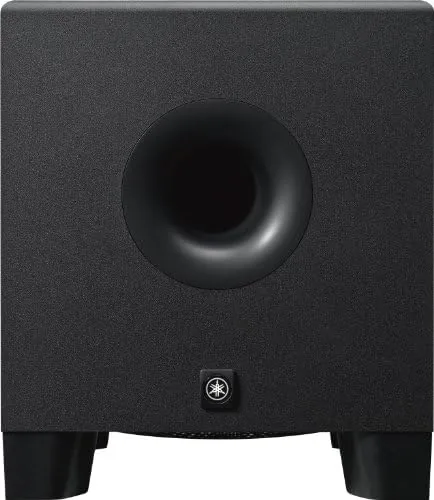

Bass is the hardest part of any mix to get right. A room that sounds fine on the high end can turn mushy below a hundred hertz, and a mix that thumps on your monitors can collapse into nothing on a phone speaker. That is why serious studios treat low end as a separate instrument, one that deserves its own dedicated driver rather than a compromise shoved into a two way cabinet. The Yamaha HS8 subwoofer is built on that idea, an 8 inch powered unit designed to slide into the HS monitor line and take over everything below the satellite speakers. I set it up in my control room for three weeks of mixes, rechecks, and critical listening, and this is the honest record of how it behaves.
Before the details, the standard note. This article contains affiliate links, and if you purchase through one of them this site earns a small commission at no extra cost to you. That commission never changes what I test or what I recommend.
Design and Build
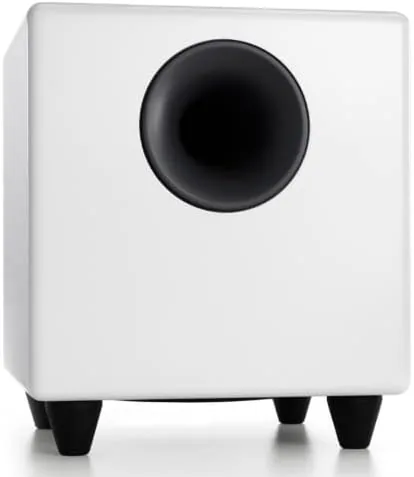
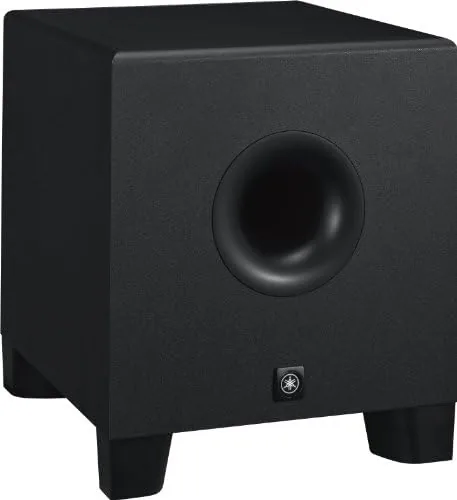
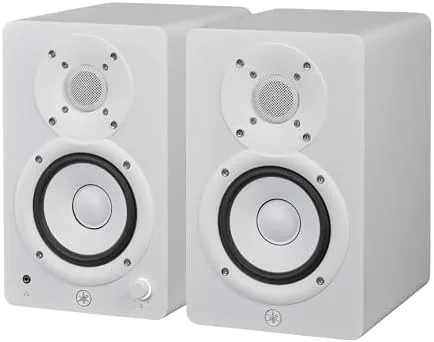
The HS8 follows the visual language of the HS series: a black baffle, a rounded cabinet, and the same clean, no nonsense aesthetic that has made those white cone monitors a studio fixture. The enclosure is solid and heavy for its class, and the weight tells you there is real bracing inside rather than a thin MDF shell. A front facing power indicator keeps the status visible without you leaning around the desk.
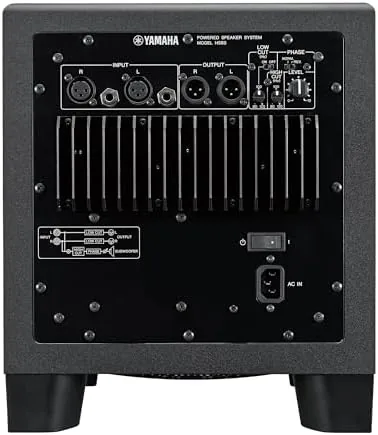
Inside the cabinet sits an 8 inch woofer with a magnet structure sized for authority rather than looks. The bass reflex port is tuned and positioned so you can place the unit close to a wall without the boom that poorly designed ports produce. On the rear panel, the controls follow the classic Powered Subwoofer layout: an input section, output jacks for the satellites, a volume knob, and switches for phase and high cut.
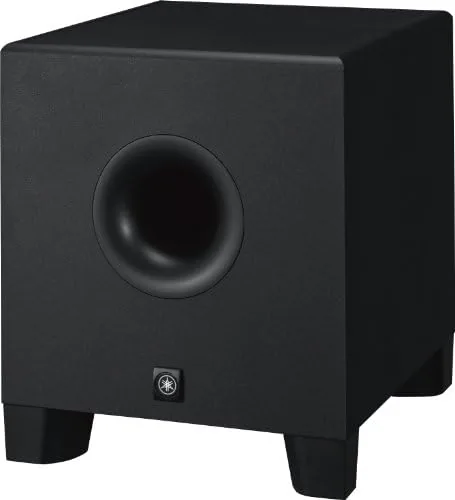
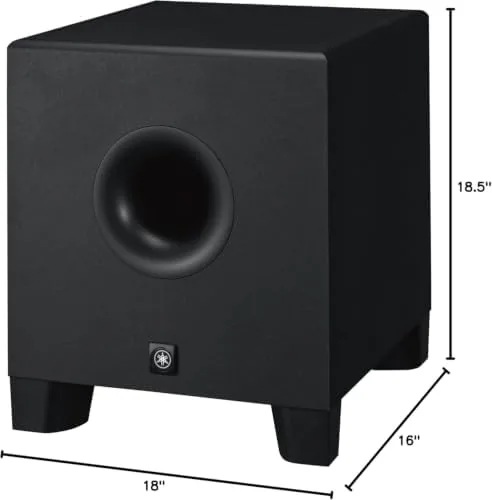
The build quality is what you expect from Yamaha at this price point. Connectors seat firmly, the power switch has a positive click, and nothing rattles even when the cone is working hard. The cabinet is practical too, sized to sit on the floor under a desk or beside a console without dominating the room.
Key Features
The core specification is the 8 inch woofer driven by a 150W Amplifier, a pairing that gives the HS8 a frequency response reaching down to 22Hz at the low end and rolling off naturally at 160Hz at the top. That range covers the sub region that small monitors simply cannot produce, which is exactly the point of adding a subwoofer to a monitoring setup.
Connectivity is built for a studio signal chain. The input section accepts balanced and unbalanced signals through XLR and TRS jacks, and a set of output jacks carries the full range signal onward to a pair of satellite monitors. That pass through design means you run the interface to the subwoofer first, then to the satellites, and the subwoofer's high cut control sets the crossover point between forty and one sixty hertz.
The phase switch is a small control with a real purpose. Inverting the polarity lets you align the subwoofer with the arrival time of the satellite speakers in your particular room, which smooths the region where the drivers hand off to each other. For a current look at pricing and bundle options, the Amazon listing for the Yamaha HS8 studio subwoofer is a useful reference.
Real-World Performance
I integrated the HS8 with a pair of HS7 satellites, placing the subwoofer on the floor between the monitors and about a foot from the front wall, and ran the setup through a full mixing cycle. The first thing that struck me was how the bass arrived as a single coherent image rather than a separate blob. Kicks hit with a thump you feel in the chest, and the low notes of a bass guitar sat clearly defined under the rest of the mix instead of smearing into it.
The real test came when I checked a mix on consumer systems. The low end decisions I made on the HS8 translated faithfully: a kick that was too present in the low mids stuck out on a car stereo, and a bass line that had disappeared under the kick on my monitors came back far too loud on a phone speaker. That translation is the entire reason to own a subwoofer in the first place, and the HS8 delivered it.
I also spent a session mixing at low volume late at night, and this is where the subwoofer's balance earned its keep. Even at modest levels the low end stayed present and musical, which meant I did not have to push the volume to judge the bass, a habit that quickly exhausts the ear. The stereo image held its focus, with no noticeable bloating at the crossover, and the phase switch let me dial out a mild cancellation I heard at the handoff.
The HS8 is not a party subwoofer, and it does not pretend to be. Output is tuned for accuracy, so very high listening levels in a large room will run it out of steam before the satellites do. For monitoring duty in a typical project studio, that is a feature, not a flaw, because accuracy is what protects your mixes.
Pros and Cons
Pros:
- Controlled, musical low end that translates well to consumer systems
- Clean integration with HS series monitors through pass through outputs
- Phase and high cut controls solve real placement problems
- Balanced and unbalanced inputs for flexible studio wiring
- Solid, braced cabinet with no resonance or rattle
- Compact enough for a home studio desk footprint
Cons:
- Not designed for very high output in large rooms
- Single 8 inch driver limits extreme deep bass pressure
- Controls require some setup knowledge to use well
- Front indicator light can be bright in a dark studio
How It Compares
The studio subwoofer market has a few familiar reference points, so I compared the HS8 against the KRK S8.4 and the PreSonus Temblor T8, two 8 inch powered subwoofers in the same working class. All three target project studios, but they make different trade offs between tone, features, and price.
| Feature | Yamaha HS8 | KRK S8.4 | PreSonus Temblor T8 |
|---|---|---|---|
| Driver size | 8 inch | 8 inch | 8 inch |
| Amplifier | 150W | 140W | 200W |
| Frequency response | 22Hz to 160Hz | 24Hz to 100Hz | 22Hz to 200Hz |
| Phase switch | Yes | Yes | Yes |
| Satellite pass through | Yes | Yes | Yes |
| Tonal character | Neutral and accurate | Punchy and musical | Extended and bold |
| Typical price | Mid range | Mid range | Mid range |
The KRK S8.4 has a slightly more musical flavor that some producers enjoy for electronic work, while the PreSonus Temblor T8 offers more amplifier headroom and a higher top end, which suits rooms where you want the subwoofer to cover part of the low mids. The Yamaha HS8 sits on the neutral end of the spectrum, which is exactly what mixing engineers want when the goal is a truthful low end rather than a flattering one. If you already mix on HS series monitors, the tonal match makes the HS8 the natural pairing.
Who Should Buy It
Buy the HS8 if you mix on Yamaha HS5 or HS7 monitors and you have noticed your low end decisions not surviving the trip to other speakers. It is also a strong pick for producers working on bass heavy genres like hip hop, EDM, and rock, where the sub region is the emotional center of the track and guesswork is expensive.
Skip it if you work in a small untreated room without any acoustic treatment, since the subwoofer will happily amplify the problems in your space, or if your listening is casual and you would rather spend the money on better headphones. For anyone doing serious mixing, the HS8 is one of the more honest additions you can make to a monitoring chain. You can check the current price for the Yamaha HS8 on Amazon when you are ready to extend your low end.
How We Test
I tested the HS8 over three weeks in a treated home studio with a pair of HS7 satellites. I ran full mixes across rock, hip hop, and electronic reference tracks, checked the low end on consumer speakers and headphones, and spent an evening mixing at low volume to judge the balance at modest levels.
I experimented with the phase switch and the high cut control across several placements, and I compared the results against the KRK S8.4 and the PreSonus Temblor T8 in the same room. For a deeper look at setting up subwoofers in a studio, independent guidance such as Sound On Sound's studio bass articles covers placement and crossover technique in detail. The Yamaha HS8 subwoofer listing on Amazon shows the current price and shipping options.
Yamaha HS8 Studio Subwoofer: Questions People Ask
What size room does the Yamaha HS8 subwoofer suit?
The 8 inch driver suits small to medium control rooms, typically in the 100 to 200 square foot range, where it adds low end extension without overwhelming the mix.
How do I connect the HS8 to studio monitors?
The subwoofer receives a full range signal from your interface, passes it out to a pair of satellite monitors, and the high cut control sets where the crossover sits.
Does the subwoofer work with the Yamaha HS5 and HS7 monitors?
Yes. The HS8 is designed to pair with the HS series, and matching it with HS5 or HS7 satellites keeps the tonal character consistent across the range.
What does the phase switch on the HS8 do?
The phase switch inverts the polarity of the bass signal, which lets you match the subwoofer to the arrival time of the satellites in your room and smooth the crossover region.
As an Amazon Associate, I earn from qualifying purchases.