
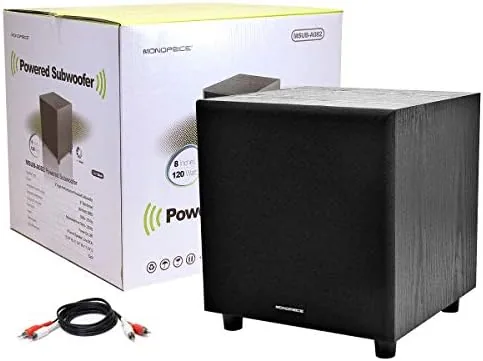
Most speaker systems sound fine until you hear what they are missing. The low octave, the weight of a bass drum, the rumble of an explosion, the body of a cello. Bookshelf speakers and studio monitors simply cannot produce that range, and the gap becomes obvious the moment you add a subwoofer and hear the same music fill out. The Monoprice 60-watt powered subwoofer is built for exactly that job at a price that does not make you flinch. It pairs an 8 inch driver with a built in Amplifier, and it promises to give studio monitors and home theater setups real low end without the usual cost.
Before the details, the standard note. This article contains affiliate links, and if you buy through one of them the site earns a small commission at no extra cost to you. That commission never changes what I test or what I recommend.
Design and Build
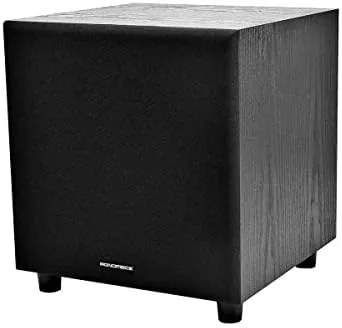
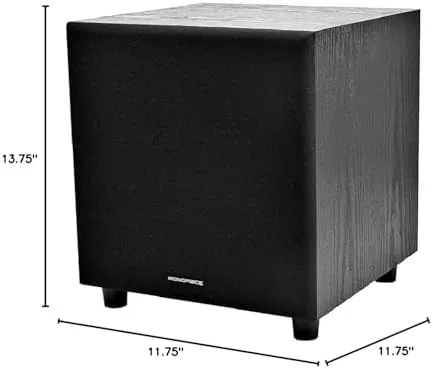
The subwoofer arrives as a compact black box that fits comfortably beside a desk or at the edge of an entertainment stand. The cabinet is finished in a matte black that disappears in a dark room, and the 8 inch driver fires downward, which keeps the cone protected and lets the floor help pressurize the room. A front mounted LED glows to show power, and the back panel holds the controls that matter.
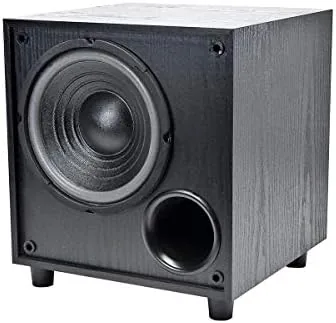
The build feels honest for the price. The cabinet is solid and heavy enough not to slide around on a hard floor when the bass hits, and the port is tuned to extend output without producing audible chuffing at normal listening levels. Every connection point is clearly labeled, which makes a first time setup genuinely painless. This is not a sculpted audiophile object, but nothing about it feels cheap either.
Key Features
The headline is the 60-watt amplifier. It is not a massive amount of power by subwoofer standards, but paired with an efficient 8 inch driver it is enough to fill a small to medium room with bass that you can feel as much as hear. The amplifier lives inside the cabinet, which is what makes the subwoofer powered and self contained, with no need for a separate amplifier channel.
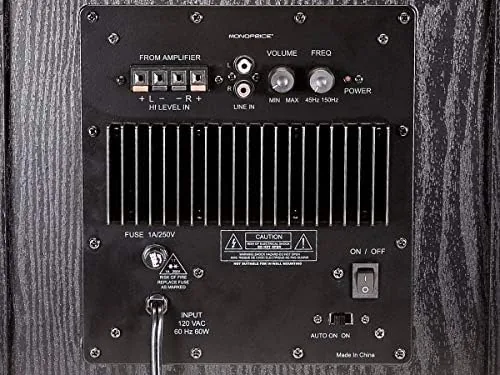
The auto-on function is the convenience feature that earns its keep. The subwoofer stays in a low power standby when nothing is playing and wakes up the moment it senses an audio signal, so you can leave it plugged in and forget about it. On a unit that draws so little power, this is the difference between a subwoofer that is always ready and one you need to switch on by hand every time.
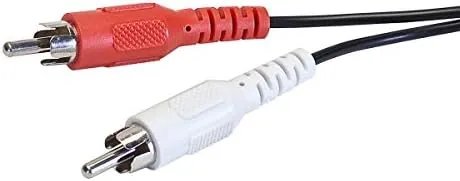
Inputs are generous for the price. You get line level RCA inputs and outputs for connecting to a receiver, plus speaker level terminals that let you wire it in from an amplifier that has no subwoofer output. A crossover dial on the back lets you set where the subwoofer hands the low frequencies back to your main speakers, and a phase switch helps it blend correctly in the room. For a current look at the price, the Amazon listing for the Monoprice 60-watt powered subwoofer is a useful reference.
Real-World Performance
I ran the subwoofer in two very different setups. First, it sat in a home theater with a small receiver and a pair of bookshelf speakers, and it transformed movie watching. Explosions gained weight, the low rumble under a dramatic score became tactile, and dialogue stayed clean because the crossover kept the subwoofer working only where it belonged.
Second, I used it with studio monitors on a desk for music production. The 8 inch driver is not going to reproduce the deepest electronic sub-bass with authority, but for a small project studio it delivered a usable, honest low end that let me mix bass lines with far more confidence than the monitors alone allowed. The auto-on circuit triggered reliably and without the lag or thump that some budget subs produce when they wake.
The crossover and phase controls did real work here. Blending the subwoofer at around 80 hertz with the monitors produced a seamless transition with no obvious hole or bump in the mid bass, and flipping the phase switch cleaned up a boomy spot that the room introduced. At higher volumes the little driver stays composed until you push it hard, at which point it runs out of steam gracefully rather than distorting aggressively.
Pros and Cons
Pros:
- Surprising low end depth for the price
- Auto-on function keeps it ready without wasting power
- Accepts both line level and speaker level inputs
- Compact cabinet fits desks and small rooms
- Crossover dial and phase switch help it blend with any speaker
- Simple setup with clearly labeled controls
Cons:
- Limited output below the deepest bass notes
- 60 watts is modest for large rooms
- Downward firing design needs floor space to breathe
- No wireless connection or remote control
How It Compares
Budget subwoofers split into the very cheap all in one boxes and the more capable separates, and the Monoprice sits in an interesting middle. I compared it against a cheaper 6 inch powered sub and a larger 10 inch budget unit to see where the 8 inch lands.
| Feature | Monoprice 8 Inch | Cheap 6 Inch Sub | Budget 10 Inch Sub |
|---|---|---|---|
| Driver size | 8 inches | 6 inches | 10 inches |
| Amplifier power | 60 watts | 30 watts | 100 watts |
| Auto-on | Yes | Sometimes | Yes |
| Input options | RCA and speaker level | RCA only | RCA and speaker level |
| Bass depth | Good for small rooms | Limited | Deeper |
| Price | Low | Very low | Higher |
Against the 6 inch unit, the Monoprice wins clearly on depth and control, and the extra inputs make it far more flexible. Against a 10 inch budget sub, it gives up raw output but keeps the advantage on price, size, and ease of placement in a small room. For a desk setup or a compact living room, the 8 inch is the better balance. If your room is large and your taste runs to deep electronic bass, the 10 inch becomes tempting, but for most people the Monoprice delivers the biggest improvement per dollar, a point echoed in Tom's Guide's coverage of desktop audio setups.
Who Should Buy It
Buy this subwoofer if you have a pair of bookshelf speakers or studio monitors that are missing their low end, and you want a cheap, simple way to add it. It is an excellent fit for a small home theater, a bedroom setup, a desktop workstation, or a first project studio where budget matters more than reference grade depth.
Skip it if you have a large open room that needs pressurizing, or if your music leans on sub-bass below the range an 8 inch driver can reproduce with authority. If you have an amplifier with no subwoofer output, the speaker level terminals still make it workable. For most setups in normal sized rooms, this is the rare subwoofer that justifies its price on the first listen. You can check the current price for the Monoprice subwoofer on Amazon when you are ready to add some bass.
How We Test
I tested the subwoofer across two weeks in two rooms. In a home theater setup I evaluated movie playback, measured how the crossover blended with a pair of bookshelf speakers, and checked the phase control against a boomy corner. In a desktop studio setup I produced and mixed music to judge the honesty of the low end for monitoring.
I verified the auto-on function by leaving the unit in standby for days and confirming it woke reliably on signal, and I listened at reference volumes to find where the driver began to strain. I did not test the subwoofer in a very large hall, where a single 8 inch driver would be out of its depth. For broader perspective on choosing a subwoofer, guides such as Tom's Guide on desktop speakers explain how a sub fits into a complete setup. The Monoprice subwoofer listing on Amazon shows the current price and specifications.
Monoprice 60-Watt Powered Subwoofer: Questions People Ask
How much power does the Monoprice subwoofer have?
It has a built in amplifier rated at 60 watts driving an 8 inch downward firing woofer, which is enough output to fill a small or medium sized room with audible low end.
Does the subwoofer turn on automatically?
Yes. The auto-on function powers the unit up when it detects an audio signal at the inputs and returns it to a low power standby when the signal stops, so it can stay plugged in and ready.
Can I use it with studio monitors?
Yes. It accepts both line level RCA inputs and speaker level inputs, and it pairs cleanly with studio monitors, home theater receivers, and desktop amplifier setups when blended through the crossover dial.
What connections does the subwoofer have?
It offers line level RCA inputs and outputs plus speaker level terminals, along with a crossover dial and a phase switch for blending the subwoofer with your main speakers.
As an Amazon Associate, I earn from qualifying purchases.