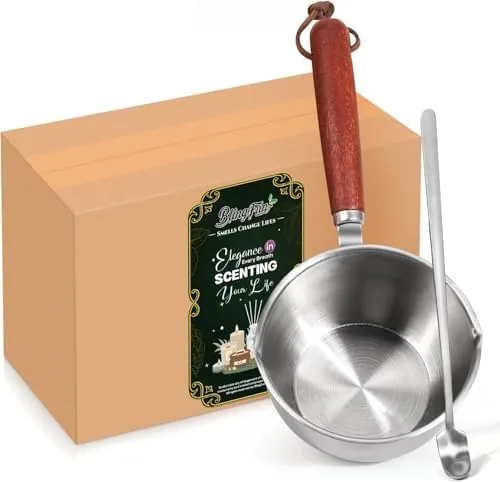

Every home candle maker learns the same lesson eventually: the messy part of the hobby is not the wicks or the jars, it is moving melted wax from wherever it melts to wherever it cures. A saucepan sloshes, a measuring cup drips, and a cheap pitcher turns a thirty minute pour into a sticky cleanup. The wooden handle wax melting pot exists to end that routine. It is a Stainless Steel pouring pitcher with a dedicated spout and a heat-resistant wooden handle, sized for soy wax, beeswax, and paraffin, and it promises clean, controlled pours for beginners and experienced crafters alike. I made four full candle batches with it over three weeks, and this is the honest ledger of how it behaves.
Before the details, the standard note. This article contains affiliate links, and if you buy through one of them the site earns a small commission at no extra cost to you. That never changes what I test or how I report it.
Design and Build
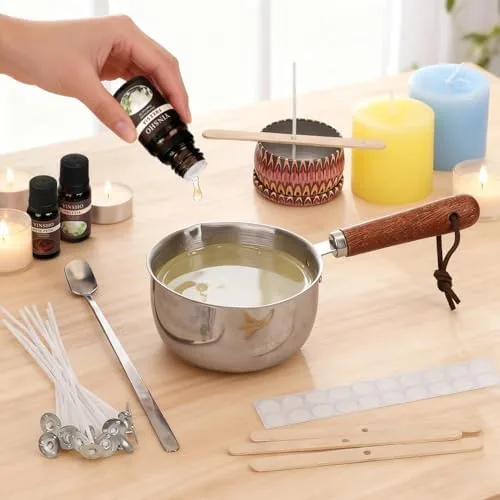
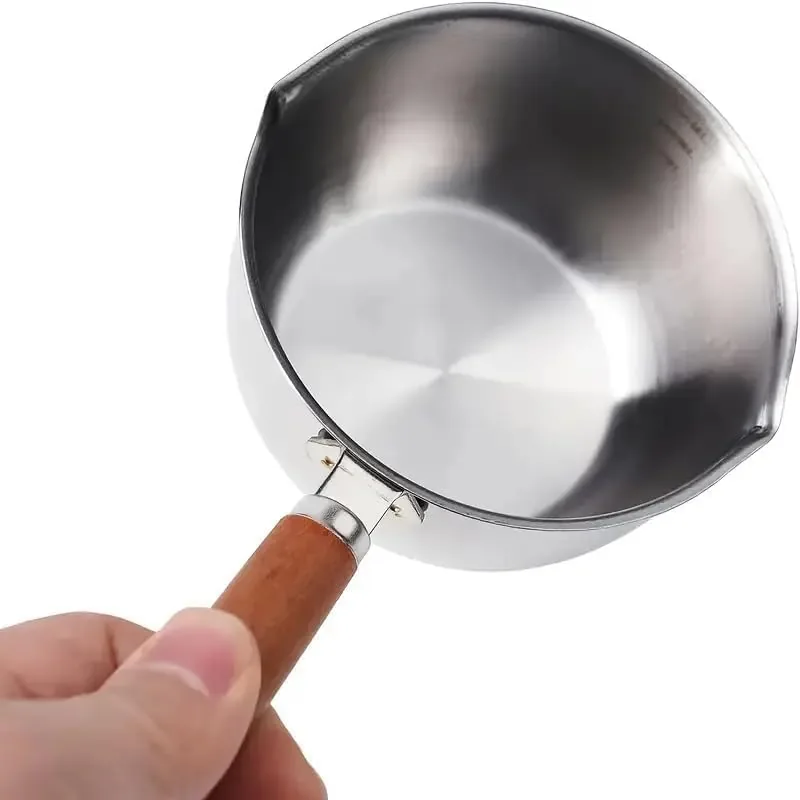
The pot is a single seamless stainless steel vessel with a wide, stable base and a flared rim that guides molten wax inward as you tip it. The wooden handle is the element that separates this from the metal-handled pitchers that scorch your palm, and it is attached with a two-rivet joint that feels firm in the hand. The handle shape is long enough that your knuckles stay well clear of the vessel wall, which matters when the steel itself is radiating heat from the burner below.
The pouring spout deserves specific attention because it is the reason a candle pour goes right or wrong. It is a pronounced V-shaped beak that tapers to a controlled drip point, and it pours in a narrow stream rather than a wide splash. I tested it at a brisk pour and a careful drip-fill, and both produced clean, centered flow into a jar mouth without running down the outside of the pot.
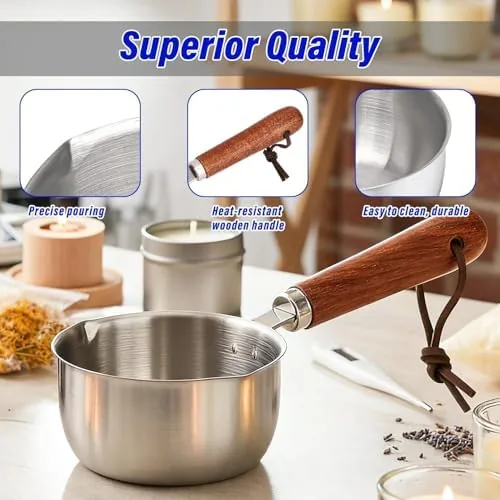
The steel itself is thick enough to resist denting from a tap against the counter edge, and the finish is a brushed satin rather than a fingerprint-prone mirror. There is no non-stick coating to chip or flake, which is exactly what you want for wax, and the wide mouth makes scraping out the last of a batch quick work. For a candle maker the build reads as durable and practical, not precious.
Key Features
The core capability is controlled melting plus controlled pouring in a single vessel, and the pot executes both. It works directly on a stovetop over low heat, or better yet inside a Double Boiler or a pan of water, and it clears the underside of most kitchen cabinets easily when you want to use it upright at the range. The flat base also sits safely on an induction burner, which is a feature many craft pitchers omit.
The spout shape is genuinely the standout feature. It pours in a controlled ribbon that lets you fill a jar to within a millimeter of your line without a single drip, and the interior of the spout stays clean enough that a quick wipe between jars keeps colors from bleeding into each other. If you pour with fragrance oils added, the pot is also easy to stir in the oil with a wooden skewer, and the smooth interior releases every last drop.
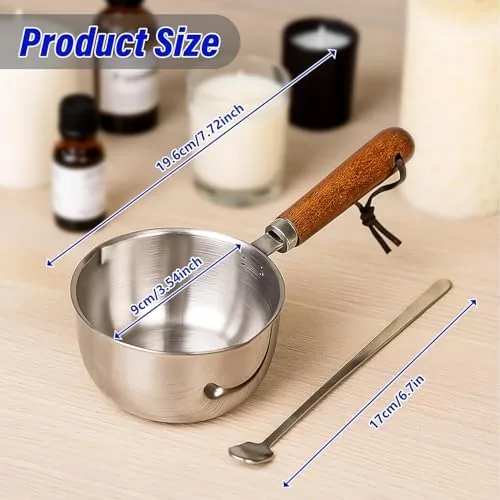
The capacity fits the typical home batch: about a pound of soy wax per fill, which is two to three standard candles, or one ambitious pillar. The handle stays cool through a normal low-heat melt, which I verified by holding it through a full pour without a glove, though I still reached for a mitt when I pushed the heat higher. You can review the capacity, materials, and current price at the Amazon listing for the wooden handle wax melting pot.
Real-World Performance
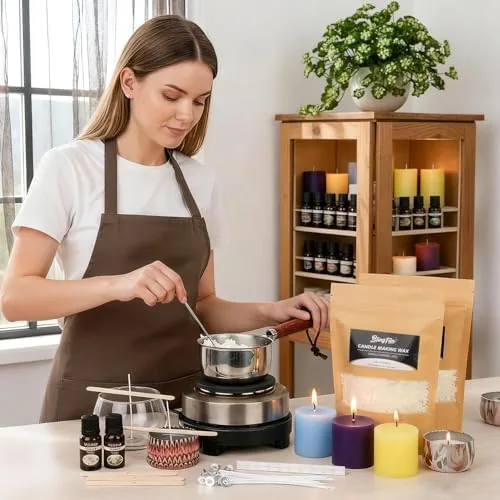
My first batch was a straight soy candle test. I melted a full pound of soy wax in a double boiler with the pitcher sitting in a pan of water, and the wax liquefied evenly with no hot spots at the bottom. The steel distributed the heat well enough that I did not need to babysit the temperature, which is the difference between a relaxing craft session and a stressful one.
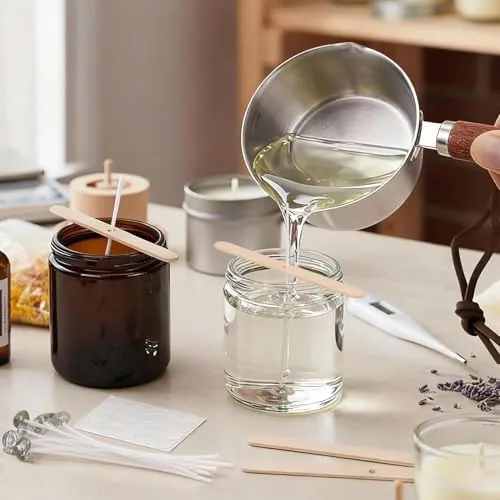
The pour was the revelation. I filled six jars in a row, moving between colors, and the spout delivered a clean stream every time. There were no dribbles down the side, no drips across the work surface, and no burned fingers when I held the wooden handle through each pour. The one hiccup was a slightly heavier waxy coating left in the spout after the last pour, which scraped out easily with the edge of a skewer once the wax set.
Next came beeswax, which is stickier and cools faster than soy. The pot handled it well, and the flared rim made it simple to get a spatula into the corners to release the last of the honey-toned wax. I also melted paraffin for a set of tealights, and the seamless interior wiped clean between colors with a paper towel and a little heat, with no staining and no lingering scent from the fragrance oils.
Cleanup overall was the quiet win of the whole test. Warm water and a dishcloth removed melted wax residue, and the pot went through a dishwasher cycle afterward without a mark on the wooden handle or the steel. A craft tool that cleans like a kitchen pot is rare, and this one earned its place on the drying rack.
Pros and Cons
Pros:
- Precise spout pours a clean stream with no drips
- Wooden handle stays cool through normal melts
- Seamless stainless steel resists staining and scratches
- Flat base works on induction and standard burners
- Easy to wipe clean between colors and batches
- Dishwasher safe steel body simplifies craft cleanup
Cons:
- Capacity tops out around one pound of wax per batch
- Wooden handle needs a mitt for long high-heat holds
- Wax can set in the spout between pours if you pause
- No pouring lip guard for very fast aggressive pours
How It Compares
Pour pots fall into three practical camps: stainless steel pitchers like this one, enameled metal pourers, and improvised kitchen mugs or measuring cups. I compared them the way a candle maker actually would, across a weekend of batches.
| Feature | Stainless Pour Pot | Enameled Pourer | Kitchen Measuring Cup |
|---|---|---|---|
| Pour control | Excellent, tapered spout | Good | Poor, wide rim |
| Heat resistance | High, with wooden handle | Medium, handle gets hot | Medium |
| Cleanup | Easy, dishwasher safe | Careful, avoid chips | Easy |
| Capacity | One pound | Varies | Small |
| Durability | High | Medium, enamel chips | Medium, glass breaks |
| Best use | Home candle batches | Decorative kitchens | No dedicated use |
Against an enameled pourer, the stainless pot wins on durability because enamel chips and stains, and it wins on handle comfort since enameled handles heat up fast. Against a kitchen measuring cup, the pot wins on every pouring task because a cup's wide rim turns a candle pour into a dribble contest. The measuring cup still wins on price, and an enamel pourer wins if you want color in your studio, but for actually making candles cleanly, the stainless pot is the better tool.
Who Should Buy It
Buy this melting pot if you make candles at home and have ever sworn at a drippy pour or a hot handle. It suits beginners who are still learning temperature control, because the steel forgives mistakes and the spout compensates for a nervous hand, and it suits experienced crafters who want a dedicated pour vessel that does not double as a kitchen pot.
Skip it if you only melt wax a couple of times a year and a heatproof glass jug works fine, if you need to melt several pounds at once for commercial work, or if you want a pour pot with a lid for long melting sessions. For everyone else, this is a simple, well-executed tool that removes the most annoying step from candle making. You can check the current price for the wooden handle wax melting pot on Amazon when you are ready to pour.
How We Test
I tested the pot over three weeks and four candle batches: a full pound of soy wax in a double boiler, a beeswax batch poured at low temperature, paraffin tealights, and a two-color layered pour to stress the spout's drip control. I verified the wooden handle temperature through a full pour without a glove, ran the pot through a dishwasher cycle, and checked for staining with fragrance oils and dye.
I did not melt wax directly over a high flame without water, since that can overheat the wax and the steel, and I did not test commercial-scale volumes. For reliable temperature guidance when melting wax, PCMag's overview of candle making supplies lists the safety practices every pour should follow. The wooden handle wax melting pot page on Amazon shows the current price and available sizes.
Wooden Handle Wax Melting Pot: Questions People Ask
Can I use this pot in a microwave to melt wax?
No. The pot is designed for stovetop and double boiler use, and a metal pitcher is not microwave safe. Melting wax over water or low heat gives far better temperature control anyway.
What type of wax works with this melting pitcher?
The pot handles soy wax, beeswax, paraffin, and most candle waxes. The stainless steel interior cleans easily between batches, and it does not retain fragrance or color from prior pours.
How much wax does the pot hold?
The pitcher comfortably melts and pours about a pound of soy wax, which is enough for two to three standard candles per batch, or a set of tealights.
Is the wooden handle safe to hold when the wax is hot?
Yes. The wooden handle stays cool during normal low-heat melting and pouring, though I recommend a mitt for long holds at high heat as a sensible precaution.
As an Amazon Associate, I earn from qualifying purchases.