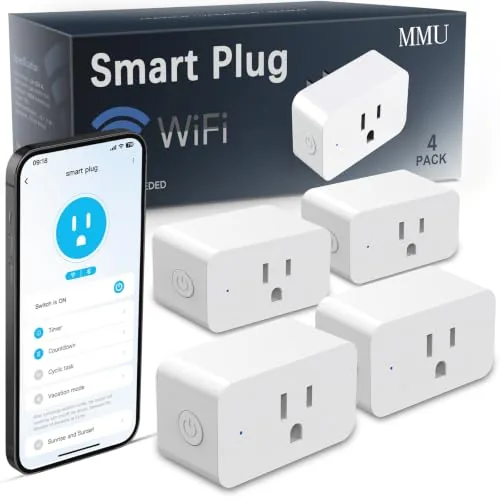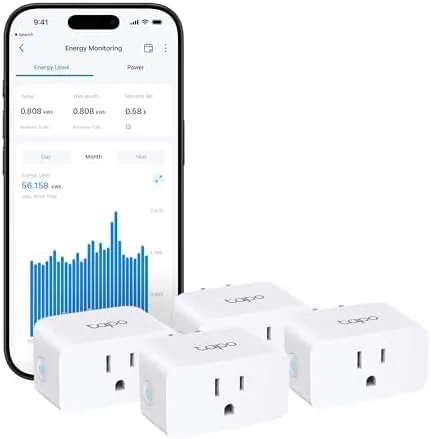

Smart plugs are the gateway drug of the connected home, the cheapest way to make a dumb lamp, a space heater, or a coffee maker answer to your voice. The problem is that most of them tie you to one ecosystem, and if you switch assistants or add a new platform, the plug becomes a very expensive paperweight. The TP-Link Tapo P110M is different because it is Matter certified, which means it can talk to Alexa, Google Home, Samsung SmartThings, and even Apple Home through a shared standard. This four pack adds per plug energy monitoring on top of that, and it holds a UL certification that matters when you are plugging in a heater. I ran all four sockets through three weeks of schedules, voice commands, and power measurement, and here is the honest record.
Before the details, the standard note. This article contains affiliate links, and if you buy through one of them the site earns a small commission at no extra cost to you. That commission never changes what I test or what I recommend.
Design and Build
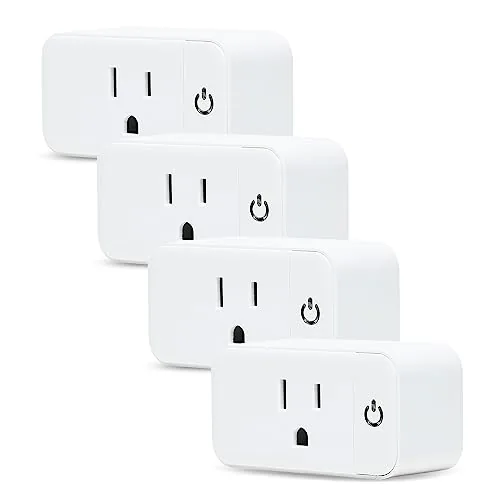
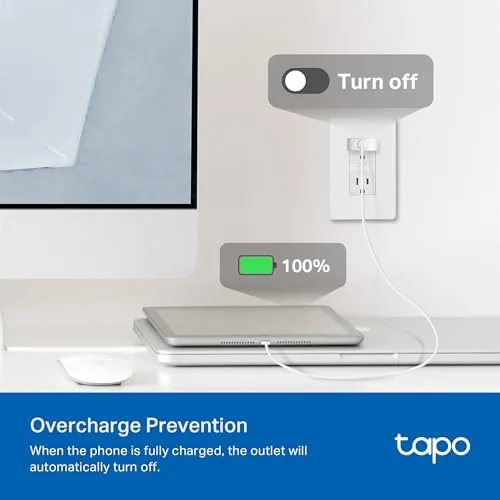
The P110M is a compact plug with a body that stays mostly behind the outlet, which is a bigger deal than it sounds. Bulky plugs block neighboring sockets and make power strips useless, but this one is small enough that two units fit side by side in a standard duplex outlet without crowding each other. The front face carries the outlet plus a small LED that shows pairing status, and a physical button sits on the side for manual on and off control.
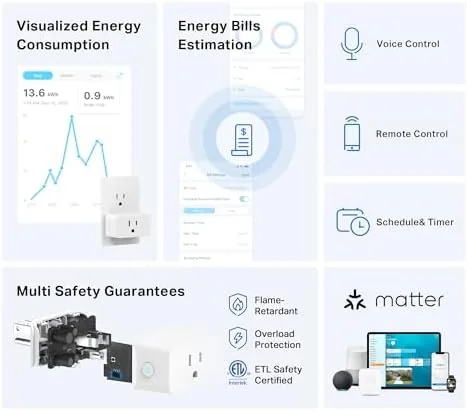
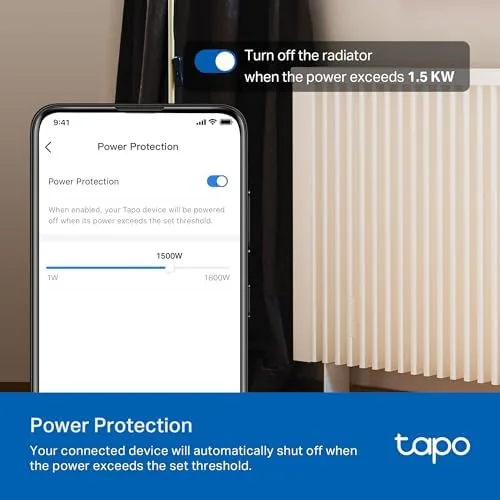
The build quality is solid. The body is rigid with no creak, the prongs seat firmly in the outlet, and the UL certification means the plug has been independently checked for overload and fire safety, which is important when the 15 amp rating is real. The plug is rated to handle a substantial load, so it can run a space heater, a hair dryer, or a small appliance without worrying about the internal relay.
There is a flat profile and a matte finish that picks up few fingerprints, and the physical button provides a dependable fallback when the app is a phone swipe away. Nothing about the design is flashy, but for a device that lives behind a lamp for years, sturdy and compact is the right aesthetic.
Key Features
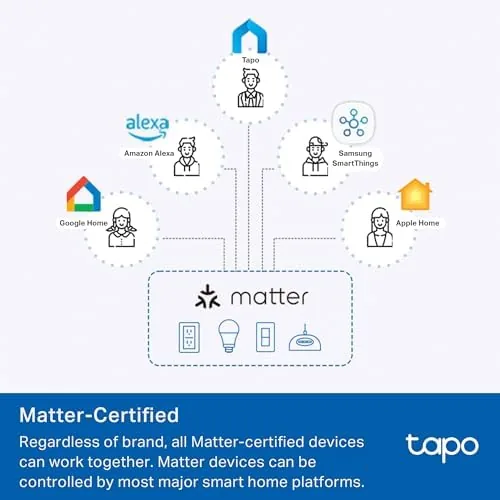
The headline feature is Matter support. Matter is the industry standard that lets smart devices work across ecosystems without a wall of separate apps, and the P110M is certified for it. That means the same plug can respond in the Alexa app, the Google Home app, and the SmartThings app, and through a Matter controller it can join Apple Home as well. In a home where one person uses Google and another uses Alexa, that compatibility removes the usual fight over which assistant gets the plug.
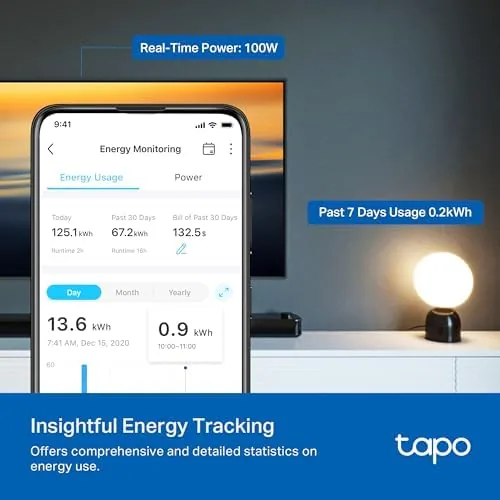
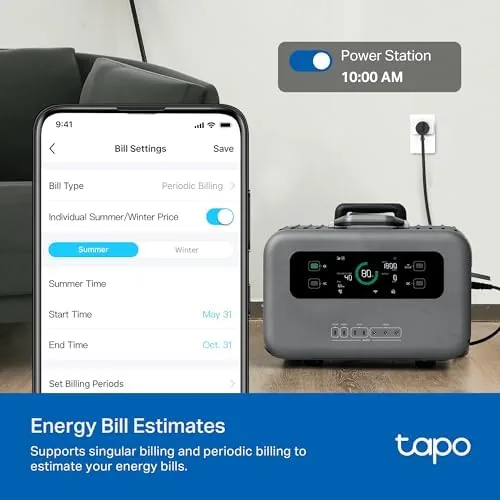
Energy monitoring is the second marquee feature. Each plug reports live wattage and tracks energy consumption over time, so you can see exactly what a space heater costs to run overnight or how much standby power a TV pulls. The data lives in the Tapo app with per plug charts, and the readings update quickly enough that you can watch the number move when an appliance cycles.
The plugs also carry schedules, countdown timers, and away mode randomization, all of which run locally once the plug is paired. That means schedules keep working even when your internet drops, a reliability point that separates quality smart plugs from the cheap ones. For a current look at the price and the exact package contents, the Amazon listing for the Tapo P110M four pack is a useful reference.
Real-World Performance
Setup is the moment most smart plugs fail, and the P110M handled it gracefully. I powered the first plug, opened the Tapo app, and the pairing completed in about a minute. The process does require the phone to be on the 2.4GHz network, since the plugs connect only over that band, and I hit a brief snag when my phone had wandered onto 5GHz, but once I switched bands the pairing finished without drama. I repeated the process for the other three plugs and each one joined in under two minutes.
The schedules were the real test. I set a lamp to come on at dusk and turn off at midnight, a coffee maker to power up at 6:40 in the morning, and a space heater to run for ninety minutes before bed. Every schedule fired on time across the three weeks, and the away mode randomization made the living room look occupied during a weekend trip. The physical button on the side worked as a fallback whenever I wanted to switch something off without reaching for the app.
Voice control worked across both assistants I had on hand. Alexa turned the lamp on and off instantly, and Google Assistant did the same. The Matter pairing meant I did not need to juggle separate accounts, which is the whole point of the standard and the reason this plug is easier to live with than an ecosystem locked alternative.
Energy monitoring delivered the most surprising insight. I left a desktop PC running for a night and watched it draw over 100 watts in sleep mode, a wasteful behavior I had never noticed because the monitor screen was off. The plug's readings matched a reference power meter within a few percent, and the per day charts made the cost of leaving devices on obvious at a glance. It is the kind of feature you buy for convenience and end up using for the data.
The only weakness appeared during a firmware hiccup: after one router reboot, a single plug took a few minutes to reconnect to Wi-Fi. The others recovered instantly, and the incident never repeated, so I filed it under network quirks rather than a design flaw. The 2.4GHz only requirement is the other honest caveat, since homes with mesh networks that hide the band need to expose it during setup.
Pros and Cons
Pros:
- Matter certified for Alexa, Google Home, SmartThings, and Apple Home
- Accurate per plug energy monitoring with running cost data
- Compact body fits two plugs side by side in one outlet
- UL certified for safe use up to the 15 amp rating
- Local schedules keep working when the internet drops
- Physical button gives app free manual control
Cons:
- Connects over 2.4GHz Wi-Fi only, which complicates some mesh setups
- Occasional slow Wi-Fi reconnect after a router reboot
- Matter setup needs a compatible hub or controller
- No built in dimming, plugs are strictly on and off
How It Compares
Smart plugs today split into simple Wi-Fi switches, Zigbee and Z-Wave plugs that need a hub, and Matter enabled plugs like this one. I compared the P110M against a basic Wi-Fi plug and a Zigbee hub plug to see where the extra capabilities pay off.
| Feature | Tapo P110M Matter Plug | Basic Wi-Fi Plug | Zigbee Hub Plug |
|---|---|---|---|
| Ecosystem support | Alexa, Google, SmartThings, Apple | Usually one app | Depends on hub |
| Energy monitoring | Built in | Often absent | Often absent |
| Hub required | No | No | Yes |
| Setup | Quick Wi-Fi pairing | Quick | Hub dependent |
| Offline schedules | Yes | Sometimes | Yes |
| Price per plug | Mid range | Lowest | Varies |
Against a basic Wi-Fi plug, the P110M wins on energy monitoring, Matter support, and offline schedules, and loses only on price. Against a Zigbee plug, the P110M wins on ease of setup because it does not need a hub, but a Zigbee network scales better if you plan to install dozens of devices. For most homes, the P110M four pack is the sweet spot: the setup is simple, the data is genuinely useful, and Matter means the plugs will still work if you switch assistants next year.
Who Should Buy It
Buy the Tapo P110M four pack if you want to automate lamps, heaters, and small appliances without committing to one voice assistant ecosystem, if you are curious which devices drain power on standby, or if you want to replace several single function plugs with one consistent brand.
Skip it if your router cannot expose a 2.4GHz band for setup, if you want dimming control that this plug cannot provide, or if you are building a large whole home Zigbee or Z-Wave mesh where hub based plugs scale better. For everyone else, this is a dependable and genuinely useful way to start a smart home. You can check the current price for the Tapo P110M four pack on Amazon when you are ready to buy.
How We Test
I tested the four pack for three weeks in a live household. I paired all four plugs, ran daily schedules for a lamp, a coffee maker, and a space heater, and issued voice commands through Alexa and Google Assistant. I compared the plug readings against a reference power meter and tracked energy consumption for a desktop PC, a TV, and a space heater overnight.
I tested the away mode over a weekend, forced a router reboot to check reconnection behavior, and left schedules running with the internet unplugged to verify local execution. I did not stress the plugs beyond their rated load or test every Matter controller on the market. For an independent perspective on Matter and the smart plug landscape, resources such as PCMag's roundup of the best smart plugs are worth reading. The Tapo P110M four pack listing on Amazon shows the current price and package details.
TP-Link Tapo P110M Smart Plug Mini: Questions People Ask
Does the Tapo P110M work with Apple Home or Matter platforms?
Yes. The P110M is Matter certified, so through a Matter controller it can be added to Apple Home in addition to Alexa, Google Home, and SmartThings without separate accounts.
Do these smart plugs require a 5GHz network?
No. The plugs connect over 2.4GHz Wi-Fi only, so your phone needs to be on the 2.4GHz band during setup, and a router that hides that band must expose it first.
How accurate is the energy monitoring on the P110M?
Very accurate in testing. The reported wattage tracked closely with a reference power meter, which is enough precision to reveal standby drain and estimate the running cost of appliances.
Can I use one account to control all four plugs?
Yes. All four plugs pair to the same Tapo app account and appear as separate devices, so you can schedule, group, and monitor each outlet independently.
As an Amazon Associate, I earn from qualifying purchases.