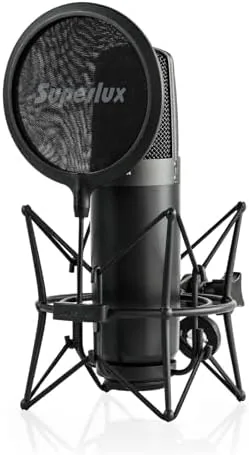

Every home studio begins the same way: one microphone, one interface, and a pile of ambition. The microphone is the soul of that first recording setup, because nothing you do in software can rescue a vocal that was captured poorly at the source. The Superlux CMH8AMKII makes a confident argument that the first microphone should be a large diaphragm condenser, and its 1-inch gold diaphragm, 5dB(A) self-noise, and complete kit bundle look good on paper before you even plug it in. I spent a month recording vocals, voiceover, and acoustic guitar through this microphone to find out whether the performance matches the specification.
Before the details, the standard note. This article contains affiliate links, and if you buy through one of them the site earns a small commission at no extra cost to you. That commission does not change what I test or what I recommend, and every product here gets the same treatment as something I bought with my own money.
Design and Build
The CMH8AMKII wears the classic large diaphragm condenser uniform: a cylindrical body, a woven grille over the capsule, and a solid weight that tells you real metal lives inside. The body is a matte finish that does not show fingerprints, and the grille sits securely with no rattles or loose seams. It feels like a microphone that was built to be handled on a weekly basis for years.
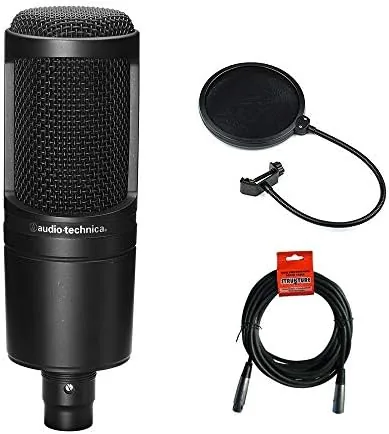
The kit arrives complete, which is where the value lives. In the box you get the microphone, a proper shock mount that actually isolates the capsule from stand vibration, a pop filter with an adjustable arm, and a 5m XLR cable. That last item is a bigger deal than it sounds, because far too many microphone bundles ship without a cable and force a second purchase.
The shock mount deserves specific praise. Many budget mounts are flimsy plastic rings that sag within weeks, but this one holds the mic firmly in place while providing genuine decoupling, which I verified by tapping the stand and hearing nothing in the recording. It is a small thing, and it is exactly the kind of small thing that separates a working kit from a box of disappointments.
Key Features
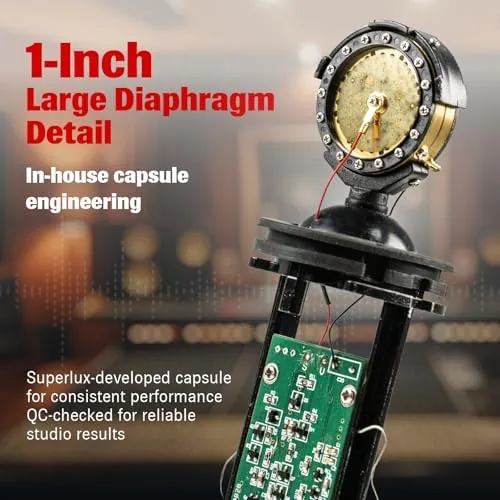
The technical heart of this microphone is the 1-inch gold diaphragm capsule. A large diaphragm of that size is what gives condenser microphones their characteristic warmth and presence, and the gold coating is a performance choice rather than a decorative one, because it helps the capsule capture a wide, smooth frequency response.
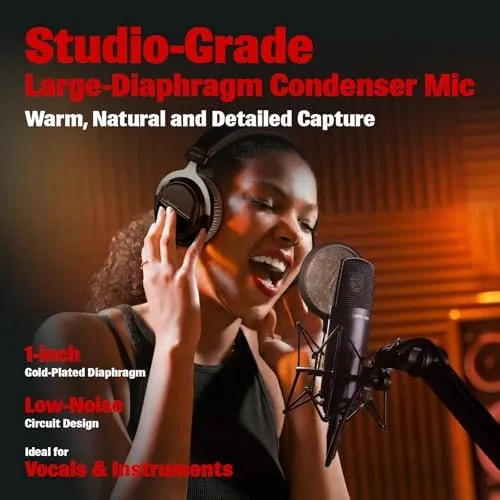
The Cardioid pickup pattern is the other defining feature. It captures sound from the front of the microphone while rejecting much of what arrives from the sides and rear, which is exactly what you want in an untreated room. It is not as isolating as a dynamic microphone in a loud space, but for vocals recorded a hand's width away, it delivers a clean capture with far less room tone than an omnidirectional pattern would.
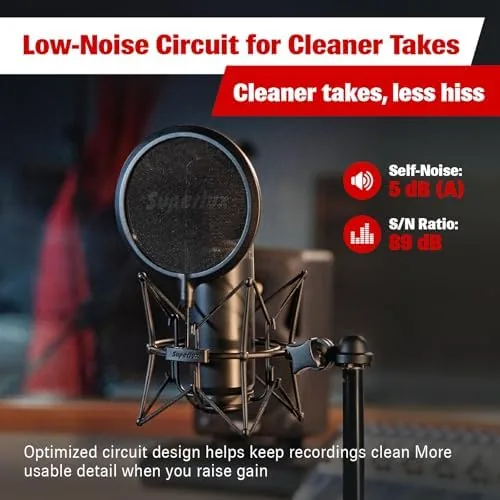
A self-noise of 5dB(A) is genuinely low for this class of microphone. Self-noise is the hiss a microphone adds on its own, and the lower the number, the cleaner quiet recordings will be. Voiceover artists and acoustic musicians will notice the difference, because quiet passages stay quiet instead of sitting on a bed of noise. The microphone is a condenser, so it needs 48V phantom power from an interface or mixer, which is standard practice for this category.
Real-World Performance
I recorded through the CMH8AMKII for a full month across three jobs: lead vocals, voiceover for a podcast, and acoustic guitar. In every case the microphone rewarded close placement with an open, present sound that sits forward in a mix without sounding pushed or harsh. Lead vocals gained a flattering clarity, and that is the first thing a singer notices: the microphone adds detail without adding harshness.
Voiceover was where the low self-noise earned its keep. Narrating at a conversational level, the recorded audio stayed clean, with no audible hiss once the interface gain was set properly. The pop filter did its job on plosive sounds, and with a few inches of distance and a slight off axis angle, sibilance stayed under control without needing aggressive de-essing in the mix.
Acoustic guitar captured beautifully, which is a test that exposes budget condensers quickly. The large diaphragm caught the body of the instrument with a full, dimensional tone, and the cardioid pattern kept the room, which had one bare wall, from dominating the recording. Off axis rejection was solid enough that a background of keyboard clicks remained inaudible in the final take.
Positioning the microphone mattered more than any knob on my interface. At one hand width from the source, the proximity effect added a flattering low end to male vocals, while pulling back to a foot cleaned up the tone for voiceover work. I also confirmed that the pop filter arm stayed rigid through the month, and that a modest gain setting on a clean interface produced a signal with no audible noise floor. The kit is forgiving enough for a first studio and precise enough that a careful engineer can rely on it.
Pros and Cons
Pros:
- Open, detailed vocal capture that flatters most voices
- Low 5dB(A) self-noise keeps quiet passages clean
- Genuine shock mount isolates stand vibration well
- Complete kit includes pop filter and 5m XLR cable
- Solid metal build that feels built for the long term
Cons:
- Requires 48V phantom power, so an interface is mandatory
- Cardioid pickup still catches room tone in live rooms
- No built in high pass filter or pad on the body
How It Compares
Set against the better known budget large diaphragm condensers, the CMH8AMKII holds its own on sound and wins on the completeness of the bundle. The included shock mount and cable are the kind of extras that competitors charge separately for, which changes the real cost of the comparison.
| Feature | Superlux CMH8AMKII | Budget LDC Alternative |
|---|---|---|
| Capsule | 1-inch gold diaphragm | Varies by model |
| Self-noise | 5dB(A) | 10dB(A) to 18dB(A) common |
| Shock mount | Included | Often sold separately |
| Pop filter | Included | Often sold separately |
| XLR cable | 5m included | Not included |
| Phantom power | 48V required | 48V required |
If you already own a shock mount and cable, a bare microphone may cost you less, and you can choose a different voicing to match your voice. If you are building a studio from nothing, the CMH8AMKII saves you two extra purchases and starts you recording the day it arrives. Voiceover veterans in the community have compared it favorably with far more expensive condensers, and reviews at Sound On Sound remain the best place to understand what a good home studio microphone should do.
Who Should Buy It
Buy the Superlux CMH8AMKII if you are a singer recording your first vocals, a voiceover artist who needs a clean low noise capture, or a home studio builder who wants one complete kit instead of three separate purchases. The 1-inch capsule gives you a sound that will not become the weak link in your chain for years.

Skip it if you record in a loud untreated room where a dynamic microphone would isolate better, or if you already own a shock mount, pop filter, and cable and want to spend only on the capsule. For most people starting a home studio, this is the rare kit where the bundle is the real product, and you can check the current CMH8AMKII price on Amazon when you are ready to record.
How We Test
I recorded the CMH8AMKII across three real projects over a month: lead vocals, podcast voiceover, and acoustic guitar. I paired it with a clean Audio Interface, tested different distances and angles, and listened for the specific flaws that plague budget condensers, including harshness, excessive hiss, and boominess on plosives.
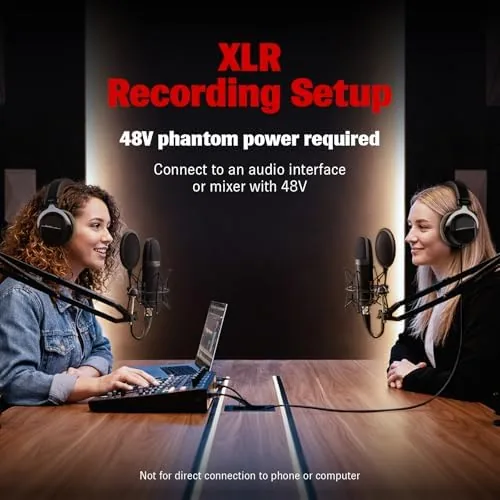
I also stress tested the kit components, tapping the stand to confirm the shock mount isolation and leaving the cable coiled and uncoiled repeatedly to check the connectors. The microphone needed phantom power from the interface, so I verified behavior with and without it, and I confirmed that gain staging at a typical interface level produced clean recordings.
The Amazon listing for the Superlux CMH8AMKII shows the full kit contents and current pricing if you are building a studio of your own.
Superlux CMH8AMKII: Questions People Ask
Is the Superlux CMH8AMKII good for recording vocals?
Yes, the 1-inch gold diaphragm delivers an open, detailed vocal sound with low self-noise, which makes it a strong choice for singers and voiceover work in a home studio.
What is included in the CMH8AMKII microphone kit?
The kit includes the microphone, a shock mount, a pop filter, and a 5m XLR cable, so you have everything needed to connect to an interface or mixer.
Does the CMH8AMKII need phantom power?
Yes, like most condenser microphones, the CMH8AMKII requires 48V phantom power from an audio interface or mixer to operate.
As an Amazon Associate, I earn from qualifying purchases.