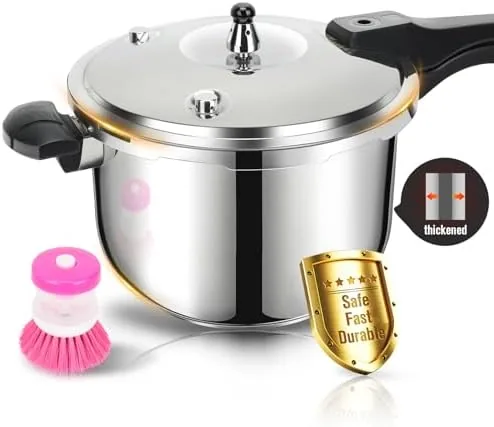

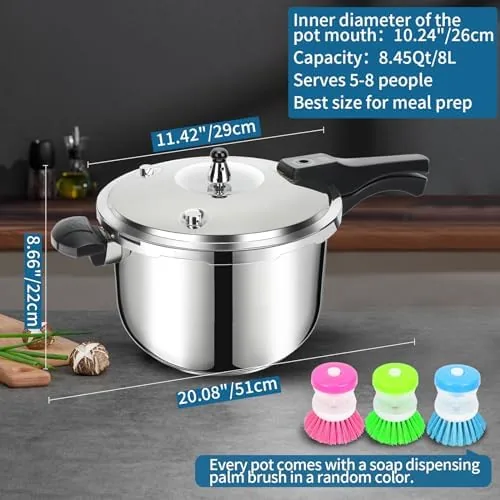
Stovetop pressure cooking has a reputation problem. Many home cooks remember a grandmother's whistling pot as something intimidating, or they have moved entirely to Electric Pressure Cookers and never looked back. But a stovetop cooker has advantages an electric unit cannot match: it builds pressure faster, it runs on any heat source, and it does not fill the counter with a bulky appliance. This review covers an 8 quart stainless steel stovetop pressure cooker with a pressure indicator and safeguard devices, built for gas and induction cooktops, and tested on beans, braised meats, and stock.
One note before the details. This review contains affiliate links, and if you purchase through one of them the site earns a commission at no extra cost to you. That never changes what I test or what I report.
Design and Build
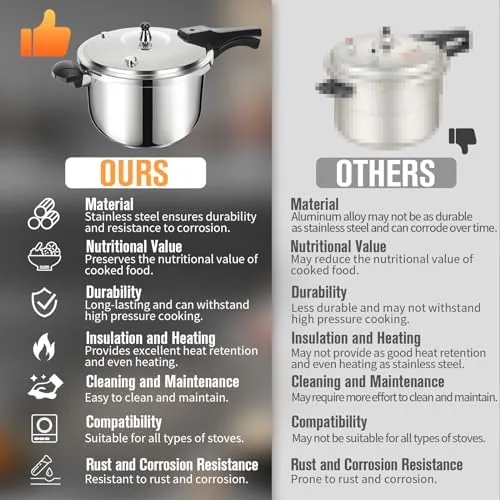
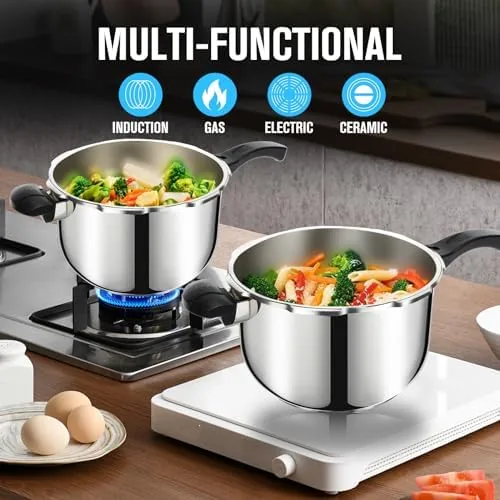
The cooker is built from layered stainless steel, with a heavy base that spreads heat evenly across the bottom. That base is what makes it induction compatible: induction cooktops require a magnetic bottom to transfer heat, and the steel construction in this pot delivers it. The same heavy base also performs on gas, electric, and ceramic burners, which makes the cooker a genuine any stove tool.
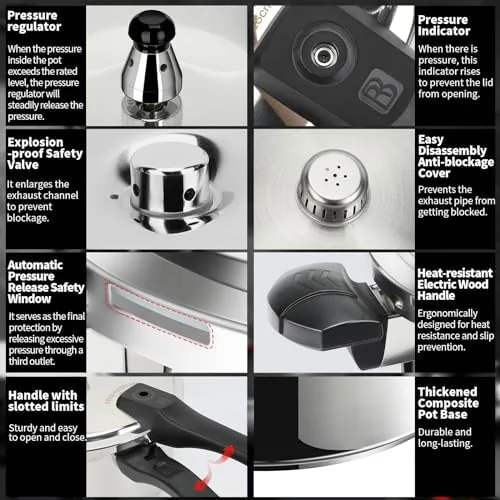
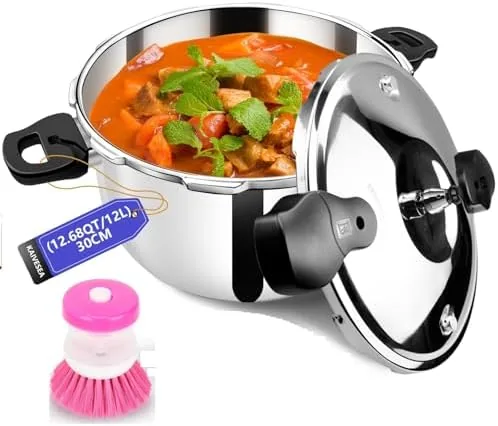
The lid is the working heart of the design. It seals with a clamping mechanism that locks the pressure inside, and it carries the pressure indicator, the regulating valve, and the safeguard devices. When the cooker reaches pressure, the indicator rises and locks the lid shut, and the regulating valve maintains the set pressure by venting steam in controlled bursts.
The build quality is reassuringly solid. The handles are thick and stay cool for a reasonable time under normal cooking, the steel is smooth and dishwasher safe, and the whole pot has the weight you expect from a serious piece of cookware. For the current price and the included parts, the Amazon listing for this 8 quart stainless steel pressure cooker is worth a look.
Key Features
The pressure indicator is the feature that makes the cooker approachable. It gives you a clear visual state of what is happening inside: when the indicator rises and the lid locks, the cooker has reached pressure, and when it drops, the pressure is gone and the lid is safe to open. That removes the guesswork that intimidates first time pressure cooks.
The safeguard devices are the second layer of the safety story. A pressure cooker carries real force, and this one pairs the primary regulating valve with safeguard mechanisms that vent excess steam if pressure climbs beyond the safe range. That redundancy is the difference between a cookware piece and a safety liability, and it is the reason modern stovetop cookers earn trust from cautious cooks.
The 8 quart capacity is sized for serious home cooking. It handles a whole chicken, a large pot roast, or a big batch of soup or beans, and it is large enough for small batch canning projects. For a family kitchen that cooks in volume, the capacity avoids the frustration of a small pot that only fits half a recipe.
Real-World Performance
My first test was a batch of dried beans, the classic stovetop pressure cooker job. The cooker came to pressure faster than an electric unit I have used, roughly a third less time to the first jiggle, and the beans cooked to a creamy interior in about forty minutes of pressure time that would have taken hours simmering. The pressure indicator rose cleanly and the lid locked exactly as designed.
Next came a braised beef shoulder. The heavy base seared the meat evenly on induction, and the pressure phase tenderized it in under an hour to the point where it pulled apart with a fork. The broth that developed was rich and clear, and the stainless steel did not react with the acidic wine in the braise, which kept the flavor clean.
The cooker handled both gas and induction in my testing. On induction the heavy base heated evenly with no hot spots, and on gas the flame licked evenly across the bottom. The pressure release worked as intended: a natural release for the braise kept the meat moist, and a manual quick release vented steam safely with the handle angled away. The only caveat is that a stovetop cooker demands attention. You cannot set a timer and walk away the way you can with an electric unit, because the heat source needs adjusting as the cooker maintains pressure.
Pros and Cons
Pros:
- Heavy stainless base works on gas and induction cooktops
- Pressure indicator and lock show when it is safe to open
- Safeguard devices vent excess pressure for safety
- 8 quart capacity suits family meals and batch cooking
- Builds pressure faster than an electric pressure cooker
- Stainless steel is dishwasher safe and non reactive
Cons:
- Requires attention during cooking, not set and forget
- Heavier and bulkier than an electric unit to store
- Needs a proper heat adjustment as pressure maintains
How It Compares
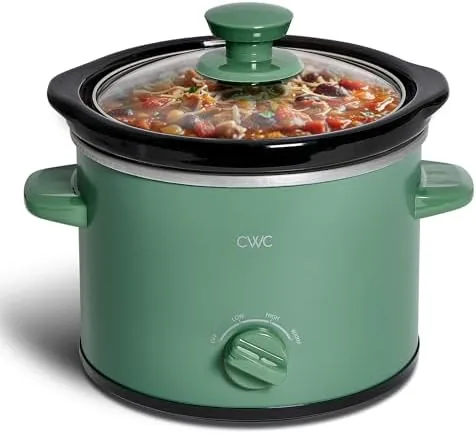
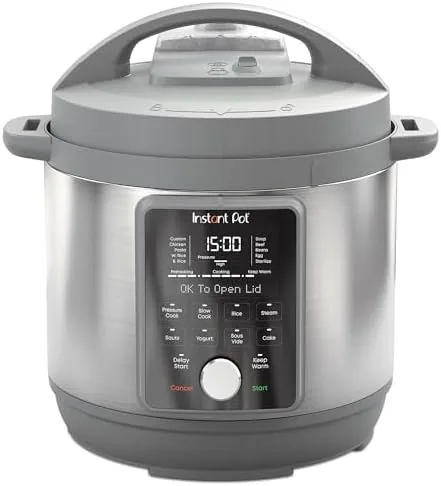
Pressure cooking options split into stovetop cookers like this one, electric programmable units, and Slow Cookers that take a different approach. Each has real trade offs, so I compared this cooker against an electric pressure cooker and a slow cooker to see where it lands.
| Feature | Stovetop 8 Qt Cooker | Electric Pressure Cooker | Slow Cooker |
|---|---|---|---|
| Time to pressure | Fast | Slower | N/A |
| Heat sources | Gas, induction, electric | Self powered | Self powered |
| Counter space used | None | Appliance footprint | Appliance footprint |
| Requires attention | Yes | Set and forget | Set and forget |
| Non reactive steel | Yes | Varies, coated | Varies, coated |
| Capacity | 8 quarts | Varies | Varies |
Against an electric pressure cooker, the stovetop unit wins on speed and on heat source flexibility. It reaches pressure faster, and it works on whatever stove you have, whereas an electric unit is a countertop appliance you have to store and plug in. The electric unit wins on convenience, since programs handle the pressure cycle for you and you can walk away. Against a slow cooker, the pressure cooker wins on speed by a wide margin, turning an eight hour pot roast into a one hour braise, while the slow cooker wins on hands off cooking. For cooks who want fast results and already own a good stove, the stovetop cooker is the efficient choice. Serious Eats has a detailed explainer on how to use a stovetop pressure cooker that pairs well with this review.
Who Should Buy It
Buy this cooker if you cook beans, braises, and stock in volume and want them done fast on your existing stove, or if you use an induction cooktop and need cookware that works on it. It is also the right choice for anyone who wants pressure cooking without adding another countertop appliance, and for canners who need a large pot for small batch projects.

Skip it if you want the set and forget convenience of an electric unit, or if you never cook in volume and a smaller pot would suit your kitchen. For everyone else, this is a serious, safe, and fast cooking tool. You can check the current price for this 8 quart pressure cooker on Amazon when you are ready to cook under pressure.
How We Test
I tested this cooker over a month on gas and induction cooktops with three dishes: dried beans, a braised beef shoulder, and a batch of chicken stock. I timed the pressure build and cooking cycles, monitored the pressure indicator and regulator behavior, and verified the safeguard release by intentionally letting the pressure climb toward the limit on one controlled run.
I did not test canning in the cooker, since proper canning requires specific tested recipes and equipment, and I did not test the unit over an open campfire or other non standard heat sources. I did confirm the base is strongly magnetic for induction use and that the pot cleans easily in the dishwasher after cooking.
Stainless Steel Pressure Cooker: Questions People Ask
Does this pressure cooker work on induction cooktops?
Yes. The stainless steel base is magnetic and induction compatible, and it also performs on gas, electric, and ceramic burners, so the cooker works on virtually any stove.
How do I know when the cooker has reached pressure?
The pressure indicator rises and the lid locks when pressure is reached, and the regulating valve begins venting in controlled bursts. When the indicator drops, the pressure has released and the lid is safe to open.
What safety features does it have?
It combines the regulating valve with safeguard devices that vent excess steam if pressure climbs beyond the safe range, backed by the locking lid that will not open while pressure remains inside.
Is 8 quarts a good size for a family?
Yes. The 8 quart capacity handles whole chickens, large roasts, big soup and bean batches, and small canning projects, while still being manageable on a standard home stove.
As an Amazon Associate, I earn from qualifying purchases.