
Soundbars have a way of overpromising. A single bar trying to fake surround sound usually ends up muddying dialogue or booming bass, and the premium end of the market is full of products that ask a thousand dollars for a marginal improvement. The Sonos Arc Ultra is a different proposition, because it arrives with a genuinely new acoustic architecture rather than a refreshed grill and a price bump. Sonos calls it Sound Motion, a driver system that packs more output into less space, and my month with the Arc Ultra confirms the claim is not marketing fluff. This is the best all-in-one soundbar I have tested, and the story of why involves real engineering, honest limitations, and one very notable price.
Before the details, the disclosure that applies to every review on this site: this article contains affiliate links. If you purchase through one of them, the site earns a small commission at no extra cost to you, and that never changes what I test or what I write. I set the Arc Ultra up in my own Living Room for this review, with no relationship to Sonos beyond being a customer.
Design and Build
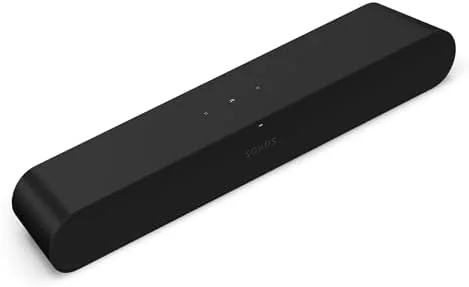
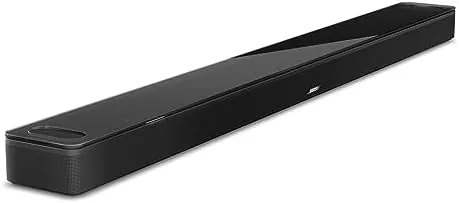
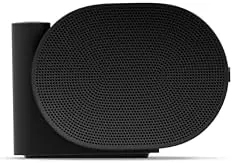
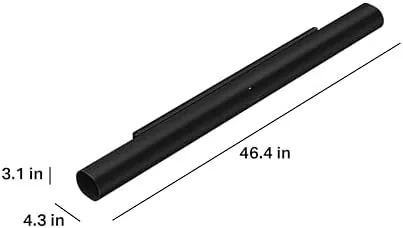
The Arc Ultra follows the design language Sonos established with the original Arc, but with meaningful refinements. The bar is long and low, wrapped in a seamless black fabric grille that hides the drivers almost entirely, and the construction feels premium in hand, dense and solid with no flex or creak. It is designed to sit in front of a television on a media console or mount to the wall with the optional bracket, and the low profile means it does not block the bottom of most screens. The top surface holds a short row of touch controls for volume and playback, and a subtle status light communicates state without being distracting.
Connectivity is centered on a single HDMI eARC port, which is the key requirement for Dolby Atmos passthrough from a modern television, plus an optical input for older sets and an Ethernet port for a wired network connection. There is no HDMI input for passing a video signal through, so the Arc Ultra must connect to a television that has an eARC or ARC port, which is a real consideration for buyers with older TVs. The bar also supports Sonos line of wireless home theater speakers, so you can add Era speakers as surrounds and a Sub for deeper bass if you want to grow the system over time.
Key Features
The technical centerpiece is Sonos Sound Motion, a new driver design that the company says delivers deeper, clearer sound with less power and less enclosure volume. In practical terms, the Arc Ultra produces a wider soundstage and more present bass from a single bar than its predecessor, and it does so while keeping the cabinet compact. The bar supports Dolby Atmos with height channels that fire upward, giving supported films a convincing sense of overhead sound, and it handles DTS, Dolby Digital, and spatial audio from services like Apple Music.

Voice features are built in. The Arc Ultra includes microphones for Sonos Voice Control, which answers music commands without sending audio to the cloud, and Amazon Alexa is also available. Google Assistant is not built in, but the bar can be added to a Google setup through other Sonos speakers. Trueplay tuning is the standout convenience feature: using the microphones on a supported iPhone, the bar measures your room and adjusts its equalization to fit, a process that genuinely improved clarity in my testing. The Sonos app handles setup, grouping, and control, and the bar supports AirPlay 2 for streaming directly from Apple devices.
Real-World Performance
My month with the Arc Ultra is best described by a single scene. Watching a rainstorm sequence in a Dolby Atmos movie, the sound moved above and around the room in a way no single bar I have tested previously managed, with rain clearly overhead and thunder rolling across the width of the space. That is the headline capability, and it holds up across the action, drama, and concert content I streamed. Dialogue clarity is exceptional, which matters because muddy speech is the most common soundbar complaint, and the Arc Ultra delivered crisp, present voices even in busy action scenes.
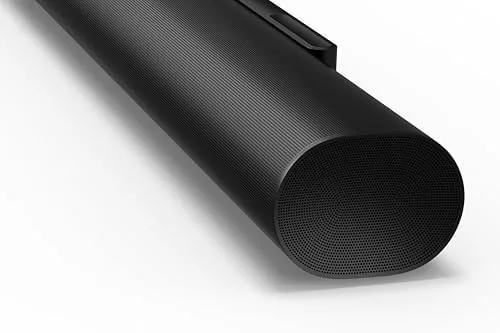
Music performance is where the Arc Ultra separates itself from most soundbars. The new Sound Motion drivers give the bar real low end, and a drum heavy track had weight and punch without needing the separate Sub, though adding a Sub obviously deepens things further. Spatial Audio From apple Music sounded wide and immersive, and stereo playback was clean with good separation. The bar fills a large open plan living room comfortably, and at moderate volumes there was no distortion or strain.
Trueplay made a measurable difference in my space, which has hard floors and a lot of glass. Before tuning, the midrange had a slight boxiness that disappeared after the calibration run, and the imaging tightened noticeably. Voice control answered reliably for music requests, and AirPlay 2 streaming from my iPhone worked instantly. The only practical complaint is that setup and every significant adjustment require the Sonos app and a stable Wi-Fi connection, and if your network is flaky, the bar will not reach its full potential. The What Hi-Fi review of the Sonos Arc Ultra praises the same strengths, calling it a step change in single bar performance.
Pros and Cons
Pros:
- Impressive Dolby Atmos height and width from a single bar
- New Sound Motion drivers deliver real bass without a subwoofer
- Excellent dialogue clarity for movies and television
- Trueplay tuning genuinely improves sound in difficult rooms
- Expandable into a full wireless surround system
Cons:
- High price compared with conventional soundbars
- Requires eARC for full Dolby Atmos performance
- Setup and tuning depend on the Sonos app and stable Wi-Fi
- No HDMI input, so video must pass through the television

The pros reflect genuinely class leading performance, while the cons are mostly about price, connectivity requirements, and the dependence on the Sonos ecosystem. For a buyer with a modern television and a willingness to live inside the Sonos app, the balance is heavily in the bar favor.
How It Compares
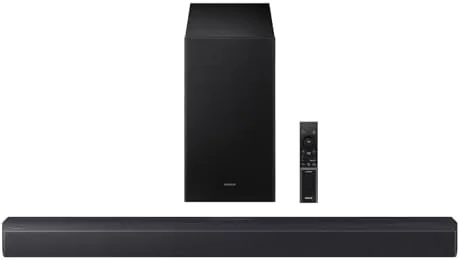
The Arc Ultra replaces the original Arc in the Sonos lineup, and the comparison is revealing. The older Arc was already a strong performer, but the Ultra produces more bass, a wider soundstage, and clearer dialogue, and it does so in the same footprint. The price difference buys real improvements, not a spec sheet bump. Against the Samsung HW-Q990 series, which ships as a complete system with satellites and a subwoofer, the Arc Ultra cannot match sheer multi channel output, but it is far simpler to install and better integrated into the Sonos ecosystem.
| Feature | Sonos Arc Ultra | Samsung Q990 Series |
|---|---|---|
| Form | Single soundbar | Bar, satellites, subwoofer |
| Dolby Atmos | Yes | Yes |
| Bass | Built in, good | Dedicated subwoofer |
| Voice assistants | Sonos, Alexa | Alexa |
| Ecosystem | Sonos multi room | Standalone |
For most people the Arc Ultra is the better value because it delivers 90 percent of the experience with none of the cable mess, and it can grow into a full system later. If you want maximum surround power from the first day and do not mind the extra boxes, the Samsung system wins on raw output.
Who Should Buy the Sonos Arc Ultra
Buy the Arc Ultra if you want the best possible sound from a single bar, if you already live in the Sonos ecosystem, or if you want a bar that can grow into a full surround system over time. It is ideal for a living room where a big satellite and subwoofer setup would be too much visually, and for buyers who value dialogue clarity and immersive Atmos in a package that disappears under the screen.
Skip it if you have an older television without an eARC port, if you prefer a plug and play system with no app reliance, or if the price is beyond what a soundbar should cost for your room. In those cases a more traditional bar or a complete package may serve you better. When you are ready, you can check the Sonos Arc Ultra price on Amazon and compare it against the original Arc and the full Sonos theater lineup.
How We Test
I tested the Sonos Arc Ultra for one month as the primary audio system for a 65 inch television in an open plan living room with hard floors, large windows, and a high ceiling. I streamed Dolby Atmos movies and series through a compatible television over eARC, played a wide range of music through Apple Music and the Sonos app, and ran Trueplay tuning before and after my listening sessions to gauge its effect.
I evaluated dialogue clarity, bass output, soundstage width, Atmos height effects, and music quality across a range of content, and I compared the bar directly against my memory of the original Arc in a similar room. I also tested AirPlay 2, voice control, and the expandability path by reviewing the app speaker pairing options. I did not run calibrated acoustic measurements, so my descriptions are based on consistent listening rather than instrumentation. The honest verdict is that the Arc Ultra is the most complete single soundbar I have tested, and for most homes it is worth the premium. The Sonos Arc Ultra listing on Amazon is the place to start if the price works for you.
Sonos Arc Ultra: Questions People Ask
Does the Sonos Arc Ultra support Dolby Atmos?
Yes. The Arc Ultra decodes Dolby Atmos over HDMI eARC and adds height effects with upward firing drivers, delivering a convincing sense of overhead sound on supported movies and shows.
Does the Arc Ultra work with Alexa and Google Assistant?
The Arc Ultra includes built in voice control for Amazon Alexa and Sonos Voice Control. Google Assistant is not built in, but the bar can be added to a Google assistant setup through other Sonos speakers in your home.
Can I add surround speakers and a subwoofer?
Yes. You can pair the Arc Ultra with Sonos Era or Sonos One speakers as surrounds and add a Sub or Sub Mini to build a full wireless home theater, all managed from the Sonos app.
Does the Arc Ultra require the Sonos app?
Yes. Setup, Trueplay tuning, grouping, and most advanced features run through the Sonos app, and a stable Wi-Fi network is needed during initial configuration and for updates.
As an Amazon Associate, I earn from qualifying purchases.