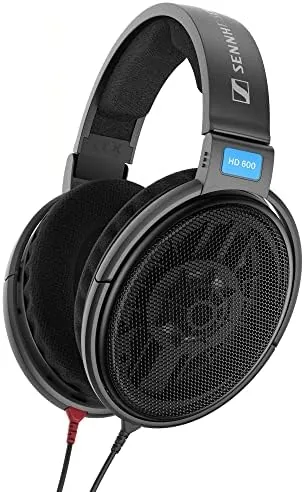

Some audio gear ages badly, replaced by each year's fashion and forgotten. The Sennheiser HD600 has done the opposite. More than two decades after its introduction, it remains the headphone that reviewers use as a baseline and that studios keep on a shelf for reference listening. The design has barely changed because the design did not need to change. I spent several weeks with the HD600 doing studio work, critical listening, and long evening sessions, and it is still the pair I reach for when I need to trust what I hear.
One disclosure before we begin: this article contains affiliate links, and if you buy through one of them the site earns a small commission at no extra cost to you. That commission never affects what I test or recommend.
Design and Build
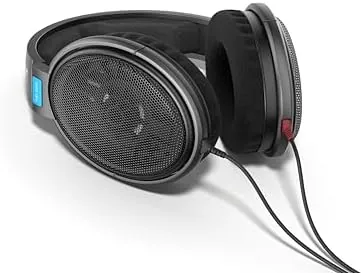
The HD600 looks the part of a serious instrument. The open metal grille over each driver is a deliberate signal that this is not a closed pair designed to block the world; it is a pair designed to let sound breathe. The construction is a mix of dark metal and matte plastic, and while it lacks the brushed aluminum of flagship models, it feels durable and purposeful. These are headphones made to sit on a desk for years, not to be babied.
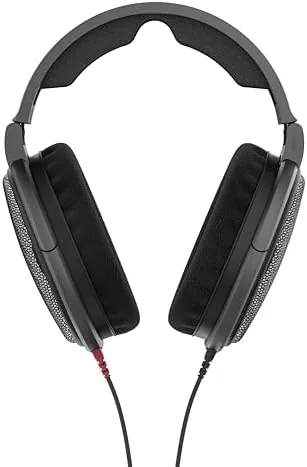
The headband is a rigid metal spring covered in foam and fabric, and the earcups ride on a simple metal yoke that lets each side rotate for a comfortable fit. The clamp force is moderate, firm enough to stay put during head movements but gentle enough for extended wear. Weighing around 260 grams, the HD600 is far from the heaviest headphone on the market, and that weight is distributed well across the head.
The velour earpads are a defining part of the design. They are soft, breathable, and comfortable against the skin, far less sweaty than leather pads over a long session. They are also user replaceable, which is a genuinely important feature: when the pads compress after years of use, a fresh set restores both comfort and the original frequency response, since pad depth changes the acoustic tuning.

Key Features
The core feature is the open-back design. Each driver sits behind an open metal grille, which lets air move freely and lets sound escape and enter both directions. That openness is what creates the HD600's spacious, three dimensional soundstage. Instruments and vocals appear to have space around them, rather than being crammed between your ears, and the naturalness of that presentation is the reason the HD600 remains a studio reference.
The sound signature is best described as neutral. The HD600 is not a bassy consumer headphone and it is not a bright analytical one. It sits close to flat, with a slight warmth in the mids and a smooth, non-fatiguing treble. Vocals are the star: male and female voices are rendered with honesty and presence, and the midrange is where the HD600 earns its reputation. You hear the music the way it was mixed, without added color, which is exactly what a reference headphone should do.
The 300 ohm impedance is another defining spec. High impedance headphones are designed to be driven by amplifiers rather than phones alone, and the HD600 follows that philosophy. It works from a laptop or phone at moderate volume, but a dedicated headphone amplifier reveals significantly more detail, dynamics, and control. For owners who already have an amp, this is a benefit; for newcomers, the amplifier is part of the total cost of the upgrade.
Real-World Performance
I began with studio use, running the HD600 through a desktop amplifier and checking mixes against it. The neutrality is immediately apparent. A mix that sounded exciting on consumer headphones revealed its flaws here: the kick drum sat slightly too loud, the snare had a boxy tone, and the vocal lacked the sheen I had heard on other cans. Each of those judgments was accurate, and that is precisely the point of a reference headphone. The HD600 does not flatter a recording; it reports on it.

Critical listening followed, with a rotation of jazz, classical, and electronic records. The imaging is excellent. A live jazz recording placed the piano left, the bass center, and the drummer right with convincing depth, and the sense of space made the performance feel like a room rather than a signal. Treble transients on cymbals and high hats were clean without ever becoming harsh, and long listening sessions produced no fatigue at all.
The honest limitations are real. The bass is present but modest in quantity; electronic and hip hop listeners who want sub bass rumble will find it restrained, and the open-back design means these headphones leak sound freely and isolate nothing. In a quiet room they are sublime, but on a bus or beside a loud family, they are nearly unusable. The 300 ohm impedance also means they sound thin and uninvolving from a phone alone, so the amplifier question matters.
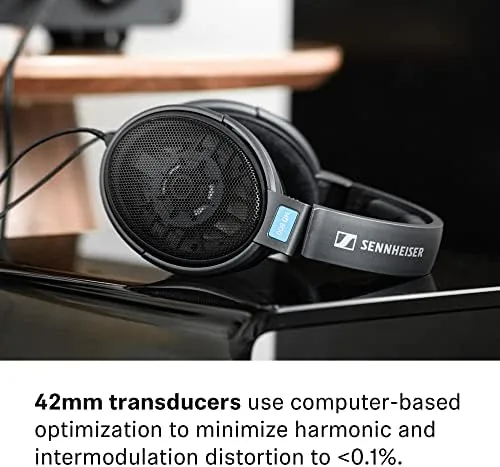
Comfort over a long evening proved outstanding. I wore the HD600 for a four hour mixing session and then for a movie afterward, and the only reminder they were on was the gentle pressure of the pads. The open design kept my ears cool, the weight stayed manageable, and nothing on the headband created a hot spot. For marathon listening, few headphones at any price are more forgiving.
Pros and Cons
Pros:
- Neutral, honest sound signature trusted for studio reference
- Excellent imaging and a spacious, natural soundstage
- Outstanding comfort for long sessions
- User replaceable earpads extend the product life
- Proven reliability over decades of use
- Reveals more detail with a good amplifier
Cons:
- Open-back design leaks sound and provides no isolation
- Modest bass output not suited to bass heavy genres
- 300 ohm impedance needs an amplifier for full performance
- Design and materials feel dated next to modern flagships
How It Compares
To place the HD600 in context, I compared it with two well known rivals: the HD660S2, its more refined sibling, and a popular closed-back alternative for studio use. The table below reflects my listening over the test period.
| Feature | Sennheiser HD600 | HD660S2 | Closed-Back Rival |
|---|---|---|---|
| Design | Open-back | Open-back | Closed-back |
| Impedance | 300 ohm | 300 ohm | Lower, easier to drive |
| Sound signature | Neutral reference | Warm, more resolving | More bass presence |
| Soundstage | Spacious | Similar, refined | Narrower |
| Noise isolation | None | None | Good |
| Price | Moderate | Higher | Varies |

The HD660S2 costs notably more and refines the same recipe, with more bass body and slightly better resolution, but the HD600 still holds its own at its lower price. The closed-back rival adds isolation and more bass, which suits noisy environments and pop music, but it gives up the open soundstage that makes the HD600 special. For a studio reference used in a quiet room, the HD600 remains the value pick among serious open-backs.
Who Should Buy It
Buy the HD600 if you mix or edit audio and need to trust what you hear, or if you are a listener who wants the most honest, natural sound for the money. It rewards owners who will drive it with a decent amplifier and who appreciate a sound signature that reports rather than flatters. It is also an excellent first step into the high-end headphone world, because its neutrality gives you a reference against which to judge everything else.
Skip it if you listen mostly on the move, in noisy spaces, or primarily to bass heavy music. The open-back design and modest low end make those scenarios a poor fit. If You Can give it a quiet room and an amplifier, this is one of the most enduring purchases in audio. You can check the current price of the Sennheiser HD600 on Amazon when you are ready.
How We Test
I tested the HD600 over several weeks with a mix of real tasks: mixing and checking audio at a desk amplifier, critical listening across jazz, classical, and electronic records, and long evening sessions to judge comfort. I compared it directly against the HD660S2 and a closed-back studio headphone to place it in the wider market. I also assessed the effect of the 300 ohm impedance by running the headphones from a phone and a laptop without an amplifier.
For a broader look at what makes a great headphone, PCMag offers a helpful roundup of the best headphones across categories. My verdict here comes from weeks of listening, not a spec sheet.
The Sennheiser HD600 listing on Amazon shows the current price and package options.
Questions People Ask
Are the Sennheiser HD600 good for studio monitoring?
Yes, the neutral and honest sound signature makes them a trusted choice for mixing and critical listening, though the open-back design lets sound escape and leak in, so a quiet room is required.
Do I need a headphone amplifier for the HD600?
They work from a phone or laptop, but a dedicated amplifier unlocks their full detail and dynamics, so an amp is strongly recommended for critical listening and studio work.
How does the open-back design affect noise isolation?
Open-back headphones leak sound outward and let outside noise in, so they are not suitable for noisy environments, but the open design creates a natural, spacious soundstage that closed pairs cannot match.
Are the ear cushions replaceable?
Yes, the velour pads are user replaceable, which extends the life of the headphones and restores comfort and tuning as the original pads wear down over time.
As an Amazon Associate, I earn from qualifying purchases.