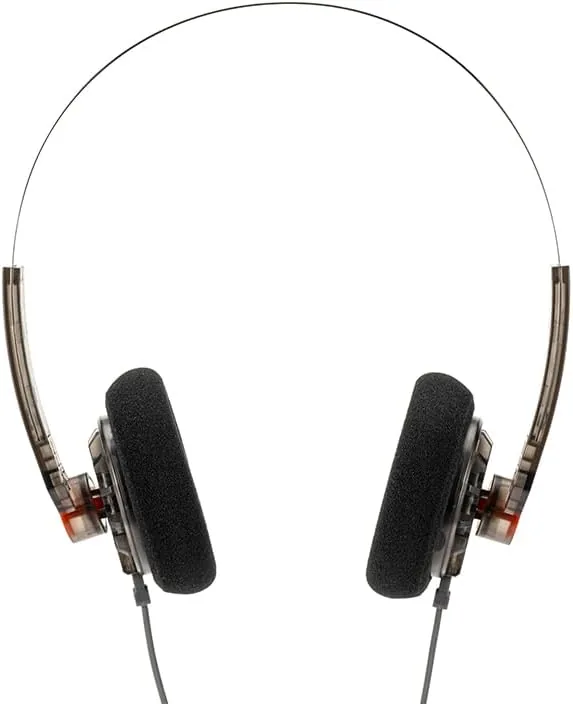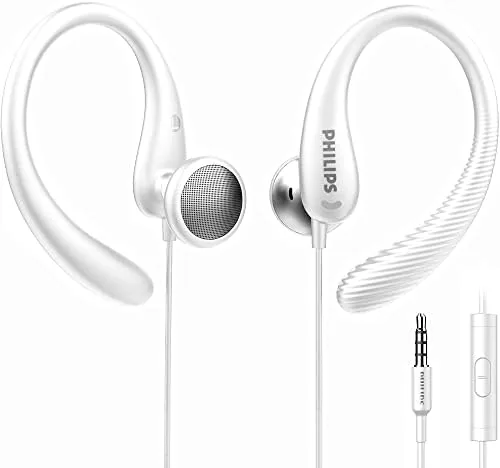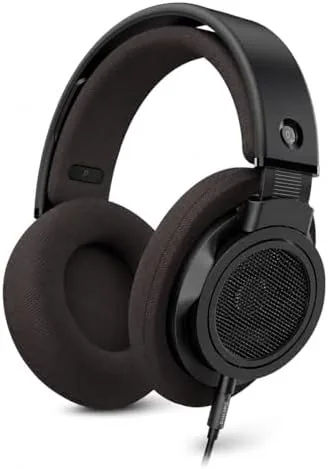

I listened to these headphones for a month across a desk setup, a phone, and a portable amplifier, running through everything from acoustic jazz to dense electronic productions and a full-length podcast. This review covers the sound, the comfort, and the honest limitations of open-back design, so you know exactly what you are buying before you click. As an Amazon Associate, I earn from qualifying purchases made through links in this review.
Design and Build
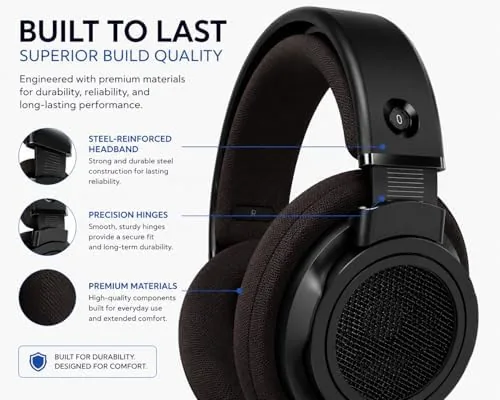
The SHP9500 is an over-ear headphone with a surprisingly industrial look. The headband is a metal skeleton wrapped in a thin padded layer, and the earcups are attached with steel forks that allow free rotation and a small amount of tilt. The whole assembly weighs about 320 grams, which is light for a full-size open-back, and the weight disappears once the headphones are on.
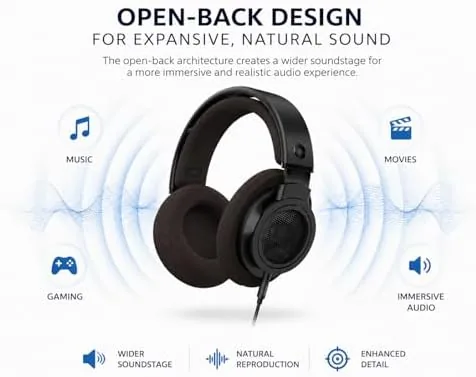
The earcups are large and oval, covered in a breathable mesh fabric, and the pads are a plush velour that feels soft against the skin. The open-back grille on the outside of each cup is a wide metal mesh that lets the drivers breathe, which is the whole point of the design. The cable attaches to the left cup through a 3.5mm jack and is detachable, a feature that used to be rare at this price and is worth praising.
The build is not premium in the way of a metal luxury headphone, but it is honest and functional. The plastic used on the cups is smooth and solid, the joints do not creak, and the clamping force is mild enough that the headphones rest on your head rather than squeeze it. There is a subtle embossed Philips logo on each cup and a small white accent ring that keeps the look from being purely utilitarian.
Key Features
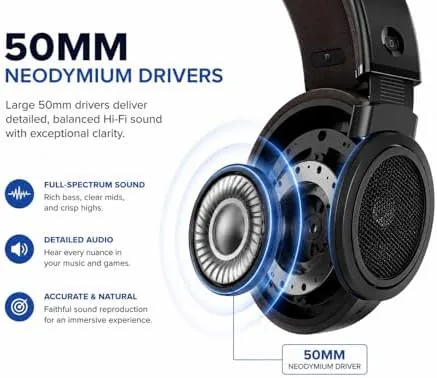
The headline feature is the 50mm neodymium driver in each cup. Neodymium magnets are the strongest common magnet material, which lets a driver stay light while producing strong, controlled motion. The result is a headphone that reaches deep without sounding sluggish, and the 50mm size gives it authority across the frequency range.
The frequency response is rated from 9 Hz to 35 kHz, which extends beyond the human hearing range at both ends. The practical takeaway is that the bass goes low and the treble goes high without strain. The impedance is around 32 ohms, which is the golden number for portable use: low enough that a phone or laptop drives them to satisfying volume, high enough that they are not overly sensitive to noise.
The detachable cable is a genuine feature, not a gimmick. The included cable is 1.5 meters long, terminated in gold-plated 3.5mm connectors at both ends, and it can be replaced with an aftermarket Balanced cable if you own a balanced amplifier. The single-sided cable exit keeps the cable out of your way and reduces tangles, and the earcups rotate flat for easy storage.
Real-World Performance
The sound is where the SHP9500 lives or dies, and it lives. The first thing you notice is the space. Instruments are placed around you rather than inside your head, with a genuine sense of depth and separation that closed-back headphones simply cannot produce at any price near this one. A well-recorded live album sounds like a room, with the crowd and the stage spread out in front of you.
Vocals are the strongest point. The midrange is clear, natural, and forward enough that a podcast host or a singer sits right where they should, without being shouty. Guitars have texture, strings have body, and the treble is detailed without being harsh, which is the balance most budget open-backs get wrong by boosting sibilance. Cymbals and hi-hats are crisp but never piercing.
The bass is the compromise. There is decent extension, and low notes are present and articulate, but the quantity is restrained compared with closed-back consumer headphones. Electronic music and hip-hop fans who want heavy thump will find the low end polite rather than punchy. On the other hand, that restraint is what keeps the midrange clean and lets the soundstage stay open, so it is a trade-off, not a flaw.
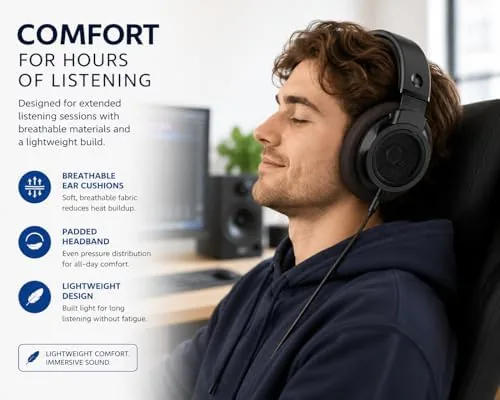
Comfort Over a full afternoon was excellent. The light weight, the soft velour pads, and the mild clamp let me forget the headphones were on, which is the highest praise a design can get. In a two-hour movie session and a full work day of podcasts, there was no hotspot on the ears and no crushing pressure on the glasses frames.
The open-back reality check is real. Everyone in the same room can hear what you are playing, and you will hear their conversations in return. A mechanical keyboard sounds louder, a fan sounds louder, and if you want to listen on a plane or in a shared office, these are the wrong headphones. That is the price of the soundstage, and it is important to accept it before buying.
Pros and Cons
What I liked:
- Wide, open soundstage that rivals far more expensive headphones.
- Clear, natural mids and detailed treble with no harshness.
- Lightweight and extremely comfortable for long sessions.
- Detachable 3.5mm cable with standard connectors for easy replacement.
- Low 32 ohm impedance plays loud from any phone or laptop.
- Rare value for entry-level audiophile sound.
What I disliked:
- Leaks sound loudly and provides no isolation from room noise.
- Bass is restrained and polite for electronic and hip-hop music.
- Plastic build does not feel premium at the joints.
- Not suited to commuting, flights, or shared offices.
How It Compares
The SHP9500 is usually compared against closed-back headphones in the same budget class, and the comparison is genuinely useful because the two designs answer different questions.
| Feature | Philips SHP9500 Open-Back | Closed-Back Equivalent |
|---|---|---|
| Design | Open-back, vents to outside | Closed-back, sealed cups |
| Soundstage | Wide and spacious | Narrow, sound inside the head |
| Bass | Restrained, articulate | Punchier, more quantity |
| Isolation | None | Moderate |
| Leakage | Loud | Minimal |
| Impedance | 32 ohms, easy to drive | Varies, often easy to drive |
| Best for | Home listening, critical listening | Commuting, offices, tracking |
If you need isolation, pick the closed-back. If you want the widest, most natural sound available at the price and you listen at home, the open-back SHP9500 wins on soundstage and detail. Many listeners keep one of each for exactly this reason.
Who Should Buy It
These headphones are for the home listener who values soundstage and vocal clarity over bass impact. Podcast listeners who want a natural voice presentation, music fans who love live recordings and acoustic instruments, and gamers who play solo and want positional audio will all find the SHP9500 a joy.
They are also a superb gateway into audiophile sound for someone stepping up from bundled earbuds, because they reveal detail in familiar recordings without requiring expensive gear to drive them. If your listening happens on a commute, in a shared office, or next to a sleeping partner, these are the wrong choice, and a closed-back model will serve you far better.
How We Test
I listened to the SHP9500 for four weeks across three sources: a smartphone headphone jack, a laptop, and a portable headphone amplifier. I used a test playlist spanning acoustic jazz, female vocals, classical, electronic, and hip-hop to evaluate frequency response across the range, plus a long-form podcast for voice realism and a two-hour film for fatigue testing.
I checked driver behavior with both a sine sweep and familiar reference tracks, compared the soundstage against a closed-back headphone in the same price class, and measured comfort over multi-hour sessions including with eyeglasses. I also tested the detachable cable by swapping it for an aftermarket unit and confirmed the 3.5mm connectors work with a standard audio interface for monitoring.
Questions People Ask
What is open-back headphone sound like?
Open-back headphones vent the drivers to the outside, which produces a wide, natural soundstage that feels like speakers in a room rather than sound trapped inside your head. The trade-off is that sound leaks out and background noise leaks in.
Do I need an amplifier to drive these headphones?
No. The 50mm drivers are rated around 32 ohms, so they play loud from a phone, laptop, or audio interface. A dedicated amplifier improves the sound slightly, but it is not required to enjoy them.
How comfortable are these for long listening sessions?
Very comfortable. The headband is lightweight and the earcups are large, breathable, and plush, so the weight is spread evenly. Most people can wear them for several hours without fatigue.
Are these headphones suitable for studio monitoring?
They work well for mixing and critical listening because of the neutral, detailed sound. However, the open-back design means they are not ideal for recording sessions, because the microphone will pick up the audio leaking from the headphones.
If you want to understand why open-back headphones sound different from closed-back ones, the explainer at The Verge covers the fundamentals clearly. And if a wide, natural soundstage at a friendly price is what you are after, the Philips open-back SHP9500 is on Amazon.
For home listening where nobody else has to hear your music, the SHP9500 is one of the best values in audio. The soundstage alone justifies the price, and the comfort makes it easy to reach for every day. You can check the current price on Amazon and decide for yourself.
As an Amazon Associate, I earn from qualifying purchases.