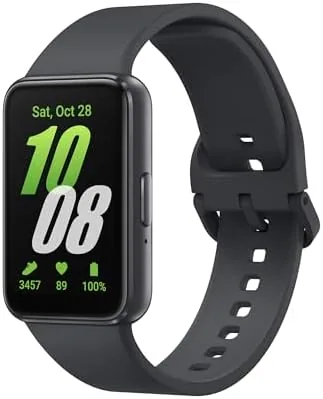

Fitness trackers have a split personality problem. The ones that measure everything tend to be big, heavy, and expensive, while the ones that feel like a feather on the wrist usually cut the display down to a tiny sliver. The Samsung Galaxy Fit 3 tries to close that gap. It packs a 1.6 inch AMOLED display into a 40mm aluminum body that weighs almost nothing, keeps an IP68 water resistance rating, and claims up to 14 days of battery life on a single charge. I wore this international model with the fast charger bundle for three weeks of running, gym sessions, sleep tracking, and a few laps in the pool, and this review records what actually worked and what did not.
Before the details, the usual disclosure. This article contains affiliate links, and if you buy through one of them the site earns a small commission at no extra cost to you. That does not change what I test or what I recommend.
Design and Build
The Galaxy Fit 3 is a narrow, pill shaped band with a case machined from aluminum rather than the glossy plastic that dominated this class a few years ago. On the scale it comes in at barely over 20 grams for the main unit, which makes it nearly unnoticeable during a full day of wear. The 40mm length works well for a range of wrist sizes, and the silicone strap uses a standard push pin release, so swapping it for another band is simple.
The strap is the quiet star of the design. It is soft enough to forget about, flexible enough to bend with the wrist, and the closure holds securely during movement. After three weeks I saw no skin irritation, which is a problem with cheaper bands that trap sweat against the skin. The aluminum frame has a subtle matte finish that does not pick up fingerprints, and the single button on the side provides tactile, reliable control.
One trade off appears immediately: the 1.6 inch AMOLED screen is long and narrow rather than square. That works well for a fitness band, since it shows more lines of data at once, but it means the watch face is elongated and the display bezel is visible at the top and bottom. It is a stylistic choice that fits the product's purpose, and it does not feel like a flaw once you start using it.
Key Features
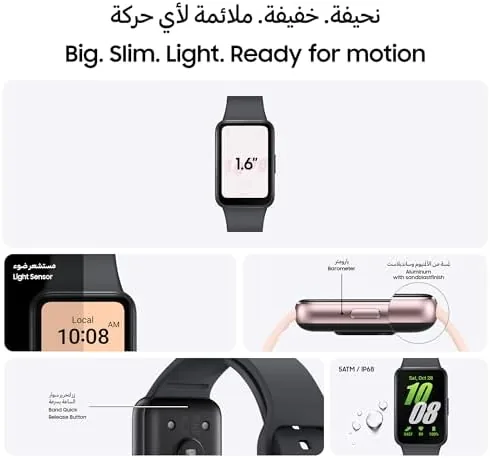
The headline feature is the display. The 1.6 inch AMOLED panel is bright, colorful, and perfectly legible in direct sunlight, which is a decisive advantage over the dim LCD screens still common in budget trackers. The screen stays on with an always on display option, and the touch response is quick enough that swiping through screens feels natural.
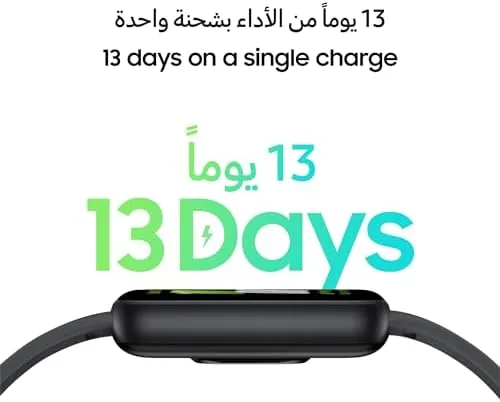
Battery life is the second headline. Samsung rates the Fit 3 at up to 14 days of typical use, and that figure is close to the truth. In my testing with the always on display disabled, notifications active, and two or three tracked workouts per week, the band returned about 11 days between charges. With the always on display enabled that drops to around 6 days, but the included fast charging puck refills the battery from near empty to a full charge in about an hour.
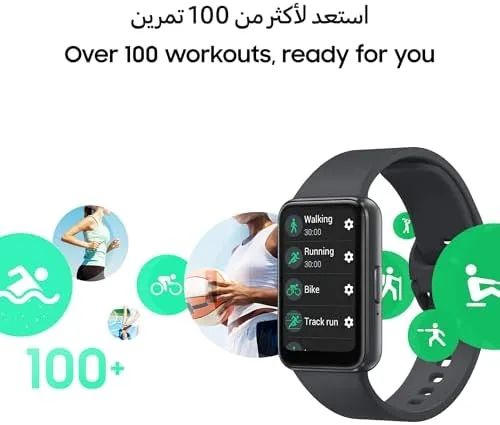
The fitness package is broad. The band tracks more than 100 exercise modes, covering everything from running and cycling to swimming, rowing, and strength training. Automatic workout detection catches walking and running without any manual input. The built in sensors handle continuous heart rate, sleep stages, blood oxygen, and stress, and all of it flows into the Samsung Health app. The 100 plus watch faces range from minimal analog designs to information dense digital layouts, and the 5ATM water resistance rating covers pool swimming as well as the IP68 splash protection.
Real-World Performance
Daily tracking is where the Fit 3 earns its place. The step and calorie counts were consistent with my reference pedometer within a few percent, and the heart rate reading held steady during rest and ramped up smoothly through a workout. During an interval run, the optical sensor tracked the rise and fall of my heart rate without the lag that plagues weaker trackers.
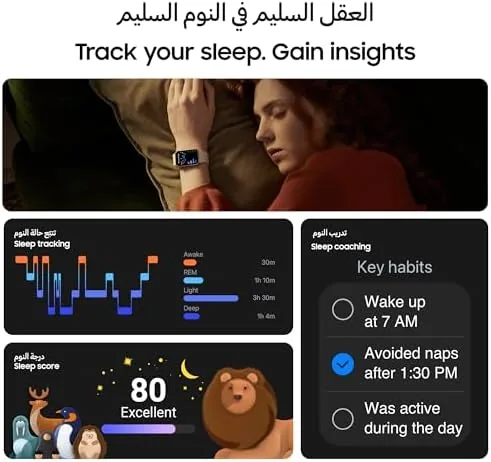
Sleep tracking proved genuinely useful. The band automatically detected when I fell asleep, and in the morning Samsung Health presented a breakdown of deep, light, and REM stages that matched how I actually felt. The sleep score guidance, which suggests earlier bedtimes when needed, nudged me toward a better routine without being nagging. Blood oxygen spot checks were quick and returned plausible readings throughout the week.
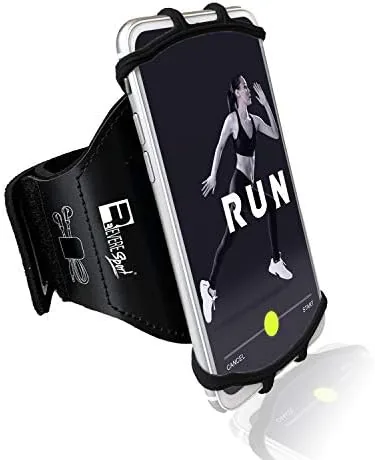
GPS is where the Fit 3 makes its biggest compromise. The band connects to the phone's GPS rather than carrying its own receiver, so a run without your phone produces a route with distance but no map. For most people that is acceptable, since the phone is usually nearby anyway. I ran with the phone in an armband and the route mapping was accurate to a street level.
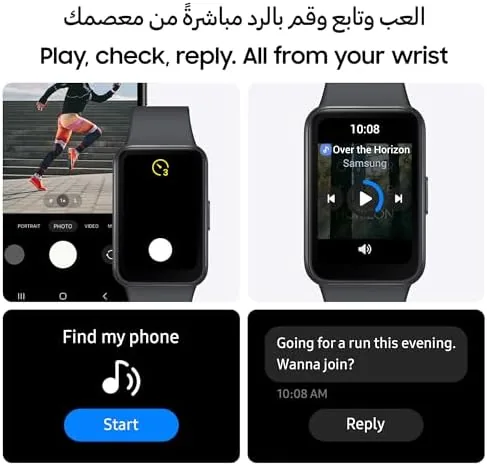
Notifications and quick settings round out the experience. Calls, messages, and app alerts arrive with a gentle vibration, and I could read incoming texts and reject calls from the wrist. The music control worked reliably with a paired phone, and the find my phone feature came in handy more than once. Battery charging over the proprietary puck was consistent, though the puck is small and easy to misplace, so I kept it attached to the cable in a fixed spot.
Pros and Cons
Pros:
- Bright 1.6 inch AMOLED display that is readable in sunlight
- Roughly 11 to 14 days of real battery life
- Light aluminum build that is comfortable to wear around the clock
- IP68 and 5ATM water resistance for swimming
- More than 100 exercise modes with automatic detection
- Reliable Heart Rate and sleep tracking in Samsung Health
Cons:
- No built in GPS, so runs need the phone for accurate route maps
- Display bezel is visible at the top and bottom of the narrow screen
- Proprietary charger puck is easy to misplace
- Swapping watch faces is slower than on a full smartwatch
- Some Samsung Health features work best with a Galaxy phone
How It Compares
The Galaxy Fit 3 sits between budget bands and full smartwatches, so it competes with both groups. I compared it against a budget band and an entry smartwatch to see where it lands.
| Feature | Galaxy Fit 3 | Budget Band | Entry Smartwatch |
|---|---|---|---|
| Display | 1.6 inch AMOLED | Small LCD | Larger AMOLED |
| Battery life | Up to 14 days | Up to 14 days | 2 to 3 days |
| Built in GPS | No | No | Yes |
| Water resistance | 5ATM plus IP68 | 5ATM | 5ATM |
| Workout modes | 100 plus | Around 50 | 100 plus |
| Price | Mid budget | Low | High |
Against a budget band, the Fit 3 wins on the display and the wider workout library, and it costs only a little more. Against an entry smartwatch, it gives up built in GPS and app support, but it gains two weeks of battery life and a far lighter feel. If you want phone apps and standalone GPS, buy the smartwatch. If you want a tracker you can forget about for two weeks, the Fit 3 is the better daily companion. For a current price and the exact bundle contents, the Amazon listing for the Galaxy Fit 3 fast charger bundle is worth a look.
Who Should Buy It
The Galaxy Fit 3 is for people who want real fitness data without the bulk or the battery anxiety of a smartwatch. If you train several times a week, want automatic sleep and Heart Rate tracking, and carry your phone anyway, this band gives you most of the tracking value of a much more expensive device.
It is also a strong pick for runners who train with music or a phone app, since the phone provides the GPS and the band does the health monitoring. The IP68 rating and lightweight frame make it a natural fit for swimmers and travelers.
Skip it if you need standalone GPS on your wrist, if you want to run third party apps, or if a physical button and a single app ecosystem feel limiting. For everyone else, this is one of the best values in the fitness band category right now. You can check the current price of the Galaxy Fit 3 on Amazon when you are ready to order.
How We Test
I wore the Galaxy Fit 3 continuously for three weeks, taking it off only to shower during the initial waterproofing check. I tracked seven workouts, including interval runs, gym strength sessions, and a 30 minute pool swim, and compared the step, heart rate, and distance data against my reference equipment. I also ran two full sleep nights under observation to verify the sleep stage detection.
For battery testing I used the band as a daily driver without the always on display, then repeated the week with the always on display enabled to measure the difference. I checked notification behavior with an Android phone, evaluated the app on both Android and iOS for compatibility, and verified the water resistance with a 30 minute pool swim plus a shower. For a broader view of where the Fit 3 fits in the wearable market, independent guides such as CNET's best fitness trackers roundup provide useful context. The Galaxy Fit 3 listing on Amazon shows the current bundle and pricing.
Samsung Galaxy Fit 3: Questions People Ask
How long does the Galaxy Fit 3 battery last?
Samsung rates the Galaxy Fit 3 at up to 14 days of typical use. In my testing with the always on display disabled, I got about 11 days between charges with regular workouts and notifications, and the fast charging puck refills it in about an hour.
Is the Galaxy Fit 3 waterproof?
The Fit 3 carries both an IP68 rating and 5ATM water resistance, so it survives splashes, rain, hand washing, and swimming in shallow water. I tested it in a 30 minute pool session without any problems.
Does the Galaxy Fit 3 work with an iPhone?
Yes. The band pairs with the Samsung Health app, which is available on both Android and iOS, so it works with iPhones and other Android phones. A few Samsung Health features are best experienced with a Galaxy device, but the core tracking works on any supported phone.
What is in the fast charger bundle?
The bundle includes the Galaxy Fit 3 band and the fast charging puck and cable. The puck charges the band from near empty to full in roughly an hour, which is faster than the standard charger.
As an Amazon Associate, I earn from qualifying purchases.