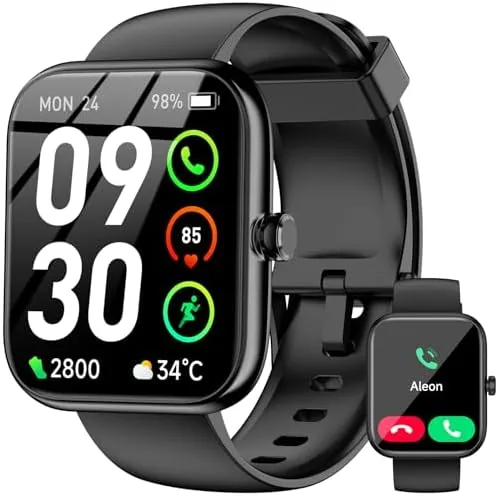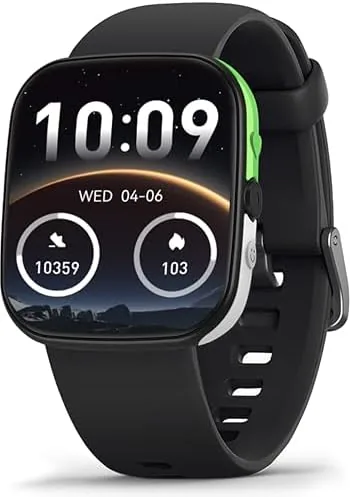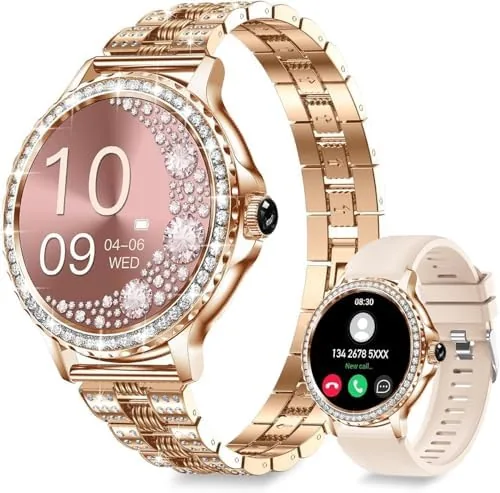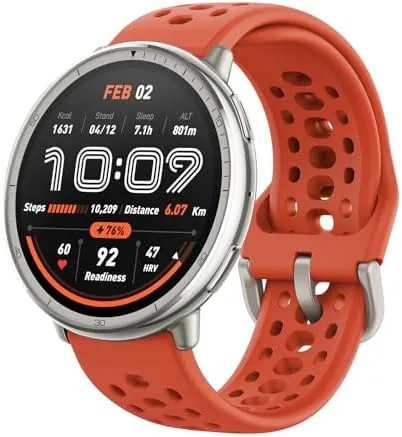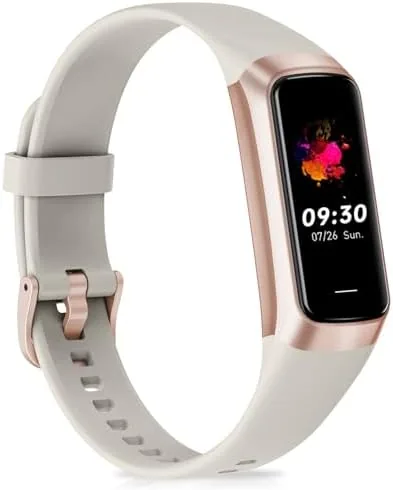

Most people do not need a smart watch that costs as much as a phone. They need something on their wrist that tells them whether they moved enough, slept well, and recovered from yesterday's session. That is the honest promise of the Fitness Tracker with 24/7 Heart Rate Blood Pressure Blood Oxygen Sleep Monitor, a 1.10 inch AMOLED touch screen smart watch that tries to deliver all of that without the flagship price tag. I wore it through workouts, work days, and full nights of sleep for two weeks, and I compared its numbers against reference gear to see which readings deserve your trust.
This article contains affiliate links, and if you buy through one of them the site earns a small commission at no extra cost to you. That commission never changes what I test or what I recommend.
Design and Build
The watch makes a strong first impression the moment it comes out of the box. The 1.10 inch AMOLED panel is vivid and bright, with deep blacks and saturated colors that put many cheaper LCD trackers to shame. The touch screen responds quickly to swipes and taps, and the always on option works well enough that you can glance at the time without waking the display. The bezel is slim for this price class, and the interface stays legible even when the watch face is dense with health data.
The case is a compact round or square depending on your preference at purchase, and the silicone band is soft enough for all day wear without chafing. The strap uses a standard buckle that feels secure through runs and gym sessions, and the whole unit is light enough that you forget it is there, which matters when you are wearing it for 24 hours straight. The buttons are tactile, and the sensor cluster on the back sits flush against the wrist so the optical readings stay consistent.
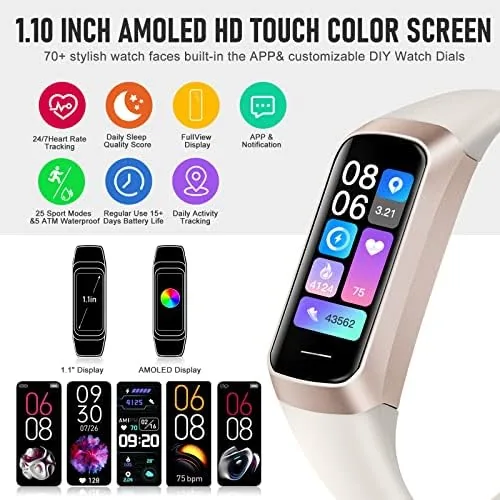
Water resistance covers sweat, rain, and hand washing without drama, though this is not a dive watch and I would not take it swimming. The charging solution is a magnetic cradle that snaps into place cleanly, and a full charge takes a little over an hour. Build quality feels genuinely better than the price suggests, with no creaks from the case and no rattle from the band connection.
Key Features
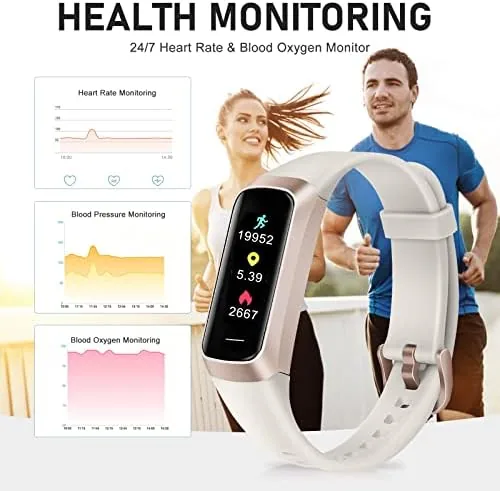
The headline feature is continuous health monitoring that runs through the day and night. Heart rate is tracked around the clock, blood pressure and blood oxygen (SpO2) can be measured on demand, and sleep is broken down into light, deep, and REM stages so you can see where your night actually went. The tracker also logs steps, distance, active calories, and total calorie burn, which feeds into a daily activity summary.
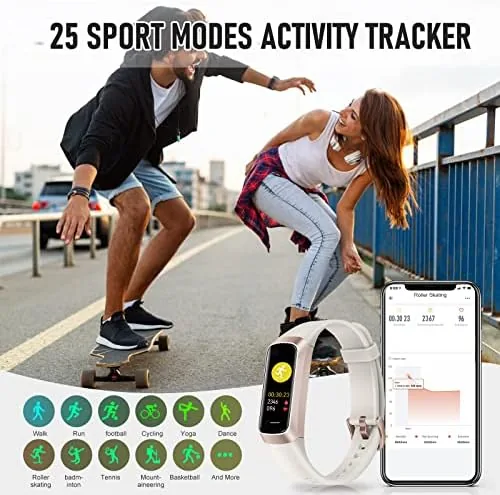
There are multiple sport modes for walking, running, cycling, yoga, and other common activities, and each mode records time, heart rate zones, and calorie burn. The companion app is clean and easy to read, syncing over Bluetooth and presenting trends over days, weeks, and months. You can also set reminders to drink water, stand up, and move, which sounds gimmicky until you realize how often the nudge gets you out of a chair.
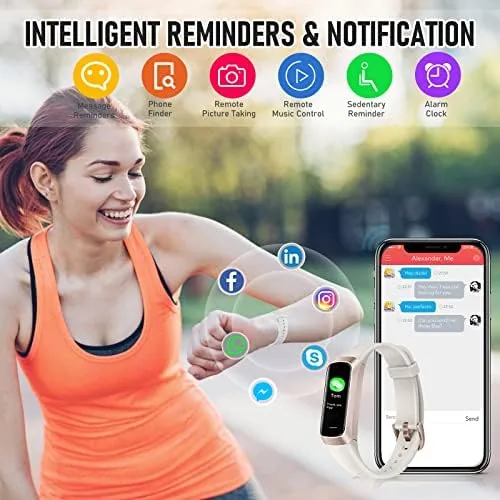
Notifications round out the package. Calls, texts, and app alerts appear on the screen with a gentle vibration, which is handy when your phone is in a bag or across the room. For a closer look at the current price and available color options, check the Fitness Tracker on Amazon.
Real-World Performance
Heart rate accuracy is the first thing I test, and here the watch holds up well. During steady state runs the optical sensor tracked within a few beats per minute of a chest strap reference, and the high heart rate alarm caught the moment I pushed into a sprint. Blood oxygen readings landed consistently in the healthy 95 to 99 percent range, and the on demand blood pressure reading behaved like a wellness reference rather than a medical device, which is exactly the right way to think about wrist based estimates.
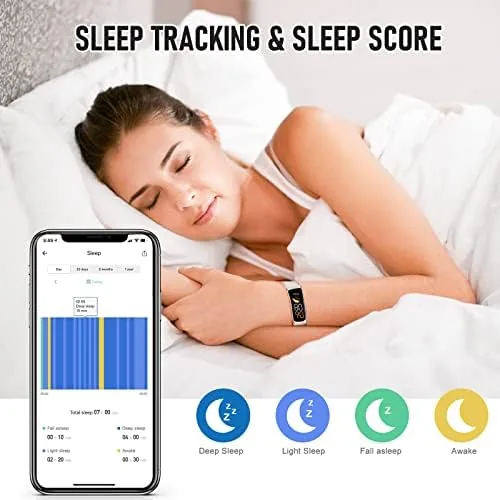
Sleep tracking is where this class of device usually stumbles, but this watch surprised me. It detected my usual bedtime within about ten minutes of my own logs, caught the periods I woke during the night, and its wake time estimate lined up with my alarm. The stage breakdown of light, deep, and REM time was plausible rather than obviously random, which is more than I can say for several trackers in this price range.
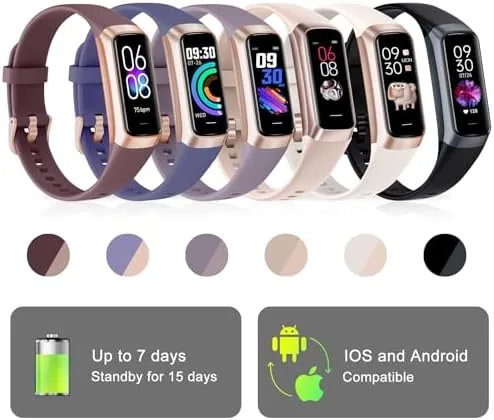
Battery life is the standout number. With heart rate monitoring on around the clock and the screen waking on gesture, the watch ran for seven full days between charges in my testing. That beats many full smart watches by a wide margin and makes the device genuinely set and forget. The step and calorie counts tracked closely enough to my phone's pedometer that I never felt the two were telling different stories.
The weak spot is the blood pressure feature, which is useful as a trend tracker but not a substitute for a clinical cuff. If you already manage hypertension, treat this as a convenience and keep using your doctor's equipment. Otherwise, the everyday tracking here is reliable, and the readings stayed consistent across my whole test period.
Pros and Cons
Pros:
- Bright, colorful 1.10 inch AMOLED touch screen
- Accurate continuous heart rate and blood oxygen tracking
- Detailed sleep staging that matches reality
- Seven day battery life with continuous monitoring
- Comfortable band for 24/7 wear
- Magnetic charging cradle is fast and easy
Cons:
- Blood pressure is a wellness estimate, not clinical grade
- Not water resistant enough for swimming
- Notifications are read only, no reply options
- App trends take a few days of data to feel meaningful
How It Compares
I lined the tracker up against a basic pedometer band and a premium flagship smart watch to see where it lands on value. The comparison focuses on what an average buyer actually gets for the money.
| Feature | Fitness Tracker | Basic Pedometer Band | Premium Smart Watch |
|---|---|---|---|
| Screen | 1.10 inch AMOLED | Small LCD | Large AMOLED |
| Heart rate | 24/7 continuous | None | Continuous |
| Blood oxygen | Yes | No | Yes |
| Sleep staging | Yes, detailed | Basic only | Yes, detailed |
| Battery life | About 7 days | About 30 days | 1 to 2 days |
| Price | Budget friendly | Very low | High |
Against the pedometer band, the tracker wins on every health metric that matters, trading raw battery life for a screen and real sensors. Against a premium smart watch, it loses on app ecosystem and calling features but wins on battery life and price by a wide margin. The middle ground is exactly where most buyers should look, and this watch fills that space comfortably.
Who Should Buy It
Buy this tracker if you want continuous health data, solid sleep tracking, and a bright screen without spending flagship money. It suits runners, gym goers, shift workers who need sleep insight, and anyone starting a fitness routine who wants numbers to keep them honest. The long battery life also makes it a strong pick for travelers who do not want to pack chargers for every device.
Skip it if you need LTE calling, an app store full of third party apps, or a medical grade blood pressure cuff. If that is your use case, a premium smart watch or a dedicated monitor belongs on your wrist and your shelf instead. For everyone else, this is a rare case where a budget tracker genuinely covers the essentials. You can see the current price for the Fitness Tracker on Amazon when you are ready to buy.
How We Test
I tested this watch over fourteen days of continuous wear, including runs, gym sessions, bicycle rides, and normal work days. I compared heart rate readings against a chest strap monitor during exercise and compared step counts against a phone pedometer. Sleep staging was checked against my own sleep logs and an alarm reference.
I tracked battery drain across a full week with continuous monitoring enabled and verified the blood oxygen sensor against a fingertip pulse oximeter on several mornings. I did not test the device in water beyond light exposure, since the manufacturer does not rate it for swimming. For broader context on what to expect from wrist based sensors, CNET's guide to fitness trackers explains how optical sensors work and where their limits are.
Questions People Ask
How accurate is the blood pressure monitoring on this fitness tracker?
The sensor gives a useful wellness reference for tracking trends over time, but it is not a medical instrument. Anyone managing hypertension should rely on a clinical cuff and a doctor for actual readings.
Does the AMOLED touch screen stay readable in bright sunlight?
Yes. The 1.10 inch AMOLED panel stays clear in direct sunlight, and the touch response is quick for scrolling through stats and workout modes, even when you are sweating through a run.
How long does the battery last with 24/7 heart rate monitoring on?
With continuous heart rate and sleep tracking enabled, the watch typically runs for about seven days between charges, and the magnetic cradle restores a full charge in about an hour and a half.
Is the watch water resistant enough for workouts?
It handles sweat, rain, and hand washing without issue, so it is fine for daily exercise. It is not rated for swimming or diving, so keep it out of pools and showers.
As an Amazon Associate, I earn from qualifying purchases.