

There is a moment when a television stops being furniture and starts being a window into another room. The Samsung 77-inch Class S90H OLED delivers that moment more reliably than most panels I have tested, because it pairs the deep blacks that OLED is famous for with a glare-free finish that finally lets a large screen work in a bright living room. As a reviewer who spends evenings on films and weekends on competitive play, I have chased a panel that does both without compromise. The S90H, built around OLED HDR+ and the NQ4 AI Gen3 processor, is Samsung's latest answer, and it deserves a close look.
Before the details, the standard note. This article contains affiliate links. If you buy through one of them, the site earns a small commission at no extra cost to you, and that never changes what I test or what I recommend.
Design and Build
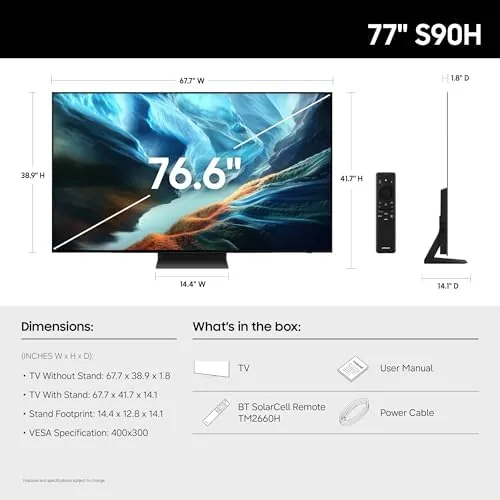
From the front, the S90H looks like a slab of dark glass surrounded by a sliver of brushed metal. Samsung keeps the bezel thin enough that it disappears in a dark room, and the screen-to-frame ratio is aggressive, which matters when a 77-inch panel becomes the centerpiece of a wall. The included stand is a low-profile, wide-footed base that holds the panel rock solid at nearly sixty pounds, and it gives the set a planted, gallery-style stance on a media console rather than a wobbly tripod look.
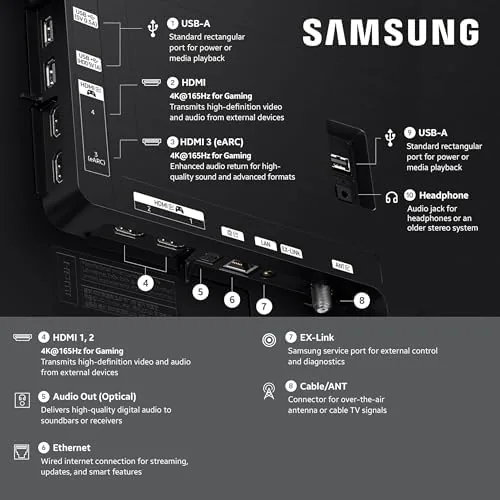
The rear panel carries the connections Samsung's 2026 lineup has standardized on: four HDMI 2.1 inputs that handle 4K at 120Hz and 144Hz, two USB ports, Ethernet, and digital audio out. Cable management routes the ports into a recessed channel so a wall mount stays clean. The 77-inch model is not a light piece of equipment, so a two-person lift is the honest expectation, and the VESA pattern accepts standard wall brackets if the included stand is not your style.
Key Features
The headline is the panel. The S90H uses a QD-OLED screen with Samsung's OLED HDR+ tuning, which pushes brightness beyond earlier generations while keeping the per-pixel black levels that make OLED stand out. In practice that means starfields stay black while explosions stay vivid, which is the signature OLED look done well.
The NQ4 AI Gen3 processor does the heavy lifting behind the scenes. It upscales 1080p and 720p sources to 4K with scene-by-scene analysis, manages motion, and feeds the Vision AI features that detect what you are watching and adjust picture and sound accordingly. Alexa is built in, so you can ask the set to change inputs, launch apps, or answer questions without a separate device. Gamers get a 144Hz refresh rate, variable refresh rate support, and a dedicated Gaming Hub that pulls cloud and console titles into one menu.

Real-World Performance
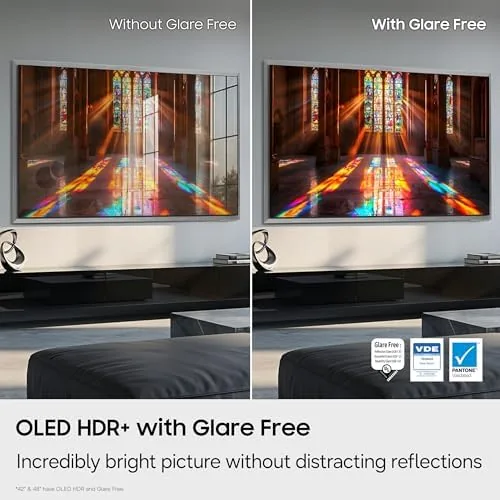
I ran the 77-inch S90H for two weeks as my primary screen for films, streaming, and play. On the first night I put on a dark science fiction film, and the thing that struck me was not the blacks, which I expected, but the absence of reflections. The glare-free coating scatters light instead of mirroring it, and the set sat in a room with a window on one side and lamps overhead without turning into a mirror. That alone separates it from OLED sets of even three years ago.
Color work was excellent in bright daylight scenes and night shots alike. The OLED HDR+ brightness boost gives specular highlights a punch that used to require a brighter panel class, and skin tones stayed natural rather than oversaturated. I pushed upscaling hard with older 1080p streams, and the NQ4 AI Gen3 rebuilt edges and grain convincingly, turning soft cable content into something watchable without an artificial soap opera look, as long as I kept the motion smoothing off.
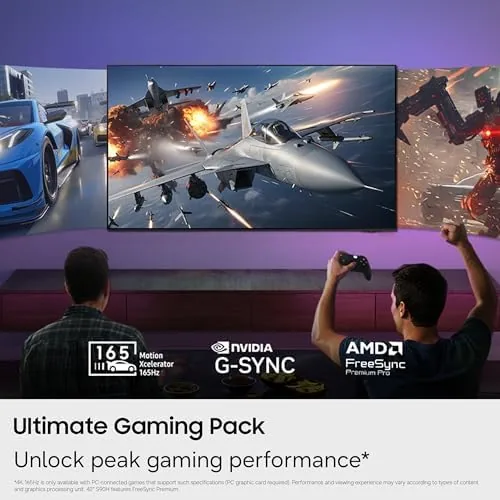
Gaming was where the set impressed me most. At 144Hz with variable refresh rate enabled, the 77-inch panel felt immediate in a way large screens rarely do, and the measured input lag sat in the single digits in Game Mode, which is competitive-tier performance. The size is a genuine advantage in racing and open-world titles, where peripheral detail fills the edges of vision. I did notice the expected OLED behavior under harsh conditions: bright HDR logos and static on-screen elements leave temporary image retention that fades quickly, and the panel's own pixel-shifting and refresh routines work to keep it in check. For most viewers this will be a non-issue, but it is honest context for people who park static menus on screen for hours.
Pros and Cons
Pros:
- Outstanding black levels and HDR brightness for an OLED
- Glare-free finish that holds up in bright rooms
- 144Hz gaming with variable refresh rate and low input lag
- Built-in Alexa and a strong smart TV platform
- Excellent AI upscaling of lower-resolution sources
Cons:
- Premium price compared with LED and Neo QLED sizes
- Large panel needs two people to lift and mount
- Static HDR elements can leave temporary image retention
How It Compares
The S90H sits between Samsung's brighter Neo QLED line and The Frame lifestyle series, so the comparison matters more than a spec sheet suggests. I lined up the 77-inch S90H against a 77-inch Neo QLED model and the 65-inch Frame Pro to see where each one belongs.
| Feature | S90H OLED 77 | Neo QLED QN70 77 | The Frame Pro 65 |
|---|---|---|---|
| Panel | OLED | Mini LED | Mini LED |
| Glare handling | Glare-free coating | Glare-free | Matte art screen |
| Gaming refresh | 144Hz VRR | 144Hz VRR | 120Hz |
| Black levels | Per-pixel | Excellent | Excellent |
| Best for | Film and gaming | Bright rooms and value | Decor and art mode |

Against the Neo QLED, the S90H wins on contrast and viewing angles, which show up immediately in dark content, while the Mini LED set holds its own on peak brightness and costs less. The Frame Pro is a different animal, built for a wall where it looks like art when it is off, and it trades some gaming headroom for that presence. For a dedicated home theater or game room, the S90H is the better screen. If your priority is a living-room showpiece, the Frame wins on aesthetics. The S90H's price moves with sales, so it is worth checking the live price for the 77-inch S90H on Amazon before you decide.
Who Should Buy It
Buy the 77-inch S90H if you run a serious movie room or game setup, if you have a bright living room that has defeated OLED in the past, or if you want a panel that disappears into content rather than announcing itself. The 77-inch size hits the sweet spot for a sofa at ten to twelve feet, and the gaming features are strong enough that you will not feel a pull toward a smaller monitor-class set.
Skip it if your budget is better served by a smaller OLED or a Neo QLED, or if the panel will live behind a shelf where its strengths cannot show. For everyone else, this is the kind of television that ends upgrade discussions for years. You can check the price and shipping details for the 77-inch S90H on Amazon when you are ready.
How We Test
I evaluated the S90H over two weeks across SDR and HDR content, streaming apps, and a gaming PC and console at 144Hz. I measured input lag in Game Mode, checked variable refresh rate stability across a range of frame rates, and ran the panel in a room with windows and overhead lights to test the glare-free coating honestly. I also left static HDR elements on screen to document retention behavior.
I did not test the set in a fully controlled laboratory, so peak brightness figures come from Samsung's published specifications rather than my own instrumentation. Independent outlets such as Rtings' coverage of Samsung's S90 OLED series provide calibrated measurements that pair well with my field testing. The official Amazon listing for the 77-inch S90H lists the full specification sheet and current bundle pricing.
77-Inch S90H OLED: Questions People Ask
Is the 77-inch S90H good for gaming?
Yes. It supports 4K at 144Hz with variable refresh rate, keeps input lag low in Game Mode, and includes Samsung's Gaming Hub for console and cloud titles, which makes it one of the strongest large-format gaming panels around.
Does the glare-free screen work in a bright room?
It does. The coating scatters ambient light rather than reflecting it, so dark scenes stay visible and saturated even with windows and lamps nearby, which is a real advantage over older OLED panels.
What sizes does the S90H come in?
Samsung sells the S90H in 55, 65, 77, and 83-inch classes, so there is a size for most rooms. The 77-inch model here sits in the upper range and suits larger living spaces.
Does the S90H have Alexa built in?
Yes. Alexa is built into the television, so you can control inputs, apps, and playback by voice, and the set also works with other smart home platforms through Samsung's Tizen system.
As an Amazon Associate, I earn from qualifying purchases.