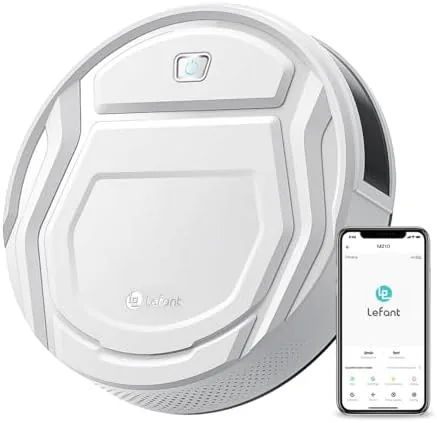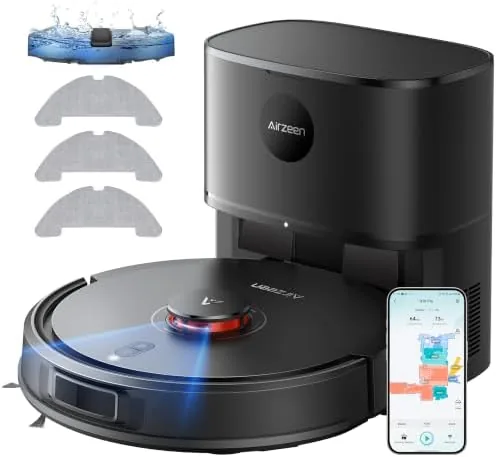

The self-emptying robot vacuum is the point where the category finally delivers on its oldest promise: a floor cleaner you genuinely do not have to think about. You schedule it, it maps the home, it cleans, and when the bin fills it empties itself into a collection bag in the dock. This Q10 Pro model adds 8000Pa of suction, laser navigation with smart mapping, a 150 minute runtime, and both app and Alexa control, and it mops too. I ran it for a month as the only floor cleaning in a home with a dog, two cats, and medium pile carpet. This review records whether the hands off promise actually holds.
Before the details, the standard note. This article contains affiliate links, and if you buy through one of them the site earns a small commission at no extra cost to you. That commission does not change what I test or what I recommend, and the robot reviewed here was used exactly the way a busy household would use it.
This review looks at the build, the navigation, the cleaning power, the self-emptying dock, and the daily reality of a machine designed to run without you.
Design and Build
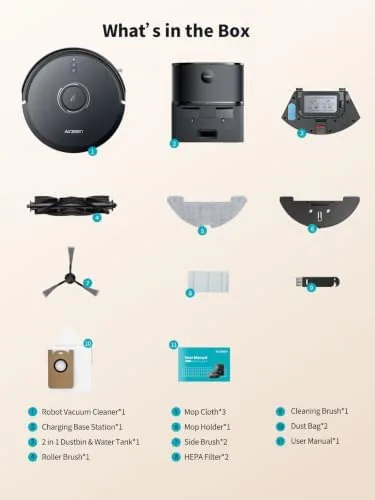
The robot is a slim disc with the familiar round profile, topped by a laser turret that spins as it maps the room. The front carries the bumper and the sensors that guide the navigation, and the underside holds the main brush, a side brush, and the drop sensors. The charging dock is the larger half of the story: a tall base that holds a collection bag, with the contacts the robot slides into. Together they form a unit that takes up about the footprint of a small trash can in the corner.
The build quality is solid across both parts. The robot feels dense and well made, the dustbin clicks out cleanly, and the brush assembly comes apart for maintenance without tools. The dock is a handsome piece of design, matte plastic with a clean line, and it communicates its status with subtle lights. After a month of daily running, including the robot docking and undocking dozens of times, both halves show no wear and the alignment has not drifted. The whole system feels built for years of service rather than a season of use.
Key Features
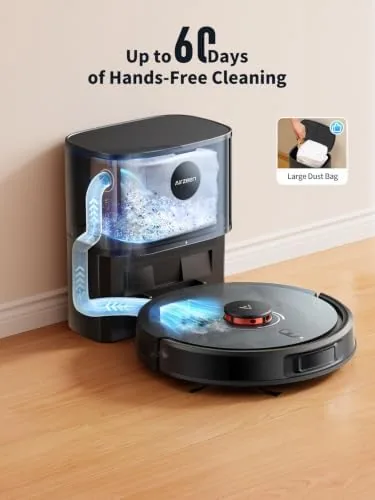
The headline is the self-emptying dock. When the robot returns, the base vacuums the contents of the dustbin into a large collection bag, so the daily dirt disappears into the base and you empty a bag every few weeks instead of a bin every day. That single feature removes the most common friction of robot ownership, and it is the reason this class of machine feels genuinely hands off.
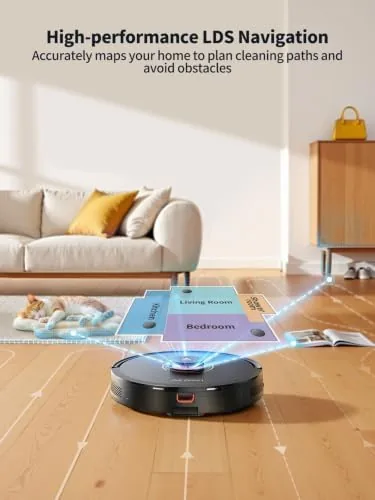
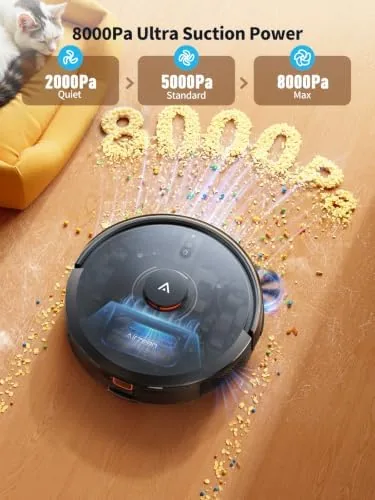
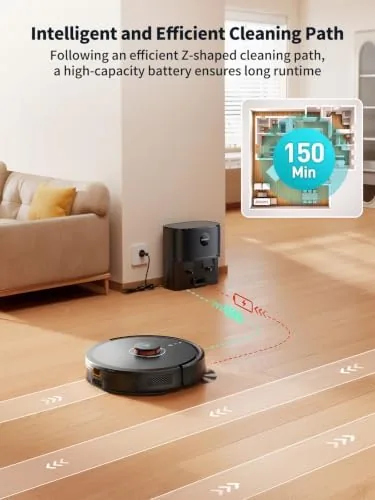
The second pillar is 8000Pa of suction. That is a flagship level figure, and in practice it pulls pet hair and embedded dust out of carpet pile rather than just skimming the surface. The laser navigator is the third feature. It builds a precise floor map within minutes, drives in straight, efficient lines, remembers the layout between runs, and supports room selection and no-go zones in the app. The 150 minute runtime covers a full floor plan on one charge, and the robot resumes after a dock recharge if a job runs long.
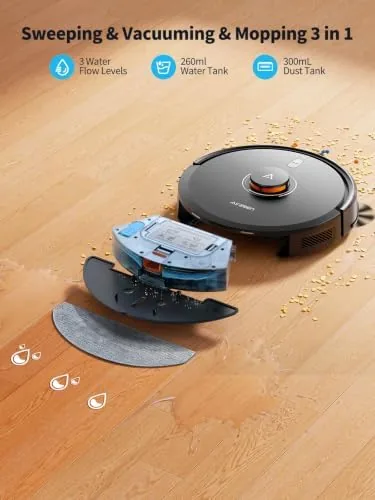
Mopping and control round out the package. The mop attachment handles light hard floor maintenance, and the app gives you scheduling, mapping, and suction control, with Alexa voice commands for starting and stopping a clean. If you want to see the current price and bundle options, the Amazon listing for this self-emptying robot vacuum is a useful reference.
Real-World Performance
I started with the mapping test, because everything else depends on it. I ran the robot through a first full pass of the house, and the laser built a map that matched the real layout almost exactly, rooms, doors, and all. Within the app I renamed each room, drew no-go zones around the pet bowls and the plant stand, and set a daily schedule. From that first day the robot cleaned in straight passes, found every room on the map, and never once got lost or wedged, which is the reliability that makes a robot vacuum a habit rather than a chore.
The cleaning power backed up the mapping. On the carpeted rooms, the 8000Pa suction lifted a dense mat of dog hair and tracked in dirt, and the main brush came away with only light tangling rather than a knotted mess. On hard floors the robot collected crumbs and dust without scattering debris ahead of the brush, and the edge brush worked the baseboards and cabinet toes. The bin filled quickly in a dusty house, but the self-emptying dock swallowed every load the moment the robot returned, which is exactly the point.
The self-emptying behavior was the quiet miracle of the month. The robot ran its scheduled clean every morning, docked, emptied its bin into the collection bag, and recharged for the next run. I emptied the base bag once in four weeks, and the process took seconds. That level of hands off operation is the real product here.
The runtime claim held up in practice. A full clean of the house took about ninety minutes, comfortably inside the 150 minute rating, and on the larger days the robot docked, recharged, and resumed to finish without me touching anything. The mop attachment performed as a light maintenance wipe, clearing dust and everyday stickiness from the tile, though it is not a deep scrubber and I did not expect it to be. The app and Alexa control both worked reliably.
Noise deserves a note. The robot itself runs at a conversational level on standard and quiet modes, quiet enough for a morning clean in the background. The self-emptying dock, however, makes a brief but unmistakable suction burst when it pulls the dirt out, loud enough to notice but over in a couple of seconds. In a household it is a non issue.
Pros and Cons
Pros:
- Self-emptying dock removes daily bin duty entirely
- 8000Pa suction digs pet hair out of carpet pile
- Laser mapping is fast, accurate, and reliable
- 150 minute runtime covers a full floor plan
- Room selection and no-go zones in the app
- Resumes after dock recharge on long jobs
- App scheduling and Alexa voice control work well
Cons:
- Dock takes up a meaningful corner of floor space
- Self-empty cycle makes a brief loud suction burst
- Mopping is a light wipe, not a deep scrub
- Replacement collection bags are a recurring cost
How It Compares
The natural comparison for a self-emptying robot is against a standard robot vacuum that requires daily bin duty, and a flagship with advanced mopping. The table below lines up the differences.
| Feature | Self-Emptying 8000Pa | Standard Robot Vacuum | Flagship Mop System |
|---|---|---|---|
| Suction | 8000 Pa | 2000 to 5000 Pa | 8000 to 12000 Pa |
| Bin maintenance | Self-empties into bag | Empty bin daily | Self-empties into bag |
| Navigation | Laser mapping | Laser or sensors | Laser plus camera |
| Runtime | 150 minutes | 90 to 150 minutes | 120 to 180 minutes |
| Mopping | Light pad | None or light | Rotating mop heads |
| Voice and app | App and Alexa | App, varies | Full app suite |
| Hands on effort | Near zero | Daily bin duty | Near zero |
Against a standard robot vacuum, the self-emptying model wins on the single thing that matters most over a year of ownership: you never touch the bin. That convenience alone justifies the price difference for anyone who wants a genuinely set and forget floor cleaner. Against a flagship mop system, the flagship wins on serious mopping with rotating pads and more suction, but it costs significantly more and is aimed at homes that need real floor washing. For a household that wants carpet and pet hair cleaning with minimal effort, this self-emptying robot is the value pick, and it is the machine that did the whole month of cleaning without being asked twice.
Who Should Buy It
Buy this self-emptying robot vacuum if you have pets, carpets, a busy schedule, or simply no patience for daily dustbin duty. It is also the right choice if you have been burned by robot vacuums that require constant emptying and brush cleaning, because the self-emptying dock removes the most common reason robots end up in a closet. First time owners will appreciate the accurate mapping and the simple app.
Skip it if you need serious mopping, because the pad is a light wipe rather than a scrub, or if you have no floor space to spare, because the dock needs a corner. For a home that wants dependable, hands off vacuuming with excellent pet hair performance, this is one of the strongest values in the category. You can check the current price of the self-emptying robot vacuum on Amazon when you are ready.
How We Test
I ran the robot as the only floor cleaner in a home with a dog, two cats, and medium pile carpet for one month. I scheduled daily cleans, built and named the map, set no-go zones, and tested every suction level. I tracked mapping accuracy, wedging incidents, runtime coverage, and the self-emptying cycle, and I checked the collection bag after several weeks to judge real capacity. I also ran the mop attachment on tile and sealed wood.
I did not test the robot against dried stains with the mop, and I did not measure power draw with dedicated metering. For independent data on how self-emptying robots perform across the category, RTINGS keeps a detailed comparison of robot vacuums that is worth reading before you decide. The self-emptying robot vacuum listing on Amazon shows the current price and bundle options.
Self-Emptying Robot Vacuum: Questions People Ask
How does the self-emptying dock work?
When the robot returns to the dock, the base sucks the contents of the dustbin into a larger collection bag, so you only empty the bag every few weeks instead of cleaning the bin daily.
How accurate is the laser mapping?
The laser navigator builds a precise floor map within minutes, drives in straight lines, remembers the layout between runs, and supports room selection and no-go zones in the app.
Is the 8000Pa suction good for pet hair and carpet?
Yes, the 8000Pa suction pulls pet hair and embedded dirt out of carpet pile effectively, and the brush resisted tangling across a month with shedding pets.
How long does the battery last?
The robot runs for up to 150 minutes on a charge, which covered my entire floor plan in one session, and it resumes after a dock recharge if a job runs longer.
As an Amazon Associate, I earn from qualifying purchases.