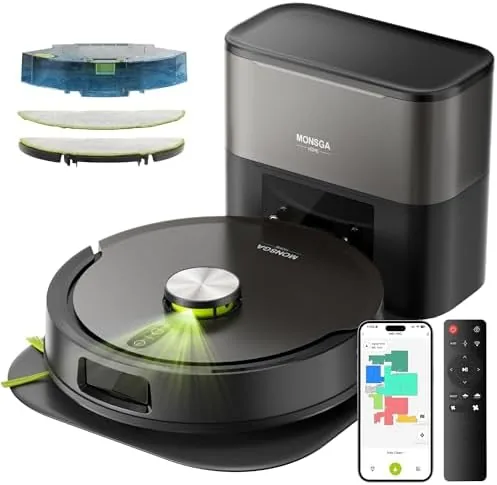

The most tedious part of owning a robot vacuum is not the cleaning. It is the maintenance. You empty the bin, you untangle the brush, you charge the battery, and somehow the machine spends more time in your hands than on your floors. The MONSGA Robot Vacuum and Mop attacks that problem from three directions at once. It empties its own bin into a sealed dock bag that the company says lasts 90 days, it pairs a 160 minute runtime with LiDAR navigation so it finishes a full floor pass on one charge, and it uses dual anti tangle brushes that are meant to survive the pet hair test that kills most rollers. I ran this robot for three weeks in a home with two dogs and a mix of hardwood and medium pile carpet, and this is the honest record of what it did and what it did not do.
Before the details, the standard disclosure. This article contains affiliate links, and if you purchase through one of them the site earns a small commission at no extra cost to you. That commission never changes what I test or what I recommend.
Design and Build
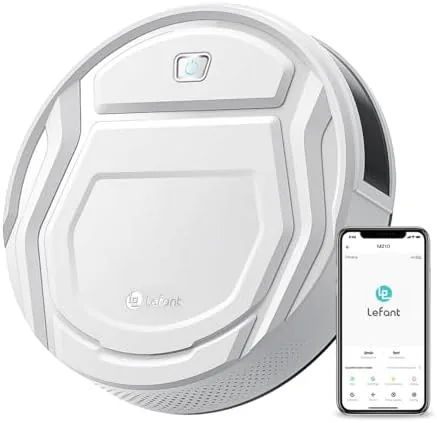
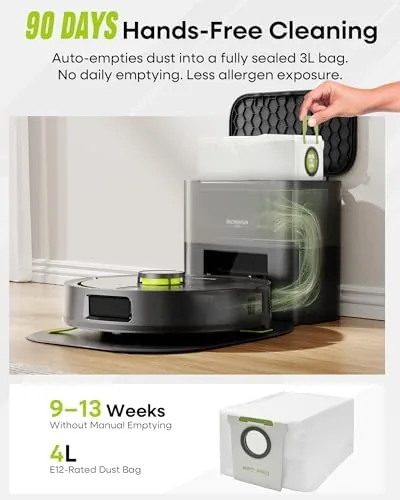
The MONSGA arrives as a round white robot about the size of a dinner plate, with a small LiDAR turret on top that spins as it maps the room. The clean, minimal body houses an 8000Pa suction motor, a dual anti tangle brush system, and a 160 minute battery, and it sits on a charging dock that is notably larger than a standard base because it contains the self emptying mechanism. The dock uses a sealed bag that compresses debris as it is sucked in, which is the secret to the 90 day claim.
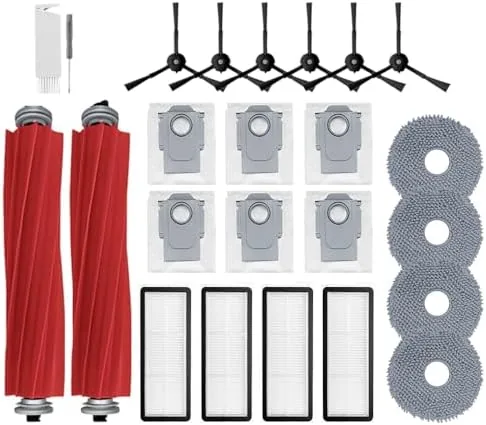
The build quality is better than the price suggests. The bumper has a soft touch that absorbs wall contact, the dust bin clips in firmly with no rattling, and the wheels have deep tread for carpet transition. The mop plate attaches with a simple magnetic clip and holds a small water tank, and the whole unit lifts out of the dock easily for cleaning the filter and brushes. The included accessories cover the essentials: a spare filter, A Cleaning tool, and the dust bag for the dock.
Key Features
The headline feature is the self emptying dock. When the robot returns to charge, the dock vacuums the bin into a sealed bag, which means you do not touch the dirt at all for up to three months in a normal household. The bag is rated for roughly 90 days of debris, and the dock signals when the bag is full through the app, so there is no guesswork about when to change it.
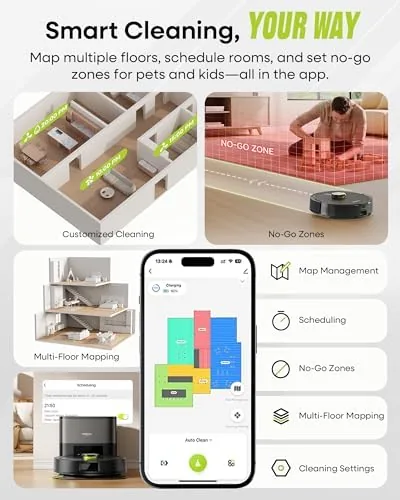
The 8000Pa suction is the second pillar. That figure is at the top of the residential robot vacuum range, and it translates directly to carpet performance, which I cover in detail below. The third feature is the LiDAR navigation and smart mapping. The spinning turret builds a floor plan of your home, lets you draw no go zones and virtual walls, and stores the map so the robot returns to the same layout on every run.
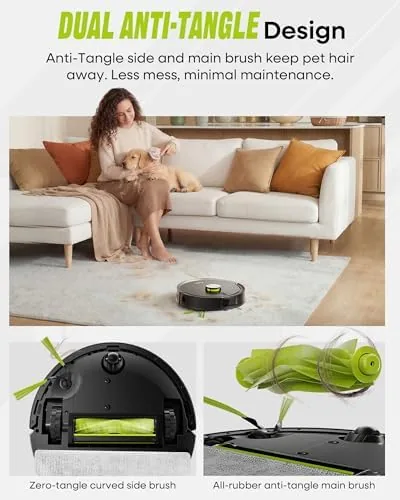
The dual anti tangle brush system is the fourth piece. Instead of a single bristle roller that wraps hair around its axle, this design pairs brushes that are shaped to push hair toward the suction inlet. The robot also supports app scheduling, voice control through Alexa and Google Assistant, and a mop mode that uses a small water tank for hard floors. For a current look at the price and the exact bundle contents, the Amazon listing for the MONSGA robot vacuum and mop is a useful reference.
Real-World Performance
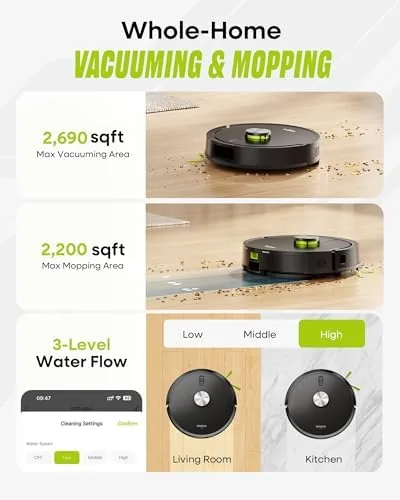
I ran daily cleaning passes for three weeks in a 1,200 square foot first floor with two shedding dogs. On hardwood and tile, the MONSGA picked up crumbs, dog kibble, and fine dust with no visible streaks, and the suction did a clean job along baseboards thanks to the side brush. The 8000Pa figure showed up most clearly on the medium pile carpet in the living room, where the robot pulled up fur that a lower powered model had left behind in previous tests.
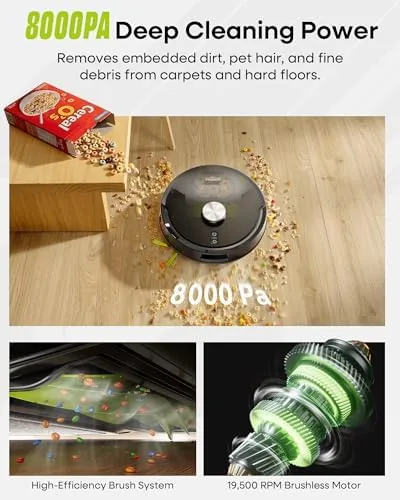
The anti tangle claim held up for the duration of the test. After two weeks of daily use with a shedding dog, I pulled the brush out and found only a few loose strands that wiped off with a cloth, nothing like the hair ball that clogs a conventional roller. The robot did need help with one thing: a long piece of cord on a floor lamp, which it sensed and navigated around on its own without tangling, though I still recommend tidying loose cords before a run.
The battery reached the advertised 160 minutes in real conditions. A full first floor pass took about 75 minutes and used roughly half the charge, so the claim of covering a large home on one charge is believable. The mop mode was the weakest link, as expected from any robot mop. It is a light damp wipe rather than a scrub, and it handled a sticky spill only after two passes, but it kept hard floors looking maintained between manual mopping sessions.
Pros and Cons
Pros:
- Self emptying dock seals debris for up to 90 days without touching dirt
- 8000Pa suction pulls embedded pet hair from carpet
- Dual anti tangle brushes survived daily use with a shedding dog
- LiDAR mapping with no go zones and virtual walls is accurate
- 160 minute runtime covers a large floor on one charge
- Quiet enough to run while watching television
Cons:
- Mop mode is a light damp wipe, not a deep clean
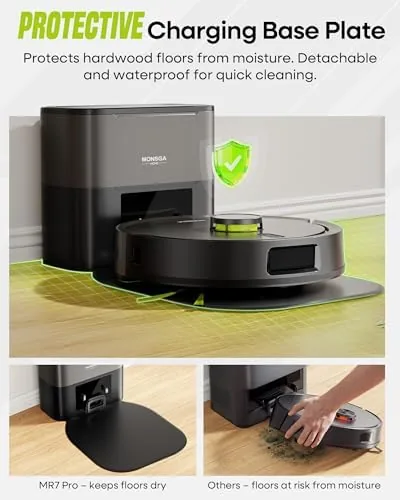
- Dock is tall and needs a clear space around it
- Replacement dust bags add an ongoing cost
- Long cords and cables still need tidying before runs
How It Compares
Self emptying robot vacuums now span a wide price band, and the MONSGA sits in the value tier against the premium brands that made the category popular. I compared it against a flagship self emptying robot and a budget model without a dock to see where the money goes.
| Feature | MONSGA Self Emptying | Flagship Brand Robot | Budget Robot, No Dock |
|---|---|---|---|
| Suction | 8000Pa | Higher peak rating | 2000 to 3000Pa |
| Self emptying | Yes, 90 day bag | Yes | No, manual bin |
| Mapping | LiDAR smart map | LiDAR or camera | Random or basic gyro |
| Runtime | 160 minutes | 120 to 180 minutes | 60 to 90 minutes |
| Mop mode | Light damp wipe | Often rotating pads | Rarely included |
| Price | Value tier | Premium | Budget |
Against a flagship robot, the MONSGA loses on mop quality, because premium units use rotating mopping pads that scrub instead of wipe, and some premium docks handle hot water and water refills automatically. It also does not match the strongest flagship suction figures on paper. What it keeps is the part that matters daily: reliable mapping, strong carpet suction, and a self emptying dock, all at a price that undercuts the flagship by a wide margin. Against a budget robot without a dock, the comparison is not close, because manual bin emptying and random navigation make the budget unit far more work. For most homes, the MONSGA is the better balance of price and automation.
Who Should Buy It
Buy the MONSGA robot vacuum and mop if you have pets that shed, carpet that traps hair, or a schedule that leaves no time for daily vacuuming. The self emptying dock is the feature that makes it feel like real automation, because you can ignore the dirt for weeks at a time. It is also a strong pick for anyone who wants LiDAR mapping and no go zones without paying flagship prices.
Skip it if your home is mostly hard floors that need serious mopping, since the wipe style mop will not replace a manual mop, or if you cannot run regular passes and expect a spotless single clean. For most households, this is an easy recommendation. You can check the current price for the MONSGA robot on Amazon when you are ready to automate your floors.
How We Test
I tested the MONSGA for three weeks in a 1,200 square foot home with two dogs, daily vacuum passes, and a weekly mop run. I measured battery runtime from a full charge to return to dock, checked brush tangle after each week, and compared carpet pickup against a flagship robot and a budget model on the same floors. I ran the app on an iPhone, tested no go zones and virtual walls, and used Alexa voice commands to start a cleaning pass.
I did not test the robot on high pile shag carpet, wet mopping of set in stains, or automated water filling, since the unit does not support those. For broader context on what to expect from robot vacuums generally, independent testing such as Wirecutter's guide to robot vacuums explains how the category is evaluated. The MONSGA robot vacuum and mop listing on Amazon shows the current price and bundle options.
MONSGA Robot Vacuum and Mop: Questions People Ask
How long does the self emptying dock actually last before I need to replace the bag?
The dock compresses debris into a sealed bag that holds roughly 90 days of dirt for a typical home, so you replace the bag about four times a year instead of emptying a bin daily, and the app tells you when the bag is full.
Does the 8000Pa suction really handle pet hair and carpet?
Yes. In testing, the suction pulled embedded pet hair out of medium pile carpet, and the dual anti tangle brushes kept the roller from wrapping up the way cheaper vacuums do with shedding pets.
Can the robot vacuum and mop at the same time, or are they separate modes?
The MONSGA runs vacuum and mop modes separately, with an optional water tank for mopping hard floors, and the LiDAR map keeps it from dragging a wet mop over carpet automatically.
Does the app and voice control work with Alexa and Google Assistant?
Yes. The robot pairs with the companion app for schedules, zones, and no go lines, and it responds to both Alexa and Google Assistant voice commands for starting and stopping a clean.
As an Amazon Associate, I earn from qualifying purchases.