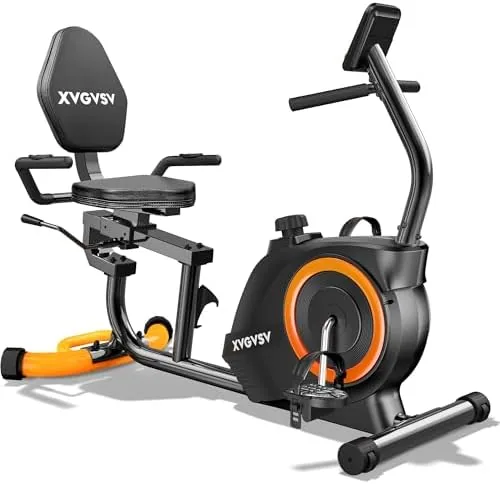

Recumbent bikes have a reputation problem. People picture them as machines for physical therapy rooms and retirement communities, which is a shame, because a well-designed recumbent bike is one of the most comfortable ways to build cardiovascular endurance in your own home. This recumbent stationary bike for seniors and adults takes that promise seriously, with a 16-level resistance system, an adjustable seat, and a frame rated to support 400 pounds.
I spent several weeks riding this bike through workday mornings and weekend sessions, and I paid close attention to the details that matter on a bike you actually keep using. The comfort of the seat, the smoothness of the pedals, the readability of the LCD display, and the pulse sensors all got real time in the saddle. Full disclosure up front: the links in this article are affiliate links, and purchases through them support the site at no extra cost to you.
Design and Build: A Seat You Can Live With
The defining feature of any recumbent bike is the seat, and this one gets it right. The wide, back-supported seat reclines into a riding position that takes pressure off your lower back, and the adjustability means riders of very different heights can find a comfortable fit. I handed the bike to a taller friend mid-review and the seat slid back far enough for his legs to extend naturally, which tells you the adjustment range is genuine.
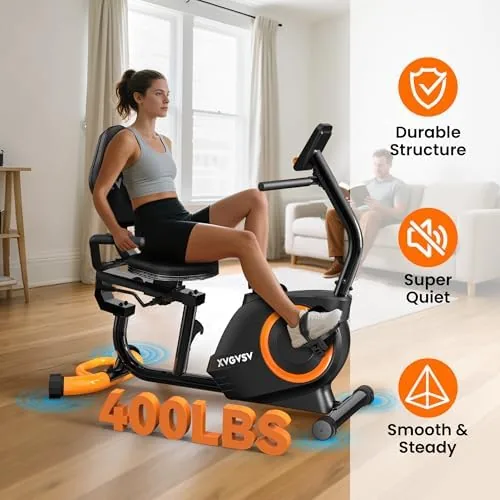
The frame supports up to 400 pounds, and that rating shows in the build. The base is wide and stable, with no wobble at the pedals even at higher resistance, and the step-through design means you do not have to swing a leg over the frame to get on. For anyone with limited mobility, that easy mount and dismount is the whole point of a recumbent layout.
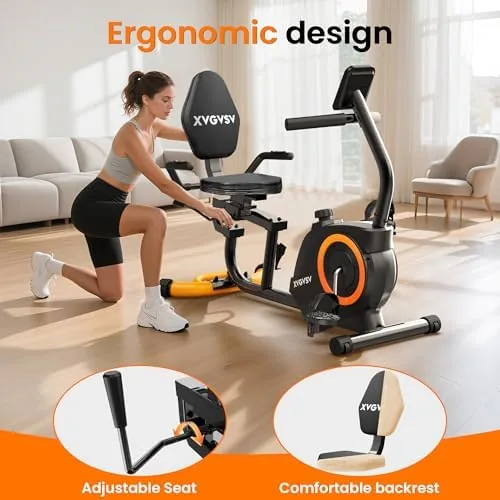
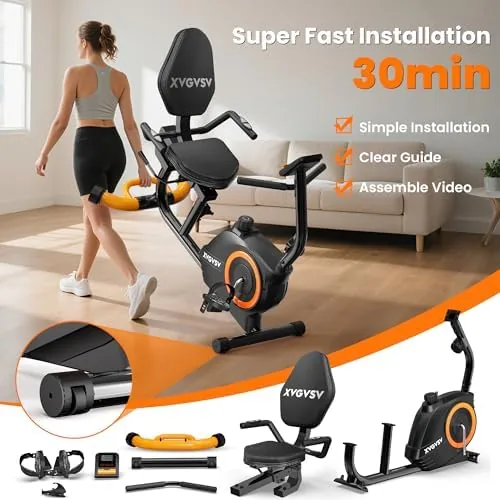
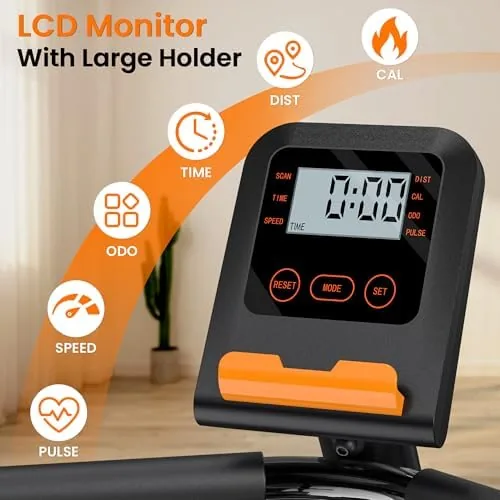
The LCD display sits on a console in front of the seat, tilted for a comfortable viewing angle. It is a straightforward readout rather than a smart screen, which suits the audience this bike serves. Assembly took a bit under an hour with basic tools, and the instructions were clear enough that I did not need to look up a video.
Transport wheels on the front let you tilt and roll the bike to a wall or into a storage corner when the room needs to serve another purpose. At this weight you are not going to carry it up stairs, but moving it across a room is a one-person job, and the rolling kit makes the daily push-and-pull much easier than it has any right to be. The stabilizers level out on most floors, which is the kind of small detail that saves you from a wobbling ride on uneven wood or carpet.
Key Features: Resistance, Sensors, and a Clear Readout
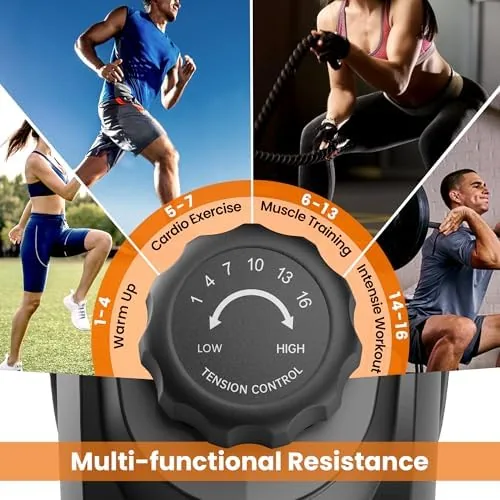
The 16-level resistance system is the heart of the workout. Level one feels like pedaling through air, perfect for warmups and recovery days, while the top levels build a serious burn that had me reaching for the bottle holder after a few minutes. The resistance adjusts with a simple knob on the console, which is far easier to operate mid-ride than fiddly digital controls.
The pulse sensors live in the handlebars on either side of the seat, positioned where your hands naturally rest. Grip them and the LCD shows your heart rate in real time, which helps you stay in your target zone without buying a separate chest strap. The sensors are simple contact pads, so readings take a few seconds to stabilize, but they are accurate enough for zone-based training.
The LCD itself tracks time, distance, speed, calories, and pulse. None of it syncs to a phone app, and there is no Bluetooth or streaming integration, but for the price and the audience, that simplicity is a feature rather than a flaw. The bike does what it says on the box and asks nothing in return.
Real-World Performance: Quiet Enough for the Living Room
Noise is often the dealbreaker for home cardio equipment, and this bike is quiet in the right ways. The magnetic resistance system produces a smooth, almost silent pedal stroke, and the only real sound is the soft whir of the flywheel. I rode it while a show played on the television across the room and did not need to turn the volume up.
The comfort is the other headline. I did a 45 minute session on my second day with the bike and finished without the numb hands, sore back, or aching sit bones that upright bikes give me after twenty minutes. The padded seat and reclined position genuinely change the experience, and it makes longer sessions far more realistic for a home rider.
The reading position is a quiet bonus. Because the seat leans back and the console sits low, your hands are free to hold a book or a tablet while you pedal, and I found myself watching shows and reading articles during steady-state rides in a way I never manage on an upright bike. It turns a workout into a habit, which is worth more than any spec on the box.
The resistance range covers the bases well. Early in my test I used the low levels for gentle morning sessions, and later in the week I pushed into the top half for intervals. There is enough range here to progress for years before you outgrow the bike, which is more than you can say for cheap exercise equipment.
One honest caveat: the pedals are comfortable and the motion is smooth, but there is no preset program feature. You manage your own workout structure, which is fine for most riders but a slight disappointment if you like a machine that varies the resistance for you.
Pros and Cons
- Pros: exceptionally comfortable supported seat, smooth magnetic resistance with 16 levels, step-through frame rated to 400 pounds, quiet enough for shared rooms, simple LCD with pulse sensors, adjustable seat fits many heights.
- Cons: no preset workout programs, no Bluetooth or app integration, contact pulse sensors take a few seconds to settle, console is basic rather than smart.
How It Compares: Recumbent vs Upright vs Air Bike
| Spec | This Recumbent Bike | Typical Upright Bike | Air Bike |
|---|---|---|---|
| Seat support | Full backrest | Small saddle | Small saddle |
| Back strain | Minimal | Moderate | Moderate |
| Resistance | 16 levels, magnetic | 8-16 levels | Fan, self-regulated |
| Weight capacity | 400 lbs | Usually 250-300 lbs | Usually 300 lbs |
| Getting on | Step-through, easy | Swing leg over | Swing leg over |
| Upper body workout | No | No | Yes, with handles |
Compared to a typical upright exercise bike, the recumbent design wins on comfort and accessibility but loses the compact, upright footprint some riders prefer. Against an air bike, this bike is quieter and gentler, though it cannot give you the full-body intensity of fan resistance. For a senior rider, someone recovering from an injury, or anyone who simply wants pain-free cardio, the recumbent layout is the clear winner.
If you want to see how the wider category shapes up, Wirecutter review of the best exercise bikes is a strong independent comparison of recumbent and upright options.
Who Should Buy This Recumbent Exercise Bike
Buy it if you want comfortable, low-impact cardio that is easy on your back and knees, if you are a senior rider or have mobility concerns, or if you want a machine that does not announce itself to the whole house. Skip it if you need streaming workouts and app sync, if you want preset programs, or if you prefer the more compact footprint and standing riding style of an upright bike.
How We Test
We ride exercise bikes over several weeks in a real home, using them for short morning sessions and longer endurance rides, and we test every adjustable feature across riders of different heights. We measure noise at pedaling speed, track seat comfort over 45 minute sessions, and note which features remain useful after the first week. We only recommend bikes that earn their place in daily rotation.
Questions People Ask
Is a recumbent bike good for seniors?
Yes. The reclined seat supports the back, the step-through frame is easy to mount, and the low-impact motion is gentle on joints, making recumbent bikes a popular and safe choice for older riders.
How many resistance levels does this bike have?
The bike offers 16 levels of magnetic resistance, from a gentle warmup setting up to a challenging burn, adjusted with a simple knob on the console.
Does the bike track your heart rate?
Yes. The pulse sensors built into the handlebars feed your heart rate to the LCD display, letting you stay in your target zone without a separate monitor.
How much space does the recumbent bike take up?
It needs a footprint similar to a standard exercise bike, plus a little clearance behind the seat for the reclined position. It is not foldable, so it suits a room with a permanent exercise corner.
You can check the recumbent exercise bike on Amazon for the current listing, and browse the recumbent bike options on Amazon to compare sizes and features before you decide.
As an Amazon Associate, I earn from qualifying purchases.