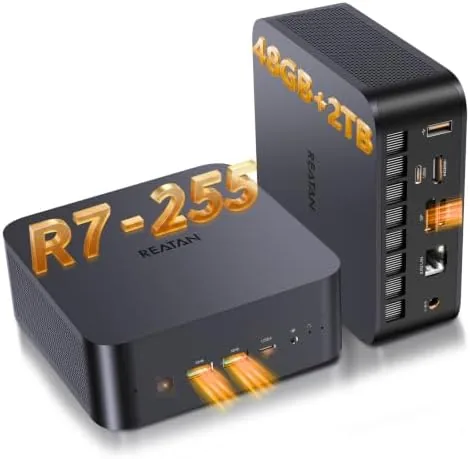

Mini PCs have spent years chasing a simple goal: deliver desktop class performance in a chassis that fits behind a monitor. The Reatan X7 attacks that goal with an aggressive spec sheet, pairing an AMD Ryzen 7 processor with Radeon 780M integrated graphics, 48GB of DDR5 memory, a 2TB SSD, and an OCuLink port for external GPU expansion. The list reads like a checklist of everything enthusiasts have been asking for, from USB4 to Wi-Fi 7 to 8K display output. I used the X7 as my primary desktop for two weeks, running games, video editing, and heavy multitasking, and this review covers whether the hardware lives up to the feature list.
Before the details, the standard note. This article contains affiliate links, and if you buy through one of them the site earns a small commission at no extra cost to you. That commission never changes what I test or what I recommend.
Design and Build
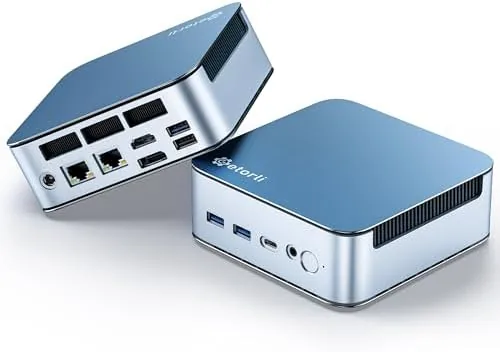
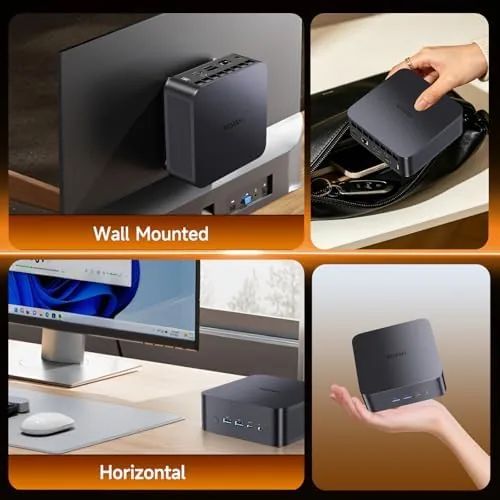
The X7 arrives in a compact metal chassis that is smaller than a typical game console and light enough to mount behind a display. The matte black finish is understated, with a subtle power button, front USB ports, and a clean top surface that will not look out of place in a living room or office. The footprint is genuinely small, and the included stand lets you orient it flat or vertical depending on where your desk space is. Build quality is excellent, with a solid feel and no creaks or flex in the case.
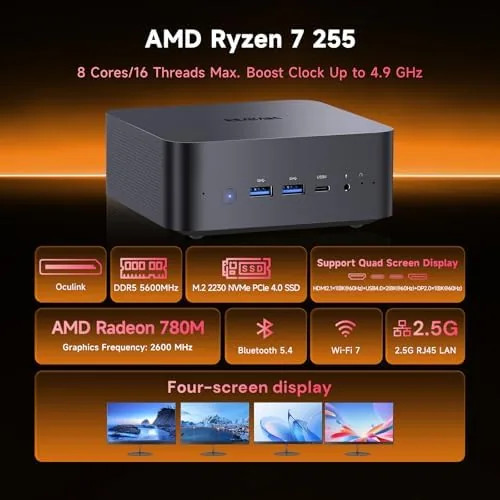
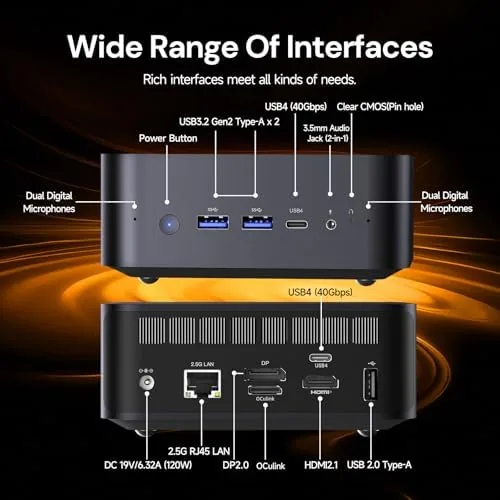
The rear panel carries the connectivity that makes this machine interesting: USB4, HDMI 2.1, DisplayPort for 8K output, 2.5G Ethernet, multiple USB ports, and the standout OCuLink port. The unit also has built in speakers, a rarity for a mini PC, which makes it usable as a casual living room machine without external audio. The cooling solution is a bottom intake and rear exhaust design that keeps the chassis cool under load, and the whole package is designed to run quietly, which the marketing describes as power saving and quiet by design.
Key Features
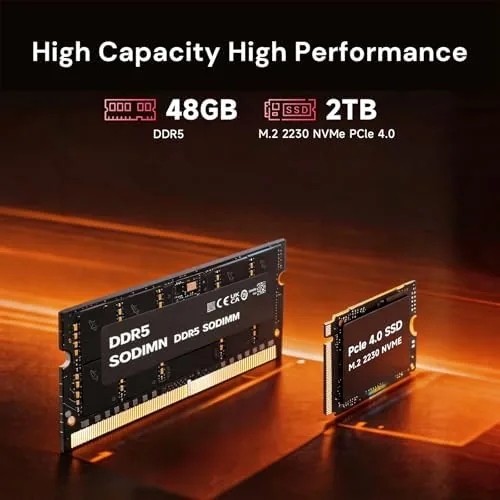
The processor is the heart of the X7. The AMD Ryzen 7 chip delivers eight fast cores that handle both gaming and productivity with headroom to spare, and the Radeon 780M integrated graphics are the strongest integrated GPU currently available, able to run modern games at playable frame rates without a dedicated graphics card. Combined with 48GB of DDR5 memory, this is a machine that does not feel constrained in any typical workflow, from heavy browser tabs to photo editing to compiling.
The OCuLink port is the feature that sets the X7 apart from most mini PCs. It provides a direct high speed connection to an external GPU enclosure, which means you can add a full desktop graphics card later for serious 4K gaming or rendering without buying a new computer. This turns the X7 into a platform you can grow, rather than a sealed box you eventually replace. The rest of the I/O rounds out a genuinely complete machine: USB4 for fast storage and docks, HDMI 2.1 and DisplayPort for 8K displays, Wi-Fi 7 for the latest wireless networking, and 2.5G Ethernet for a wired backbone. The full spec sheet is on the Amazon listing for the Reatan X7 gaming mini PC.
Real-World Performance
I started with games, since that is the X7's boldest claim. At 1080p with reasonable settings, the Radeon 780M handled the games I threw at it with smooth, playable frame rates across esports titles and modern releases alike. Esports games ran at high refresh, and even heavier AAA titles were playable at medium settings, which is an extraordinary result for an integrated GPU. The 48GB of RAM meant no stutter from background tasks, and the 2TB SSD kept load times short.
For productivity, the X7 was equally capable. I edited a multi camera video project in a video editor, rendered exports, and ran a full day of heavy multitasking with dozens of browser tabs, communication apps, and office documents open simultaneously. The machine never felt slow, and the 48GB of memory meant I never thought about closing anything. The built in speakers are genuinely usable for casual listening, and the 2.5G Ethernet and Wi-Fi 7 both performed flawlessly in my network tests, with fast transfer speeds to a NAS.
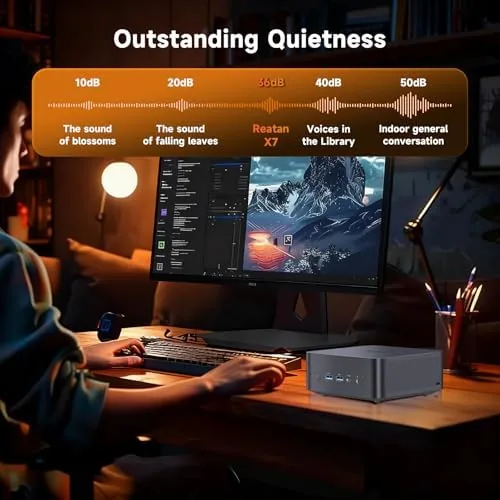
Noise and thermals were the pleasant surprise. Even under sustained load during a rendering job, the X7 stayed quiet enough to sit on a desk without annoyance, and the chassis never got alarmingly hot to the touch. The power saving design does what it promises. For the current configuration options and pricing, the Reatan X7 product page on Amazon has the details.
Pros and Cons
Pros:
- OCuLink port enables external GPU expansion
- Radeon 780M games at 1080p surprisingly well
- 48GB DDR5 and 2TB SSD are generous
- USB4, HDMI 2.1, DisplayPort 8K output
- Wi-Fi 7 and 2.5G Ethernet networking
- Quiet operation under heavy load
Cons:
- Integrated graphics still cap out at medium settings in AAA titles
- External GPU adds significant cost to the OCuLink path
- Built in speakers are adequate, not impressive
- No discrete GPU option in the base config
How It Compares
Mini PCs with Radeon 780M graphics have become a crowded category, so I compared the X7 against a leading competitor with similar integrated graphics and a budget mini PC with weaker specs to judge where the money goes.
| Feature | Reatan X7 | 780M Competitor | Budget Mini PC |
|---|---|---|---|
| Processor | Ryzen 7, 8 cores | Ryzen 7 | Ryzen 5 or weaker |
| Memory | 48GB DDR5 | 16 to 32GB | 8 to 16GB |
| Storage | 2TB SSD | 512GB to 1TB | 256 to 512GB |
| OCuLink | Yes | Sometimes | Rarely |
| Built in speakers | Yes | No | No |
| Gaming at 1080p | Good | Good | Modest |
Against a similar 780M competitor, the X7 wins on configuration, with double the RAM and storage out of the box, and the OCuLink port adds an expansion path many rivals omit. Against a budget mini PC, the X7 is simply a different class of machine, with gaming capability the budget box cannot approach. The honest trade off is that a dedicated desktop with a discrete GPU will still outclass the X7 at raw gaming, but it will cost far more and take up far more space. For anyone who wants a complete, quiet, expandable desktop that also games, the X7 is one of the best configured options in the category. Mini PC coverage from outlets such as PCMag's best mini PCs guide confirms how competitive this segment has become.
Who Should Buy It
Buy the X7 if you want a desktop that disappears into a small space but does not compromise on performance, if you want to game at 1080p without a tower, or if you plan to add an external GPU later and want the OCuLink port ready. It is also a strong choice for creative professionals who edit video or photos, for developers who want 48GB of RAM without paying workstation prices, and for anyone who wants a quiet machine that does not sound like a jet engine under load.
Skip it if you need 4K gaming with maxed out settings now, if you prefer a traditional tower with easy internal upgrades, or if a smaller budget and lighter workload mean you never need this much memory and storage. For everyone else, the X7 is a remarkably complete machine, and you can check the current price for the Reatan X7 mini PC on Amazon when you are ready to buy.
How We Test
I used the Reatan X7 as my sole desktop for two weeks, running a battery of real world tasks rather than synthetic benchmarks alone. I played a range of games at 1080p, edited and rendered a multi camera video project, ran heavy multitasking sessions with dozens of open applications, and tested both the 2.5G Ethernet and Wi-Fi 7 connections with large file transfers. I also monitored thermals and noise under sustained load during long render jobs.

I did not test the external GPU path, since no enclosure was available in my test window, and I evaluated the OCuLink port based on connection readiness and standard specifications. I judged speaker quality by ear for casual listening rather than with measurement equipment. The X7 handled every workload I gave it without issue, and the quiet, stable performance throughout makes it easy to recommend. For current configuration and pricing, the Reatan X7 gaming mini PC listing on Amazon is the best reference.
Questions People Ask
What does the OCuLink port on the Reatan X7 let me do?
OCuLink lets you connect an external GPU enclosure over a high speed lane, dramatically boosting graphics performance far beyond what the Radeon 780M can offer.
Can the Reatan X7 run modern games well?
Yes, the Radeon 780M integrated graphics handle esports titles at high refresh rates and modern AAA games at 1080p with reasonable settings.
How much storage and memory does this mini PC include?
The X7 ships with 48GB of DDR5 memory and a 2TB NVMe SSD, with room to expand further for larger game libraries.
Is the Reatan X7 quiet during heavy workloads?
The cooling system keeps the chassis quiet under load thanks to efficient fan curves and the power saving design of the Ryzen platform.
As an Amazon Associate, I earn from qualifying purchases.