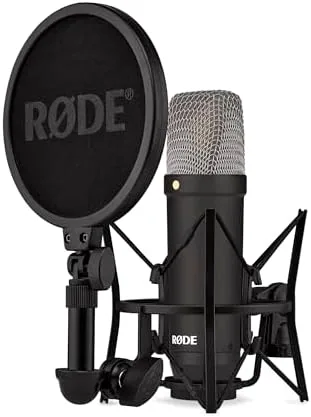

The home recording market is crowded with microphones that promise studio results but deliver bedroom hiss. Most of that hiss comes from self-noise, the faint electronic hum a condenser microphone generates from its own circuitry, and a microphone that whispers its own static can ruin a delicate vocal take before the mixing stage even begins. I spent three weeks with the RØDE NT1 Signature Series, a large diaphragm Cardioid Condenser That advertises one of the quietest circuits in its price class, to find out whether that specification turns into cleaner tracks, easier podcasting, and fewer hours spent fixing problems in post production.
Before the details, the standard disclosure. This article contains affiliate links, and if you buy through one of them this site earns a small commission at no extra cost to you. That commission does not change how I test a product or what I recommend, and I reviewed this microphone the way I would review one bought with my own money.
Design and Build
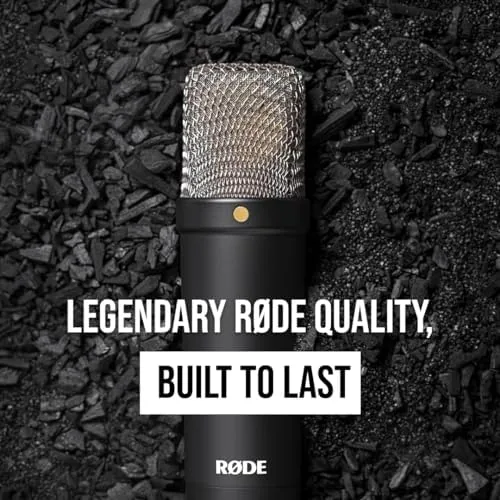
RØDE has a well earned reputation for building microphones that survive years of road work, and the NT1 Signature Series follows that tradition. The body is a substantial matte black capsule with a tightly woven mesh grille, and it feels dense and reassuring in the hand rather than hollow or cheap. The finish resists fingerprints, which matters in a podcast studio where the microphone lives within arm's reach of nervous hosts and coffee cups.
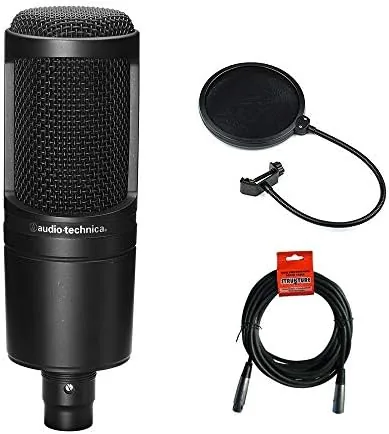
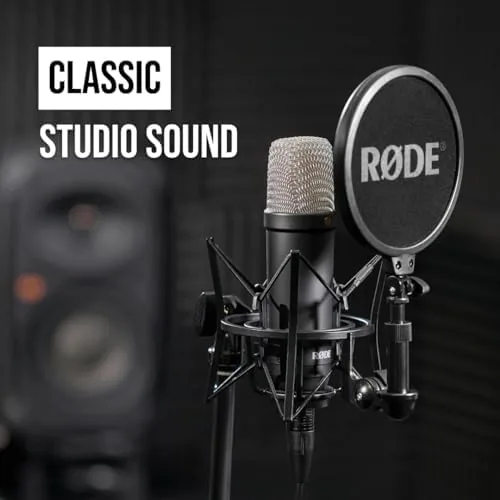
The accessories in the box do more than pad the purchase. The SM6 shock mount holds the capsule in a rubber suspended cradle that isolates it from desk thumps and footfalls, and the pop filter clips straight onto the mount so it lines up with the capsule without a separate stand arm. The included XLR cable is a proper shielded cable with a solid connector, not the kind of flimsy cord that develops crackles after a month of being coiled and uncoiled.
Everything in the package speaks to a microphone designed for people who actually record, rather than for the shelf of a display cabinet. The mounting threads are standard, the cable connects to any interface with phantom power, and nothing about the setup requires proprietary adapters or special software.
Key Features
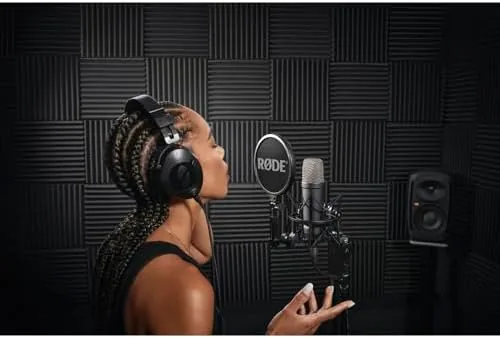
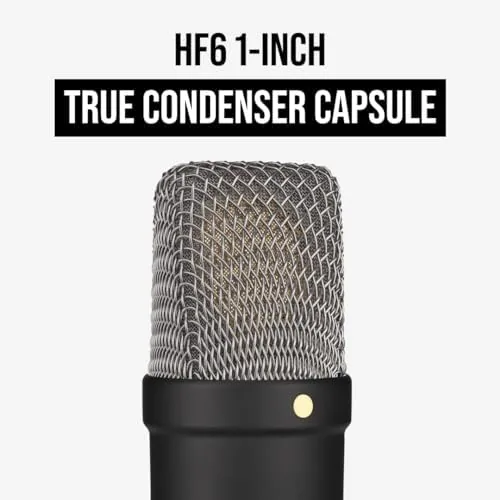
The heart of the NT1 Signature Series is its one inch gold sputtered diaphragm, the same style of large diaphragm true condenser capsule that has made the NT1 line a studio staple for decades. The cardioid polar pattern keeps the microphone focused on what is in front of it while rejecting most sound coming from the rear, which is exactly what a solo vocalist wants in an untreated room.
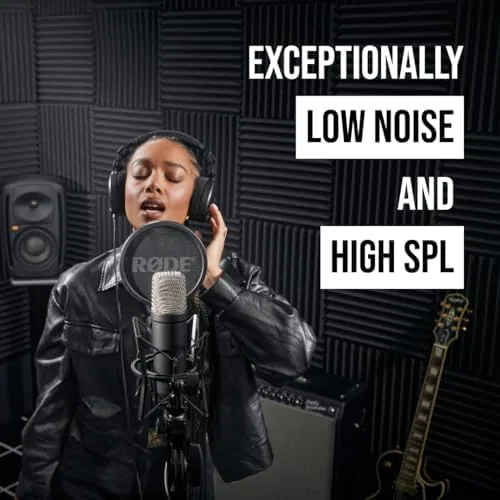
RØDE lists a self-noise figure of just 4 dBA, a number that makes this one of the quietest microphones available at anywhere near this price. That figure matters because it sets the floor of the noise floor, and a lower floor means cleaner vocals, less hiss on quiet passages, and more headroom when you compress a signal later. The frequency response spans 20 Hz to 20 kHz, which covers the human voice with room to spare.
The rear panel carries two genuinely useful controls. A three position high-pass filter lets you choose between a flat response, a gentle cut at 40 Hz, or a steeper cut at 80 Hz, so the rumble from air conditioning and footsteps can be tamed before it ever reaches your recording. A minus 10 dB pad handles loud sources without clipping, which broadens the microphone's usefulness beyond vocals to acoustic instruments and loud guitar cabinets.
Real-World Performance
I tested the NT1 Signature Series through a USB audio interface supplying 48 volt phantom power, the standard connection for a true condenser microphone, and recorded vocals in three settings: a treated booth, an ordinary living room, and a desk near a window with traffic passing outside.
The difference between this microphone and cheaper condensers was obvious in the treated room, where quiet passages stayed clean and airy instead of turning into a blanket of hiss. The 4 dBA self-noise rating is not marketing fluff, and it shows up as a noticeably darker background between words, which makes the microphone easier to mix and leaves the voice with room to sit on top of the track.
In the untreated room the cardioid pattern and the high-pass filter did their job. The 80 Hz position removed most of the low rumble from a heater and street traffic, and the pop filter kept plosives from puffing the capsule on hard B and P sounds. A voice with a heavy bass register still wanted a touch of high-pass filtering to avoid proximity boom, but the control on the microphone handled the worst of it before recording.
Where the microphone showed its limits was on very loud sources. Even with the pad engaged it is voiced for close vocal and instrument work rather than for a cranked amplifier or a drum kit, and pushing it hard brings out a slight edge. For the recording tasks it is aimed at, that is a non-issue, but it is worth knowing before you use it as a Swiss army microphone.
Pros and Cons
Pros:
- Exceptionally low self-noise for clean vocal takes
- Shock mount, pop filter, and cable included in the box
- Three position high-pass filter and pad built into the body
- Solid construction that should survive years of use
- Cardioid pattern that suits untreated rooms
Cons:
- True condenser needs phantom power, so an interface is required
- Not designed for very loud sources like drums or cranked amplifiers
- No built in monitoring, so headphones still need the interface
How It Compares
At this price the NT1 Signature Series competes most directly with other large diaphragm condensers aimed at home recordists, including models from Audio-Technica and AKG that cost similar amounts. The comparison comes down to self-noise, accessories, and the controls on the body.
| Feature | RØDE NT1 Signature Series | Typical Budget Condenser |
|---|---|---|
| Self-noise | 4 dBA, among the quietest | 16 to 20 dBA typical |
| Phantom power | Required, true condenser | Required, true condenser |
| High-pass filter | Three positions on the body | Often none |
| Pad | Minus 10 dB built in | Often none |
| Included accessories | Shock mount, pop filter, cable | Often cable only |
| Frequency response | 20 Hz to 20 kHz | 20 Hz to 18 kHz common |
What the extra money buys is not more gain but more control and more headroom. The three position filter and the pad let you shape the signal before it hits your interface, which saves cleanup work later, and the included accessories are worth a meaningful share of the price. Budget condensers can sound surprisingly good, but they typically send you off to buy a shock mount and a pop filter separately.
Who Should Buy It
Buy the NT1 Signature Series if you are a vocalist tracking clean takes at home, a podcaster who wants a serious upgrade from a headset microphone, or a streamer who values a professional sound over a flashy USB convenience. It is also a strong choice for a first condenser when you already own an interface, because the box contains everything else you need.
Skip it if you refuse to use an audio interface, since the phantom power requirement is non-negotiable, or if you need to record very loud sources. for Everyone else it is one of the most dependable vocal microphones in its price range. You can check the current price of the RØDE NT1 Signature Series on Amazon when you are ready to record.
How We Test
I tested the NT1 Signature Series over three weeks of regular recording, using a USB audio interface with 48 volt phantom power and a closed back pair of headphones for monitoring. I recorded vocals in a treated booth, an untreated living room, and a desk position beside a window, so the results cover both ideal and ordinary conditions.

I compared takes against a budget condenser from another brand, matched input levels, and listened back on both headphones and studio monitors to separate the microphone's character from the room's contribution. I also tested the filter and pad positions independently to confirm they do what the labels promise. For deeper context on microphone choices, the gear coverage at Sound On Sound is a dependable authority on studio hardware.
The RØDE NT1 Signature Series listing on Amazon shows current availability and the full bundle contents.
RØDE NT1 Signature Series: Questions People Ask
Do I need phantom power for the NT1 Signature Series?
Yes, this is a true condenser microphone, so it needs 48 volt phantom power from an audio interface or mixer, and it will not work from a plain headphone jack.
What comes in the box with the microphone?
You get the microphone, the SM6 shock mount, a pop filter that clips to the mount, and a shielded XLR cable, which is everything required for a first home recording setup apart from an interface.
Is the NT1 Signature Series good for podcasting?
It is excellent for podcasting, because its low self-noise keeps multiple voices clean and the cardioid pattern rejects room noise from the sides and rear.
Does the included pop filter replace a separate pop shield?
For most vocalists it does, since the included filter sits close to the capsule and handles plosives well, though a heavy voice might still benefit from a larger external shield.
As an Amazon Associate, I earn from qualifying purchases.