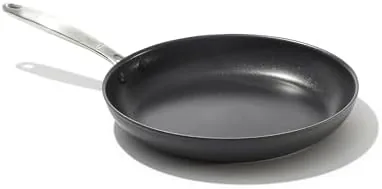

Every serious cook keeps at least one nonstick pan, and the reason is always the same. Some foods simply refuse to behave on steel. Eggs stick, fish flakes, and delicate crepes tear, and the only tool that rescues those foods is a good nonstick surface. The OXO Enhanced 10 inch frying pan makes a strong argument that the right nonstick pan should also be free of the chemicals that gave the category a bad name. I cooked with this skillet for weeks, from fried eggs at dawn to seared fish at dinner, and this review is the honest record of what a PFAS free ceramic coating does when it meets a real stove.
The disclosure first. This review contains affiliate links, and purchases made through them support the site at no extra cost to you. That support never changes what I test or what I say about it, and the pan used here was bought and used exactly as any home cook would use it.
What follows covers the construction, the ceramic coating, the handle, the oven limits, and the honest maintenance this pan expects. If you are weighing a ceramic pan against a traditional nonstick, the comparison section below lays out the trade offs clearly.
Design and Build
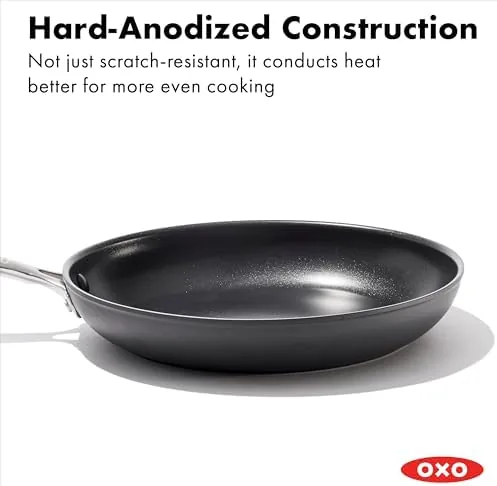
The pan is a hard anodized aluminum body with a black ceramic nonstick interior and a stainless steel handle. Hard anodization hardens the aluminum surface so it resists scratching and corrosion, which gives the pan a long working life while keeping it light enough to toss a batch of mushrooms one handed. The result is a pan that feels substantial without feeling heavy.
The ceramic interior is where OXO makes its environmental argument. Traditional nonstick coatings rely on PFAS chemistry, the family of forever chemicals that has raised health questions. The ceramic coating here cooks without those compounds, and it does not need the coating refreshed with oil the way cast iron and steel pans do. The trade off is that ceramic coatings ask for softer treatment, wooden or silicone tools instead of metal.
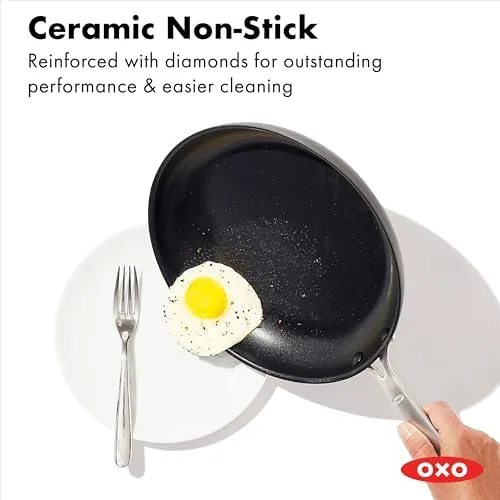
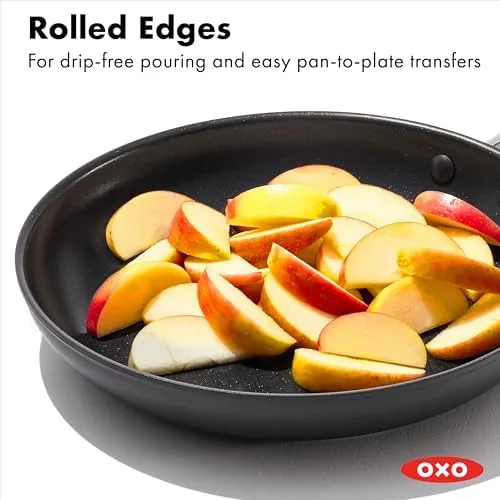
The stainless steel handle is a design win. It stays cool on the stove during a long sear, it feels balanced in the hand, and it gives the pan a clean look that plastic handles cannot match. The pan is oven safe to a high temperature, which means you can start a frittata on the stove and finish it under the broiler without swapping pans.
Key Features
The headliner is the PFAS free ceramic nonstick coating. It releases eggs without butter, fish without sticking, and melted cheese without a fight, and it does all of that without the chemical baggage of older nonstick pans. The coating is also scratch resistant, so it shrugs off the wooden spatula that would leave permanent marks in a cheap nonstick finish.
The hard anodized body does the structural work. It distributes heat evenly across the cooking surface, which means the middle does not scorch while the edges stay lukewarm, and it heats quickly enough that you are not waiting around for the pan to come to temperature. The 10 inch cooking surface fits two eggs, a full fillet of fish, or a generous pancake with room to work.
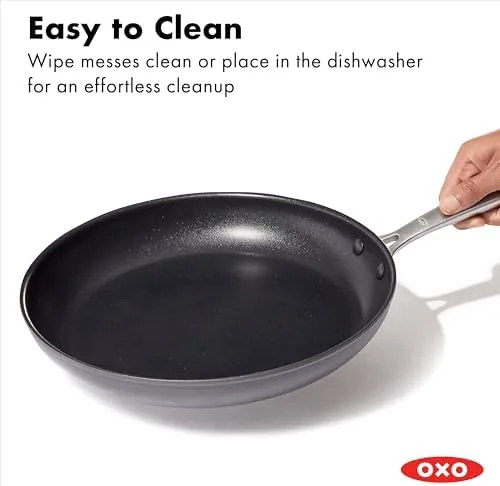
The stainless steel handle adds oven safety and a comfortable grip, and the pan is dishwasher safe for the nights when you do not feel like hand washing. OXO also includes its Good Grips philosophy throughout, meaning the handle shape and the pan rim are designed for comfortable, confident handling.
Real-World Performance
The test that matters most for a nonstick pan is the fried egg, and this pan passed with ease. A lightly buttered egg slid around the surface like it was on ice, released with a single nudge of the spatula, and left the pan nearly clean. I cooked the same egg test on day one and again after two weeks of heavy use, and the nonstick performance did not noticeably fade.
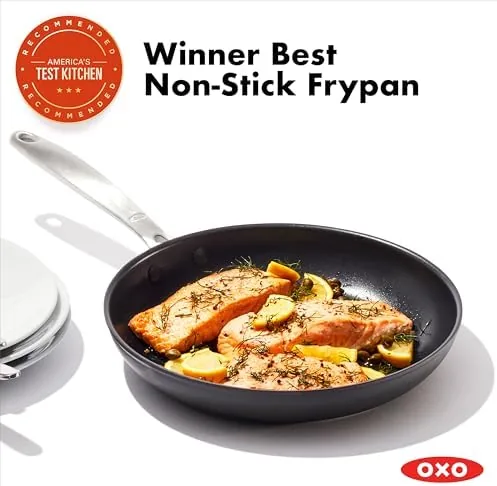
Fish is the second great nonstick challenge. A salmon fillet, skin side down, released cleanly without the skin tearing, and the even heat of the hard anodized body produced an even, golden sear across the whole fillet. The pan handled the transition from stovetop to oven for a frittata without complaint, and the handle stayed cool enough to grip after a few minutes in the heat.
Heat distribution earned real respect during a batch of pancakes. The middle browned at the same rate as the edges, which is the test that separates a well built pan from a cheap one, and the whole surface stayed consistent across six pancakes in a row. The ceramic coating also held up against the occasional slide of a metal fork from a careless breakfast, showing a resilience that budget nonstick pans rarely offer. Between the eggs, the fish, and the pancakes, the pan released everything without a single stuck spot, and the rim stayed free of the scorched buildup that cheap pans collect after a few weeks.
The honest limitations are about care, not cooking. The ceramic coating is tougher than cheap nonstick but not indestructible, so metal utensils and abrasive scouring pads are best avoided, and high heat is better kept for the stainless pans. Cooking with the heat on medium works beautifully, and the pan releases everything you throw at it. For an everyday pan, that is a fair exchange for a coating free of PFAS chemistry. It is also a pan that works across kitchens, since the hard anodized body sits flat on gas, electric, and even ceramic cooktops without wobbling, and the handle stays steady even when a spatula is scraping hard against the surface.
Pros and Cons
Pros:
- PFAS free ceramic coating is safer for everyday cooking
- Release performance is excellent for eggs and fish
- Hard anodized body heats evenly and resists scratches
- Stainless steel handle stays cool and feels balanced
- Oven safe for stovetop to broiler cooking
- Dishwasher safe for easy cleanup
Cons:
- Ceramic coating needs soft utensils and gentle care
- Not ideal for very high heat searing
- Heavier than a plain aluminum nonstick pan
- Oven safe limit is lower than all steel cookware
How It Compares
The main decision is ceramic versus traditional nonstick, and the table below makes the difference clear.
| Feature | OXO Enhanced Ceramic | Traditional Nonstick |
|---|---|---|
| Coating chemistry | PFAS free ceramic | PFAS based polymer |
| Food release | Excellent with care | Excellent from day one |
| Scratch resistance | Good for ceramic | Varies by quality |
| High heat use | Keep to medium | Similar limits |
| Tool requirements | Wood and silicone | Wood and silicone |
| Eco credentials | Strong | Weaker |
Both pans release food well, and the real difference is in what you cook and what you value. If you want a pan without PFAS chemistry and you are willing to use soft tools, the OXO ceramic is the better choice. If the absolute longest lasting nonstick is your only concern, a quality traditional pan may last longer before its coating fades. For most cooks, the ceramic pan is the more responsible pick that still delivers daily performance.
Who Should Buy It
Buy the OXO Enhanced frying pan if you cook eggs, fish, pancakes, and crepes regularly, if you want to move away from PFAS chemistry without giving up nonstick convenience, or if you want one reliable pan that works on the stove and in the oven.
Skip it if you do most of your cooking over very high heat, if you prefer metal utensils and heavy scrubbing, or if you already own a pan you love for eggs. For everyone who values clean cookware and effortless release, this is a pan you will reach for every single day. You can check the current price of the OXO Enhanced frying pan on Amazon to see today's offer.
How We Test
I cooked with the OXO Enhanced pan for several weeks, running the fried egg test repeatedly, searing salmon fillets, browning pancakes in batches, and finishing a stovetop frittata under the broiler. I used wooden and silicone tools, hand washed the pan most nights, and pushed the dishwasher occasionally to confirm the pan's promises hold.
For more on how nonstick pans and PFAS chemistry compare, Serious Eats has tested the nonstick skillet field in depth, including ceramic options. The OXO Enhanced 10 inch pan listing on Amazon shows the current price and full specifications.
OXO Enhanced Frying Pan: Questions People Ask
Is the OXO pan really PFAS free?
Yes, the ceramic nonstick coating is free of PFAS chemicals, making it a safer choice for everyday cooking while still releasing food easily.
Can the skillet go in the oven?
Yes, the pan is oven safe to a high temperature, and the stainless steel handle stays cool on the stovetop and comfortable in the oven.
Is the frying pan dishwasher safe?
Yes, the pan is dishwasher safe, though hand washing with mild soap extends the life of the ceramic nonstick coating.
What foods is the hard anodized body good for?
Hard anodized aluminum heats evenly and resists scratching, so the pan works well for eggs, fish, pancakes, and delicate foods that stick easily.
As an Amazon Associate, I earn from qualifying purchases.