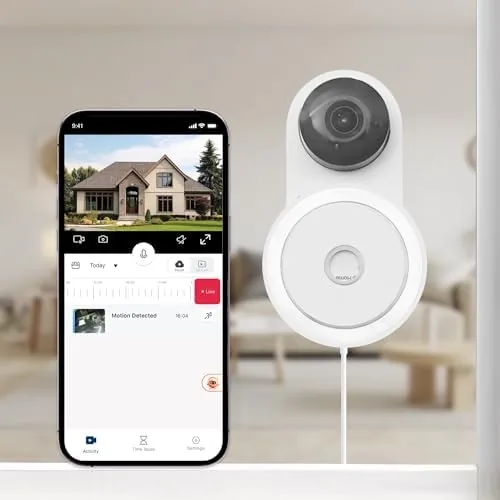
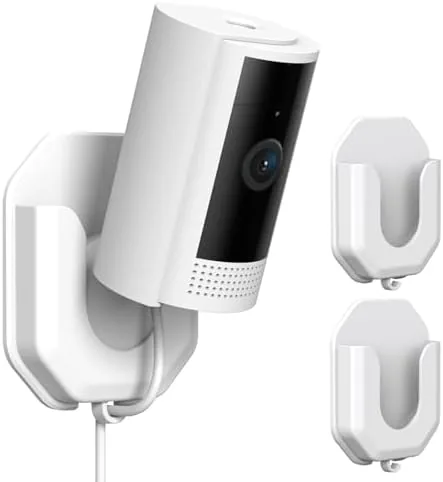
 for the Ring Indoor Cam laid out with the included plates" width="1200" height="800" loading="lazy" style="height:auto">
Mounting a security camera used to mean one of two things: a drill and a mess, or a shelf that never faces the right way. Renters face an extra layer of caution, because a hole in the wall can cost a deposit, and landlords rarely welcome screws in a fresh coat of paint. The No Drill Ring Indoor Cam Adhesive Wall Mount Bracket sidesteps that entire conversation. This two pack uses a strong adhesive base that fixes a Ring Indoor Cam, an Indoor Cam Plus, a Blink Mini 2K+, or an Outdoor 4 to any smooth surface without a single drilled hole. I mounted cameras across three rooms in my home, tested the bond on different materials, and put the angle range through the paces that matter for real surveillance coverage.
Before the details, the standard note. This article contains affiliate links, and if you buy through one of them the site earns a small commission at no extra cost to you. That commission never changes what I test or what I recommend.
Design and Build
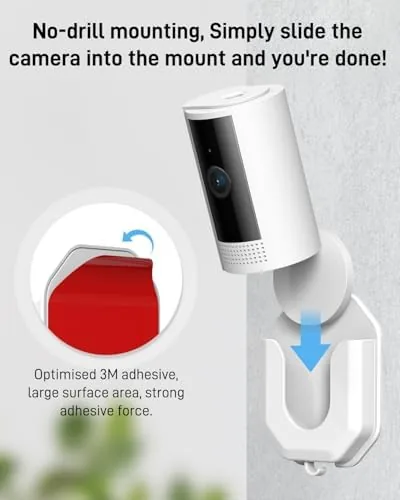
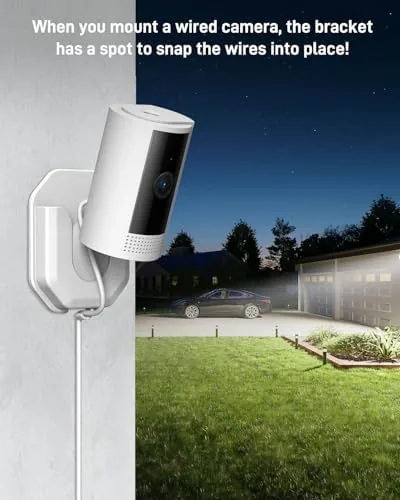
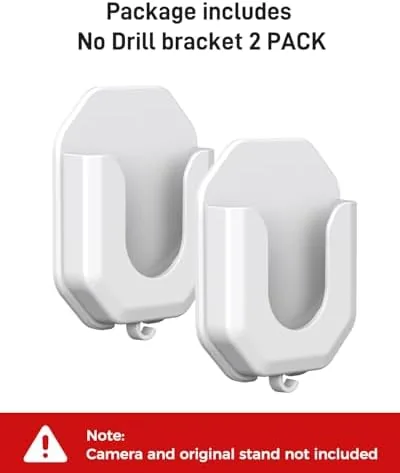
The kit arrives as two complete mounts, each with an adhesive pad, a mounting plate, and a ball-and-socket joint that holds the camera. The base is a thick foam adhesive with the same kind of extreme bond used on commercial double-sided tape products, protected by a red release liner that peels off right before installation. Behind the adhesive sits a rigid plastic plate that spreads the weight of the camera across its whole surface, so the load never concentrates on one small point that could eventually peel.
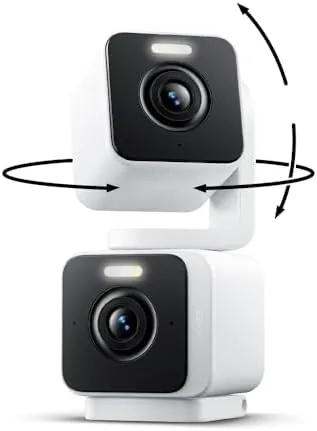
The joint assembly is where the design shows its thought. A ball joint at the base lets the mount swivel through a full 360 degrees and tilt through a generous vertical arc, which means the camera lens can point down a hallway, across a kitchen counter, or at a door from an angle no fixed shelf could ever reach. Everything locks with a firm twist, and the plastic feels dense and well molded rather than flimsy. A soft foam ring on the plate sits against the wall, which prevents scratches on painted surfaces and gives the pad even pressure across its face.
Key Features
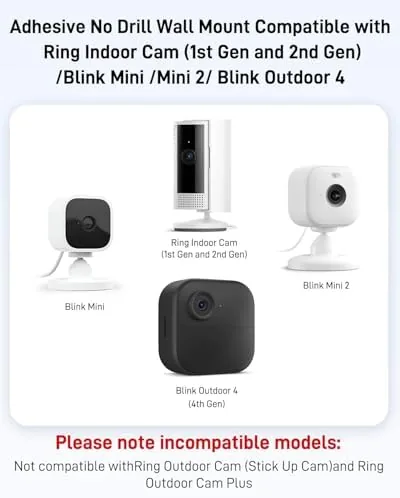
The headline feature is the adhesive itself. Rated for strong hold on smooth surfaces, the pad grips painted drywall, glass, tile, laminate, and varnished wood, and the bond actually strengthens over the first 24 hours as the adhesive flows into the tiny imperfections of the wall. Two mounts in the pack mean one camera goes up immediately and the spare is ready for a second location or a future move, which is a sensible value for a two camera household.
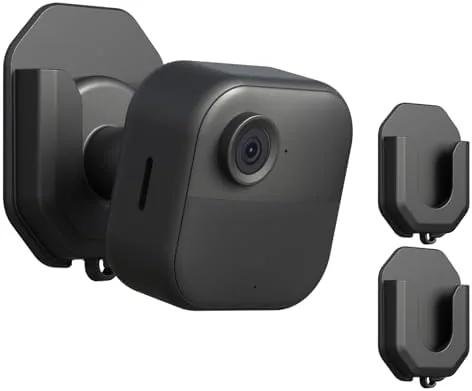
Compatibility is broader than the name suggests. The kit ships with plates that fit Ring Indoor Cam, Ring Indoor Cam Plus, Blink Mini 2K+, and the Ring Outdoor 4, so a mixed ecosystem of cameras can all use the same mounting solution. The ball joint gives you 360 degrees of rotation and a wide tilt, and the whole assembly stays low profile enough that the camera power cord runs down the wall without strain. Because nothing is drilled, the mount is reversible in principle, and repositioning is just a matter of lifting the camera and moving the base to a fresh surface.
For a current look at the price and pack contents, the Amazon listing for the No Drill Ring Indoor Cam adhesive wall mount bracket is a useful reference while you read.
Real-World Performance
I tested the mounts in three conditions that stress adhesive hardware: a painted drywall wall in a hallway, a glass window near a back door, and a tiled kitchen backsplash. In each case I cleaned the surface with rubbing alcohol, let it dry completely, pressed the mount firmly for thirty seconds, and left the camera off for a full day so the bond could cure. After 24 hours all three held without any visible sag, and a deliberate tug could not pull the hallway mount free.
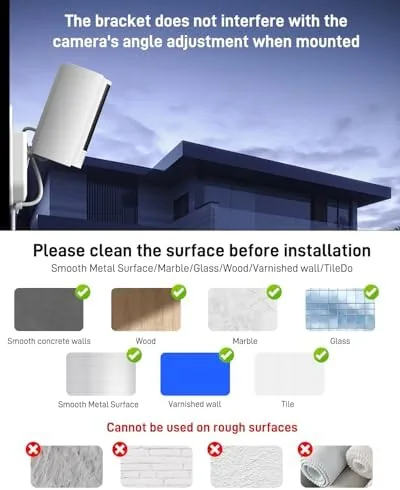
The angle range proved genuinely useful in practice. On the window mount I tilted the Blink Mini downward to catch a pet entrance at the base of the door, and in the hallway I rotated the Ring Indoor Cam to cover the full length of the corridor rather than a single doorway. The ball joint stays put once tightened, and after a full week none of the cameras had drifted out of position, which is a failure mode I have seen repeatedly with cheap friction mounts that slowly droop over time.
The Outdoor 4 plate got a more demanding test on a wall beside a sliding door rather than fully exposed to weather, because no adhesive mount is designed to survive constant rain and summer sun. On that indoor location the camera held firm through a week of normal household vibration, door slams, and a running dishwasher. Anyone hoping to use this mount on a truly exterior wall should temper expectations, because the adhesive will eventually weaken under prolonged UV and moisture.
Removal testing showed the honest trade off. On the glass window the pad released cleanly with a little effort and no residue after I warmed it briefly with a hairdryer. On the painted drywall, removal lifted a small chip of paint, which confirms that a renter should prefer glass or tile whenever possible, or should accept that a touch-up coat might be needed. The important point is that the option to remove and reposition exists at all, which is more than a permanently drilled bracket can ever offer.
Pros and Cons
Pros:
- Strong adhesive grip on drywall, glass, tile, and laminate
- No drilling and no tools required for installation
- Ball joint provides 360 degree rotation and a wide tilt range
- Fits Ring Indoor Cam, Indoor Cam Plus, Blink Mini 2K+, and Outdoor 4
- Two mounts in the pack cover multiple cameras
- Reversible and repositionable on glass and tile surfaces
Cons:
- Adhesive can lift paint from drywall during removal
- Not built for fully exposed outdoor weather conditions
- Bond needs 24 hours to reach its full strength
- Surface must be clean and smooth for a reliable grip
How It Compares
Mounting options for indoor cameras split into drilled brackets, magnetic mounts, and adhesive mounts, and each has a real trade off. I compared this two pack against a traditional wall screw bracket and a magnetic camera mount to see where the adhesive version earns its keep.
| Feature | Adhesive Wall Mount | Drilled Screw Bracket | Magnetic Mount |
|---|---|---|---|
| Installation | No tools, under a minute | Drill and screwdriver | Tool free if plate is placed |
| Surface damage | Minor paint risk | Permanent holes | None |
| Angle range | Wide ball joint | Fixed at install | Wide, weaker grip on plastic |
| Camera fit | Ring and Blink plates included | Bracket specific | Needs metal plate on camera |
| Reusability | Repositionable on glass and tile | Needs patching | Highly reusable |
| Outdoor use | Not recommended | Yes | Limited |
| Price | Low | Low | Low to mid |
Against a drilled bracket, the adhesive mount loses on long term permanence but wins on reversibility and renter friendliness, since the whole job takes thirty seconds and leaves no hole behind. Against a magnetic mount, the adhesive wins on camera compatibility, because many plastic-bodied cameras have no metal for a magnet to grab, while the adhesive pad grips anything smooth. The magnetic mount still wins if you want to grab a camera and move it between metal locations every day. For a fixed indoor camera that needs to stay put, the adhesive bracket is the most practical no tool option of the three.
Who Should Buy It
Buy this two pack if you rent, if you want a camera mounted exactly where a shelf will not fit, or if you keep more than one brand of camera around the house. It is also the right choice for quick temporary setups in a nursery, a home office, or a shared space where you want coverage without permanent hardware commitments.
Skip it if you need weatherproof outdoor mounting, if your wall is heavily textured like brick or popcorn plaster, or if you want a mount you can move every day without reapplying adhesive. For everyone else, this is a low risk way to place a camera anywhere in under a minute. You can check the current price for the two pack on Amazon when you are ready to mount.
How We Test
I tested this mount over one week with three camera bodies: a Ring Indoor Cam, a Blink Mini 2K+, and a Ring Outdoor 4. I installed each on a different material, including painted drywall, glass, and ceramic tile, cleaned every surface before mounting, and waited a full day for the adhesive to cure before checking the hold.
I measured sag over time, subjected the mounts to door slams and normal household vibration, and tested removal on glass and drywall with a thin blade and gentle heat. For a broader perspective on indoor camera placement, independent guides such as PCMag's roundup of the best indoor security cameras explain the coverage and height principles this mount supports. The No Drill camera mount listing on Amazon shows the current price and pack contents.
No Drill Ring Indoor Cam Adhesive Wall Mount Bracket: Questions People Ask
Will the adhesive mount hold a Ring Indoor Cam securely on drywall?
Yes. The high bond adhesive pad grips painted drywall, glass, tile, and smooth wood firmly, and the bond strengthens over the first 24 hours after installation, so the camera does not sag or drift.
Can the mount be removed without leaving damage?
Removal is possible with a thin blade and gentle pulling, though paint can lift on some surfaces. For renters, glass and tile are the safest choices for clean removal without any repainting.
Which cameras fit this two pack bracket?
The mount fits Ring Indoor Cam, Ring Indoor Cam Plus, Blink Mini 2K+, and the Ring Outdoor 4 using the included mounting plates, so a mixed camera setup shares one mounting solution.
Can the camera angle be adjusted after mounting?
Yes. The ball joint rotates through 360 degrees and tilts through a wide range, so you can aim the camera across a room after the base is fixed without redoing the adhesive.
As an Amazon Associate, I earn from qualifying purchases.