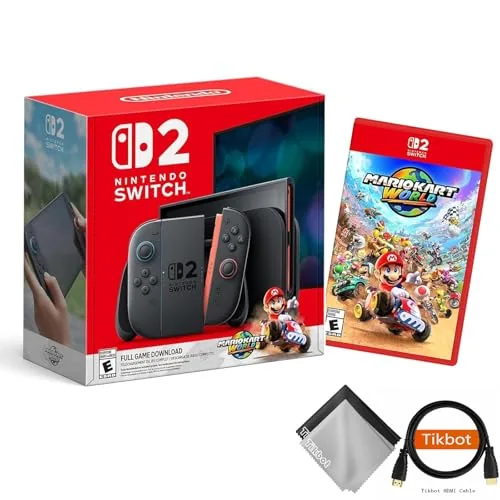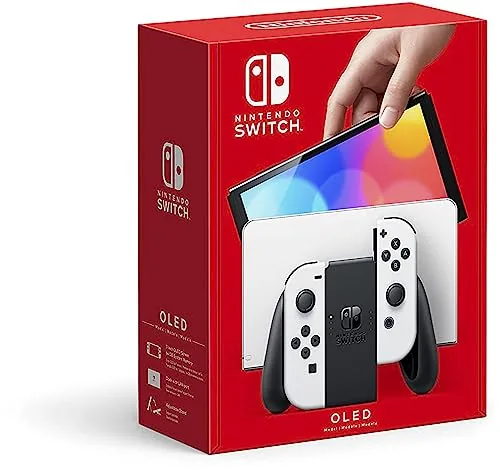
The Nintendo Switch has always been a console about flexibility, a machine that moves between the television and your hands without missing a beat. The OLED model does not change that idea, but it polishes every surface that makes handheld play special. A 7 inch OLED screen replaces the older LCD, the kickstand becomes something you can actually trust, the dock gains an Ethernet port, and the speakers get a genuine upgrade. This review is the record of three weeks of play with the OLED model, mostly in handheld mode, and it argues that the screen alone is worth most of the price difference.
Before the details, the standard note. This article contains affiliate links, and if you buy through one of them the site earns a small commission at no extra cost to you. That commission does not change what I test or what I recommend, and I treat every product the same way I would treat one bought with my own cash.
Design and Build
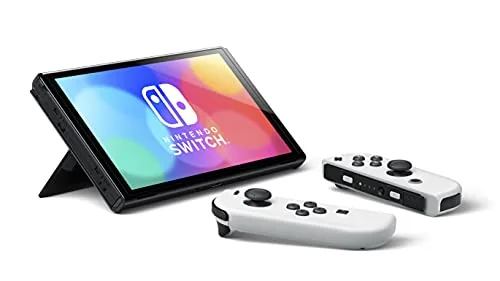
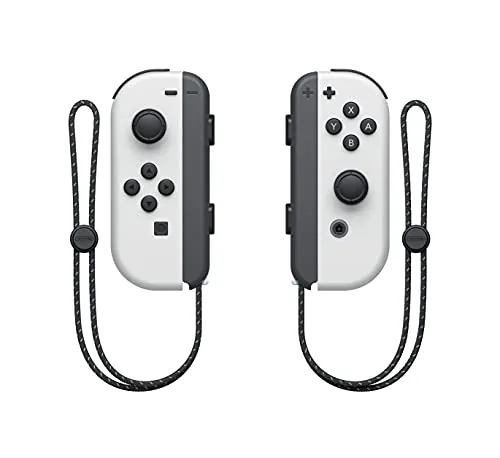
The OLED model looks like the Switch you already know, because it is the Switch you already know, refined. The white Joy-Con in this bundle give the console a clean, modern look, and the whole unit feels the same in the hand as the standard model, which is exactly right for a console whose ergonomics were already settled. Nothing about the layout has changed, so every muscle memory from an older Switch carries straight over.
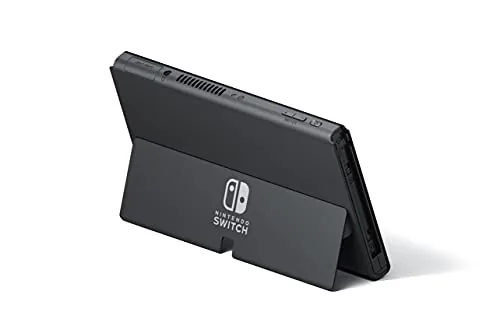
The changes are visible when you look closely. The screen bezel is noticeably thinner, which lets the larger 7 inch panel fit in a body barely bigger than the original 6.2 inch model. The kickstand is the quiet triumph: it runs across the full width of the console now, and it holds the system steady at multiple angles instead of collapsing under the weight of the screen. Tabletop play, which used to feel fragile, now feels deliberate.
The storage was doubled to 64 GB, which matters more than it sounds, because modern Switch games can run past 10 GB each and a memory card is not something everyone buys. The dock also grew an Ethernet port, a small change that rewards anyone who plays online, since a wired connection is steadier than WiFi for competitive matches.
Key Features
The OLED screen is the story of this console. A 7 inch OLED panel produces true blacks, vivid colors, and far better contrast than the LCD it replaces, and in a dark room it looks like a different machine entirely. Games designed with bold palettes, and many of the best Switch titles are, look dramatically richer. The difference is not subtle, and it is visible in every single game you already own.
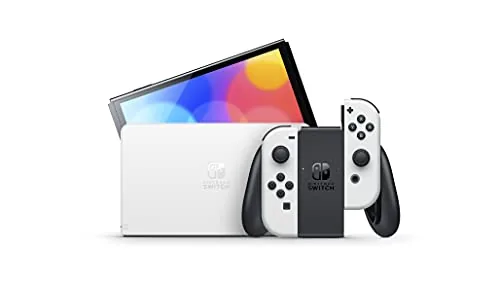
Underneath the glass the hardware is unchanged, and that is worth stating plainly: the OLED model runs the same games at the same performance as the standard Switch. You do not buy it for faster load times or higher frame rates. You buy it for the screen, the kickstand, the storage, and the dock, and the console is honest about that.
The speakers were upgraded and the difference is real. The standard Switch sounds thin, while the OLED model delivers fuller, richer audio in handheld mode, which makes games with good soundtracks noticeably more immersive. None of this will replace a good pair of headphones, but it lifts the everyday experience.
Real-World Performance
I spent three weeks with the OLED model, most of it in handheld mode, because that is where the upgrade lives. Across action games, sprawling RPGs, and quick arcade sessions, the screen was consistently excellent. Colors that looked flat on an LCD glow on this panel, and dark scenes that used to wash out now hold their detail. Playing a colorful platformer in a dim room is close to the best visual experience the Switch can offer.
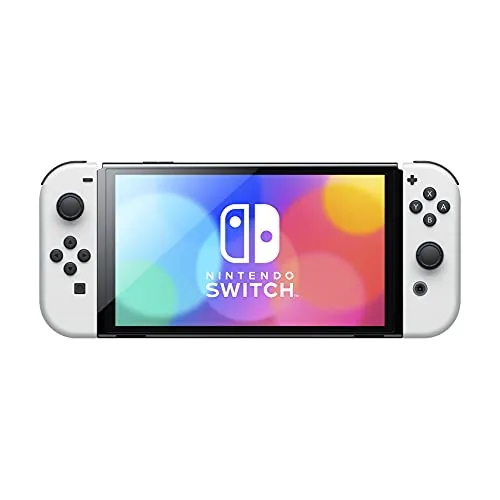
Battery life matches the already improved rating of the standard model, which means roughly four to nine hours of play depending on the game and the brightness. In practice I could get through a long travel day on a charge without anxiety, which is the most useful measure of all. The bigger screen draws a little more power, but the console handles it with no meaningful loss of stamina.
Docked play is exactly what you expect, with the console outputting 1080p to the television and holding the same performance as any other Switch. The Ethernet port on the new dock proved its worth during online sessions, where the wired connection stayed steady while wireless devices in the same room competed for bandwidth. The tabletop mode, thanks to that wide kickstand, finally works the way Nintendo intended, which opens up a whole style of play that the older model made awkward. Setting the screen up between two players for a shared game now feels natural rather than fragile.
Pros and Cons
Pros:
- The 7 inch OLED screen is a dramatic visual upgrade
- 64 GB of storage gives room for more digital games
- The new kickstand finally makes tabletop mode usable
- The dock adds Ethernet for steadier online play
- Upgraded speakers sound noticeably fuller
Cons:
- No performance gain over the standard Switch
- No 4K output on the dock
- Costs more than the standard model for the same games
How It Compares
The comparison that matters is the OLED model against the standard Switch, because most buyers already own a Switch or are choosing between the two. The standard model costs less and plays the same games, but it keeps the old LCD screen, the narrow kickstand, and the thinner speakers. The OLED model asks for more money and gives you the screen and the build changes.
| Feature | Switch OLED | Standard Switch | Switch Lite |
|---|---|---|---|
| Screen | 7 inch OLED | 6.2 inch LCD | 5.5 inch LCD |
| Handheld play | Yes | Yes | Yes, only |
| Dock and TV mode | Yes, with Ethernet | Yes | No |
| Storage | 64 GB | 32 GB | 32 GB |
| Kickstand | Wide, sturdy | Narrow, weak | None |
| Speakers | Improved | Standard | Standard |
Against the Switch Lite, the OLED model wins clearly for anyone who wants television play at all, since the Lite is handheld only and cannot be docked. Between the OLED and the standard model, the decision is simple: if you play mostly in your hands, the OLED is worth the extra money for the screen alone. If you rarely undock the console, the standard model saves you the difference.
Who Should Buy It
Buy the OLED model if handheld play is your main way of using the Switch, because the screen upgrade is the difference between a good console and a great one. Buy it if you are buying your first Switch, since there is no longer any reason to settle for the older screen. Buy it if you play online, because the Ethernet dock removes a whole category of connection problems.
Skip it if you already own a standard Switch and only ever play docked, because you will not see the screen improvement at all. Skip it if your budget is tight, since the games you want will cost the same regardless of which console you play them on. For everyone else, the OLED model is the Switch to buy, and you can check the current Nintendo Switch OLED price on Amazon when you are ready.
How We Test
I tested the OLED model over three weeks of real play rather than a single benchmark session. The console went through handheld sessions at home, tabletop play with friends, and docked evenings on the television, and I tracked battery life across different games and brightness levels to see how the bigger screen affected stamina.
I compared the OLED screen directly against a standard Switch side by side with the same game to judge the visual difference honestly, and I tested the Ethernet dock by running online matches both wired and wireless. I did not open the console to inspect the internals, and I did not test the joy con drift issue beyond noting that no drift appeared during the review period. Independent coverage such as The Verge review of the Switch OLED is a useful second opinion, and the Nintendo Switch OLED listing on Amazon shows the current bundle price.
Nintendo Switch OLED: Questions People Ask
Is the OLED model worth the price over the standard Switch?
Yes, if you play handheld, because the 7 inch OLED screen is dramatically richer and the kickstand, speakers, extra storage, and Ethernet dock all improve daily use.
Does the Switch OLED support 4K?
No. It outputs up to 1080p on the dock and 720p in handheld mode, and it does not include the 4K upscaling of any newer model.
How long does the battery last?
Expect four to nine hours of play depending on the game and screen brightness, which matches the improved battery already found in the standard model.
Can I use my existing Joy-Con and games?
Yes. The OLED model uses the same Joy-Con, the same dock, and the same game library as every other Switch, so nothing in your collection is left behind.
As an Amazon Associate, I earn from qualifying purchases.