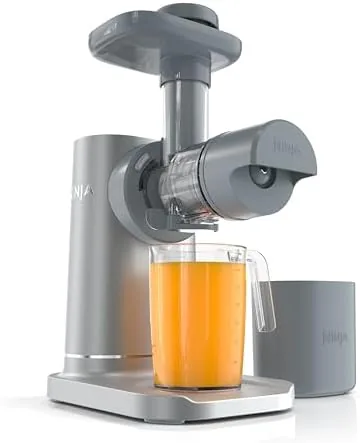

Slow juicers have a reputation problem, and it is earned. The classic masticating juicer squeezes great juice but jams on celery, stops dead on kale leaves, and turns a five minute glass of juice into a twenty minute disassembly session. The Ninja NeverClog Cold Press Juicer exists to break that cycle. The silver JC151SL model pairs a 150W high torque auger with a feed design that is supposed to keep fibrous fruits and vegetables moving instead of clogging, and it adds a 24oz jug, a 36oz pulp container, two one touch programs, and parts that claim dishwasher safety. I spent two weeks running this machine through leafy greens, whole apples, ginger, and the kind of fibrous loads that kill other juicers. This is the honest record.
Before the details, the standard note. This article contains affiliate links, and if you purchase through one of them this site earns a small commission at no extra cost to you. That commission never changes what I test or what I recommend.
Design and Build
The machine arrives in pieces that click together with satisfying firmness: a base motor unit, the auger assembly, the feed chute, a 24oz juice jug, and a 36oz pulp container. The silver finish is clean and modern, with a brushed tone that hides fingerprints better than gloss, and the footprint is compact enough to live on the counter without dominating it. The base is stable during operation, which matters for a Machine with a powerful auger that pushes against fibrous material.
The assembly is genuinely tool-free. The auger slides into the chamber, the chute locks over it with a twist, and the containers seat on their bases. Disassembly reverses the process in about ten seconds, and every wet part is either a single piece or splits into two. There are no hidden corners where pulp builds up and bakes, which is the first honest sign that this juicer was designed around cleanup rather than as an afterthought.
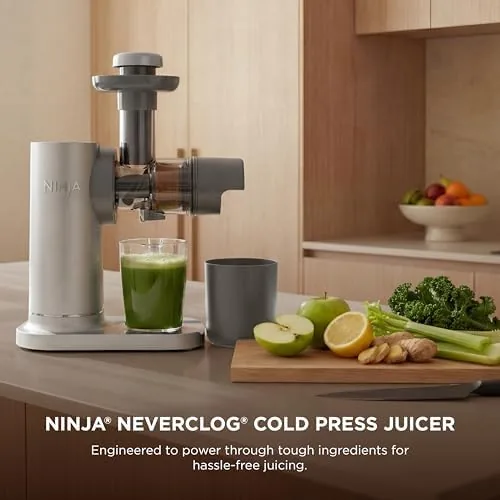
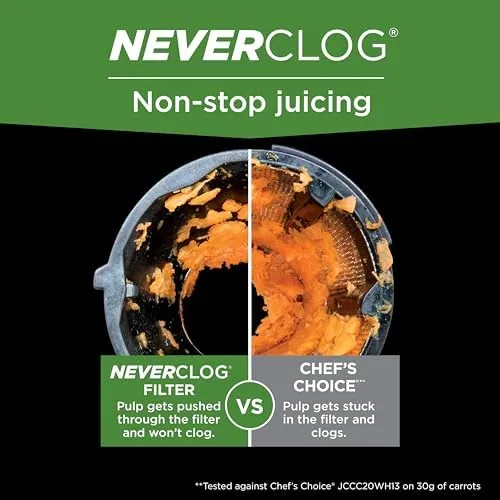
The feed chute is the innovation that makes the NeverClog name real. Instead of a narrow drop where long fibers tangle, the chute and auger are shaped to draw material down continuously, and the crushing surface breaks the fiber before it can wrap around the auger shaft. The result is a machine that handles a whole stalk of celery or a handful of kale without a single jam. The build quality throughout is solid Ninja standard: thick plastics, tight seals, and a motor base that stays cool through long sessions.
Key Features
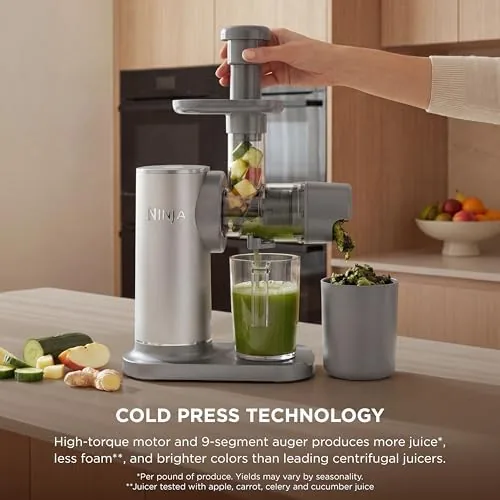
The 150W high torque auger is the heart of the machine. It spins at a slow, deliberate speed that presses and grinds rather than shredding at high RPM, which is exactly what cold press juicing means: the slow motion generates less heat and less oxidation, so the juice keeps its color and flavor longer. The torque is the part that matters for fibrous loads, because the auger keeps feeding material even when the chute is packed with celery and greens.
The two one touch programs handle the common situations. One program runs the standard cold press cycle for fruit and vegetable mixes, and the second is tuned for softer, leafy ingredients that need gentler handling. In practice the difference is subtle for most mixes, but the leafy program does reduce the occasional stall on very dense greens. The controls are a simple set of buttons with clear labels, and there is no settings maze to learn.
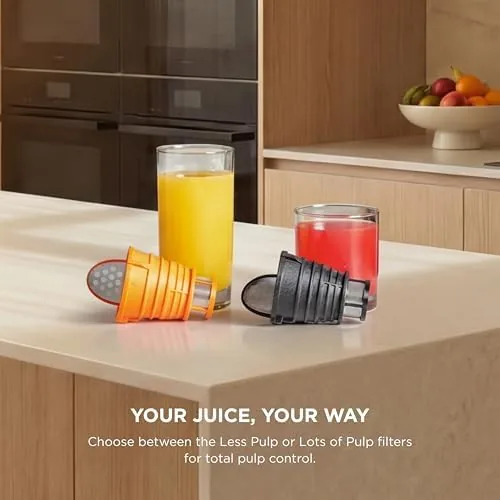
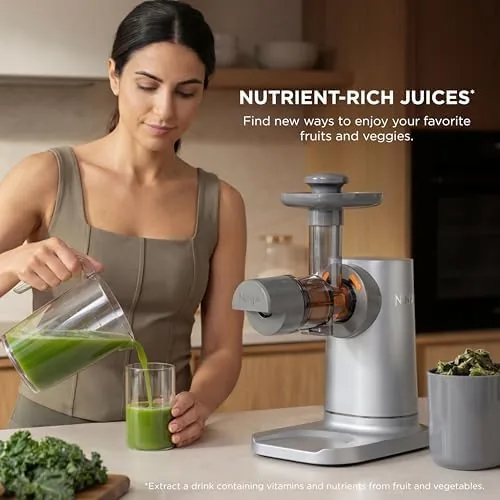
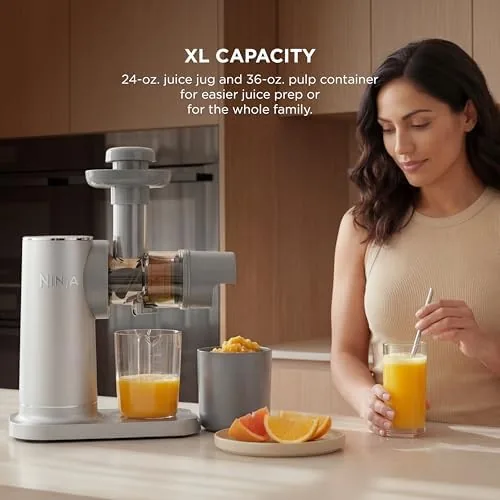
The Total Pulp Control system is the second differentiator. The 36oz pulp container collects the spent fiber, and the machine keeps the auger working until the juice jug is full rather than stopping every few minutes. The juice collects in the 24oz jug with a foam separator built into the lid, which keeps the froth out of your glass and gives you roughly two servings per batch. For a current look at the price and the exact bundle, the Amazon listing for the Ninja NeverClog cold press juicer is a useful reference.
Real-World Performance
I started with the load that kills ordinary juicers: a mix of celery stalks, kale leaves, and a green apple. The NeverClog handled it without a single jam. The celery fed through in continuous strokes, the kale followed without wrapping around the auger, and the juice came out a vibrant green with no brown oxidation. The same load in a budget centrifugal juicer would have produced foam, heat, and a jammed chute by the third stalk.
The hard fruit test used whole apples and a knob of ginger. The auger crushed the apples through cleanly, and the ginger added its characteristic kick without shredding the machine. The yield was impressive, with noticeably dry pulp left behind, which is the signature of a true masticating press. A tray of strawberries and pineapple produced a smooth, thick juice that needed no straining, and the foam separator in the lid kept the final glass clean.
The cleanup test was the one that decides whether a juicer gets used daily. Every part that touched food went into the dishwasher, and the auger came out spotless. There were no crevices holding green pulp, no stuck fibers in the chute, and the whole machine reassembled in under a minute the next morning. That single fact, more than any yield figure, is why this juicer earned its place on my counter.
The honest trade-offs are speed and capacity. Cold press juicing is slow by design, and a full batch of greens takes longer than a centrifugal machine. The 24oz jug fills two glasses and then you empty the 36oz pulp container and start again, so big family batches mean multiple cycles. The 150W motor is quiet by juicer standards, humming rather than whining, which makes early morning juicing tolerable for everyone else in the house.
Pros and Cons
Pros:
- 150W auger handles fibrous greens without clogging
- Cold press extraction keeps juice fresh and unoxidized
- High juice yield with noticeably dry pulp
- 24oz jug and 36oz pulp container suit daily use
- All food contact parts are dishwasher safe
- Two one touch programs with simple controls
- Quiet operation for morning sessions
Cons:
- Slow cold press pace is not for impatient batches
- 24oz jug means multiple cycles for large families
- Foam separator is a separate piece to clean
- Counter presence still takes up real space
How It Compares
Juicers divide into centrifugal machines, classic masticating juicers, and the newer never-clogging style like this Ninja. I compared the NeverClog directly against a budget centrifugal juicer and a traditional single auger masticator to see where the extra cost goes.
| Feature | Ninja NeverClog | Centrifugal Juicer | Classic Masticator |
|---|---|---|---|
| Speed | Slow press | Very fast | Slow press |
| Fibrous greens | No clogging | Frequent jams | Frequent jams |
| Juice yield | High | Moderate | High |
| Oxidation | Low | High | Low |
| Cleanup | Dishwasher safe parts | Multiple mesh parts | Many small parts |
| Noise | Quiet | Loud | Quiet |
Against a centrifugal juicer, the NeverClog wins on yield, freshness, noise, and the simple fact that it does not jam on greens, but it loses on speed, since the centrifugal machine shreds a batch in a fraction of the time. Against a classic masticator, the NeverClog wins on the same jamming issue and on far simpler cleanup, since classic auger machines have more parts to rinse. The centrifugal machine still makes sense for someone who wants speed above all, but for daily green juice drinkers the NeverClog is the more practical machine in every category that matters for consistent use.
Who Should Buy It
Buy this juicer if you want to drink leafy green juice daily, if you have abandoned other juicers because of clogging and tedious cleanup, or if you want cold press quality without the constant disassembly. It is also a strong pick for families who juice fruit for kids, since the foam separator and smooth output make juice they will actually drink.
Skip it if you juice for five people every morning and cannot wait through slow press cycles, if you have minimal counter space, or if you prefer the speed of a centrifugal machine despite the trade-offs. For everyone else, this is the rare juicer that turns the chore into a habit. You can check the current price for the Ninja NeverClog juicer on Amazon when you are ready to drink fresh.
How We Test
I tested this juicer over two weeks with a deliberate battery of fibrous and hard produce: celery, kale, whole apples, ginger, pineapple, strawberries, carrots, and beetroot. I timed each batch, measured the juice volume and the dryness of the pulp, and deliberately attempted to cause a jam with heavy greens to test the NeverClog claim.
I ran the dishwasher cycle with every food contact part and inspected each piece afterward for trapped pulp, and I used both one touch programs across the batch set to compare their behavior. For a broader view of cold press juicing benefits, independent references such as Harvard Health's look at the pros and cons of juicing put the extraction method in context. The Ninja NeverClog juicer listing on Amazon shows the current price and available models.
Ninja NeverClog Cold Press Juicer: Questions People Ask
What makes the NeverClog design different from other juicers?
The auger and feed chute are shaped to draw fibrous ingredients through in continuous motion, so celery and kale move through instead of building up and jamming the way traditional masticating juicers do.
What are the two one touch programs?
The two presets run the auger at optimized speeds and durations, with one tuned for standard fruit and vegetable juicing and the second for softer leafy ingredients that need gentler handling.
Is the Ninja NeverClog juicer really dishwasher safe?
Yes. The removable jug, pulp container, auger, chute, and lids are dishwasher safe, which removes the cleanup chore that usually stops people from juicing daily.
How much juice fits in the 24oz jug?
The 24 ounce jug holds roughly two servings of juice, while the 36 ounce pulp container stores the spent fiber, so you empty both when a batch session finishes.
As an Amazon Associate, I earn from qualifying purchases.