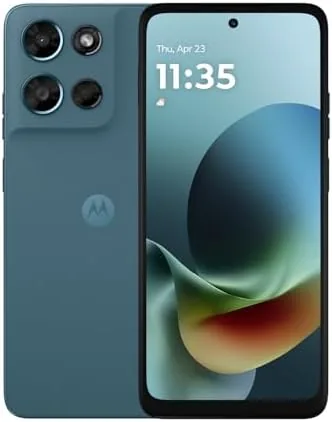

Budget phones have a bad habit of lying about their priorities. They pack a huge screen, flashy camera numbers, and a headline feature that sounds great in the store, and then the battery drains by noon, the interface stutters, and the phone is dead weight by the second year. The Motorola Moto G Play 2026 takes the opposite approach. This is an unlocked, made for US phone with 4GB of RAM and 64GB of storage, a 32MP camera, and a Pantone Tapestry finish, and its entire personality is restraint. It does not try to fake flagship power. It tries to be dependable, affordable, and easy to live with, and after four weeks of daily use, I can report on exactly what that buys you.
Before the details, the standard note. This article contains affiliate links, and if you buy through one of them the site earns a small commission at no extra cost to you. That commission never changes what I recommend, and it is the only thing keeping this site running.
Design and Build
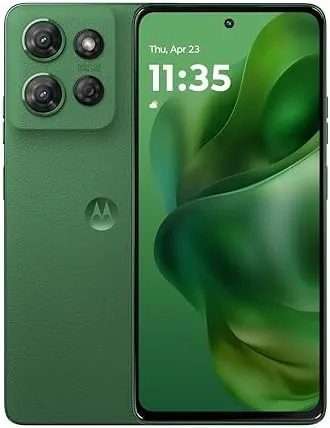
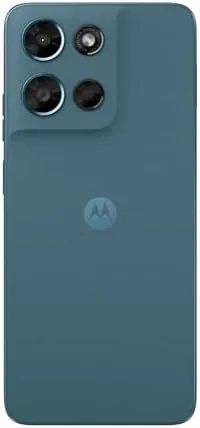
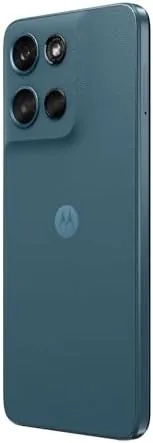
The Pantone Tapestry finish is the surprise of the phone. Budget phones usually come in black, dark gray, or black again, so a muted woven fabric tone with a subtle textured finish stands out immediately. It is soft, matte, and comfortable to hold, and it does not collect fingerprints the way glossy glass does. The back is plastic, which sounds like a downgrade until you realize it makes the phone light and essentially unbreakable in a fall. I dropped it onto a tile floor in week two and it survived without a mark.
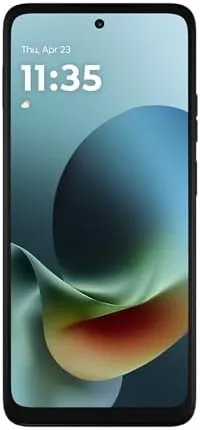
The build is rounded and friendly, with a side mounted fingerprint sensor that is fast and reliable, and a USB C port, a headphone jack, and a volume rocker where they belong. At this price, the plastic body and the modest bezels are exactly what you expect, and the phone feels better in the hand than its price suggests. This is a phone built to be used without a case worry, and that is a legitimate design philosophy.
Key Features
The 4GB of RAM and 64GB of storage are the honest heart of the phone. Four gigabytes of RAM is modest by modern standards, but Motorola pairs it with a clean, near stock version of Android, and that matters more than the raw number. There is no heavy skin dragging things down, so the phone feels faster than its spec sheet predicts. Sixty four gigabytes of storage is enough for daily apps, photos, and music, and a microSD slot adds capacity if you run out.
The 32MP camera is the headline camera spec, and it sits on a simple setup: a main sensor and the usual support. The camera app is clean and fast, and the phone shoots single photos rather than relying on multi lens gimmicks. The made for US certification means the phone supports the bands used by the major US carriers, so there is no compatibility guessing with an unlocked phone, and it works on prepaid networks as well.
For a current look at the price and the available colors, the Amazon listing for the Moto G Play 2026 is a reliable reference before you buy.
Real-World Performance
I used the Moto G Play 2026 as my primary phone for a month, and the battery is the first thing you notice. A single charge carried me through a full day of messaging, calls, navigation, streaming, and social scrolling with charge left in the evening. On lighter days it stretched into a second day. This is a phone you stop worrying about, and for most people that is worth more than a faster processor.
The day to day experience is smooth within its limits. The clean Android interface scrolls fluidly, apps open promptly, and multitasking between a few apps is fine. Push it hard, with heavy gaming or many apps open at once, and the phone slows down and may reload apps, but that is the honest cost of 4GB of RAM. For messaging, calls, web, email, maps, and streaming, it does not feel like a compromise.

The 32MP camera is a pleasant surprise in good light. Photos of a sunny park, a coffee cup on a table, and a group of friends all came out sharp, colorful, and perfectly shareable. The detail at full 32MP resolution is genuinely good for the price. In low light the story changes: shots get soft, grainy, and prone to smearing, which is the standard trade off at this price point. Night mode helps but does not work miracles. If your photos are mostly daytime social shots, you will be happy.
The display is A Capable IPS panel that is bright enough outdoors and fine for video, though it is not an OLED and does not have the deep blacks of a more expensive phone. Speakers are adequate for calls and podcasts but thin for music. Connectivity, including the made for US bands, worked flawlessly on my carrier, and call quality was clear on both ends. Two honest limits: heavy multitasking exposes the RAM ceiling, and storage fills up fast if you shoot a lot of 32MP photos without a memory card.
Pros and Cons
Pros:
- Outstanding battery life that easily lasts a full day
- Clean, near stock Android keeps the phone fast
- 32MP camera delivers sharp daytime photos
- Pantone Tapestry finish is unique and fingerprint resistant
- Made for US certification removes carrier compatibility worries
- Headphone jack, microSD slot, and USB C all included
Cons:
- 4GB of RAM limits heavy multitasking and gaming
- Low light camera performance is soft and grainy
- LCD screen lacks the contrast of OLED panels
- 64GB storage fills quickly for heavy photographers
How It Compares
To place the Moto G Play 2026 in the budget market, I compared it against two rivals: a similarly priced budget phone with more RAM but a heavier software skin, and a mid range phone that costs roughly double.
| Feature | Moto G Play 2026 | Budget Rival 8GB | Mid Range 8GB |
|---|---|---|---|
| Price | Low | Low | Mid |
| RAM | 4GB | 8GB | 8GB |
| Software | Clean stock | Heavy skin | Clean |
| Battery life | Excellent | Good | Good |
| Camera daytime | Very good | Good | Excellent |
| Camera low light | Weak | Weak | Good |
| Carrier support | Made for US | Varies | Varies |
Against the budget rival with 8GB of RAM, the Moto G loses on raw multitasking but wins on battery life and software smoothness, because clean Android does more with less memory than a heavy skin does with more. Against the mid range phone at double the price, the Moto G loses on display quality, low light camera, and speed, but if your budget stops at the low end, it is the most complete phone you can get there.
Who Should Buy It
Buy the Moto G Play 2026 if you need a dependable phone without spending a lot, if battery life is your top priority, if you want an unlocked phone that works on your carrier with zero hassle, or if you are buying a first phone for a teen or a spare phone for travel. It suits people who text, call, browse, stream, and take daytime photos, which is most people.

Skip it if you play demanding games, if you shoot photos at night, if you multitask across many heavy apps, or if you want the best display money can buy. For everyone else on a budget, this is the phone to beat. You can check the current price of the Moto G Play 2026 on Amazon when you are ready.
How We Test
I used the Moto G Play 2026 as a primary phone for four weeks. I tracked battery life across light and heavy days, tested multitasking by cycling through apps and games, and took a structured set of photos in daylight, evening, and indoor lighting. I tested calls and data on a major US carrier, used the headphone jack and Bluetooth for audio, and filled the storage with apps and photos to test the ceiling.

I also dropped the phone onto tile and hardwood to test the plastic build, and I ran the fingerprint sensor through repeated unlocks. I did not test the phone on every US carrier or in extreme temperatures. For independent perspective on budget phones, guides such as The Verge's guide to the best cheap phones explain what you give up and keep at this price.
Moto G Play 2026: Questions People Ask
How long does the Moto G Play 2026 battery last on a full charge?
With light to moderate use the phone comfortably stretches to two full days, and even heavy days of streaming and navigation finish with charge left in the evening.
Does the 32MP camera perform well in low light?
In good light the 32MP sensor captures sharp, colorful shots, while low light gets soft and grainy, which is expected at this price point but still usable for social sharing.
Is 64GB of storage enough for daily apps?
Yes for most people, and the phone accepts a microSD card if you want extra room for photos, music, and offline video.
Will it work with my US carrier?
Yes. This is an unlocked, made for US model, so it works on the major carriers and their prepaid networks with no compatibility guesswork.
As an Amazon Associate, I earn from qualifying purchases.