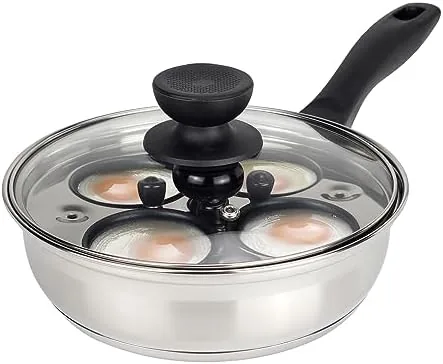

Poached eggs have a reputation as one of the fussiest breakfasts you can attempt. The classic method asks you to swirl a pot of simmering water into a vortex, slide in a cracked egg, and hope the whites wrap themselves around the yolk before they feather into white wisps. My own track record with that dance is mediocre at best. So when the MARSKITOP egg poacher pan arrived with four nonstick cups and a promise of perfect rounds without any swirling, I was more than a little curious. I have now run it through several weeks of weekend breakfasts, brunch for guests, and even a meal prep session, and this is the honest picture of how this Stainless Steel poached egg cooker performs.
Before the details, the standard note. This article contains affiliate links. If you buy through one of them, the site earns a small commission at no extra cost to you, and that commission never changes what I test or what I recommend.
Design and Build
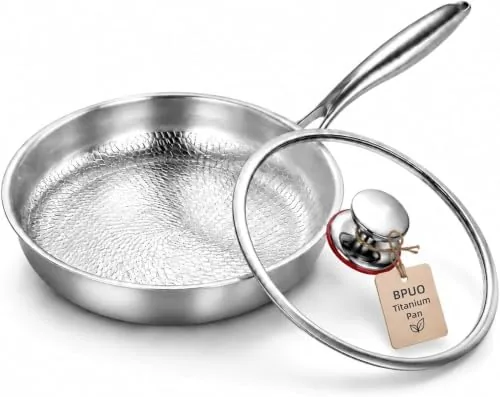
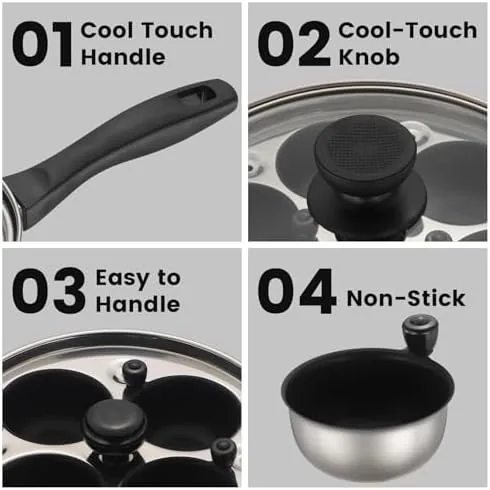
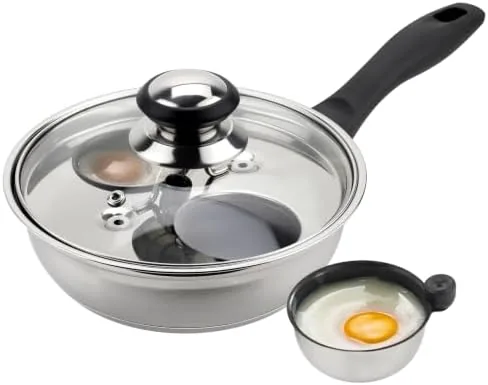
The MARSKITOP poacher arrives as a shallow pan with a fitted lid and four removable nonstick cups. The pan body is stainless steel, which gives it a solid, professional weight that cheaper aluminum poachers lack. The four cups drop into round cutouts in the pan, and each cup holds a single egg with a little room to spare. The lid is clear, which sounds like a small thing until you realize you can watch the whites set without lifting it and losing the steam.
The fit between the cups and the pan is snug without being stubborn. Each cup seats cleanly into its opening, and the nonstick coating on both the pan floor and the cups is smooth and well applied. The coating is PFOA free, which matters to anyone who has read about older nonstick chemistry and decided they would rather not have it near their food. The two side handles stay cool during cooking and give you a confident grip even when the pan is full.
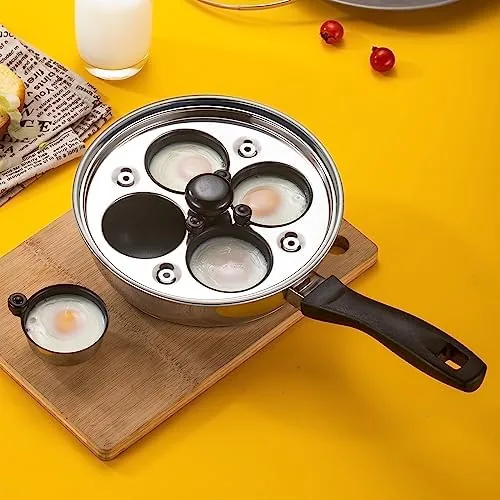
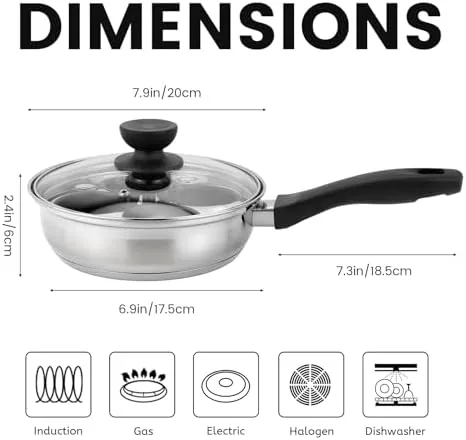
Storage is simple because the cups nest inside the pan and the lid fits on top, so the whole unit takes up about as much cabinet space as a medium skillet. The stainless steel surface shows fingerprints more readily than a dark finish would, but it wipes down without complaint. Overall, the build feels like it was designed to be used daily, not to sit pretty on a shelf.
Key Features
The headline feature is the four cup poaching design. Instead of one pot and a spoon, you get a pan that steams four eggs simultaneously in separate cups. Each egg cooks in its own space, so a broken yolk does not spoil its neighbors, and everyone at the table gets an egg cooked at the same time. For a household of two, that also means you can cook four and save two for tomorrow.
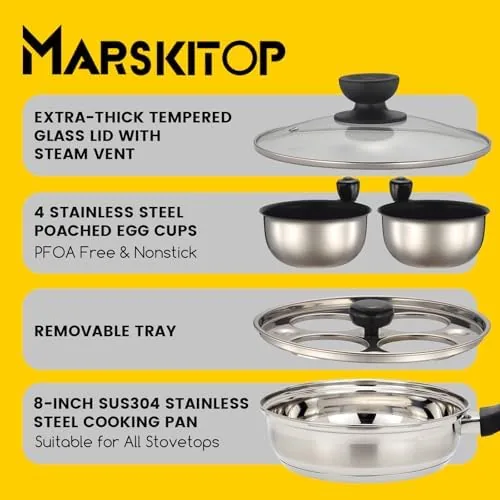
The PFOA free nonstick coating is the feature that makes the whole concept work. Eggs are sticky by nature, but in these cups the whites release with a gentle nudge from a fork or spatula, with no soaking and no scraping. The stainless steel pan body distributes heat evenly and works on most stovetops, and the steam the pan produces around the cups does the actual cooking, which is why the results come out tender rather than boiled.
The poacher also includes the lid as part of the design, which traps the steam and speeds the cooking. I measured roughly eight to ten minutes from cold water to set whites at a steady medium heat, which is in line with what a traditional method takes but with far less babysitting. For a look at the current price and the exact size of the pan, the MARSKITOP egg poacher listing on Amazon has the full specifications.
Real-World Performance
My first test was the classic breakfast run: four eggs, one session, no vinegar. I filled the pan with a shallow layer of water, brought it to a gentle simmer, cracked eggs into the cups, and covered it. Ten minutes later I had four eggs with fully set whites, soft, glossy yolks, and rounded shapes that would not have looked out of place in a diner kitchen. The whites set cleanly with no feathering, and none of the eggs stuck to the cups.
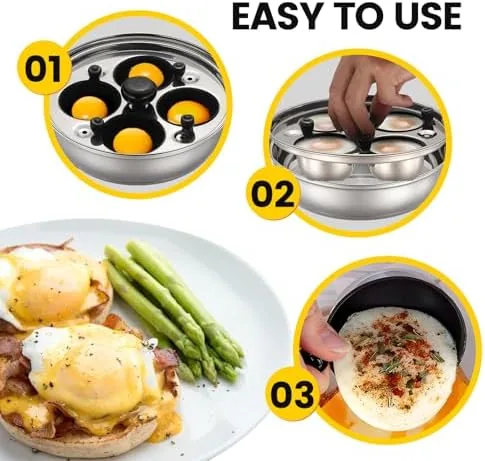
I repeated the test over several weekends and varied the doneness. With the lid on and the heat steady, the results were consistent from batch to batch, which is the real test of any poacher. A few minutes less gave me jammy, runny yolks for toast, and a few more minutes gave firmer eggs for salads and bowls. The steam heat is forgiving in a way that direct boiling is not, so a minute of inattention does not ruin the batch.
Cleanup turned out to be the quiet star. After the pan cooled, the cups wiped out with a paper towel and rinsed clean, and the pan floor needed only a quick wash. Nothing required soaking, and no stubborn ring of cooked egg protein formed around the rims. The cups and pan wash up easily by hand, and the coating has held up without scratching or flaking across all of my test sessions.
The only friction I found is one of physics rather than a flaw. You do need to manage the water level, because if the water boils too hard it can splash up around the cups, and if it runs low the pan can get noisy. Keeping the heat at a steady medium solved both. Also, the shallow pan means a very deep fill would overflow, so you are cooking by steam as intended rather than by immersion.
Pros and Cons
Pros:
- Four eggs cook at once in separate nonstick cups
- PFOA free coating releases eggs cleanly with no sticking
- Stainless steel pan body heats evenly and feels durable
- Clear lid lets you watch the whites set without lifting it
- No vinegar or water swirling required for round eggs
- Compact storage with cups nested inside the pan
Cons:
- Water level needs occasional checking during longer sessions
- Hand washing is recommended to protect the nonstick coating
- Shallow pan is not meant for deep water fill
- Stainless steel exterior shows fingerprints easily
How It Compares
Egg poachers split into a few camps: silicone cup poachers, microwave egg cookers, and stovetop pans like this one. I set the MARSKITOP next to a silicone poaching cup set and a popular microwave egg cooker to see where each earns its place.
| Feature | MARSKITOP Pan | Silicone Cups | Microwave Cooker |
|---|---|---|---|
| Eggs at once | Four | Usually two to four | One to two |
| Power source | Stovetop steam | Boiling water | Microwave |
| Round shape | Very good | Good | Good |
| Sticking issues | Minimal | Sometimes | Occasional |
| Batch consistency | High | Medium | Medium |
| Price | Mid range | Low | Low to mid |
Against silicone cups, the MARSKITOP wins on consistency because every egg cooks in the same steam bath at the same time, while cup poachers rely on you fishing floating cups out of a pot. Against a microwave cooker, the stovetop pan wins on texture and on doing four eggs at once, but the microwave option is undeniably faster for a single egg. The silicone cups are cheaper and easier to pack, and the microwave cooker wins for dorm rooms and offices. For anyone who makes eggs regularly for more than one person, the stovetop pan is the best all round pick of the three.
Who Should Buy It
Buy this poacher if you love poached eggs but not the fuss, if you cook breakfast for a family or regular guests, or if you want a healthier egg option without buying a machine. It is also a good fit for anyone who already enjoys meal prep, since four clean poached eggs store well for the week ahead.
Skip it if you only eat a poached egg a few times a year and prefer the speed of a microwave, if you need a poacher that holds more than four eggs for a crowd, or if your kitchen is genuinely out of cabinet space for one more pan. For everyone else, this is an affordable and reliable upgrade over the swirl and pray method. You can check the current price of the MARSKITOP egg poacher on Amazon before you decide.
How We Test
I tested this poacher over three weeks with six separate cooking sessions. I made eggs to order for a brunch with guests, ran two meal prep batches to check the four cup capacity, and deliberately left a batch a few minutes too long to see whether the results became salvageable. I varied the water level to test the sweet spot between strong steam and splashing, and I let the cups air cool before cleaning to check how easily cooked protein came off the surface.
I cooked on a gas stove only for this review, so I cannot speak to induction or ceramic coil behavior with certainty, though stainless steel pans are generally compatible with both. I also avoided metal utensils in the cups to protect the nonstick surface, which any owner should do. For a deeper look at egg cooking technique, independent guides such as Serious Eats' egg cooking coverage are a useful companion to any poaching tool. The MARSKITOP egg poacher page on Amazon shows the current price and any available color options.
MARSKITOP Egg Poacher Pan: Questions People Ask
How do you use the MARSKITOP egg poacher pan?
Add a shallow layer of water to the pan, set the four nonstick cups in their openings, crack an egg into each cup, cover with the lid, and cook over a steady medium heat until the whites are set to your liking. No vinegar and no swirling are needed.
Is the MARSKITOP egg poacher pan PFOA free?
Yes. The nonstick coating on the cups and the pan is PFOA free, so the eggs release cleanly without the health concerns that older nonstick chemistry carried. The cups wipe out easily after cooking.
How many eggs does the poacher cook at once?
The pan holds four eggs at a time in separate cups, which is enough for a family breakfast or a meal prep batch. Each egg cooks in its own space, so a broken yolk does not affect the others.
Can the egg cups go in the dishwasher?
The cups and pan are easy to clean by hand, and while the cups tolerate a gentle dishwasher cycle, hand washing is the safer choice for preserving the nonstick coating over the long term.
As an Amazon Associate, I earn from qualifying purchases.