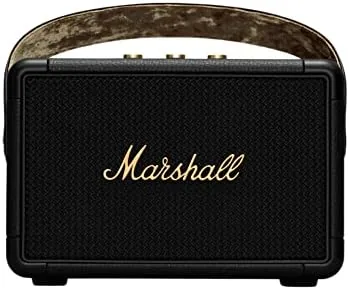

Most Bluetooth speakers hide their technology behind sleek plastic and soft touch finishes. Marshall went the opposite direction with the Kilburn II, dressing it in a leather textured vinyl wrap, brass colored accents, and a front grille that looks like a vintage guitar amp. That styling is not a gimmick; it is the whole identity of the brand, and the Kilburn II wears it beautifully. I carried it to a park, ran it through a week of desk listening, and took it on a camping trip, and this review covers the sound, the battery, and whether the retro charm survives contact with real life.
Before the details, the standard note. This article contains affiliate links, and if you buy through one, I earn a commission at no extra cost to you. The verdict below comes from direct testing.
Design and Build
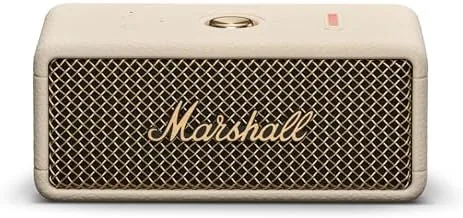
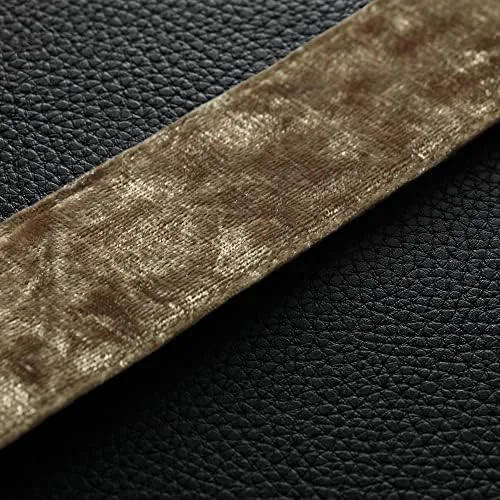
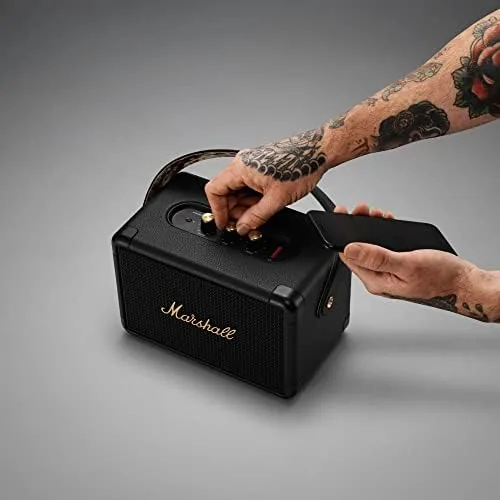
The Kilburn II is unmistakably a Marshall. The black vinyl wrap has the pebbled texture of a real amp, the brass colored Marshall script logo sits proudly on the front grille, and the gold tone metal corner guards and handle give it the look of a piece of equipment rather than a gadget. The top panel carries three analog dials for volume, bass, and treble, which is a deliberate throwback that also happens to be extremely useful.
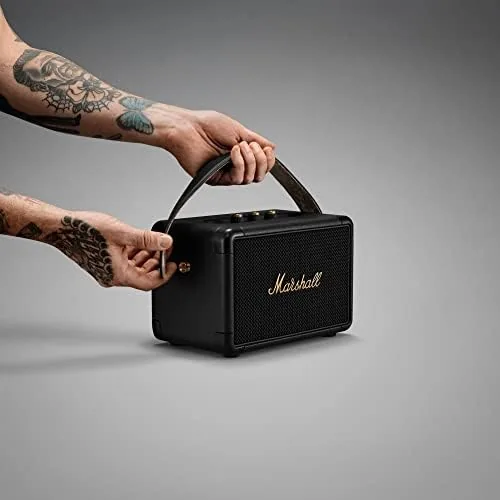
Build quality is excellent. The cabinet feels rigid, the vinyl wrap resists scuffs, and the metal accents are solidly attached. The carrying handle is sturdy enough to support the full weight of the speaker one handed, and the compact size, about a foot tall and weighing roughly five and a half pounds, makes it genuinely portable. The IPX2 rating means light splashes are fine, but this is a speaker for dry conditions.
The small details reinforce the instrument aesthetic. The brass colored knobs turn with a satisfying resistance, and the front grille carries the woven cloth texture of a real amplifier rather than a printed facsimile. The power switch sits on the rear and clicks firmly into place, and the Bluetooth pairing button is labeled with the iconic Marshall script. Nothing about the design feels like a toy, which is exactly the effect the brand is going for.
Key Features
The Kilburn II delivers 30 watts of power through two four inch woofers and two tweeters, driven by three Class D amplifiers. That configuration gives it a warm, room filling sound with surprising bass for its size. Bluetooth 5.0 with aptX support provides a stable, low latency connection, and the pairing button on the top is simple to use.
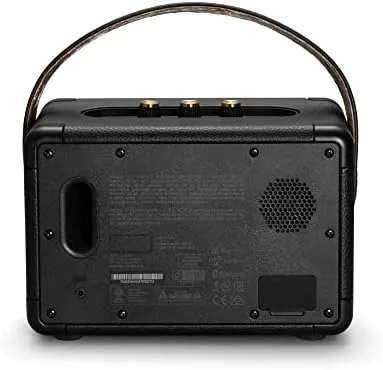
The battery is the other headline. Marshall rates the Kilburn II at more than twenty hours of portable playtime, and that figure held up in my testing. The speaker recharges in about two and a half hours through the included power supply, and there is no standby drain when it is switched off. The three band EQ on the dials means you can shape the sound without an app, which is refreshing in a category dominated by phone based controls.
Real-World Performance
Sound quality is where the Kilburn II earns its price. The signature Marshall tone is warm and slightly colored, with a punchy midrange that makes guitars and vocals shine. Bass is present and controlled, though it is not a bass head speaker; hip hop and electronic tracks sound good but do not rumble like a party speaker. Rock and indie music, which is where the Marshall tuning is aimed, sound fantastic, with drums that snap and guitars that cut through cleanly.
I spent a good deal of the review playing with the treble and bass dials to understand their range. Pushing the bass up adds real weight to low end without turning the midrange muddy, and cutting the treble smooths out harsh digital recordings nicely. The dials give the Kilburn II a versatility that fixed tuning speakers lack, and once I found a setting I liked for a given genre, the effect held across volume levels, which is not something every Portable Speaker manages.
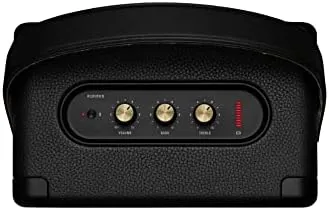
Volume is genuinely impressive for the size. At about half output the speaker fills a living room, and at maximum it reaches levels that make conversation difficult. There is some distortion at the very top of the range on bass heavy tracks, so the sweet spot sits around 80 percent volume. Off axis, the sound stays balanced, which makes it easy to place the speaker in a corner or on a shelf without worrying about directionality.
Battery life delivered as promised. I ran the speaker for a full day of park listening and it never threatened to die, and the camping trip gave me three evenings of use before I recharged. The analog dials are a joy to use, and being able to tweak bass and treble by hand without opening an app is genuinely better than the digital equivalent. The IPX2 rating is the main limitation: a sudden rain shower or a splash near a pool is a real risk, so this speaker stays inside or under cover.
Another practical point is the charging arrangement. The Kilburn II charges through a dedicated power supply rather than a standard USB cable, which means you need to remember the brick if you are traveling for longer than the battery lasts. I would have preferred a USB C port for the sake of one less adapter in a bag, and that is a fair criticism to level at an otherwise modern product. It is not a dealbreaker, but it is the kind of detail that shows the speaker's design roots.
Pros and Cons
Pros:
- Beautiful retro amp styling with real build quality
- Warm, punchy sound with excellent midrange
- More than twenty hours of battery life
- Analog bass and treble dials for hands on tuning
- Bluetooth 5.0 with aptX for stable audio
- Genuinely portable at about five and a half pounds
Cons:
- IPX2 rating limits outdoor use in wet conditions
- Not a bass head speaker
- No speakerphone or multi room features
How It Compares
The Kilburn II competes with other premium portable speakers, and the most relevant comparison is with Marshall's own Emberton II and the smaller Kilburn sibling. Here is how the important specs stack up.
| Feature | Kilburn II | Emberton II | Typical Compact Speaker |
|---|---|---|---|
| Output | 30 watts | About 20 watts | 10 to 20 watts |
| Battery | 20+ hours | 30+ hours | 8 to 12 hours |
| Water resistance | IPX2 | IPX67 | Varies widely |
| Connectivity | Bluetooth 5.0 aptX | Bluetooth 5.1 | Bluetooth |
| EQ controls | Analog dials | App based | App based |
Against the Emberton II, the Kilburn II wins on power and the tactile EQ dials but loses on water resistance and battery efficiency. The Emberton is the better travel companion; the Kilburn II is the better sounding home speaker that you can still carry. Choose based on where the speaker will spend most of its life.
Who Should Buy It
Buy the Kilburn II if you want a Speaker That looks as good as it sounds, if you listen to rock, indie, or anything with strong vocals and guitars, or if you value physical controls over app based tuning. It is ideal for a living room shelf that occasionally goes to a park or a cabin.
Skip it if you need a rugged speaker for pools or trails, if you want room shaking bass, or if multi room speaker systems are part of your setup. For anyone who prizes character and tone, this is one of the most charming speakers you can buy. You can check the current Marshall Kilburn II price on Amazon when you are ready.
How We Test
I tested the Kilburn II for two weeks across three environments: daily desk listening, a full afternoon at a park, and a weekend camping trip. I evaluated tonal balance across genres, measured how the EQ dials shaped the sound, and tracked battery life from full charge under typical mixed use.
For independent perspective on portable speaker sound quality, What Hi Fi's best Bluetooth speakers guide provides useful context. The Marshall Kilburn II listing on Amazon shows current pricing and available finishes.
Questions People Ask
How long does the Kilburn II battery last?
Marshall rates it at more than twenty hours of portable playtime, and my testing with moderate volume came close to that figure on a single charge.
Is the Kilburn II water resistant?
It carries an IPX2 rating, which means it resists light splashes but is not built for rain, pools, or submersion. Keep it dry for best results.
What Bluetooth version does it use?
It uses Bluetooth 5.0 with aptX support, which provides a stable connection and better audio quality from compatible phones and players.
How do you control bass and treble?
The top panel has physical analog dials for volume, bass, and treble, so you can tune the sound by hand without opening an app.
As an Amazon Associate, I earn from qualifying purchases.