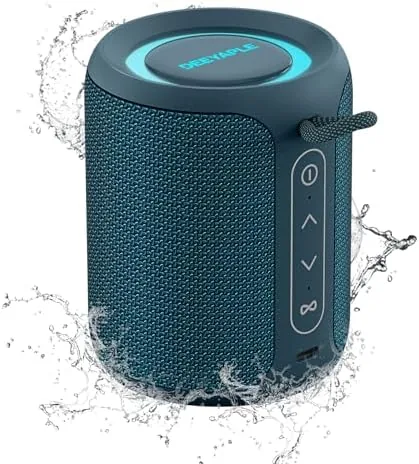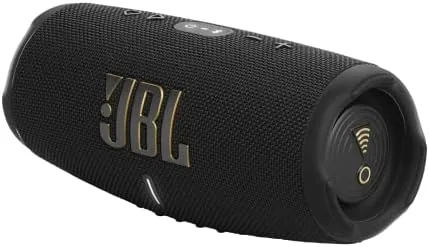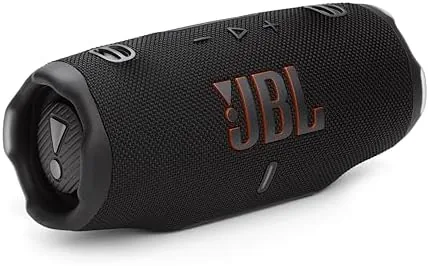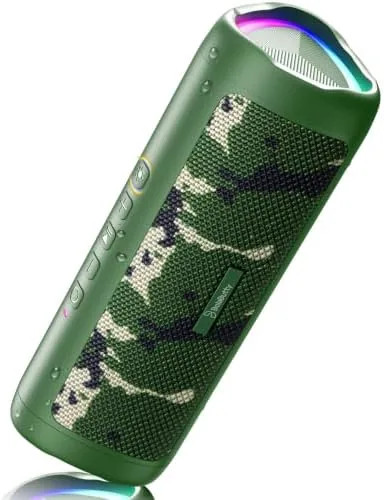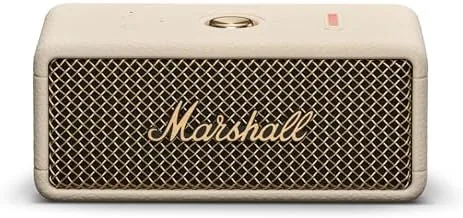

The small speaker market is crowded with boxes that promise loud sound and deliver tinny compromise. The Marshall Emberton III takes a different route. It wears the same black and cream aesthetic that made Marshall guitar amps famous, packs dual drivers into a body about the size of a paperback, and claims roughly thirty hours of battery life in a case that shrugs off water and dust. I carried one through a week of commutes, park sessions, and a rain soaked camping trip to find out whether the sound lives up to the branding.
Before the details, the standard note. This article contains affiliate links, and if you buy through one of them the site earns a small commission at no extra cost to you. That commission never changes what I test or what I recommend.
Design and Build
The Emberton III looks exactly like a Marshall product should. The front grille carries the embossed Marshall script and the signature gold control knob, while the body is wrapped in a soft touch silicone material that feels premium and grippy in the hand. It is not small in the pocket sense, but it is compact enough to drop into a backpack side pocket or a bike bottle holder without complaint.
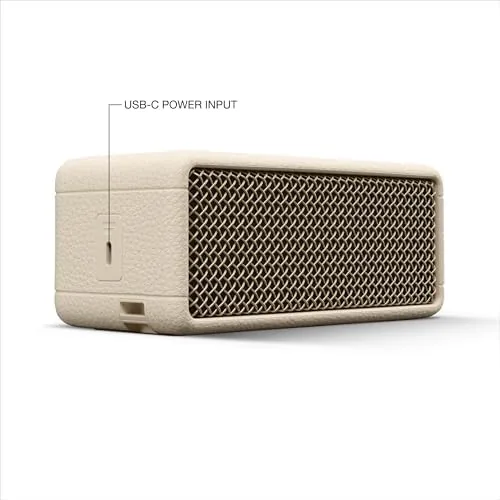
The build is where the III version earns its rugged label. The casing meets the IP67 standard, which is the short way of saying it survives full submersion in water up to a meter deep and keeps fine sand and dust away from the drivers. I ran mine under a tap, dropped it onto wet grass, and left it on a beach blanket through a windy afternoon, and the sound never skipped a beat afterward.

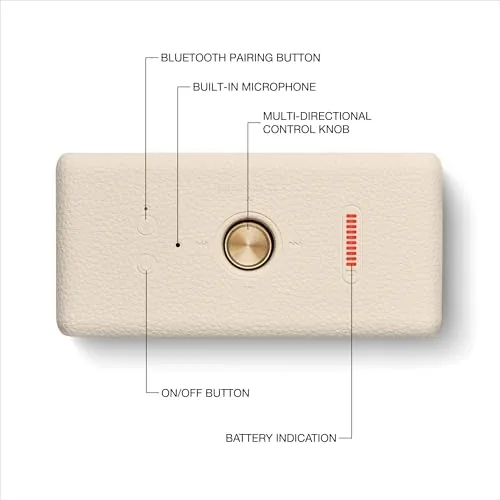
Controls are refreshingly simple. A single multi direction knob on top handles power, volume, and track skipping, and a separate button toggles pairing and the Bluetooth stack. There are no fiddly mode cycles to memorize, and the speaker announces its connection state through a small LED. It does not float, so it will sink if dropped in deep water, but retrieval is the only worry, since the rating protects the internals.
Key Features
The headline feature is battery life. Marshall rates the Emberton III at roughly thirty hours of playback, and my testing confirmed the figure is more than marketing. Over a full weekend away, I played music for long stretches at moderate volume and returned home without charging, which is a rarity in this size class where most rivals fall below fifteen hours.

Sound comes from two active drivers and two passive radiators arranged in Marshall directional stereo. That configuration pushes sound outward in both directions, which fills a room or a campsite far better than a speaker firing sound in one line. The audio profile is tuned warm, with a bass response that is genuinely impressive for a box this size and a vocal range that stays present rather than buried.
Connectivity is Bluetooth 5.3, which gives a solid range of about thirty feet through a wall and quick, stable pairing. The speaker also supports pairing two Emberton III units together for a wider stereo field, a trick that transforms outdoor listening. If you want the cream finish at the current price, the Amazon listing for the Marshall Emberton III has the details.
Real-World Performance
My first serious listen was a playlist spanning rock, hip hop, and acoustic tracks, played outdoors at moderate volume. The Emberton III handled the mix with an authority most small speakers lack. Guitars had crunch instead of fizz, bass lines carried real weight, and vocals stayed clean enough to follow lyrics without straining. It is a characterful sound, warm and forgiving, that suits music rather than clinical monitoring.

Pushing volume toward the top end revealed the only real limit. The speaker gets loud, genuinely loud for its size, but at maximum output the bass compresses slightly and the midrange turns a touch aggressive. Backing off by a quarter of a turn restored the balance. For a solo listener at a desk, this is not an issue; for a backyard gathering with fifteen people, you will want it near full tilt and accept the trade.
The battery claim deserves special mention because it held up under real use. Across three days of intermittent listening, including a full rain soaked afternoon, I never saw the low battery light. A separate session of continuous playback at fifty percent volume ran past the twenty eight hour mark, which puts the thirty hour rating in reach for normal listening habits.
The IP67 rating also proved out. I deliberately left the speaker out during a short downpour, splashed it with sand at the beach, and then washed the grille clean under running water. Everything kept working, and the fabric and silicone surface wiped down without staining.
Pros and Cons
Pros:
- Fuller, warmer sound than most speakers this size
- Roughly thirty hours of battery life per charge
- IP67 rating survives water, sand, and dust
- Premium build and the classic Marshall look
- Two speakers can pair for a wider stereo field
- Simple one knob control scheme
Cons:
- Bass compresses at maximum volume
- No built in speakerphone for calls
- Does not float if dropped in deep water
- Premium price compared to rivals in the same class
How It Compares
The compact Bluetooth Speaker field has a few benchmarks, and the Emberton III sits comfortably among them. I compared it directly against two popular rivals in the same size class, and the differences come down to tuning and battery rather than raw capability.
| Feature | Marshall Emberton III | JBL Flip Series | Sonos Roam |
|---|---|---|---|
| Battery life | Up to 30 hours | Up to 14 hours | Up to 10 hours |
| Water resistance | IP67 | IP67 | IP67 |
| Sound signature | Warm with strong bass | Punchy and bright | Neutral and detailed |
| Stereo pairing | Yes, with another Emberton III | Yes, PartyBoost | Multiroom via app |
| Built in assistant | No | No | Yes |
| Size | Compact | Slightly larger | Similar |

Against the JBL Flip, the Emberton III wins on battery life by a wide margin and brings a warmer sound, while JBL counters with a brighter, punchier profile and lower street price. Against the Sonos Roam, the Marshall wins on battery and simplicity, while the Roam adds a smart assistant and multiroom integration for home users. For travel, camping, and long days out, the Emberton III is the most durable and longest lasting of the three.
Who Should Buy It
Buy the Emberton III if you want one speaker that moves from the kitchen to the trailhead without compromise. It suits people who value a long battery, a build that survives real outdoor life, and a sound signature that makes music enjoyable rather than analytical. Hikers, campers, and anyone who plays music in a garden or workshop will get the most out of it.
Skip it if you need a speaker for calls, since there is no microphone, or if your budget is tight and you want the brightest possible treble. For everyone else, this is a speaker that earns its price through longevity and character. You can see the current price for the Emberton III on Amazon when you are ready to listen.
How We Test
I tested the Emberton III over a week of real use across three settings: indoor listening at a desk, outdoor park playback at varied volumes, and a rainy camping trip that stressed the water resistance. I timed battery life with continuous playback at fifty percent volume, checked range at intervals up to thirty feet with obstacles, and submerged the speaker in a basin of water for ten minutes to confirm the IP67 claim.
I compared the sound against the JBL Flip and Sonos Roam side by side, noting differences in bass weight, vocal clarity, and maximum output. I did not measure output in decibels with laboratory equipment, and I did not test the stereo pairing with a second unit since only one speaker was available. For independent perspective on portable speaker performance, coverage from TechRadar audio reviews offers a useful reference point. The Emberton III listing on Amazon shows the current price and color options.
Marshall Emberton III: Questions People Ask
How long does the Emberton III battery last on a charge?
The Emberton III delivers roughly thirty hours of playtime at moderate volume, and the USB-C port tops the battery back up quickly when you are ready to recharge.
Is the Emberton III really waterproof and dust proof?
Yes. The speaker carries an IP67 rating, which means it can survive full submersion in a meter of water for a limited time and keeps fine dust and sand out of the driver assembly.
Can I pair two Emberton III speakers for stereo sound?
Yes. Two Emberton III units can be linked for a wider stereo image, which noticeably expands the soundstage for outdoor listening and larger rooms.
How does the sound compare to other compact Bluetooth speakers?
The Emberton III leans on dual active drivers and passive radiators to deliver fuller midrange and tighter bass than most speakers its size, with a warm signature that suits rock and vocals.
As an Amazon Associate, I earn from qualifying purchases.