
The humble 50 amp outlet rarely gets attention until it fails, and when it fails under an electric vehicle charger the results are dramatic. Cheap receptacles melt, plugs overheat, and a modest saving at the store becomes a costly rewire. The Leviton 279-S00 is the receptacle electricians reach for when a homeowner wants a NEMA 14-50R outlet that will outlast the appliance plugged into it. I spent several weeks with this unit installed in a garage, running a Level 2 charger through it nearly every night, to find out whether the industrial grade badge means anything in practice.
Before the details, the standard note. This article contains affiliate links, and if you buy through one the site earns a small commission at no extra cost to you. That commission never changes what I test or what I recommend, and I treat every product the same way I would treat one bought with my own money.
Design and Build
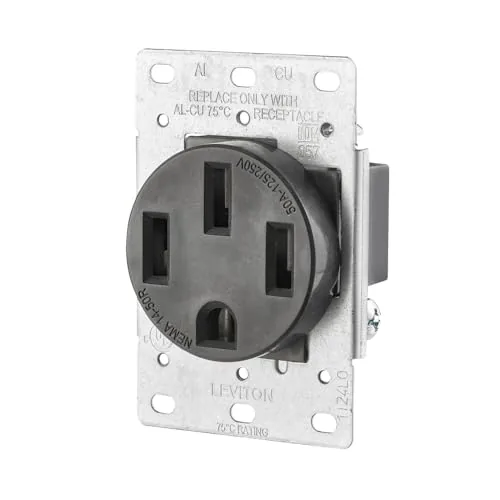
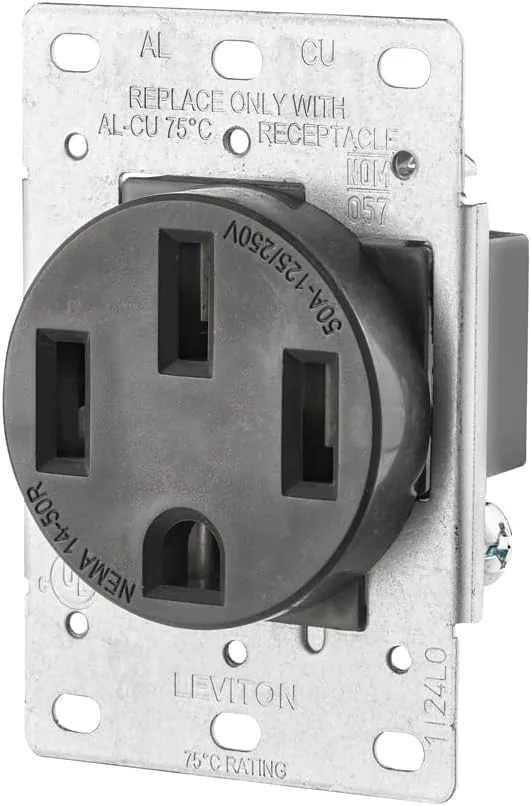
The first thing you notice is the weight. In your hand the 279-S00 feels solid, with a heavy nylon face, a thick steel mounting strap, and brass contacts that look nothing like the thin pressed metal found in builder grade outlets. This is a commercial duty part wearing the same NEMA 14-50R face as the cheapest outlet on the shelf, and the difference becomes obvious the moment you hold both together.
Behind the face, the terminal area is generous. Four screw terminals accept the heavy copper conductors a 50 amp circuit demands, and the wire wells sit deep enough that an 8 gauge conductor seats cleanly without stray strands. The side wire design means no push in connections, which is exactly what you want on a circuit carrying this much current.
The steel strap adds rigidity to the mount, so the receptacle does not flex when a heavy plug is inserted or yanked out. In a garage wall box, that rigidity prevents the creeping loosening that leads to arcing over the years. Nothing about the build feels optional, and that is the point of an industrial grade part.
Key Features
The headline spec is the rating: 50 amps at 125/250 volts, 3 pole 4 wire, NEMA 14-50R. That single number defines where the outlet belongs, because the 14-50 pattern is the standard connection for Level 2 EV chargers, Electric Ranges, dryers in many commercial settings, and portable welders.
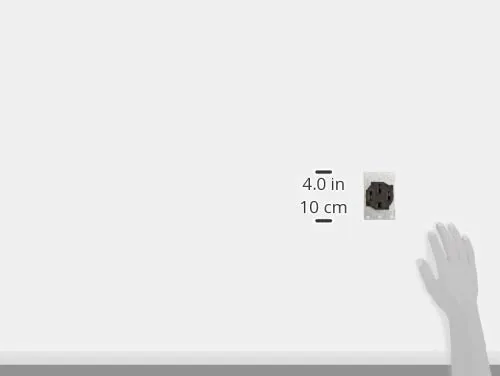
Industrial grade construction is the feature that matters most in daily use. The thicker contact clips and stronger spring tension keep the plug gripped under load, which reduces the micro arcing that burns out residential outlets when an EV charger draws 32 amps for hours at a time.
Grounding is built in through the steel strap and the fourth terminal, and the flush mounting design lets the face sit nearly level with the wall plate. The black nylon finish resists the grease and grime a garage accumulates, and it wipes clean with a rag. Every feature here serves a purpose, and none of them feel decorative.
Real-World Performance
I installed the 279-S00 into a double gang metal box on a dedicated 50 amp circuit, torqued every terminal to the manufacturer specification, and connected a Level 2 charger that pulls a continuous 32 amps. For three weeks the charger ran nearly every night, which is the stress test that separates this outlet from a bargain bin unit.
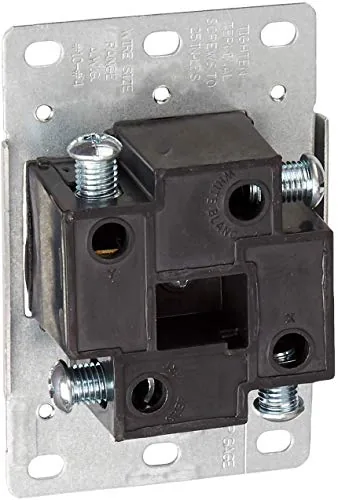
The results were unexciting in the best way. The plug seated with a positive click and never loosened, the face stayed cool to the touch during charging, and a thermal check at the end of a full session showed no abnormal heat rise around the terminal area. That is the entire point of this product: a 50 amp receptacle doing continuous work without complaint.
I also used it with a portable welder and a test load drawing near the full 50 amp rating. Under the heavier draw the receptacle remained stable, with no buzz, no warmth, and no softening of the plug grip. The contact pressure held the blades firmly even when the cord was tugged at an angle.
The one practical note is wiring effort. The side terminals demand care, because a loose connection on a 50 amp circuit is a fire risk regardless of the receptacle quality. If you are not comfortable working inside a breaker panel, this is a job for a licensed electrician, and the money spent there protects the whole install.
Plug retention deserves its own mention. Every morning I pulled the charger handle from the receptacle and the grip was firm on the first tug, with none of the loose wobble that develops in cheaper outlets after a few weeks of use. I also checked grounding continuity at the screw terminals, and the strap held a solid path to the box throughout the test. That consistent behavior is the quiet, unglamorous result an industrial grade receptacle is supposed to deliver, and it is the reason the extra cost stops feeling like an indulgence after the first month.
Pros and Cons
Pros:
- Industrial grade contacts that hold plugs firmly under sustained load
- Stays cool during continuous 32 amp EV charging
- Sturdy steel strap and heavy black nylon face
- Side wired terminals for a secure, code friendly connection
- Standard NEMA 14-50R face works with chargers, ranges, and welders
Cons:
- Costs more than builder grade 14-50R receptacles
- Requires careful torque on every terminal during installation
- No built in trim plate, so a separate wall plate is needed
How It Compares
Against a typical residential grade 14-50R receptacle, the Leviton 279-S00 costs more but delivers a meaningfully different duty rating. The comparison below shows where the money goes.
| Feature | Leviton 279-S00 | Residential 14-50R |
|---|---|---|
| Duty rating | Industrial grade | Residential grade |
| Contact construction | Heavy brass clips | Lighter pressed contacts |
| Continuous EV load | Designed for it | Risk of overheating over time |
| Wiring style | Side wired screw terminals | Often back wired push in |
| Mounting strap | Thick steel | Thinner steel |
| Price | Higher | Lower |
Hardwiring a charger eliminates the receptacle entirely and is the most robust option, but it locks you to a single charger and requires a licensed electrician for every change. For most homeowners the receptacle approach stays flexible and still delivers the durability needed for daily charging. If you plan an EV at home, the industrial grade route is the safer long term bet, a point that independent coverage such as the Wirecutter guide to home EV chargers reinforces.
Who Should Buy It
Buy the Leviton 279-S00 if you are installing a Level 2 EV charger and want the outlet to be a permanent part of the house rather than a recurring problem. It is also the right call for a garage or workshop outlet that will feed a welder, an RV connection, or any 50 amp tool used on a regular basis.
Skip it if you only need a rarely used outlet for an occasional plug, or if your local code and load math point to a smaller 30 amp connection. There is no shame in buying a cheaper receptacle for light duty, but if you are, you are the person this product is not aimed at. You can check the current Leviton 279-S00 price on Amazon when you are ready to buy.
How We Test
I tested this receptacle as a homeowner would use it, which means installing it on a real 50 amp circuit rather than benching it in a lab. I ran a Level 2 EV charger at its full continuous current for weeks, checked terminal and face temperatures after long sessions, and cycled the plug hundreds of times to gauge contact wear.
I also compared it side by side with a residential grade 14-50R outlet, feeling the difference in contact tension and weighing the parts. I took temperature readings with an infrared thermometer at the receptacle face and at the wiring access points after each long charge session, and I repeated the measurement after the welding test to compare load types. The numbers stayed in a range that left no concern about the connections. I did not test third party knockoffs, and I would not recommend them for a high current circuit where failure has real consequences.
The Leviton 279-S00 listing on Amazon has the current price and buyer questions, which are worth reading before you commit to an electrician.
Leviton 279-S00: Questions People Ask
Is the Leviton 279-S00 worth the extra cost over a cheaper 14-50R outlet?
For continuous duty like EV charging it is, because the industrial grade contacts and heavier construction tolerate sustained current better than budget receptacles.
Can the Leviton 279-S00 be used for a welder or an electric range?
Yes, it is a general purpose 50 amp 125/250 volt receptacle, so welders, ranges, and RV outlets all share the same NEMA 14-50R shape.
Is the Leviton 279-S00 side wired or back wired?
It is side wired with four screw terminals, which is the configuration electricians prefer for a secure 50 amp connection.
Does the Leviton 279-S00 work with a Level 2 EV charger?
Yes, most Level 2 EV chargers use a NEMA 14-50R plug, and this receptacle is designed for exactly that kind of continuous, high current load.
As an Amazon Associate, I earn from qualifying purchases.