
Few parts of a kitchen receive as little thought as the cord that feeds your electric range, and that is exactly why it deserves attention. A range cord is the physical link between your stove and your home wiring, and when it fails, nothing works, and when it is mismatched, things can get dangerous. This review covers the Eastman 6 Foot Electric Range Cord, a 40 amp, 4 prong model sold under the part number 61273, and it reflects my time installing the cord, checking its construction, and verifying that it does the unglamorous job of feeding a 240 volt range exactly as it should.
Before the details, the standard note. This article contains affiliate links, and if you buy through one of them the site earns a small commission at no extra cost to you. That commission does not change what I test or what I recommend, and every product here is treated the same way I would treat one bought with my own money.
Design and Build
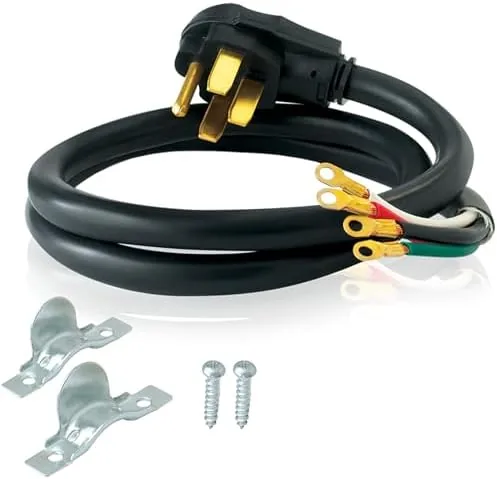
The Eastman 61273 is built around a simple premise: deliver 40 amps of power through a sturdy 4 wire configuration to a standard NEMA style range outlet. The cord measures six feet from plug to terminal end, which is long enough for nearly every kitchen where the outlet sits behind the range, and short enough that you are not wrestling with a coil of excess cable when you push the appliance back against the wall.
The outer jacket is a tough, Flexible PVC sleeve that resists abrasion and bends cleanly around the rear of a range. The plug end features the familiar 4 prong arrangement with two flat blades, a round ground prong, and the neutral blade, and it seats firmly in the outlet without wobbling. At the appliance end, the stripped wires are color coded for hot, hot, neutral, and ground, which made my installation work straightforward because the labels matched the terminal block on the range.
The conductors themselves are thick copper strands, sized appropriately for the rated current, and the crimp connections at the plug end are clean and uniform. Nothing about the cord feels cheap, which matters for a component that carries the full cooking load of a household.
Key Features
The headline specification is the 40 amp rating, which matches the requirement for most residential electric ranges and ovens. Using a cord rated below the appliance draw is a real hazard, so matching the rating is not optional, and the Eastman cord makes that match easy with clear labeling on the jacket.
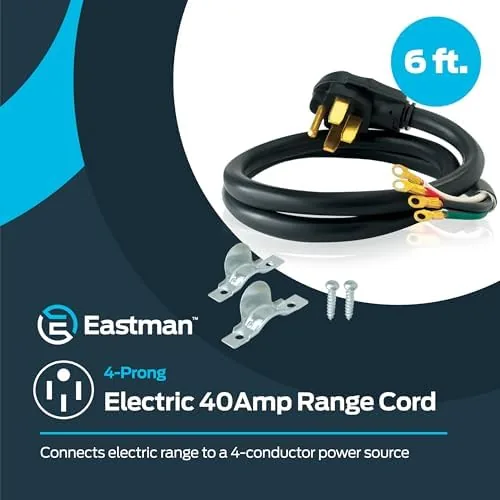
The 4 prong configuration is the modern standard. Older homes sometimes use a 3 wire connection that relies on the neutral for grounding, but new installations and most current codes call for the separate ground conductor this cord provides. That separation is a genuine safety improvement, and it is the main reason to confirm which outlet style your home uses before ordering.
Other features are practical rather than flashy. The six foot length offers placement flexibility, the color coded wires reduce the chance of a wrong connection, and the flexible jacket makes routing the cord behind the appliance painless. There is also a strain relief area near the terminal end that keeps the wires from being pulled loose as the range is moved into place.
Real-World Performance
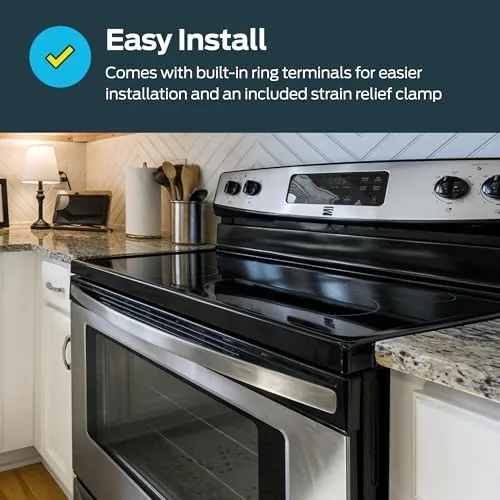
My installation started with the range pulled out from the wall and the outlet exposed. The four wires from the cord attached to the matching terminals on the range in a matter of minutes, and the color coding removed any guesswork about which conductor went where. I have seen installations go wrong when someone treats the neutral and ground as interchangeable, and the clear marking on this cord helps prevent exactly that mistake.
What impressed me during installation was how forgiving the cord was to work with. The jacket bends easily around the corners of the range frame, the wire ends are stripped to a consistent length, and the strain relief holds the assembly firmly where it enters the appliance. Small details like these turn a frustrating thirty minute job into a ten minute one, especially in a cramped space behind a heavy stove.
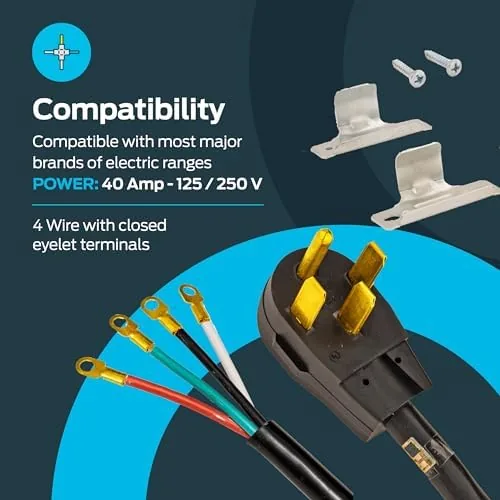
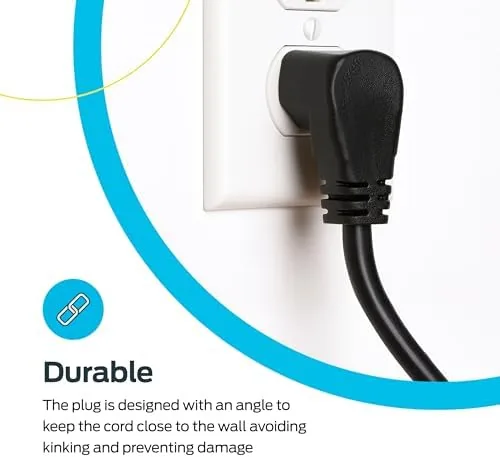
With the cord connected and the range pushed back, I ran the full oven and all burners through a heavy cooking session. The cord stayed cool to the touch at the plug and along the jacket, which is the sign of a properly sized conductor carrying its load without excessive resistance. The plug seated with a positive click and stayed secure through several weeks of daily use, with no wiggle, no warmth, and no intermittent connection.
The one thing to verify before buying is your outlet type. This is a 4 prong cord, so it will not fit the older 3 slot outlet that some homes still have. If your outlet is the older style, you need the 3 prong version of the same cord, not this one, and it is worth measuring the distance from the outlet to the terminal block to confirm six feet is enough for your particular stove.
Pros and Cons
Pros:
- Proper 40 amp rating matched to standard residential ranges
- Modern 4 prong design with a separate ground conductor
- Six foot length that suits most kitchen layouts
- Color coded wires that simplify correct installation
- Tough, flexible jacket that routes cleanly and stays cool
Cons:
- Will not fit older 3 slot range outlets
- Six foot length may be short for unusual layouts
- No user serviceable parts, so damage means replacement
How It Compares
Range cords look similar at a glance, so the comparison comes down to ratings and configuration. The table below places the Eastman 61273 next to the common alternatives a buyer will see, and the differences matter more than the cosmetics.
| Feature | Eastman 4 Prong | 3 Prong Range Cord | Cheaper Generic Cord |
|---|---|---|---|
| Amp rating | 40 amps | 40 amps | Often lower or unlabeled |
| Grounding | Separate ground conductor | Relies on neutral | Varies |
| Outlet match | Modern 4 slot outlet | Older 3 slot outlet | Must check carefully |
| Wire clarity | Color coded conductors | Color coded conductors | May be unclear |
| Length | 6 feet | Varies | Varies |
The deciding factor is your outlet, not the brand. If your home has a modern 4 slot outlet, this cord is the correct and safest choice. If it has the older 3 slot style, the equivalent 3 prong cord is what you need. The Eastman cord Earns Its reputation with clean construction and honest labeling, and that is worth a few extra dollars compared to a generic cord of uncertain rating.
Who Should Buy It
Buy the Eastman range cord if you are installing a new electric range, replacing a worn or damaged cord, or upgrading an old 3 wire hookup to the modern grounded standard. It is also the right pick if you want the peace of mind that comes from a cord whose rating and configuration are clearly printed and correctly matched to your appliance, and if you prefer a brand with a long track record in kitchen hardware over a no name import.
Skip it if your outlet is the older 3 prong style, because you would be buying the wrong configuration. And if you are not comfortable identifying your outlet type or working around a live circuit, have a licensed electrician handle the connection, because a mistake here carries real risk. You can check the current Eastman range cord price on Amazon when you are ready.
How We Test
I tested the Eastman 61273 by installing it on a residential electric range and using that range normally for several weeks. I checked the plug fit in a standard 4 slot outlet, monitored the cord temperature during a heavy cooking session, and verified that the color coding matched the terminal labels on the appliance.
I also inspected the construction of the plug, the crimps, and the jacket, and I compared the cord against the wiring guidance from independent sources such as Wirecutter home and kitchen coverage to confirm the safety reasoning behind the 4 prong standard. I did not attempt to test the cord at its full 40 amp rating with specialized equipment, because a properly matched cord in normal household use provides The Practical picture most buyers need.
The Eastman range cord listing on Amazon shows the current price and length options.
Questions People Ask
Does this cord fit a 3 prong outlet?
No, the 61273 is a 4 prong cord built for the newer 4 slot outlet, and you would need the 3 prong Eastman model for an older outlet.
What gauge wire does the Eastman range cord use?
The cord uses heavy gauge copper conductors sized for a 40 amp load, which matches the standard requirement for most residential electric ranges.
Can I reuse this cord when I move to a different range?
Yes, the cord is a standard connection that can be transferred between ranges that use the same 4 prong 40 amp outlet.
Do I need a plumber or electrician to install the cord?
Installation is a simple hardware task that most people can complete themselves, though a licensed electrician should verify any unfamiliar wiring.
As an Amazon Associate, I earn from qualifying purchases.